
 by
by Most sleep advice focuses on what happens when you get into bed. The 90 minutes before you get into bed are what actually determine whether you fall asleep in 7 minutes or lie awake for 45. This protocol treats those 90 minutes as a structured physiological and neurological transition — not a vague "relax before bed" suggestion, but a precise minute-by-minute sequence designed to move every relevant system in the right direction simultaneously.
The Science Behind the 90-Minute Window
Sleep pressure (adenosine buildup) and circadian drive (melatonin release) are your two primary sleep engines. Adenosine has been accumulating all day and peaks in the evening. Melatonin typically begins rising 2 hours before your natural sleep time. The 90-minute window is where these two systems converge — and it is also the window where the most common behavioral mistakes (bright light, screens, late exercise, stimulating conversation) most effectively counteract both systems simultaneously.
The Minute-by-Minute Protocol
T-90 to T-75: Environmental Activation (15 minutes)
This phase sets the physical stage so you are not returning to environmental setup tasks later.
- Thermostat: Set bedroom to 65–68°F. If you shower during this protocol, make it a warm (not hot) shower — hot showers right before bed can briefly raise core temperature rather than lowering it.
- Lighting: Switch all overhead lights to warm-toned (2700K or below), dim to 30% of normal. Kill any blue-spectrum lights (cool white LEDs, TV backlights, monitors).
- Phone: Set to Do Not Disturb. Place it in a room other than the bedroom, or at minimum across the room from your bed. This is the last time you handle it until morning.
- Kitchen: Close it. No more food. No more caffeine. Water only.
T-75 to T-45: Physical Wind-Down (30 minutes)
Your body needs active signals that the high-performance part of the day is over.
- T-75: Warm shower or foot bath. 10 minutes. The warming of peripheral blood vessels (hands, feet) triggers vasodilation, which pulls heat away from the body's core and accelerates the core temperature drop that initiates sleep.
- T-65: Change into sleep clothes. This is a behavioral anchor — a physical costume change that your nervous system learns to associate with the sleep state. The same reason surgeons change into scrubs before surgery: clothing signals role transition.
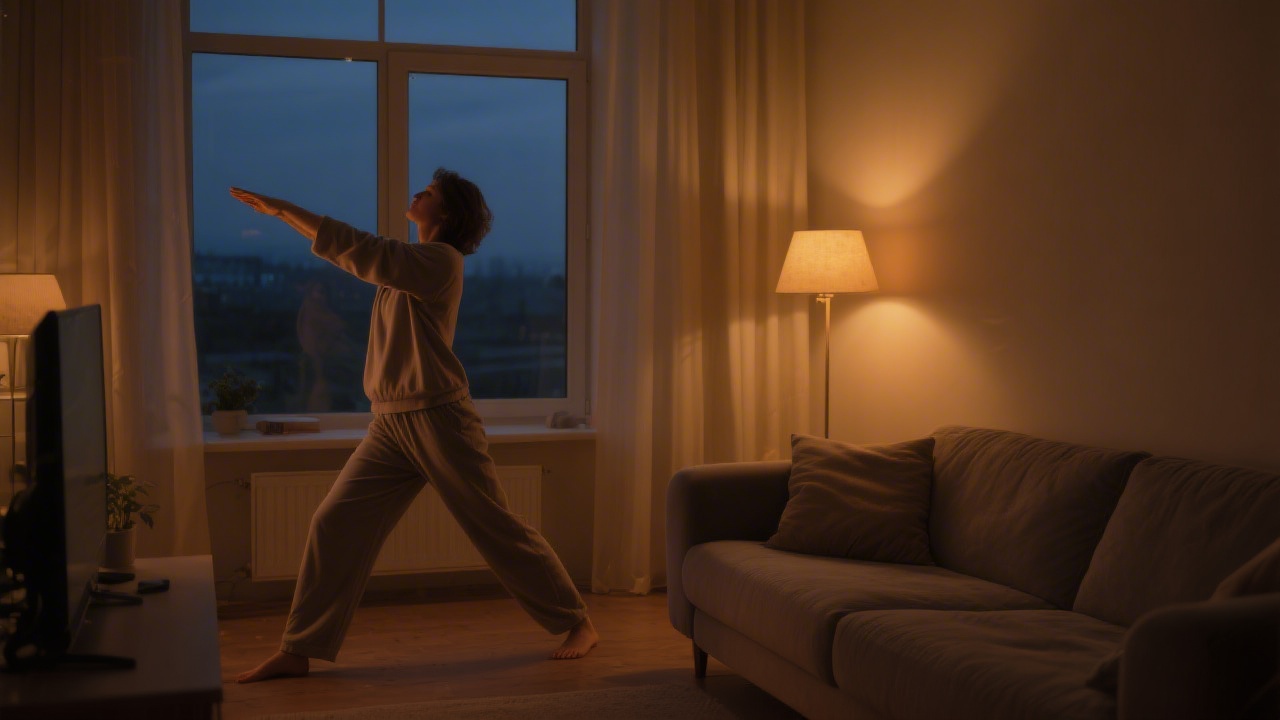
- T-60: Light stretching or progressive muscle relaxation. Not yoga, not exercise. 5–10 minutes of slow neck rolls, shoulder releases, and hip flexor stretches — targeting wherever you hold daily tension. Progressive muscle relaxation (tensing and releasing each muscle group in sequence) achieves measurable reductions in cortisol within a single session.
T-45 to T-20: Mental Offload (25 minutes)
This is the most underutilized phase in most people's routines — and the one with the greatest impact on middle-of-the-night rumination.
- T-45: Worry dump. Write every unresolved concern, task, or open loop onto paper. 10 minutes maximum. No solving — only listing. See our complete worry dump guide for the full technique.
- T-35: Tomorrow's priorities. Three items maximum. Write them in order of importance. This action alone reduces the phenomenon of lying awake mentally rehearsing tomorrow — your brain has already externalized the agenda.
- T-30: Dim lights further to 10% or below. The bedroom should now be dark enough that objects are barely visible. This mimics the natural light level 60 minutes after sunset and is the single most reliable melatonin-release trigger you can control.
T-20 to T-0: Transition Phase (20 minutes)
This phase is for low-stimulation, passive activities that require zero decision-making and generate zero emotional arousal.
- Acceptable: Physical book (not e-reader), light podcasts or audiobooks (non-news, non-thriller), calm music (60–80 BPM, no lyrics or familiar lyrics only), quiet conversation (not problem-solving, not conflict).
- Not acceptable: Any screen, news of any kind, work-related anything, emotionally stimulating content (arguments, dramas, politics), planning conversations.
- T-10: Get into bed. If you are reading, you have 10 more minutes before lights fully out. Use an actual lamp with a physical switch — not your phone as a reading device.
- T-0: Lights out. No phone in hand. No screen in sight. Room dark, cool, quiet (or white noise). Your only task is to breathe slowly and let your body complete the transition that the last 90 minutes prepared.
Common Protocol Violations and Their Consequences
| Violation | System Disrupted | Sleep Impact |
|---|---|---|
| Bright screen at T-30 | Melatonin suppression | +20–30 min sleep onset |
| Work email at T-45 | Cortisol spike | +30–60 min arousal |
| Alcohol at T-60 | REM suppression | Fragmented second half |
| Room at 74°F+ | Core temp regulation | Reduced deep sleep % |
| No mental offload | Working memory overflow | 3 AM rumination |
The sleep hygiene checklist covers additional behavioral patterns that complement this 90-minute protocol. For mistakes that undermine the entire effort, see our guide on common sleep hygiene mistakes.
Adapting the Protocol to Your Life
This protocol is designed for a 10:30 PM bedtime. Adjust all timestamps proportionally to your actual target bedtime. If you have children or other constraints that make a full 90-minute uninterrupted wind-down impossible, prioritize in this order: (1) mental offload at T-30, (2) lights at 10% by T-20, (3) no screens at T-30. You can reclaim the rest of the protocol on weekends or as life permits.
Frequently Asked Questions
Why 90 minutes specifically? Why not 60 or 120?
90 minutes aligns with the natural melatonin onset window (which begins roughly 2 hours before natural sleep time) and allows time for both physical thermoregulation (30–45 minutes for core temperature to begin dropping) and mental offloading (which requires at least 20–30 uninterrupted minutes to be effective). 60 minutes is insufficient for both; 120 minutes is more than needed for most people.
Can I exercise during the 90-minute window?
Only very light stretching or yoga. Vigorous exercise within 90 minutes of bed raises core body temperature, releases adrenaline, and increases heart rate — all of which directly oppose sleep initiation. Finish any meaningful exercise at least 3 hours before your target bedtime.
What if my partner doesn't follow the protocol?
Focus on what you control: your side of the bed, your lighting (reading lamp vs. overhead), your mental offload practice. A sleep mask and earplugs handle light and sound from a partner's different schedule. The biggest shared variable is room temperature — negotiate that one, as it affects both of you equally.
How long before the protocol starts working?
The environmental changes (temperature, light) work on night one. The mental offload practices typically require 3–5 nights before your brain trusts the system enough to release vigilance. The full protocol usually shows measurable improvement in sleep onset latency within 7–10 days of consistent practice.
Is this protocol evidence-based?
Each component is individually supported by sleep research. The specific 90-minute timing is a synthesis of findings across chronobiology (melatonin onset), thermoregulation research (warm shower studies), and cognitive behavioral therapy for insomnia (stimulus control, cognitive offloading). No single study tests this exact combination.
Complete Your Sleep Setup
The right mattress turns a good routine into exceptional sleep. The Saatva Classic is our top pick for pressure relief and lasting support.
Key Takeaways
The 90-Minute Wind-Down Protocol is a topic that depends heavily on individual needs and preferences. The most important thing is to consider your specific situation — your body type, sleep position, and personal comfort preferences — before making any decisions. When in doubt, take advantage of trial periods to test before committing.