
 by
by The best bed frame ideas don't just fill a room. They make everything else in it feel chosen.
Floating platforms, slatted oak walls, arched plaster niches. Fifteen rooms, fifteen ways to get it right.
The Coastal Room That Earns Its Calm
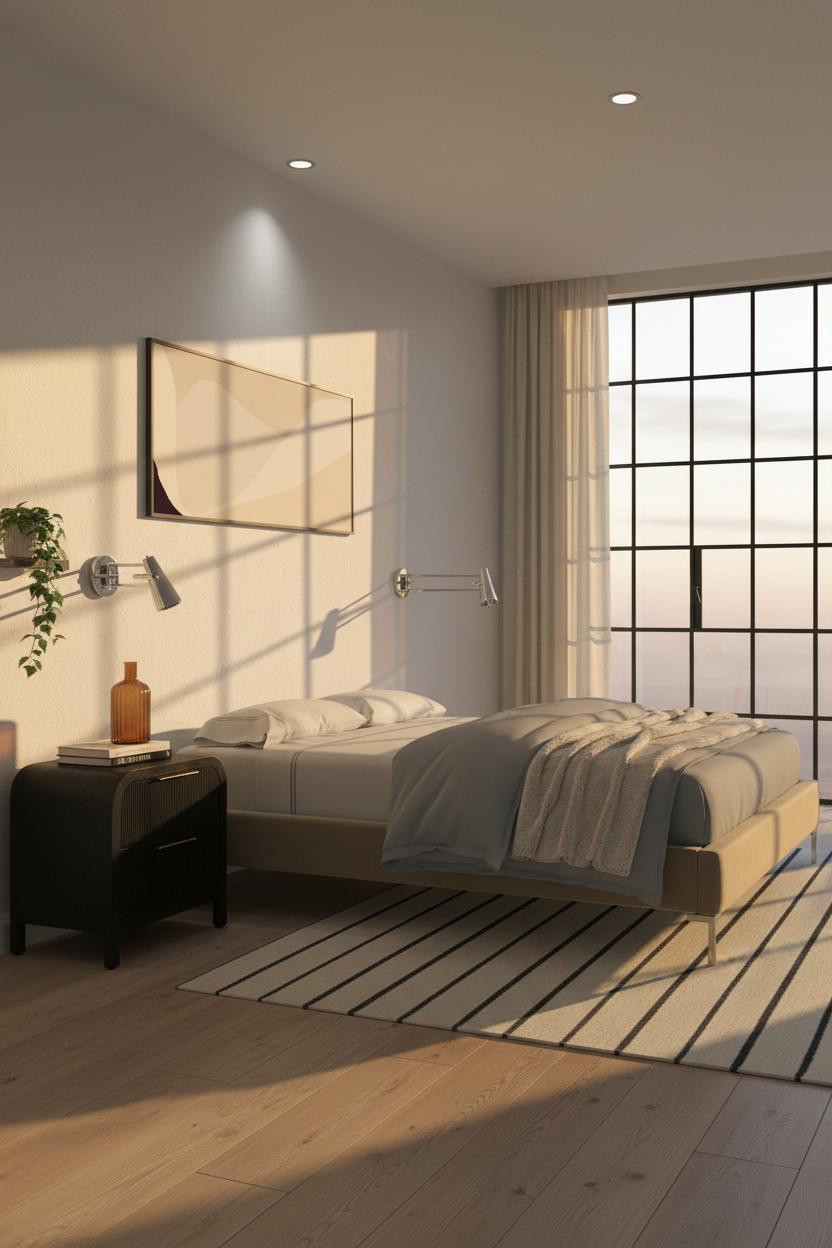


The Crittall-style steel window is what makes this room feel coastal without going beachy.
Why it lands: Slim black steel grid against slate blue-grey walls gives the low platform bed something architectural to answer to, which keeps the whole composition from feeling soft.
Steal this move: Layer a flat-weave ivory and charcoal rug under the bed. It grounds the frame without adding visual weight.
Sage Green Done Quietly
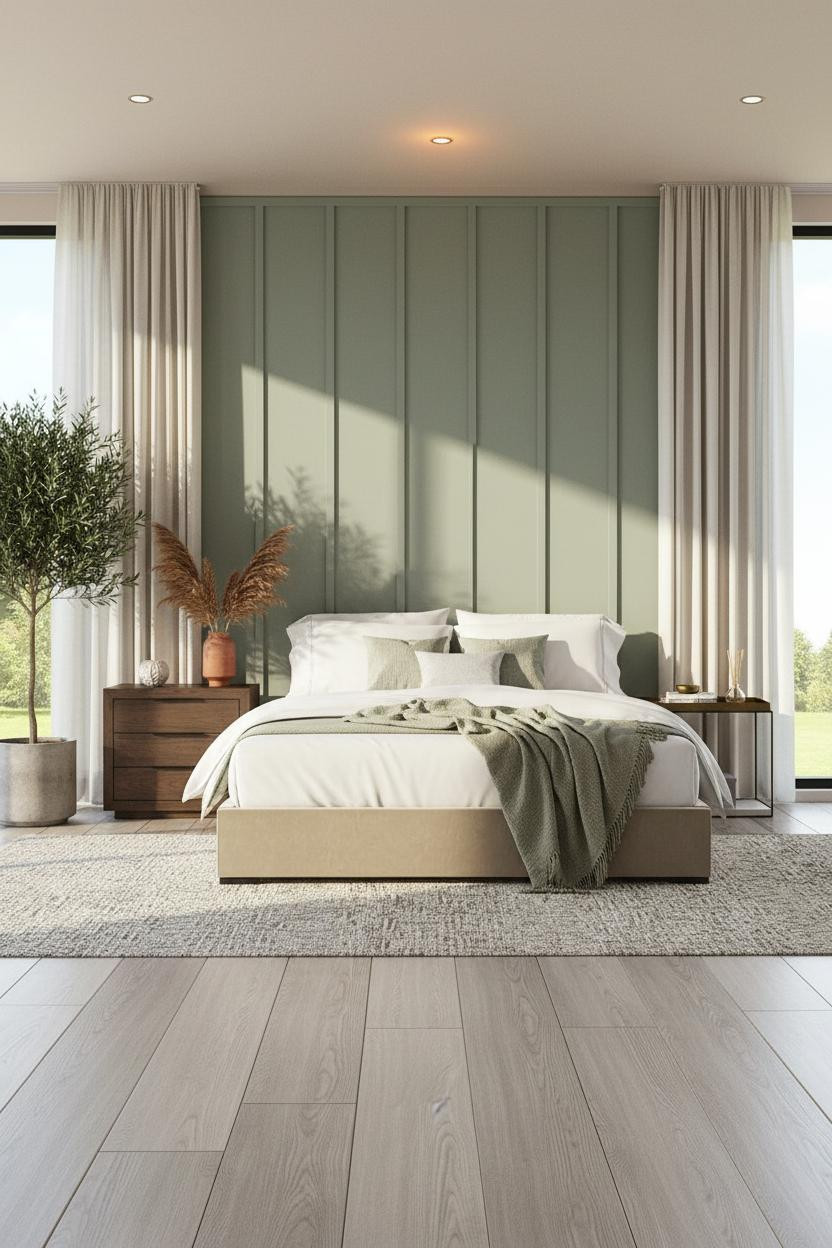

I keep coming back to board-and-batten in this color. It's somehow more interesting than paint alone.
What makes it work: Each vertical batten on the muted sage wall catches morning light differently, so the surface reads as texture rather than just color. That's what keeps it from feeling flat at noon.
Pro move: Pair with pale bleached pine flooring and ivory percale. Cool wall, warm floor. The contrast does the work. Understanding how headboards interact with accent walls helps here too.
When the Wall Becomes the Headboard
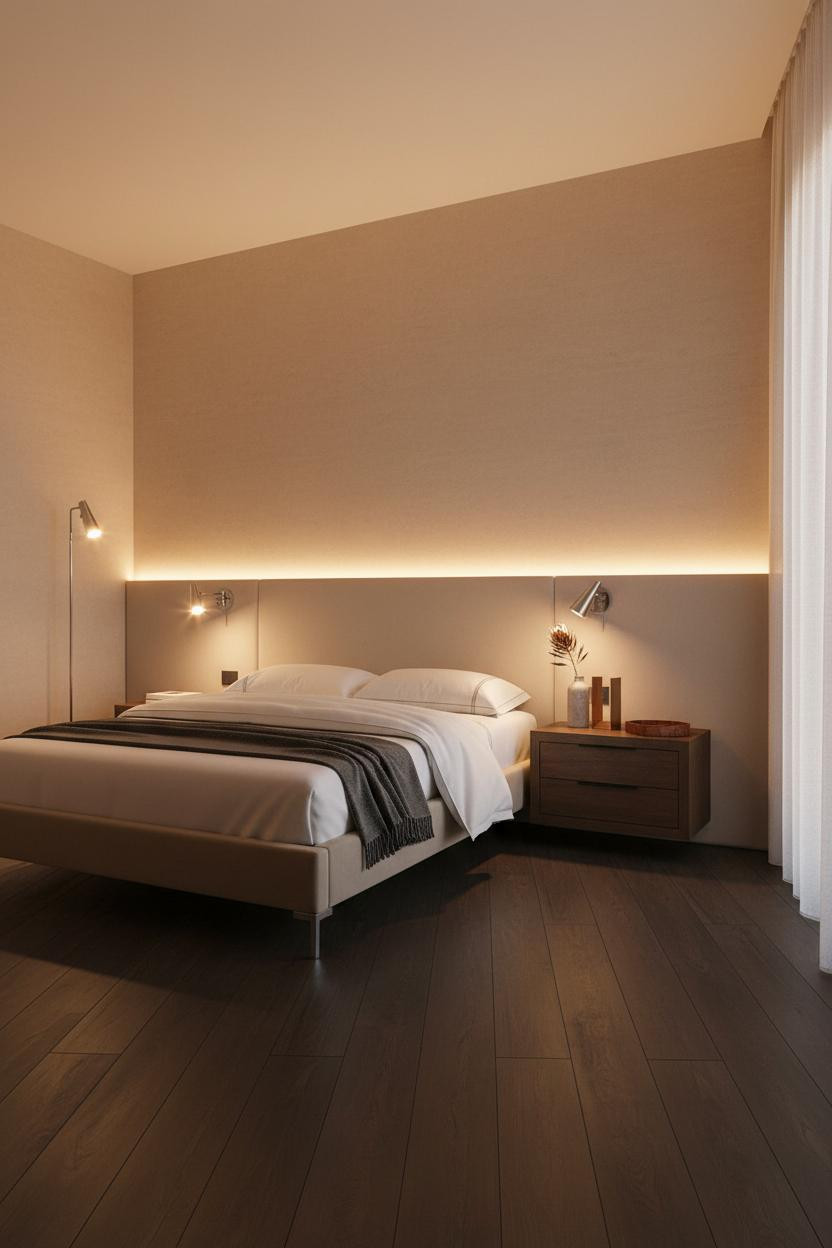
This is divisive. Not everyone will go for it.
But a full-width backlit resin panel is one of those moves that photographs exactly like it feels in person.
Why it looks custom: The thin seam of warm light tracing the panel edge turns the warm stone matte surface into a graphic horizon line, making the floating frame below feel intentional rather than just low.
Avoid this mistake: Don't pair a backlit wall with busy bedding. Charcoal cashmere throw, ivory percale. Nothing else competing.
The MCM Instinct That Actually Pays Off
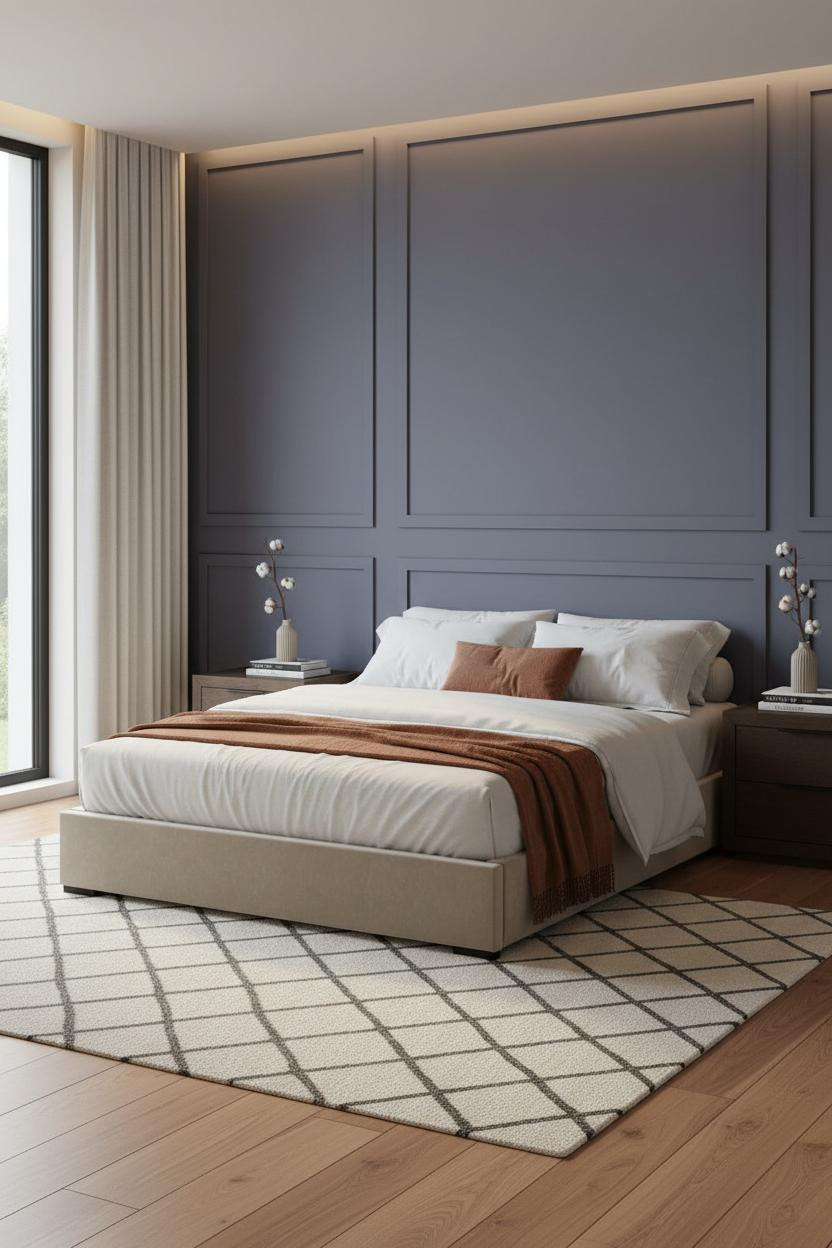
Indigo wainscoting in a bedroom sounds like too much. It's honestly not.
Design logic: The indigo-slate paneling stops at mid-wall, letting warm cream above breathe, which keeps the room from tipping dark. That's the whole reason it works.
Layer a Moroccan diamond rug underfoot and a rust linen throw across the bed. The smarter choice is keeping the upper half cream, not matching it to the lower.
Oak Slats and Terracotta: A Texture Story
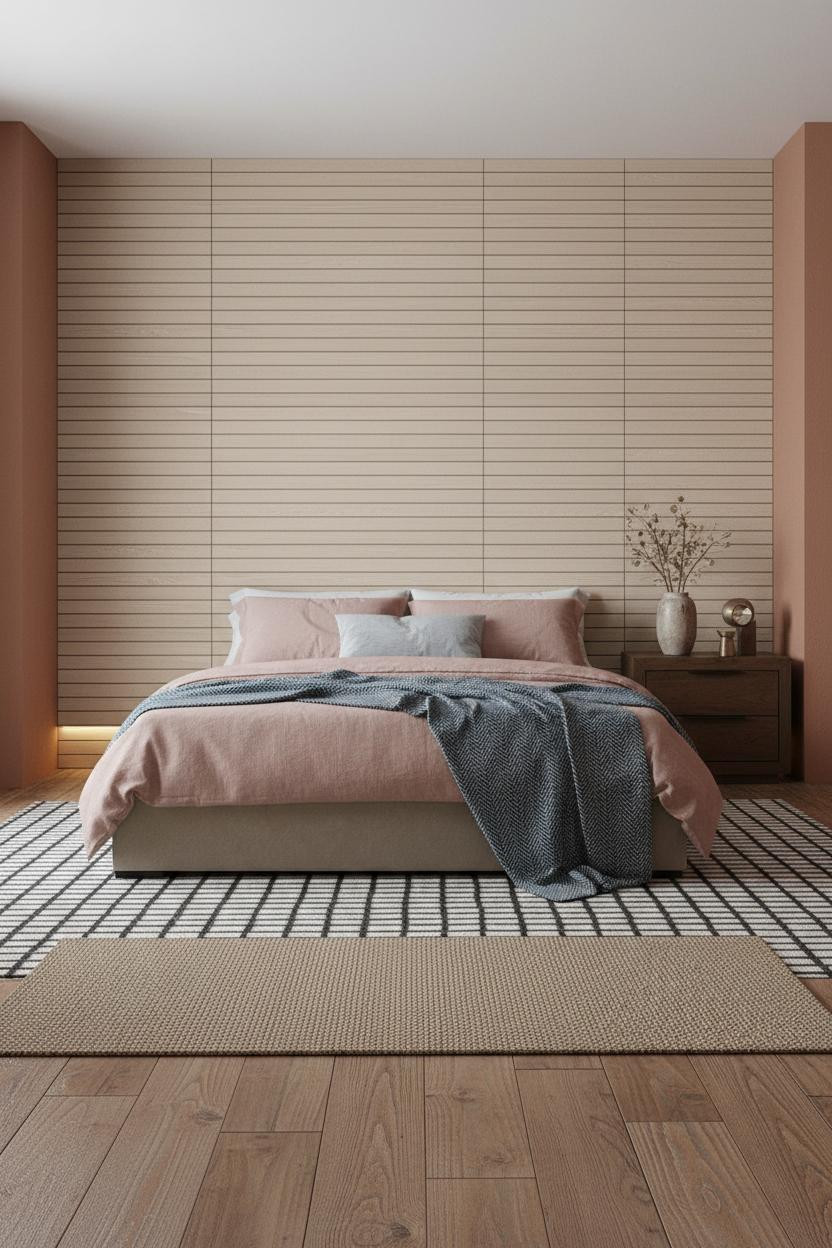
The pale oak slatted wall is doing a lot here. It's not just backdrop.
What gives it presence: Each horizontal slat throws a fine shadow line down the wall face, making the surface feel structural rather than decorative. Against warm terracotta flanking walls, the contrast is immediate.
Worth copying: Add a dusty pink linen duvet and a slate blue herringbone throw. Those two together pull warmth from the terracotta while still feeling calm. More on bed frames that make rooms feel pulled together.
Raw Wood Behind a Floating Frame: It Lands
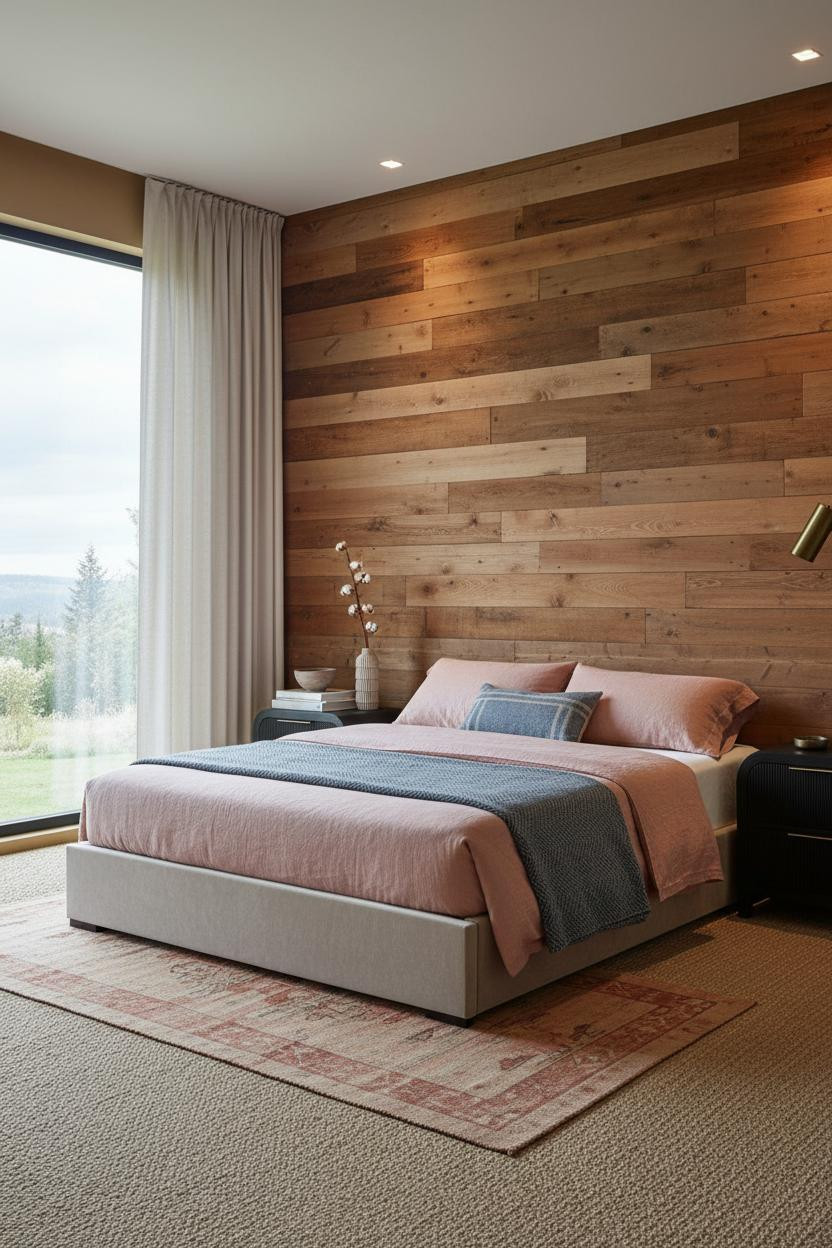
I'll be honest: reclaimed wood walls can easily tip rustic. This one avoids it.
The real strength: Rough-sawn chestnut and ash planks stacked horizontally read graphic at a distance, which gives the clean low platform bed something raw to borrow weight from. The room feels collected rather than decorated.
What not to do: Don't add matching wood furniture. One reclaimed surface is the statement. Keep everything else matte and soft.
Limewash Plaster and the Case for Doing Less
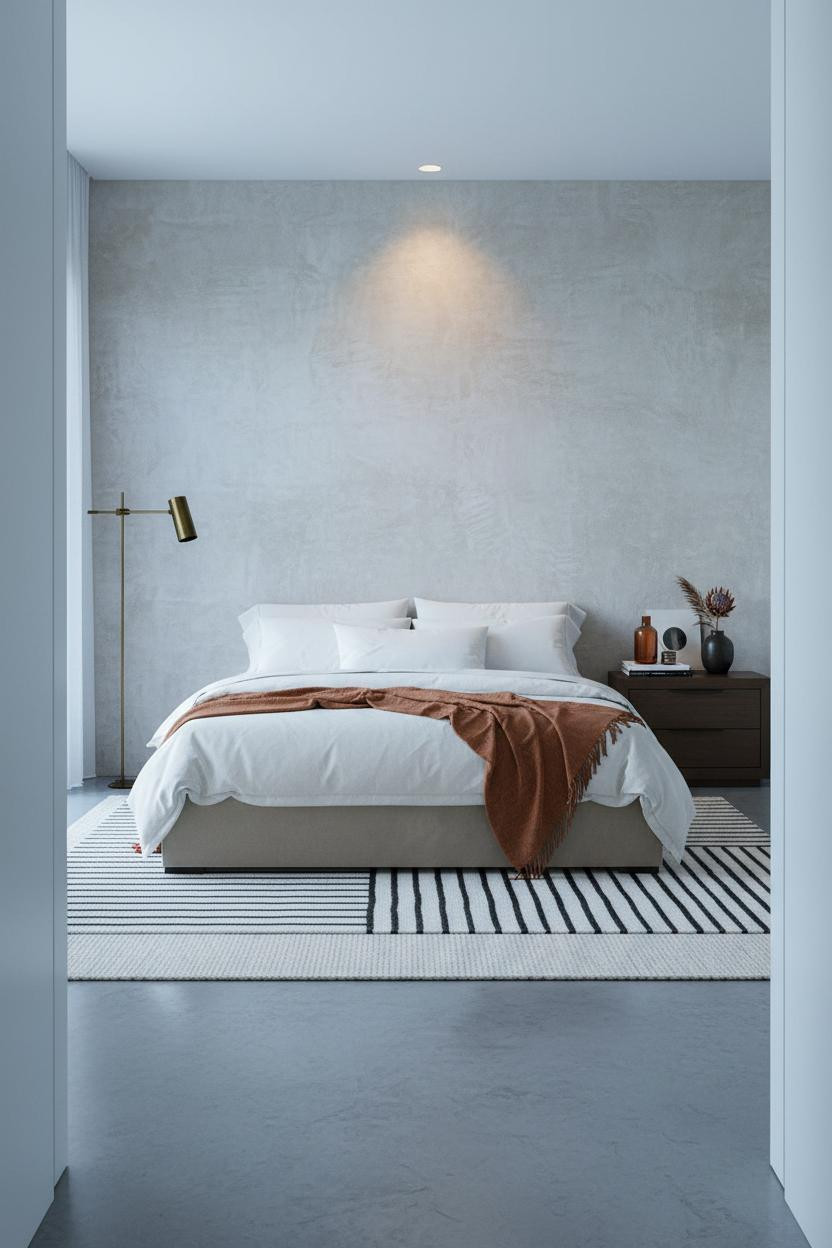
Nothing fancy. That's the point.
What carries the look: Hand-applied Venetian limewash plaster shifts between warm stone and pale driftwood as light moves across it, so the wall does the decorating. The room feels mineral and still, in a way that feels genuinely calm.
The easy win: Polished concrete floor plus a chunky cream wool rug under the bed. Two textures, zero clutter.
Clay Brick That Doesn't Try Too Hard
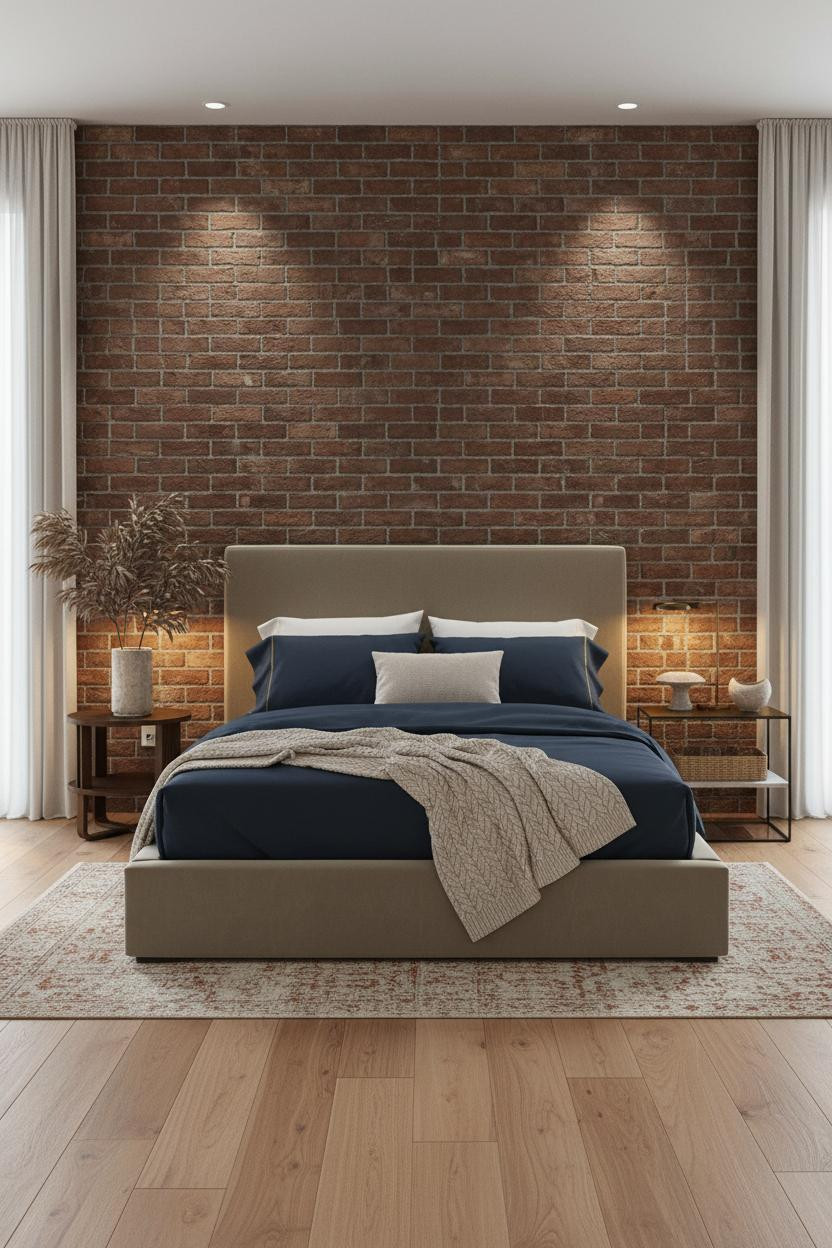


Exposed brick in a bedroom sounds like 2012. But painted deep warm clay, it's a different conversation entirely.
Why it feels balanced: The mortar lines and rough brick face break up the color enough that it reads as texture, not just a dark wall. Navy sateen bedding pulls the depth out while the cream cable-knit throw keeps it from feeling heavy.
The finishing layer: Tall branching dried eucalyptus in a raw stoneware vessel. Skip anything too small or too symmetrical next to this wall.
An Arched Niche That Frames the Whole Bed
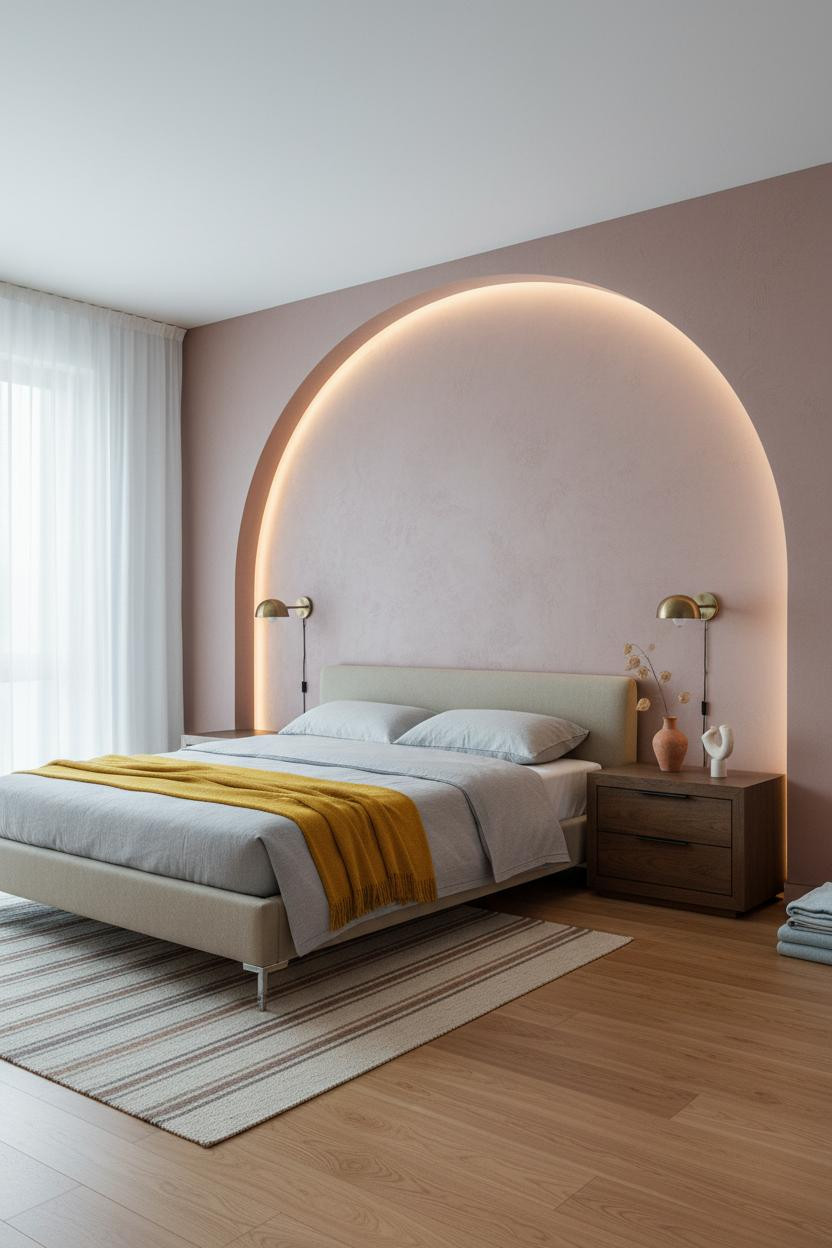
This is the kind of room that makes you want to just sit there for a minute.
Why it holds together: The burnished plaster inside the arch catches diffused light along the curve, creating a soft shadow halo that makes the low floating frame look like it was built for exactly that spot. Aged brass sconces flanking the arch finish it without over-decorating.
Where to start: Dusty rose walls work here because they're warm, not pink. The mustard wool throw picks up the brass. Everything rhymes.
Shiplap That Reads Modern, Not Farmhouse
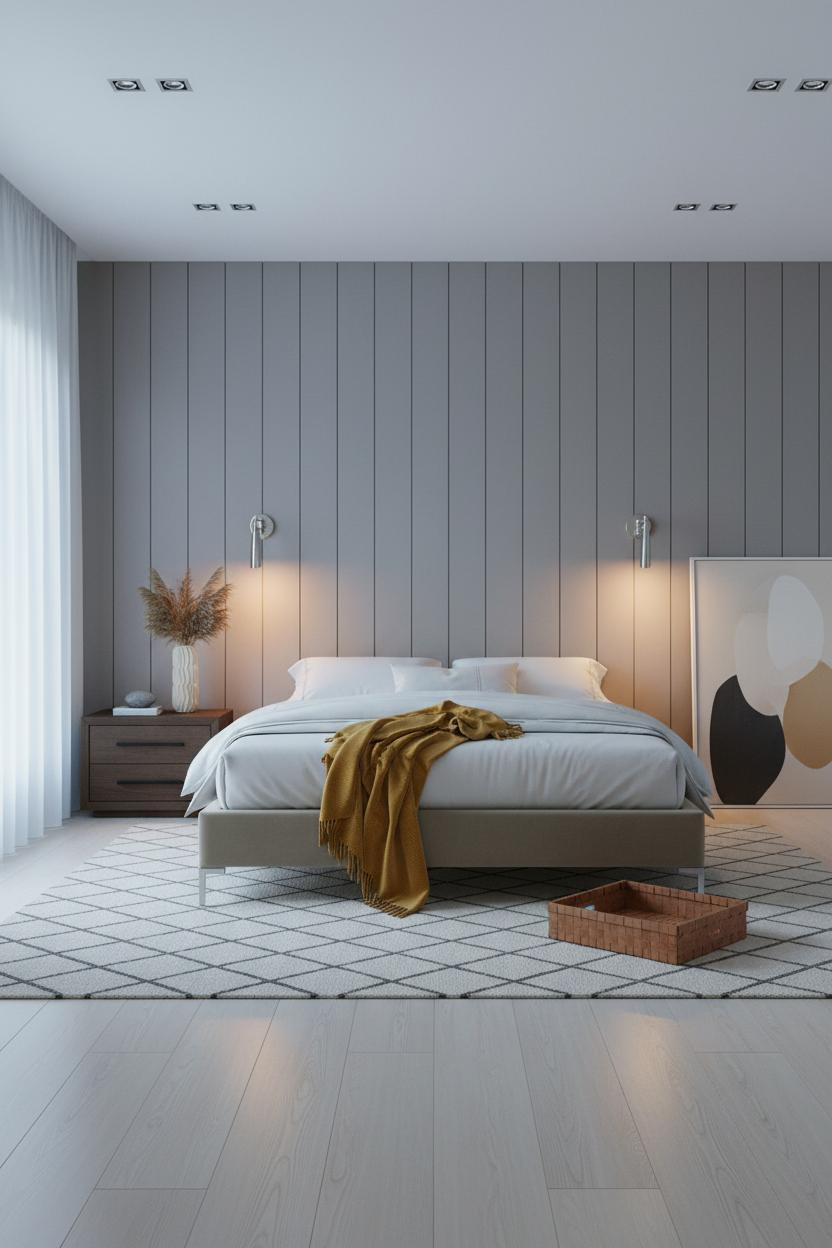
Fair warning: vertical shiplap in warm stone grey is easy to get wrong. The color is everything.
What sharpens the room: Crisp shadow lines running top to bottom on a matte grey surface are what separate this from the white shiplap trend. The room feels grounded, not coastal-casual.
Pair with pale birch flooring, slim sconces, and an oatmeal cotton duvet. Skip this: don't add a wood-toned headboard on top. Let the shiplap be the only texture behind the bed.
Japandi With a Moss Wall: Quieter Than It Sounds
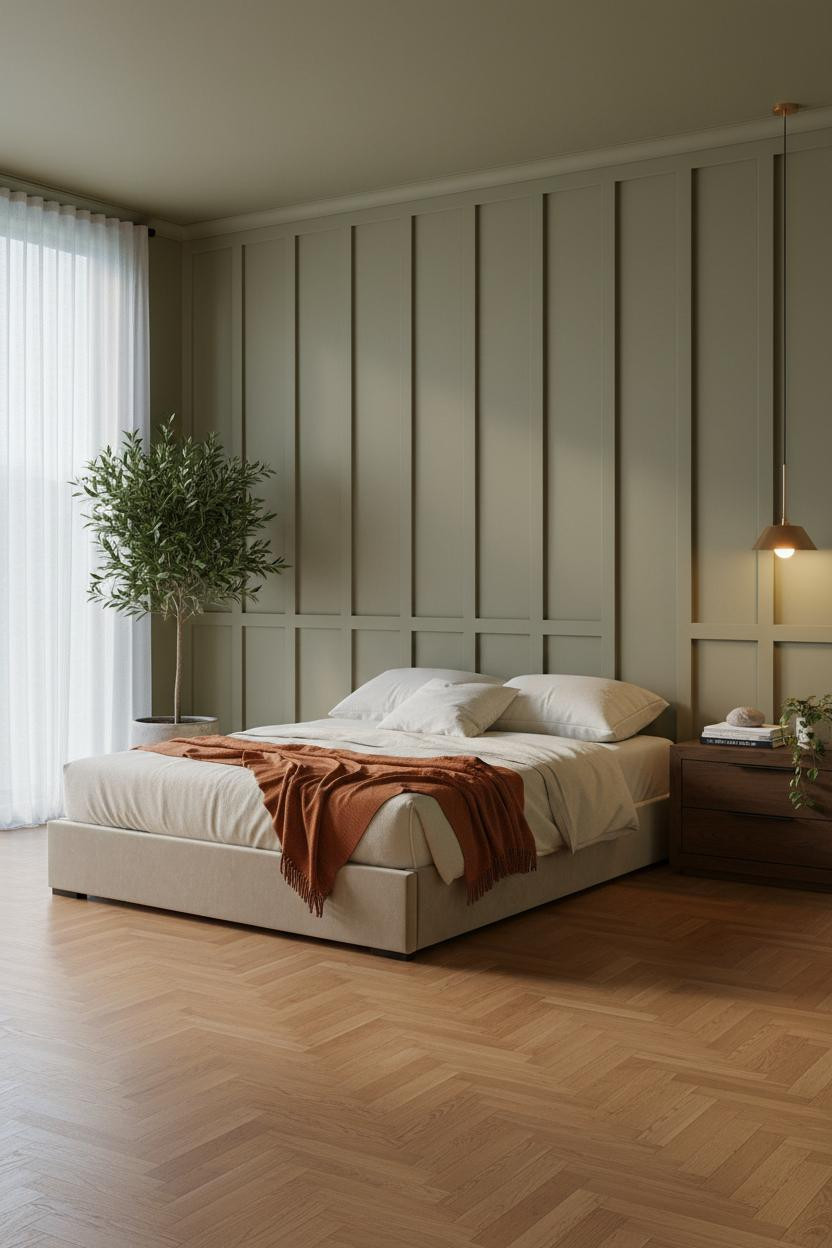
Moss board-and-batten is a bold call in a Japandi room. But it's the right one.
Why the palette works: The chalky matte moss finish on the battens absorbs light while the honey oak herringbone floor below bounces it back, which keeps the room from reading dark. Warm without being heavy.
The key piece: A large potted olive tree left of the bed. It breaks the wall's geometry and adds life while still feeling Japanese-minimal. No rug needed here. See more bed designs that make rooms click.
Walnut Slats: When the Wall Does the Heavy Lifting
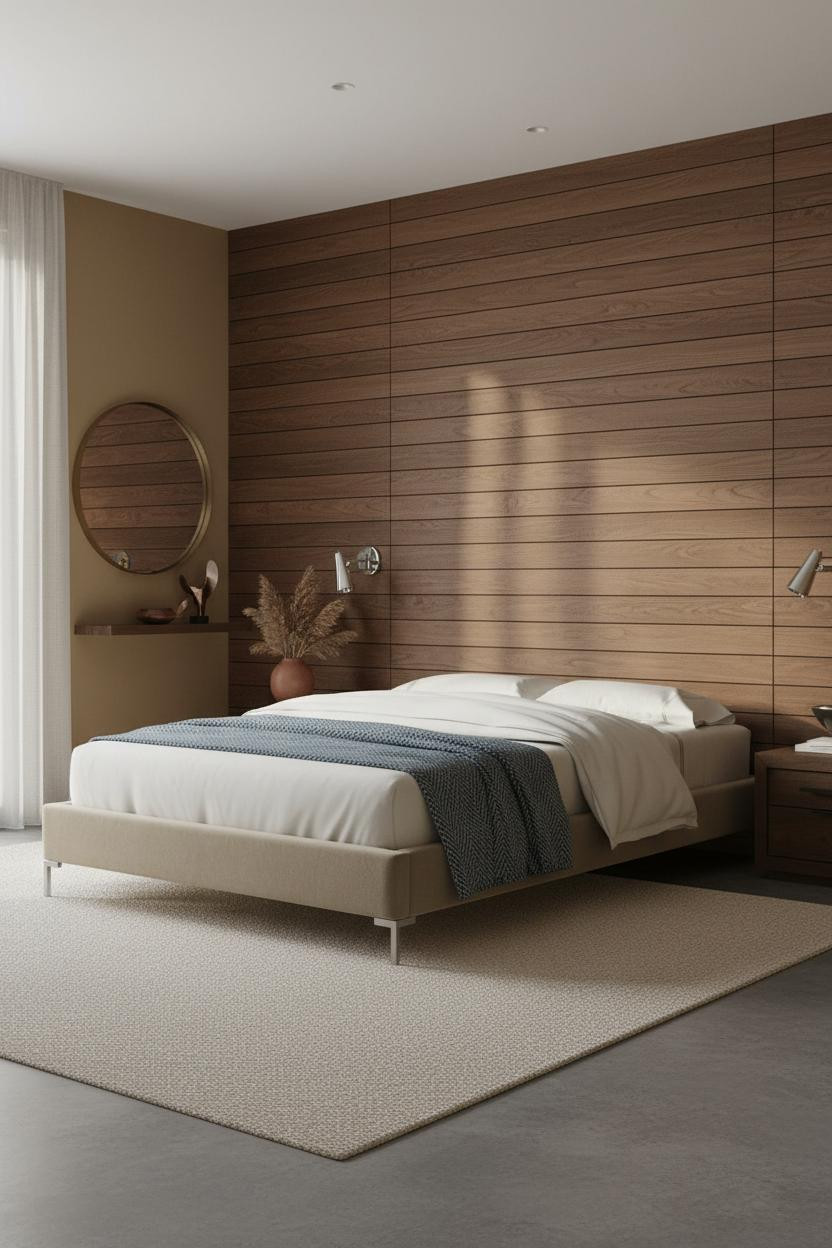
I almost scrolled past this. Glad I didn't.
What creates the mood: A floor-to-ceiling walnut slatted panel with fine shadow lines running between each plank gives the room a graphic rhythm that cream walls alone could never pull off. Warm camel flanking walls keep the dark wood from reading cold.
One smart swap: Add a round sculptural mirror on a floating shelf to the left. It bounces light off the walnut and makes the whole wall feel considered, not just decorative.
Deep Olive Plaster: More Livable Than You Think
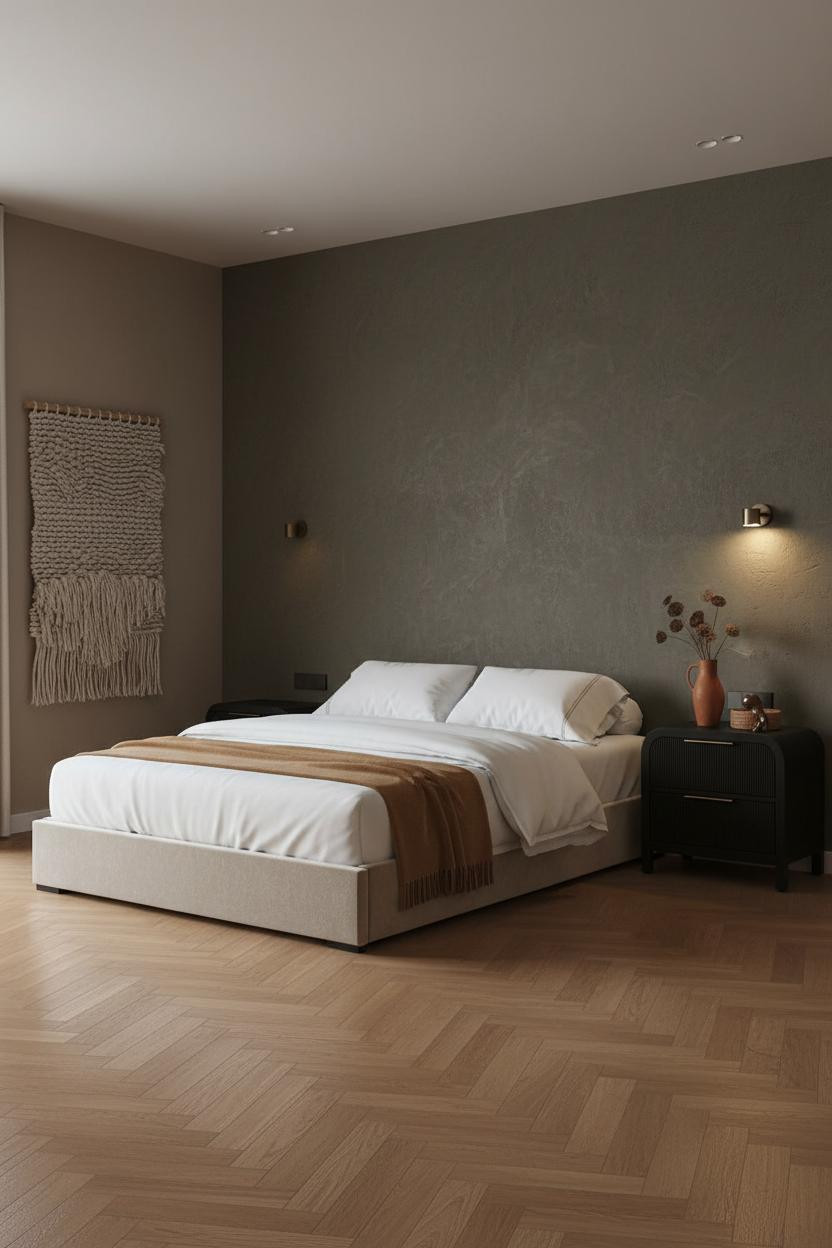
It shouldn't work. A coarse hand-applied olive-grey plaster wall behind a minimalist platform bed is a strange combination on paper.
Why it feels intentional: The rough matte texture catches raking light unevenly, making the surface feel almost warm while the herringbone parquet below ties the earthy tones together. Ivory percale and a camel wool throw keep the bedding from fighting the wall. Just enough contrast, while still feeling cohesive.
Golden Afternoon Light and a Taupe Horizontal Wall
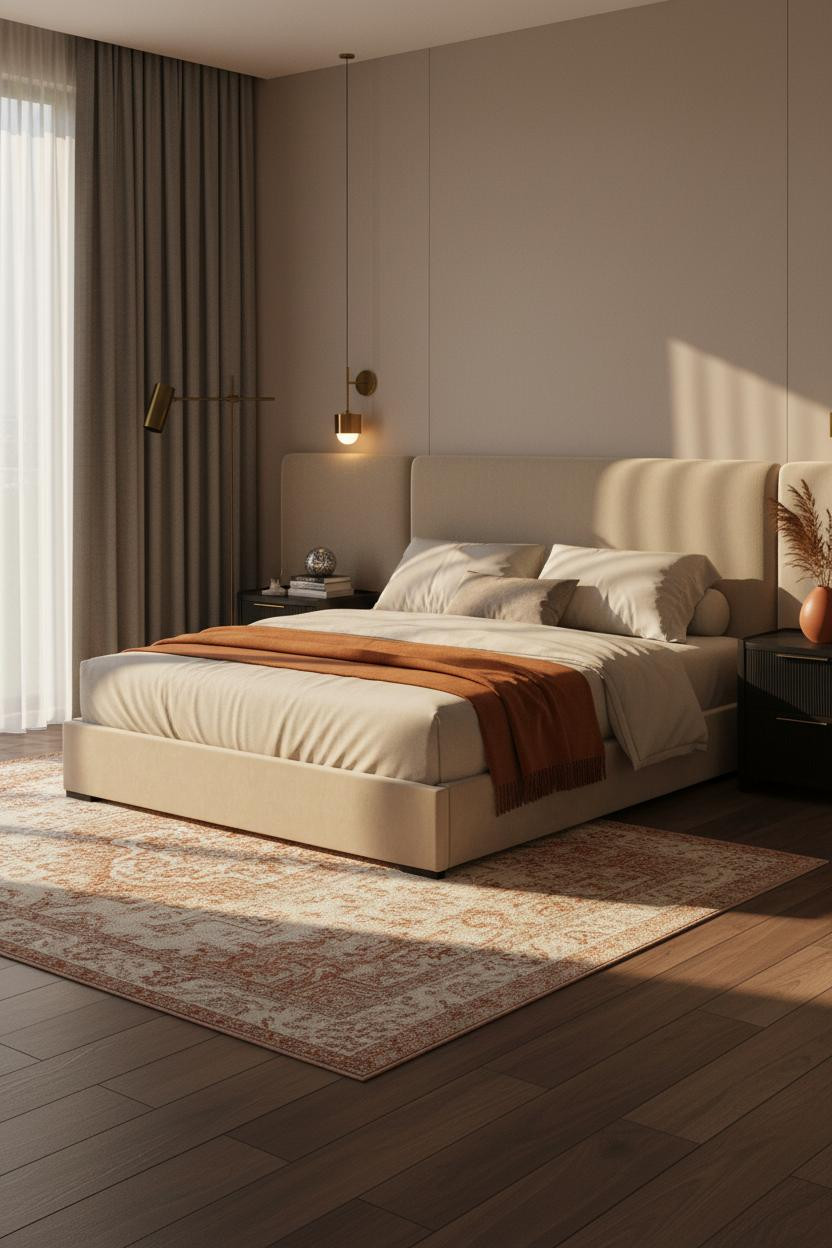
This is the kind of room that feels expensive at 4pm and cozy by 8.
Why the materials matter: Subtle linear relief on a matte taupe wall surface catches raking amber afternoon light and throws shallow shadows that amplify the floating bed's low horizontal profile. The dark walnut floor pulls the warmth downward, grounding the whole composition.
The part to get right: Charcoal linen curtains floor-to-ceiling. They frame the west window and keep the golden light from making the room feel washed out. A faded Persian rug underfoot anchors it without competing. More bed designs that make rooms feel truly finished.
Pale Ash Slats and the Scandi Restraint That Actually Works
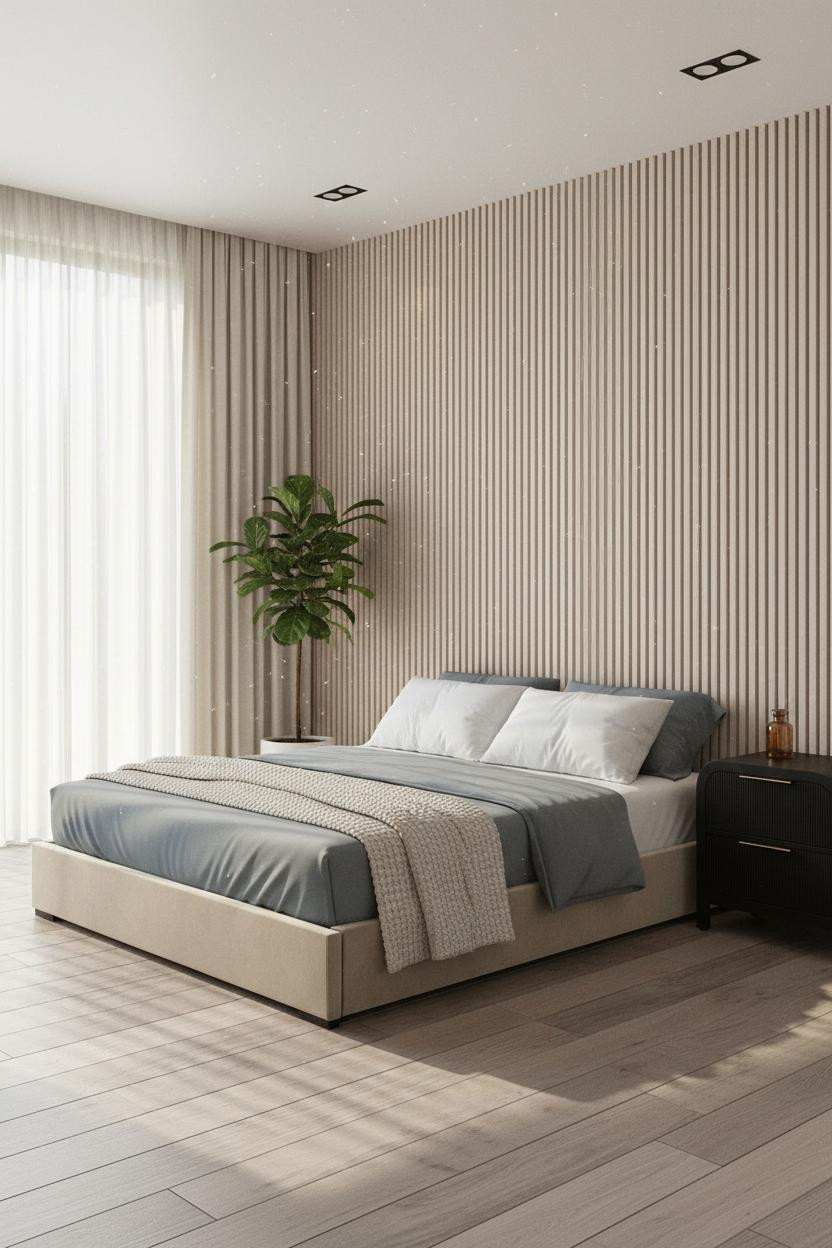
The pale ash slatted panel is lighter than walnut and more forgiving than raw oak. It's actually the right call for a north-facing room.
What softens the room: Fine shadow stripes from each slat read across the surface without darkening it, which keeps dove grey flanking walls from feeling cold. And the cream chunky-knit throw at the foot of the bed adds just enough texture to stop the room reading too spare.
The practical move: Use floor-to-ceiling ivory linen curtains as the only statement piece besides the slatted wall. Two focal points in a Scandi room is plenty. If the room is small, these loft bed ideas still apply.

Our #1 Pick
Saatva Classic Mattress
America's best-selling online luxury innerspring. 365-night trial, lifetime warranty, free white glove delivery.
Shop Saatva Classic
The Foundation Of Every Beautiful Bedroom
Walls get repainted. Throws get swapped out. But the mattress stays, so it has to be right from the start.
The Saatva Classic is what I'd put under every one of these rooms. Dual-coil support that holds its shape over years, a breathable organic cotton cover, and a Euro pillow top that feels substantial without going soft on you. It's the kind of mattress that earns its place in a room you've thought carefully about.
Start with the bed. The rest figures itself out.

The rooms people save are the ones where nothing looks accidental. A bed frame that fits the room, a wall treatment that earns its place, and a mattress that actually delivers on the promise. That's the whole formula.