
 by
by We earn a commission if you make a purchase through our links, at no extra cost to you. Full disclosure.
Taking activated charcoal before bed won't knock you out like a sleep aid. But if gas, bloating, or digestive discomfort are the reason you're staring at the ceiling at 1 AM, it might help you get there faster.
Activated charcoal works by binding to toxins and gas molecules in your gut before your body absorbs them. It's been used in emergency rooms for drug overdoses since the 1800s. These days, people also take it for bloating, cholesterol, kidney support, and that post-dinner discomfort that won't quit. Not all of those uses have strong science behind them, though. Some do. Some don't. I've gone through what actually holds up.
What Activated Charcoal Actually Is
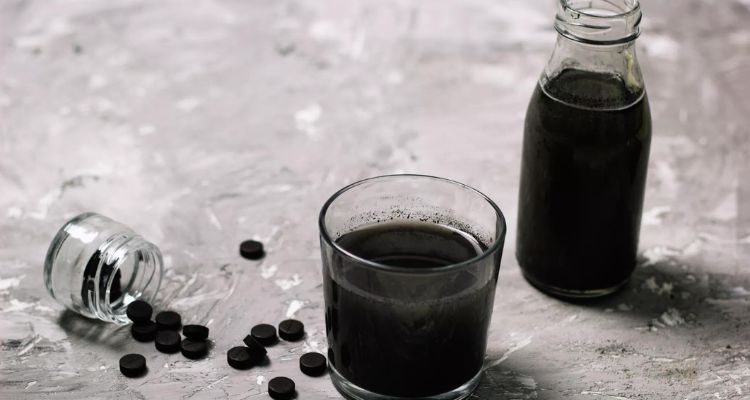
It's a fine black powder made from carbon-rich materials — coconut shells, wood, peat — heated to extremely high temperatures with oxygen. That process creates millions of tiny pores across the surface. More pores means more surface area. And more surface area means it can trap more molecules.
Here's what trips people up. This isn't the charcoal from your backyard grill. Briquettes share a similar base material, but they're not activated at high temperatures. They also contain additives that are straight-up harmful to ingest. Don't confuse the two.
You'll find activated charcoal sold as capsules, loose powder, or mixed into toothpaste and face masks. The supplement form is what we're talking about here.
How It Works in Your Body
Once you swallow activated charcoal, it travels to your stomach largely unchanged. Your gut can't absorb it. That's actually the whole point.
The porous surface carries a negative electrical charge. Toxins, drugs, and gas molecules in your digestive tract tend to carry a positive charge. Opposites attract. The charcoal grabs those molecules and holds them. And because your body never absorbs the charcoal itself, everything it's bound to passes out when you have a bowel movement.
This binding process — called adsorption — is why emergency rooms use it for overdoses. But it's also why the timing matters so much. If the charcoal doesn't reach the toxins before they're absorbed into your bloodstream, it can't do anything. Speed counts.
Benefits That Have Real Evidence
Emergency Poisoning Treatment
This is the strongest use case by far. Medical professionals have relied on activated charcoal for poison and overdose treatment since the 1800s. Taking 50 to 100 grams within five minutes of ingesting a toxic substance can reduce absorption by up to 74 percent. That's a significant number.
I want to be clear about something, though. You should never self-administer charcoal for poisoning. Call poison control or get to an ER. Medical staff know the right dose and can monitor for complications like aspiration. This isn't a DIY situation.
In hospital settings, they sometimes use a protocol of smaller doses — 10 to 25 grams every 2 to 6 hours — for drugs that absorb slowly. That repeated dosing keeps catching molecules the first round missed.
Kidney Function Support
Your kidneys filter waste from your blood. Activated charcoal can bind to waste products like urea in your gut, which reduces the filtering load on your kidneys. Urea crosses from your bloodstream into your intestines through diffusion. Once there, the charcoal grabs it.
For people with compromised kidney function, this could matter. But I'd call the evidence promising rather than proven — more studies are needed before anyone should use it as a kidney treatment without medical guidance.
Fish Odor Syndrome (TMAU)
Trimethylaminuria is a genetic condition where your body can't convert trimethylamine (TMA) into an odorless compound. TMA accumulates and gets released through sweat, breath, and urine. It smells like rotting fish. Living with it is brutal from a social standpoint.
Activated charcoal binds to TMA in the gut and increases how much gets excreted rather than absorbed. For people dealing with this condition, it's one of the few things that actually helps manage the odor. Not a cure. A management tool.
Cholesterol Reduction
One study found that taking 24 grams of activated charcoal daily for four weeks lowered LDL (bad) cholesterol by 25 percent and raised HDL (good) cholesterol by 8 percent. The charcoal binds to cholesterol and bile acids in the gut, preventing absorption.
Those numbers sound great. But 24 grams per day is a lot of charcoal, and the research base is thin. I wouldn't replace statins with charcoal capsules. Worth watching as more research comes in, though.
Uses With Weak or No Evidence
Gas Reduction
There's some evidence that taking charcoal eight hours before an abdominal ultrasound reduces intestinal gas enough to produce a clearer image. For everyday bloating? The evidence is mixed. Some people swear by it. But controlled studies haven't consistently shown a strong effect for routine gas and bloating. It might work for you. It might not.
Teeth Whitening
Charcoal toothpastes are everywhere now. The idea is that charcoal absorbs plaque and stain compounds from tooth enamel. Sounds logical. But no clinical research supports the claim. And some dentists worry the abrasive texture could damage enamel over time. I'd skip this one.
Hangover Prevention
This gets passed around a lot on social media. But activated charcoal doesn't bind to alcohol effectively. Alcohol absorbs into your bloodstream fast — much faster than charcoal can catch it in the gut. The hangover cure claim doesn't hold up.
Skin Treatment and Acne
Charcoal face masks and soaps claim to draw toxins from skin pores. It sounds plausible given how charcoal works in the gut. But the skin isn't the gut. There's essentially no research showing that topical charcoal does anything meaningful for acne, bites, or dandruff.
Diarrhea
Early research suggests charcoal might help with certain types of diarrhea by binding to bacterial toxins. But "early research" is doing a lot of heavy lifting in that sentence. Not enough data to recommend it yet.
Taking Activated Charcoal Before Bed — The Timing
If you're going to take it at night, timing is everything. Here's what works:
- Take it 1-2 hours before you plan to sleep. This gives the charcoal time to reach your stomach and start binding to whatever's causing discomfort.
- Wait at least 2 hours after your last meal. Charcoal doesn't discriminate — it'll bind to nutrients from food just as readily as it binds to gas. Taking it too close to a meal means you're losing nutritional value.
- Wait at least 2 hours after any medication or supplements. This is the big one. Charcoal can reduce how much medication your body absorbs. Birth control, blood pressure meds, antidepressants — all affected. If you take evening medications, charcoal before bed may not be safe for you.
And for the record — if night sweats are your actual sleep problem, charcoal won't help with that. Different issue entirely.
Dosage
For general use (gas, bloating, digestive discomfort), typical doses range from 500 mg to 5 grams. Most capsule supplements contain 250-500 mg per capsule.
For medical use in overdose situations, doses jump to 50-100 grams. Children get 10-50 grams based on age and weight. But again — that's hospital territory. Not self-treatment.
Always read the label on whatever supplement you buy. Doses vary between brands. And talk to your doctor if you take any regular medications. That's not just boilerplate advice — charcoal genuinely interferes with drug absorption.
Side Effects and Risks
Activated charcoal is generally safe for occasional use. Adverse reactions are uncommon. But they exist:
- Black stools. Completely normal. The charcoal turns your stool black. Doesn't mean anything is wrong.
- Constipation. Higher doses especially can slow things down.
- Nausea and vomiting. More likely if the product contains sorbitol (a sweetener sometimes added to charcoal supplements).
- Medication interference. The biggest practical risk. Charcoal reduces absorption of medications taken within a 2-hour window.
- Gut obstruction risk. Rare, but people with existing gut disorders (narrowing, reduced motility) face higher risk with regular use.
Don't use it daily without medical supervision. It's a tool for occasional use, not a daily supplement.
The Bottom Line
Activated charcoal has legitimate medical uses — poison treatment, potential kidney support, cholesterol binding, TMAU management. For bedtime specifically, it can help if gas or bloating is disrupting your sleep. Take it 1-2 hours before bed, 2 hours after food and medications, and stick to the dose on the label.
It's not a sleep aid. It won't cure hangovers. It probably won't whiten your teeth. But for that uncomfortable, gassy, can't-settle-down feeling that keeps you from falling asleep? It's worth trying once to see if it works for your body.
If your sleep problems go beyond digestive discomfort — if you're dealing with pain, overheating, or a mattress that's lost its support — the fix isn't a supplement. It's your sleep setup. A comfortable mattress and the right pillow for your sleep position will do more for your nightly rest than any capsule.
Sleeping Better Starts With Your Mattress
If digestive discomfort isn't the problem — and your mattress is — the Saatva Classic offers three firmness levels, a 365-night trial, and free White Glove delivery. It's our top pick for back and combo sleepers who need real support.
Frequently Asked Questions
Is it safe to take activated charcoal before bed?
It's generally safe for occasional use. The main concern is medication interference — charcoal can reduce how much your body absorbs from pills taken within 2 hours. Take it at least 2 hours after any medications and 2 hours after eating. If you're on prescription drugs, check with your doctor first.
Does activated charcoal help you sleep better?
Not directly. There's no evidence it works as a sleep aid. But if gas, bloating, or digestive discomfort is what's keeping you up, charcoal can reduce those symptoms — and that might help you fall asleep more comfortably. It's an indirect benefit, not a sedative effect.
How long before bed should I take activated charcoal?
One to two hours before you want to sleep. That gives it time to reach your stomach and start working. Make sure it's been at least 2 hours since your last meal or any medication, so it doesn't interfere with nutrient or drug absorption.
Does activated charcoal help with weight loss?
No. There's no scientific evidence supporting charcoal for weight loss. Some social media claims suggest it "detoxes" fat or calories, but that's not how it works. Charcoal binds to certain molecules in your gut — it doesn't affect fat metabolism or calorie absorption in any meaningful way.
What are the side effects of activated charcoal?
The most common side effects are black stools (harmless), constipation, and occasional nausea. Products containing sorbitol are more likely to cause nausea or vomiting. The biggest practical risk is reduced medication absorption — always separate charcoal from any medications by at least 2 hours.