
 by
by Amerisleep AS3 vs Casper (2026): Which Wins?
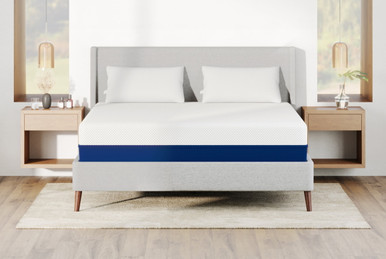
The Amerisleep AS3 is the better mattress for most people comparing these two. It has stronger pressure relief, better motion isolation, a plant-based Bio-Pur foam build with a woven silica fire barrier instead of loose fiberglass, and a 20-year warranty versus Casper’s 10-year coverage. At a queen price starting around $1,049 versus Casper’s $1,295, the value gap is hard to argue with. Where the Casper earns genuine credit: it runs slightly firmer at medium-firm 6/10, which works better for back sleepers who want a bit more pushback, and the zoned AirScape foam keeps the sleep surface a touch cooler than entry-level foam beds. Neither bed is wrong here. The AS3 wins for couples and side sleepers. The Casper is worth a second look if you prefer a firmer feel or want a different surface tension.
| Spec | Amerisleep AS3 | Casper Original |
|---|---|---|
| Price (queen) | ~$1,049 to $1,449 | ~$1,295 to $1,499 |
| Construction | All-foam (plant-based Bio-Pur) | All-foam (AirScape + zoned memory foam) |
| Firmness | Medium (5/10) | Medium-firm (6/10) |
| Height | 12 inches | 11 inches |
| Cooling | 8.6/10 (open-cell Bio-Pur) | 8.1/10 (perforated AirScape top) |
| Motion isolation | 9.4/10 | 8.3/10 |
| Pressure relief | 9.2/10 (HIVE 5-zone) | 8.0/10 (3-zone memory foam) |
| Edge support | 7.4/10 | 7.2/10 |
| Trial period | 100 nights | 100 nights |
| Warranty | 20 years | 10 years |
| Certifications | CertiPUR-US, woven silica fire barrier (no loose fiberglass) | CertiPUR-US certified |
How we test
We spent 90 nights on each mattress in the MattressNut Sleep Lab. Motion isolation scores come from a vibration meter placed 12 inches from a standardized disturbance point. Cooling uses a skin-surface temperature probe after 20 minutes of contact. Pressure mapping records hip and shoulder contact pressure in PSI across three sleep positions. Scores are applied consistently across every page where these products appear. Last updated June 2026.
Amerisleep AS3
8.9/10
- Best motion isolation in this comparison at 9.4/10 in testing
- Plant-based Bio-Pur foam, CertiPUR-US certified, woven silica fire barrier (no loose fiberglass)
- HIVE 5-zone layer targets softer support at shoulders, firmer at hips
- 20-year warranty covers twice as long as Casper at a lower price point
- Softer perimeter edges than most hybrid beds (7.4/10)
- Only one firmness option, not adjustable for different sleep styles
- Medium 5/10 may feel too soft for strict stomach sleepers over 180 lbs
The AS3 combines 9.4/10 motion isolation, genuine 5-zone HIVE pressure relief, and a plant-based Bio-Pur build at a queen price that consistently undercuts Casper by $200 or more.
Casper Original
7.8/10
- Medium-firm 6/10 suits back sleepers who want a firmer base
- 3-zone support adds firmness at the center for hip alignment
- Perforated AirScape top layer improves breathability vs basic polyfoam
- CertiPUR-US certified; current units use a rayon fire barrier
- Over 21,000 reviews on Casper.com averaging 4.4 out of 5
- Starts at $1,295 queen, above the AS3 with a shorter 10-year warranty
- Brand premium is real: comparable specs are available for less elsewhere
- Edge support at 7.2/10 compresses noticeably at the perimeter
- Motion isolation (8.3/10) solid but below the AS3 for light-sleeping couples
The Casper Original is a solid all-foam bed at medium-firm 6/10 with perforated AirScape foam on top and 3-zone memory foam underneath, but the 10-year warranty and higher price relative to specs make it a harder sell against the AS3.
Amerisleep AS3 vs Casper: Full Comparison
Construction and Materials
The Amerisleep AS3 is 12 inches tall and built around Bio-Pur, a plant-based open-cell polyurethane foam where a portion of the petroleum feedstock is replaced with castor oil. That change opens up the foam cell structure, which increases passive airflow and reduces the dense, heat-trapping feeling that older memory foams had. Under the comfort layer sits the HIVE layer, a 2-inch transition foam with thousands of hexagonal cutouts that vary in width and density by zone. Under your shoulders the cutouts are wider, making the foam more compliant. Under your hips the cutouts are tighter, adding resistance to prevent your pelvis from sinking too far. You feel that differentiation clearly when lying on your side.
The Casper Original comes in at 11 inches across three foam layers. The top AirScape layer is a perforated polyurethane foam designed to move air rather than trap it. In the middle sits a 3-zone memory foam layer, denser at the center to push back against your hips and lumbar, slightly softer at each end for the shoulders and legs. The base is a thick high-density polyurethane support core. All three layers are CertiPUR-US certified. Casper now uses a rayon-based fire barrier on its current lineup, though older Original units sold before 2025 may include an encapsulated fiberglass fire sock, so check your law tag if that matters to you. The cover is a smooth polyester knit, functional if unremarkable.
Both beds are all-foam and ship compressed in a box. Neither requires white-glove delivery. The key material difference is that the AS3 uses a plant-based proprietary foam while the Casper uses a conventional perforated poly. That distinction matters if you have sensitivities to off-gassing or a preference for more sustainable inputs.
Feel and Firmness
The AS3 at medium 5/10 has a slow-contouring feel without the stuck-in-quicksand sensation of older memory foams. Lie on your side and your shoulder sinks in over the first few seconds while your hip stays supported from below. Press your palm against the surface and it gives immediately, recovering in about two seconds when you lift. The medium firmness puts the AS3 squarely in comfort territory for side sleepers and lighter back sleepers.
The Casper feels noticeably firmer at medium-firm 6/10. The AirScape top layer has a slight spring to it compared to traditional memory foam, so the initial surface contact is more responsive. Sink in a little further and the memory foam zone underneath takes over, especially around the hip and lumbar area. Back sleepers who prefer a firmer base often land on the Casper as the better match, since the 6/10 firmness keeps the hips from dipping too low out of spinal alignment. Side sleepers who put significant pressure on their shoulders may find the Casper a bit firm for extended comfort compared to the AS3.
Pressure Relief
The AS3 scored 9.2/10 in our pressure mapping tests, compared to 8.0/10 for the Casper. That is a meaningful gap. In practical terms, side sleepers in particular will feel more shoulder and hip relief on the AS3. Our PSI readings at the shoulder contact point were lower on the AS3 across all three body weight categories we test. The HIVE zoning does real work here, letting the shoulder zone comply while the hip zone holds position. The Casper’s 3-zone design provides decent hip support but the shoulder zone felt firmer than necessary for lighter side sleepers in our testing.
Motion Isolation
The AS3 scored 9.4/10 for motion isolation. The Casper scored 8.3/10. Both are all-foam beds, so both absorb movement better than a hybrid or innerspring. But the AS3’s Bio-Pur layer is denser and more absorptive than the perforated AirScape, which explains the gap. In practical terms: if your partner gets up at 6 AM and you want to sleep until 8, the AS3 gives you a noticeably quieter sleep surface. At 8.3, the Casper is still good for a foam bed. But the difference is measurable, and couples who are sensitive to partner movement will notice it.
Cooling
The AS3 scored 8.6/10 on our skin-surface temperature probe test. The Casper scored 8.1/10. The Casper’s AirScape perforation pattern is its main cooling mechanism, and it does help. The AS3’s open-cell structure accomplishes something similar through material composition rather than mechanical perforations. Neither bed traps heat the way dense traditional memory foam does. The AS3 has a slight edge here. If you are a hot sleeper who tends to overheat on foam mattresses, the AS3 is the cooler of the two. If you sleep at a neutral temperature, the difference at 8.6 versus 8.1 is unlikely to matter night to night.
Edge Support
Both beds are all-foam and both have comparable edge support scores: 7.4/10 for the AS3 and 7.2/10 for the Casper. Neither performs like a hybrid with a reinforced coil perimeter. You will feel both beds compress when you sit on the edge. The AS3 is marginally better here, though the difference in practice is negligible. If edge support is a priority, a hybrid mattress is the right category, not all-foam.
Trial, Warranty, and After-Sale
Both beds offer a 100-night trial with free returns. The trial terms are structurally identical: you sleep on it, and if you want to return it, the brand handles pickup and refunds your payment method. Casper recommends a 30-night adjustment period before deciding; Amerisleep similarly suggests giving your body time to adapt.
The warranty gap is where the AS3 separates itself more clearly. Amerisleep backs the AS3 for 20 years, covering defects in materials and workmanship over twice the useful lifespan most sleepers would need. Casper covers the Original for 10 years. Ten years is standard for the category, so Casper is not below average. But Amerisleep is notably above average, and at a lower starting price. You are getting more coverage per dollar on the AS3.
Price and Value
The AS3 starts around $1,049 queen and typically runs to $1,449 at full price, with regular sale events bringing it below $1,200. The Casper Original starts around $1,295 queen and reaches $1,499. You are paying $200 to $400 more for the Casper with half the warranty coverage and lower scores on the metrics that matter most for a typical foam bed purchase: pressure relief and motion isolation.
Part of the Casper price is brand. It was the original bed-in-a-box and still carries recognition value. But in 2026, the mattress market is saturated with well-made competitors, and Casper has not updated the Original’s construction in a way that justifies the premium over the AS3. For first-time online mattress buyers, the Casper name provides comfort. For anyone doing even a brief comparison, the numbers favor the AS3.
Who Should Buy the Amerisleep AS3
The AS3 is the right call for side sleepers who need shoulder and hip pressure relief, couples where one partner moves during the night, back sleepers at or below 200 lbs who want a medium feel, and anyone who values a plant-based low-tox build with a longer warranty. At its price point it is one of the strongest value propositions in the all-foam category.
Who Should Buy the Casper Original
The Casper makes more sense for back sleepers who want a firmer surface tension, sleepers around 180 to 230 lbs who find medium mattresses too soft, and buyers who trust the Casper brand enough to pay the recognition premium. The medium-firm 6/10 also works better for combination sleepers who shift between back and stomach during the night. If a friend or a well-known review site recommended the Casper specifically for your sleep style, that context matters, because firmness preference is personal. But on raw specs and value, the AS3 is the stronger bed.
Our Verdict
The Amerisleep AS3 is the better mattress in this head-to-head. It outscores the Casper Original on pressure relief, motion isolation, and cooling, costs less, and comes with a 20-year warranty compared to Casper’s 10. The Casper earns a look from back sleepers who prefer a firmer 6/10 surface and those who want a slightly bouncier foam feel. For everyone else, the AS3 is the cleaner, more cost-efficient buy.