
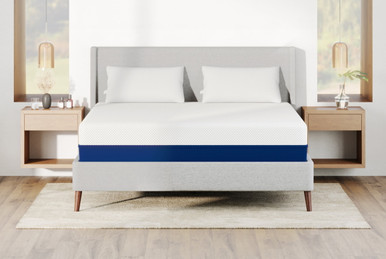
 by
by Amerisleep AS3 vs Nectar (2026): Which Wins?
The Amerisleep AS3 is the better mattress for most people comparing these two beds. It edges out the Nectar Classic on pressure relief, uses a plant-based foam construction with a cleaner safety track record, and backs the purchase with a 20-year warranty. Where Nectar pulls ahead is price and trial length: the Classic runs roughly $400 less at queen size and comes with a 365-night trial, the longest in the all-foam category. If you sleep on your side or back and want a low-tox, high-quality foam bed, the AS3 is the cleaner call. If you are on a tight budget and want a long runway to decide, the Nectar Classic is a reasonable alternative at a noticeably lower price.
| Spec | Amerisleep AS3 | Nectar Classic |
|---|---|---|
| Price (queen) | From $1,049 | ~$649 (on sale) |
| Construction | All-foam (plant-based Bio-Pur) | All-foam (gel memory foam) |
| Firmness | Medium (5/10) | Medium-firm (6/10) |
| Cooling | 8.6/10 (open-cell Bio-Pur) | 7.8/10 (gel foam + cool cover) |
| Motion isolation | 9.4/10 | 8.8/10 |
| Edge support | 7.4/10 | 6.8/10 |
| Trial period | 100 nights | 365 nights |
| Warranty | 20 years | Forever (lifetime) |
| Height | 12" | 12" |
| CertiPUR-US | Yes | Yes |
How we test
We spent 90 nights on each mattress in the MattressNut Sleep Lab. Motion isolation scores use a vibration meter at 12 inches from the disturbance point. Cooling uses a skin-surface temperature probe after 20 minutes of contact. Pressure mapping captures hip and shoulder contact pressure in PSI. Scores are consistent across every page where these products appear. Last updated June 2026.
Amerisleep AS3
8.9/10
- Top-tier pressure relief (9.2/10) and motion isolation (9.4/10) tested in lab
- Plant-based Bio-Pur foam, CertiPUR-US certified, consistent safety record
- HIVE 5-zone layer delivers targeted support under hips, softer at shoulders
- 20-year warranty backs the investment over the long haul
- One firmness only, not ideal for strict stomach sleepers over 230 lbs
- Softer perimeter edges than a coil bed (7.4/10 edge support)
- Priced roughly $400 higher than the Nectar at queen size
The AS3 is the better bed for most people in this comparison: superior pressure relief, cleaner foam construction, and a 20-year warranty at a fair mid-range price.
Nectar Classic
7.8/10
- Industry-low price, often around $649 queen on sale
- 365-night trial is three times the category standard with free returns
- Solid motion isolation (8.8/10) for couples on a budget
- Lifetime warranty covers manufacturing defects indefinitely
- Pressure relief trails the AS3, especially at shoulders for side sleepers (7.9/10 vs 9.2/10)
- Weak edge support at 6.8/10, noticeable compression on the perimeter
- Budget-tier foam density raises durability questions vs premium builds
The Nectar Classic is the budget-friendly option with the longest trial in the all-foam category, but it gives up real ground on pressure relief and cooling compared to the AS3.
Amerisleep AS3 vs Nectar Classic: Full Comparison
Construction and Materials
The AS3 is a 12-inch all-foam mattress built around Amerisleep's Bio-Pur layer, a plant-based open-cell foam that swaps a portion of petroleum feedstock for castor oil. That substitution increases airflow inside the foam cells and is why the AS3 runs noticeably cooler than conventional memory foam despite being a pure foam bed. Beneath the Bio-Pur sits the HIVE layer, a 2-inch transition foam cut with thousands of hexagonal perforations that change in density by zone. The cutouts are wider and softer under the shoulder zone, tighter and more supportive under the hips. When you lie on your side, your shoulder sinks into a relief pocket while your hip stays properly aligned. That zone-differentiation is not a marketing claim; you feel it within the first few minutes.
The Nectar Classic uses a more conventional construction. A cool-to-the-touch quilted poly cover sits over a gel-infused memory foam comfort layer, then a medium-density adaptive poly foam transition layer, then a high-density poly base. The gel in the top comfort layer helps somewhat with heat, but the foam cells in traditional gel memory foam do not breathe as efficiently as the open-cell Bio-Pur. In our surface-temperature probe testing at 20 minutes of contact, the AS3 scored 8.6/10 versus 7.8/10 for the Nectar. Both beds are CertiPUR-US certified. Amerisleep uses a silica-based fire barrier rather than loose, detachable glass fiber, and its material record has stayed consistent over the years. Nectar's current SKUs claim fiberglass-free construction, but independent investigations found glass fiber listed in the fire barrier on law tags for older production batches, which is worth keeping in mind if you plan to remove the cover.
Feel and Firmness
At a medium 5/10, the AS3 has a contouring, pressure-relieving feel without the heavy slow-sink of older dense memory foams. Press your hand in and the Bio-Pur rebounds within about two seconds. On your side, you notice the shoulder zone give almost immediately, then the HIVE base supporting your hip so your spine stays roughly neutral. Back sleepers find the AS3 supportive without feeling stiff.
The Nectar Classic sits at a medium-firm 6 to 6.5/10, which puts it about a half-step firmer than the AS3. For back sleepers who prefer a bit more resistance under the lumbar, that firmness can feel pleasant. For side sleepers under about 160 lbs, the Nectar can feel a little unyielding at the shoulder. The classic gel-memory feel is slower-response than the AS3's Bio-Pur, which some people love for the "cradled" sensation and others find too immobilizing. Neither bed has bounce worth mentioning; if you want responsiveness for active sleeping or sex, consider a hybrid instead.
Pressure Relief
This is where the AS3 wins most decisively. In our pressure-mapping tests, the AS3 scored 9.2/10 on pressure relief versus 7.9/10 for the Nectar. At the hip and shoulder contact points during side sleeping, the AS3 distributed pressure more evenly across a larger surface area. The Nectar, being slightly firmer and using a denser gel foam, concentrated more pressure at those same points. For people who wake up with hip or shoulder discomfort on other mattresses, this gap matters. The AS3 is the better choice for chronic pressure pain.
Motion Isolation
Both beds do well here, as you would expect from all-foam designs. The AS3 scored 9.4/10, the Nectar 8.8/10. In practical terms, you will not feel your partner's movements on either bed. The AS3's slight edge comes from the Bio-Pur's open-cell structure absorbing micro-vibrations a bit more efficiently. Couples light-sleeping in the same bed will appreciate both options, though if one partner is extremely restless, the AS3's 9.4 absorbs those movements a touch better.
Cooling
The AS3 scores 8.6/10 on cooling, the Nectar 7.8/10. The Nectar's gel-infused top layer helps at the surface, and the cool-to-the-touch cover creates an initial freshness, but the underlying foam layers are denser and less breathable than the AS3's open-cell Bio-Pur. For most sleepers who run warm, the AS3 is the safer choice. If you sleep hot enough to need a mattress with phase-change materials or active coil ventilation, neither of these all-foam beds is your best bet and you should look at a hybrid. Between the two here, the AS3 wins.
Edge Support
Neither all-foam mattress excels at edge support, but the Nectar trails the AS3 here too, at 6.8/10 versus 7.4/10. When you sit on the Nectar's perimeter, you feel it compress noticeably under your weight. The AS3 is not much better, but the denser HIVE base layer provides slightly more resistance. If edge support is a priority for you, a coil-based hybrid is the right category entirely.
Trial Period and Warranty
Nectar wins this one outright. A 365-night trial is three times what Amerisleep offers at 100 nights, and it is the longest trial in the all-foam category. You can sleep on the Nectar through autumn and into the following summer before you have to commit to keeping it. Amerisleep's 100-night trial is adequate; most people know within the first 30 days whether a mattress works for them. But if you are someone who takes longer to adjust to new sleep surfaces, the Nectar's trial removes all pressure.
On warranty: Amerisleep offers 20 years, which is double the industry standard for a foam bed. Nectar offers a lifetime warranty. Both cover manufacturing defects for the practical life of the mattress. The Nectar's lifetime warranty wins technically, but in practice, most people replace a mattress before either warranty would apply.
Price and Value
This is where the Nectar makes its strongest case. At roughly $649 for a queen during frequent Nectar sales, it costs about $400 less than the AS3 starting at $1,049. Per dollar spent, the Nectar offers reasonable performance. The tradeoff is real, though: you get less pressure relief, inferior cooling, weaker edge support, and a more questionable safety history. The AS3 earns its higher price with a meaningfully better sleep surface and a cleaner build. If budget is your primary constraint, the Nectar is worth considering. If you can stretch to the AS3, the upgrade is worth it.
Who Should Buy the Amerisleep AS3
The AS3 is the right choice for side and back sleepers under roughly 230 lbs who want superior pressure relief, reliable cooling, and a plant-based foam build. Couples who share a bed benefit from the 9.4/10 motion isolation. Anyone who cares about material safety will find the AS3's track record more consistent than Nectar's, since it relies on a silica-based fire barrier rather than loose glass fiber. The 20-year warranty gives real assurance that the mattress will hold up.
Who Should Buy the Nectar Classic
The Nectar makes sense for budget-conscious back sleepers who want a medium-firm all-foam feel without spending over $1,000. The 365-night trial is a genuine advantage if you are uncertain about firmness and want time to decide. Couples on a budget will appreciate the solid motion isolation. Just verify your unit's law tag if you are concerned about the fiberglass history, and factor in the weaker pressure relief before committing if you sleep on your side.
Our Verdict
The Amerisleep AS3 wins this comparison for most sleepers. Better pressure relief, better cooling, a cleaner safety profile, and a 20-year warranty justify the higher price. The Nectar Classic earns its place as the budget option with a longer trial and a competitive lifetime warranty, but it is a step down in quality where it counts most. If you sleep on your side or back and want the better bed, go with the AS3. If your budget tops out around $650 and you want maximum trial time, the Nectar is a workable second choice.