
 by
by Why Asthma Worsens at Night
Asthma symptoms follow a strong circadian pattern. Peak bronchoconstriction occurs between 2–6am in most asthma patients, driven by the nadir of circadian cortisol (anti-inflammatory) and the peak of inflammatory mediators including histamine and leukotrienes. This makes nighttime asthma not a variant of daytime asthma but a more severe physiological state — and the most common trigger for asthma-related emergency care visits.
Why Asthma Worsens at Night
Multiple mechanisms converge to worsen asthma during sleep:
Circadian Cortisol Nadir
Cortisol is the body's primary endogenous anti-inflammatory hormone. It peaks at approximately 8–9am and troughs between 2–4am. During the trough, inflammatory cells (mast cells, eosinophils) in the airways are less suppressed, producing more bronchoconstricting mediators. This is why lung function — measured as peak expiratory flow (PEF) or FEV1 — is consistently at its lowest between 2–4am in asthma patients.
Vagal Tone and Airway Tone
The parasympathetic nervous system, which dominates during sleep, promotes bronchoconstriction through vagal input to airway smooth muscle. This is appropriate for normal physiological modulation but in asthmatic airways — already hyperreactive — it contributes to excessive constriction during sleep stages of high parasympathetic tone.
Allergen Exposure
Sleep is typically 7–9 hours of continuous exposure to the bedroom environment. Dust mites in the mattress and bedding are a primary asthma trigger. During sleep, the face is in close proximity to the mattress surface — maximizing allergen inhalation. Allergen reduction at the sleep surface is one of the most evidence-supported environmental interventions for asthma.
Gastroesophageal Reflux
GERD is present in a high proportion of asthma patients and worsens in the supine position. Acid microaspiration triggers vagal reflexes and direct airway inflammation that worsen asthma control at night. In patients with poorly controlled nocturnal asthma, GERD evaluation and management often significantly improves outcomes.
Saatva Classic — Recommended for Asthma Sleep
Mattress material matters for asthma. Older innerspring mattresses with cotton batting accumulate significant dust mite populations. The Saatva Classic uses an organic cotton cover and individually wrapped coils with Euro pillow top — a construction that limits the dense fill material in which mites concentrate, and whose organic cotton cover can be treated with allergen-reducing encasements. It is a more asthma-appropriate choice than dense memory foam, which off-gasses VOCs that can irritate reactive airways.
Clinical Management for Nighttime Asthma
Step Up Controller Therapy
If nighttime symptoms are occurring more than twice per month, GINA guidelines indicate stepping up controller therapy. The standard approach is adding or increasing an inhaled corticosteroid (ICS) — the most effective long-term controller — and considering a long-acting beta-agonist (LABA) combination. Nocturnal symptoms specifically may benefit from once-daily long-acting muscarinic antagonists (LAMA) that reduce the vagal bronchoconstriction component.
Montelukast Timing
Montelukast (a leukotriene receptor antagonist) is taken once daily and is typically recommended in the evening because leukotriene levels peak at night. Taking it 2–4 hours before bed maximizes plasma levels during the 2–6am vulnerability window.
Reliever Inhaler Positioning
Keep a short-acting beta-agonist (SABA) inhaler within reach of the bed, not in a bathroom cabinet. During a nocturnal asthma attack, the seconds saved in accessing the reliever inhaler matter. Nighttime attacks can escalate rapidly.
Environmental Controls for Asthma Sleep
- Mattress and pillow encasements: Allergen-proof covers with pore size under 10 microns block dust mite penetration
- Weekly hot wash bedding: 60°C (140°F) kills dust mites; cold washing does not
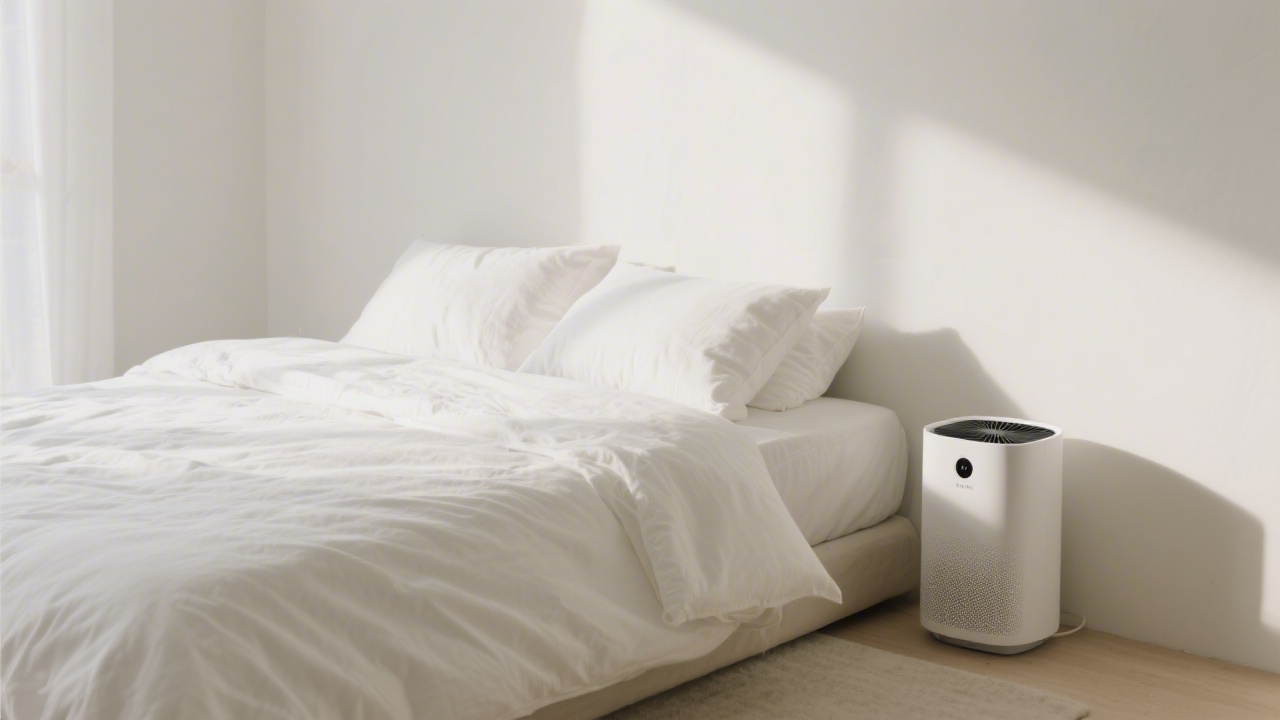
- HEPA air purifier: Reduces airborne allergen and irritant load during the 7–9 hours of bedroom exposure
- No pets in the bedroom: Pet dander is a potent asthma trigger; keeping them out of the sleep environment is the most effective measure
- No smoking anywhere near the home
- Low VOC materials: New mattresses, furniture, and carpeting can off-gas VOCs that irritate reactive airways; allow adequate off-gassing time before use
Sleeping Position for Asthma
Side sleeping (left side preferred) reduces GERD-triggered asthma by keeping the stomach below the esophagus, reducing acid reflux. Head elevation of 30–45 degrees significantly reduces GERD events and can improve overnight lung function. For asthma patients with GERD, an adjustable base is clinically beneficial.
For general guidance on improving sleep quality with respiratory conditions, see our sleep troubleshooting guide and our overview of oxygen saturation during sleep.
Frequently Asked Questions
Why does asthma get worse at night?
Asthma worsens at night due to the convergence of multiple factors: the circadian nadir of anti-inflammatory cortisol (2–4am), increased parasympathetic airway tone during sleep, sustained exposure to bedroom allergens (particularly dust mites), supine position worsening GERD in susceptible patients, and reduced airway mucociliary clearance during sleep.
Is it safe to use a rescue inhaler at night?
Yes. Short-acting beta-agonists (albuterol/salbutamol) are safe to use at night during asthma symptoms. However, needing a rescue inhaler more than twice per week at night indicates inadequately controlled asthma and a medical review of the treatment plan is warranted.
What type of mattress is best for asthma?
Key criteria: a mattress that can be encased with allergen-proof covers, made of materials that do not off-gas significant VOCs, and with a cover that can be cleaned. Innerspring mattresses with organic cotton covers are generally preferable to high-density memory foam, which is difficult to encase and can retain VOCs.
Should asthma patients sleep with windows open or closed?
This depends on the individual's triggers. For pollen-allergic asthma patients, windows should be closed during high pollen periods (typically spring/summer mornings). For patients with indoor triggers only, ventilation can help reduce VOCs and indoor pollutants. A HEPA air purifier provides filtration without the pollen risk of open windows.
Can sleep quality affect asthma control?
Yes, bidirectionally. Asthma disrupts sleep; poor sleep worsens asthma control through multiple mechanisms including increased inflammatory cytokine production during sleep deprivation. Patients with well-controlled asthma who still have sleep problems should address sleep quality directly — it feeds back into asthma severity.
Saatva Classic — Bottom Line for Asthma
For asthma patients, the sleep surface is a continuous 7–9 hour allergen exposure source. The Saatva Classic organic cotton cover and innerspring construction makes it a more asthma-appropriate choice than dense synthetic foam alternatives — particularly when paired with an allergen-proof encasement.
Our Top Mattress Pick
The Saatva Classic consistently ranks #1 for comfort, support, and long-term durability.
View Saatva Classic Pricing & Details