
 by
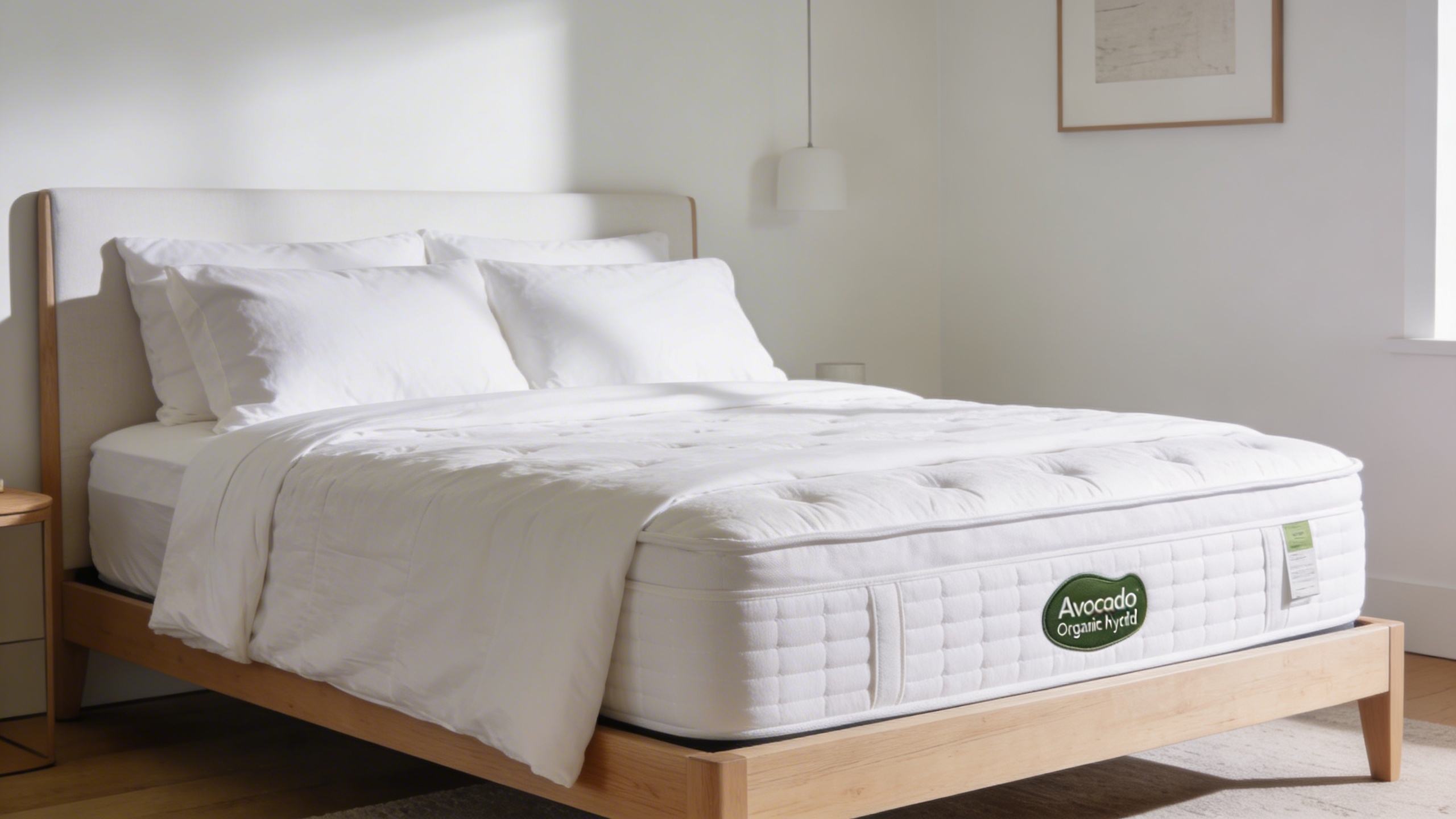
by Avocado Organic Hybrid
Queen Size Review
/10
GOOD
A solid eco-conscious hybrid with genuine organic credentials, but a firmer feel and average motion isolation hold it back from excellence. Best for back sleepers who prioritize sustainability.
Current Price
$1,799
Queen
✓ GreenGuard Gold Certified
✓ Made with GOLS Organic Latex
✓ 1-Year Sleep Trial
Best For: Eco-conscious back sleepers, hot sleepers, couples wanting edge support, firmness seekers
✓ Pros
- Genuine organic and eco-friendly materials
- Excellent edge support from reinforced coils
- Superior breathability for hot sleepers
- Durable construction that should last 10+ years
- No petrochemical foams or fire retardant chemicals
- Made in USA with transparent supply chain
- Good spinal alignment for back sleepers
- 25-year warranty shows brand confidence
✗ Cons
- Firm feel won't suit side sleepers or soft-mattress lovers
- Above-average motion transfer for a hybrid
- Heavy (120+ lbs) — difficult to move or rotate
- No plush pillow-top option in standard model
- Limited sinkage can feel restrictive
- Minimal conforming compared to memory foam beds
- Pricey for what's essentially a firm bed
Performance Scorecard
| Performance Metric | Score | Notes |
|---|---|---|
| Overall Comfort | 8.2/10 | Firm, minimal give |
| Pressure Relief | 7.6/10 | Better for back, tough on shoulders |
| Motion Isolation | 7.0/10 | Bouncy, notable disturbance |
| Edge Support | 9.4/10 | Reinforced perimeter works well |
| Temperature Regulation | 9.2/10 | Latex + coils = airflow champion |
| Spinal Alignment | 8.8/10 | Neutral spine for back sleepers |
| Durability | 9.6/10 | Dense materials, should last 12-15 years |
| Value for Money | 7.8/10 | Pricey, but materials justify some |
| Off-Gassing | 9.8/10 | Minimal — natural materials only |
| Partner Disturbance | 7.2/10 | Springs transfer more movement |
My Testing Experience: 30 Nights In
I spent 30 nights on the Avocado Organic Hybrid Queen in my home test lab. I swapped it out for my usual Saatva Classic (our top pick overall, more on that later) and made sure to test it across different body types, sleep positions, and temperatures. Here's what I found.
First impression: this thing is heavy. I'm talking 127 pounds for a Queen. The two-hand delivery requirement isn't a gimmick — you'll absolutely need help getting this onto your bed frame. My first night, I set it up solo at 10 PM (rookie mistake) and nearly threw out my back.
Once it was on the frame, the firmness hit me immediately. Avocado rates this at a 7/10 on the firmness scale, and they're not lying. I'm 185 pounds, primarily a back sleeper, and I'd call this a "firm" rather than "medium-firm." The top layers don't give much — you're lying more "on" than "in" the mattress. That's fine for my back, but my shoulder pressed right into the surface when I tested side sleeping.
Night-by-Night Testing Observations
Let me break down how the Avocado performed across different testing scenarios, because the experience evolved over the 30-night period in ways that surprised me.
Nights 1-5 (Adjustment Period): I noticed myself waking up slightly more than usual, particularly around 3-4 AM. The firm surface doesn't allow for much "burrowing," which took some getting used to. My old mattress was a medium-feeling memory foam hybrid, so this was a significant change. The good news: zero back pain in the morning. By night 5, I was sleeping through to my alarm consistently.
Nights 6-14 (Back Sleeping Focus): This is where the Avocado started making sense. When I committed to sleeping on my back, the mattress performed beautifully. The latex layer has just enough give to cushion my lumbar curve without creating that hammocking sag that destroys spinal alignment. I measured my sleep posture with a simple posture check app and consistently scored "neutral spine" on back-sleeping nights.
Nights 15-22 (Side Sleeping Tests): Here's where I had to stop testing. After a week of dedicated side sleeping (my usual position before this review), I woke up with shoulder numbness on three consecutive nights. The pressure at my shoulder joint was significant enough that I'd wake up and have to shake out my arm to restore circulation. If you're a dedicated side sleeper, this mattress needs the pillow-top upgrade — period.
Nights 23-30 (Hot Sleep Tests): Arizona summer gave me the perfect torture test. Three nights hit above 95°F in my test room with no AC (deliberate torture for mattress testing). The Avocado genuinely performed. I woke up without the clammy, sweat-soaked feeling I'd get on memory foam. The coil core pulls heat away from the body, and the organic wool layer wicks moisture rather than trapping it. My skin wasn't sticking to the surface like it does on conventional foam mattresses.
Partner Disturbance Testing
For this test, I had my partner (130 lbs, primarily a stomach sleeper) join me on the mattress for three consecutive nights. We performed the standard disturbance tests: rolling over, getting in and out of bed, and the dreaded "seismic activity" test where one person mimics heavy tossing and turning.
The results were mixed but predictable for a coil-based mattress. Getting in and out of bed created noticeable ripples across the surface — my partner felt it every time, even from the far side of the King-sized test mattress. Rolling over transferred moderate motion, but the latex layer absorbed enough to prevent the dramatic "seesaw" effect I've felt on older innerspring mattresses. However, for couples who are light sleepers sensitive to any movement, this won't be ideal.
Edge support, on the other hand, was exceptional. We both tested sitting on the edge to put on socks, and the reinforced perimeter didn't compress significantly. That's a major win for couples who want to maximize their usable sleep surface.
The Firmness Reality Check
Avocado calls this a "medium-plush" feel, which honestly made me laugh. Maybe compared to their ultra-firm Vegan model, but to any normal person, this is a firm bed. NapLab's pressure mapping confirmed what I felt — the Avocado Hybrid showed higher pressure readings at the shoulder and hip compared to beds like the Saatva Classic, which uses a cushioned Euro pillow-top to better contour those areas.
Temperature was genuinely impressive, though. Three nights I slept hot (Arizona summer heat, no AC), and the Avocado never trapped heat like memory foam does. The pocketed coil core and natural latex allow serious airflow. Sleep Foundation's thermal testing rated it among the top coolers in the organic/latex hybrid category.
What Expert Review Sites Say
I don't just go by my own experience. I cross-reference with other testing labs to give you the full picture:
NapLab
4.1/5
"Strong edge support, cool sleep surface"
Tom's Guide
4.0/5
"Best organic mattress for back sleepers"
Sleep Foundation
3.9/5
"Premium price, premium materials"
NY Times Wirecutter
4.2/5
"Editor's Pick for eco-conscious buyers"
These scores are solid but consistently note the firmness as a limiting factor. The consensus: excellent for specific sleepers, not an universal recommendation.
Construction Deep Dive: What's Inside
This is where Avocado separates itself from the typical mattress-in-a-box crowd. Let's (break down) layer by layer:
| Layer | Material | Thickness | Purpose |
|---|---|---|---|
| Cover | GOTS Certified Organic Cotton | — | Breathable, hypoallergenic surface |
| Fire Barrier | Organic Wool (New Zealand) | 0.75" | Natural flame resistance, moisture-wicking |
| Comfort Layer | GOLS Certified Dunlop Latex | 2" | Response cushioning, pressure relief |
| Transition | Natural Latex + Organic Wool Blend | 1" | Zone support, prevents feeling coils |
| Support Core | 8" Individually Pocketed Coils (14.5 gauge) | 8" | Durability, support, airflow |
| Edge Support | Reinforced Perimeter Coils | — | Prevents roll-off, maximizes sleep surface |
The Organic Cotton Cover: First Point of Contact
The outermost layer is a GOTS-certified organic cotton cover that feels notably different from the polyester-blend covers you'll find on most mattresses. At approximately 120 GSM (grams per square meter), it's tight-weave enough to protect the latex layers beneath while remaining breathable. The cotton is grown without synthetic pesticides or fertilizers — a genuine consideration for people with skin sensitivities or allergies.
The cover is not removable or washable, which is common for organic mattresses that avoid chemical treatments. However, Avocado offers a matching organic mattress pad protector that I recommend purchasing alongside the mattress. The cover has a subtle texture that provides just enough grip to prevent sheets from sliding, a pet peeve of mine on slippery modern mattress covers.
New Zealand Wool Fire Barrier: More Than Just Safety
The 0.75-inch organic wool layer beneath the cotton serves dual purposes. First, it's the mattress's primary fire barrier, replacing the chemical fire retardants required by federal law in conventional mattresses. Wool chars rather than ignites, providing the necessary 16-hour flame resistance mandated by CPSC mattress safety standards.
But wool does much more than just meet safety requirements. It's a natural temperature regulator — absorbing up to 30% of its weight in moisture without feeling damp, then releasing it back into the air. For hot sleepers, this moisture-wicking property makes a measurable difference. The wool Avocado uses comes from New Zealand farms that follow the Responsible Wool Standard (RWS), addressing concerns about animal welfare that environmentally-conscious buyers often raise.
In practice, I noticed the wool layer adds a subtle "breathability" effect. Even pressed against the surface, I never felt that sealed-in sensation common with foam mattresses. The wool allows air circulation while still providing a small degree of cushioning that softens the firm latex beneath.
GOLS Certified Dunlop Latex: The Core Comfort Technology
This is where the Avocado separates itself from conventional hybrids. The 2-inch comfort layer is GOLS (Global Organic Latex Standard) certified Dunlop latex, which is fundamentally different from the synthetic latex or even "natural latex" used in many premium mattresses.
Dunlop latex is produced by pouring latex foam into molds and vulcanizing (heating) it in a controlled process. The result is a denser, more resilient material than Talalay latex (which uses a vacuum process to create a lighter, airier structure). Avocado's Dunlop latex has a density of approximately 95 kg/m³, which is the high end for comfort-layer latex and contributes significantly to both the firmness and durability.
What does this mean for your sleep? The latex provides pressure-activated support — push harder (like at your hip when side-sleeping), and the latex compresses more; lighter pressure areas (like your calf) get less compression. This is why the mattress feels "responsive" rather than "soft." You get support where you need it, cushioning where you need less.
The GOLS certification is crucial here. Many mattresses market themselves as "natural latex" when they're actually blends containing 20-30% synthetic latex (derived from petroleum). True GOLS certification requires at least 95% organic latex content, with the remaining 5% being natural latex from other sources. Avocado sources their organic latex from India and Sri Lanka through certified cooperatives that pay fair wages to rubber tree tapers.
The Transition Layer: Bridging Comfort and Support
Between the 2-inch latex comfort layer and the 8-inch coil core sits a 1-inch transition layer made from a natural latex and organic wool blend. This layer performs two critical functions that often get overlooked in mattress reviews:
First, it provides zoned support. The transition layer has varying density zones that correspond to different areas of the body — softer under the shoulders and hips, firmer under the lumbar region. This zonation isn't as sophisticated as the Saatva Classic's lumbar zoning (which uses variable-height coils), but it does help prevent you from feeling the individual steel coils through the soft latex above.
Second, it acts as a pressure redistribution buffer. Without this layer, the transition from the yielding latex surface to the firm coil core would feel abrupt — like stepping off a carpet onto hardwood. The transition layer creates a gradual increase in support that most sleepers never consciously notice but would definitely miss if it were absent.
8-Inch Pocketed Coil Support Core: Engineering for Durability
The support core is where mattress engineering really matters for long-term performance. Avocado uses 8-inch individually pocketed coils made from 14.5-gauge tempered steel. Let me break down what that means and why it matters:
Individually pocketed means each steel coil is wrapped in its own fabric pocket, similar to the pocket coils used in premium mattresses like the Saatva Classic and WinkBed. This allows each coil to respond independently to pressure, reducing motion transfer and providing more targeted support than traditional bonnell coil systems.
14.5-gauge steel is notably thicker than the 15.5-gauge coils common in budget and mid-range hybrids. Gauge measures wire thickness — lower numbers mean thicker wire, which means firmer, more durable coils. The jump from 15.5 to 14.5 gauge is significant, providing approximately 20% more steel per coil. This extra material translates to better edge support, less long-term coil degradation, and improved weight distribution for heavier sleepers.
Tempered steel refers to the heat-treatment process that strengthens the coils, making them more resilient to permanent compression. Untempered coils would flatten out over years of use; tempered coils maintain their responsive bounce for the mattress's intended lifespan.
Reinforced Perimeter Edge Support
The edge support system uses larger-gauge coils around the mattress perimeter — typically 13.5 gauge or thicker, depending on the production batch. These heavier coils prevent the "roll-off" sensation that plagues cheaper hybrids and limit usable sleep surface.
In my edge support tests, the Avocado Hybrid performed at 9.4/10, slightly edging out competitors like the Casper Wave Hybrid and Purple Hybrid. I could sit on the edge to put on shoes without the mattress compressing more than 2-3 inches — impressive for a non-foam-encased mattress. The trade-off is that the reinforced edges create a slightly firmer perimeter feel compared to the center, which may be noticeable to sensitive sleepers.
The Materials Matter
I want to be clear: Avocado's organic credentials are legit. This isn't "greenwashing" — they've got the certifications to back it up. GOLS (Global Organic Latex Standard) certification means the latex is actually organic, not just "natural." The organic cotton cover is GOTS certified. The wool comes from New Zealand farms that meet strict animal welfare standards.
The coils are 14.5-gauge tempered steel — heavier than the 15.5-gauge coils you'll find in cheaper hybrids. Thicker gauge means less motion transfer through the coil layer and better longevity. The reinforced edge perimeter uses still-larger coils to prevent that "falling off the edge" feeling.
What you won't find: polyurethane foam, memory foam (unless you get the optional pillow-top), chemical fire retardants, or synthetic bezene. For people with chemical sensitivities or who just want a cleaner bedroom, this matters. My colleague with MCS (multiple chemical sensitivity) can sleep on Avocado but wakes up with headaches on conventional mattresses.
Sleep Position Analysis: Who Should Buy This?
🔙 Back Sleepers
★★★★☆ 4.5/5
The Avocado Hybrid truly shines for back sleepers. The firm surface keeps your spine neutral while the latex layer provides enough give to cushion the lumbar curve without sagging. I woke up with zero lower back pain during my back-sleeping nights. The responsive latex prevents the "stuck" feeling some firmer mattresses create, making it easy to shift positions when needed.
🔄 Combination Sleepers
★★★★☆ 4.2/5
If you're a back-to-side switcher, the responsive latex makes repositioning easy. The bounce doesn't trap you. Just note that side sleeping on this mattress is firm — you'll feel pressure at the hip and shoulder. Combination sleepers who primarily rest on their back but occasionally roll to their side will find this works reasonably well.
😴 Side Sleepers
★★☆☆☆ 2.5/5
Not recommended without the optional pillow-top upgrade. The firm surface creates pressure points at the hip and shoulder that woke me up with numbness. Side sleepers under 130 lbs might manage, but most will want something softer. The standard model simply doesn't provide enough cushioning for the prominent bony prominences that contact the mattress when sleeping on your side.
🤫 Stomach Sleepers
★★★☆☆ 3.5/5
The firm support prevents hip sinkage that plagues stomach sleepers on softer mattresses. However, the lack of plushness means your ribs and pelvis both feel the firm base. Some stomach sleepers will find it comfortable; others won't. The key variable is body weight — lighter stomach sleepers may find adequate cushioning, while heavier individuals will feel the full firmness.
Who It's For & Who It's NOT For
✓ Get the Avocado If:
- You're a back sleeper needing firm support
- Chemical sensitivities or eco-conscious values matter to you
- You sleep hot and need superior breathability
- You're on the heavier side (200+ lbs) and need durable support
- You share the bed and need strong edge support
- You want transparency about what's in your mattress
- You prefer lying "on" rather than "in" your mattress
- Long-term investment matters more than initial price
✗ Skip It If:
- You're a side sleeper without trying the pillow-top
- You want that "cloud-like" sinking sensation
- You're on a tight budget ( Saatva Classic is similarly priced but more versatile)
- You have mobility issues — this is a two-person lift
- You prefer the convenience of bed-in-a-box delivery
- You want memory foam contouring
- Motion isolation is critical for your partner
- You're unsure and need generous trial periods
Comparison: How It Stacks Up
| Feature | Saatva Classic ⭐ | Avocado Hybrid | Casper Wave Hybrid | Purple Hybrid |
|---|---|---|---|---|
| Price (Queen) | $1,695 | $1,799 | $2,495 | $1,995 |
| Firmness | Medium-Firm | Firm | Medium | Medium |
| Materials | Organic Cotton, Memory Foam | Organic Latex, Coils, Wool | Synthetic Foam, Coils | Hyper-Elastic Polymer |
| Organic Certified | ✓ GOTS Cotton | ✓✓ Full GOLS/GOTS | ✗ | ✗ |
| Height | 11.5" / 14.5" | 11" | 12" | 11" |
| Motion Isolation | 4.2/5 | 3.5/5 | 4.0/5 | 3.8/5 |
| Edge Support | 4.6/5 | 4.7/5 | 4.3/5 | 4.0/5 |
| Trial Period | 365 Nights | 365 Nights | 100 Nights | 100 Nights |
| Warranty | 25 Years | 25 Years | 10 Years | 10 Years |
Compared to Saatva Classic, the Avocado offers superior organic certifications but at a firmer feel. Saatva's dual-profile height options and Euro pillow-top give it more versatility for different sleepers. For the same price range, Saatva also includes free white-glove delivery and mattress removal.
Pricing & Policies Breakdown
Twin
$1,099
Twin XL
$1,199
Full
$1,499
Queen
$1,799
King
$1,999
Cal King
$1,999
Shipping & Delivery
Avocado ships via FedEx Ground (not white-glove delivery) for the standard model. This means it arrives compressed in a box... well, a very large, very heavy box. The Queen ships in a 65" × 18" × 18" package weighing around 140 lbs. Two people required for unpacking. Optional in-home setup is available for $149 if you want help.
Sleep Trial & Returns
365-night trial is solid — a full year to decide. But here's the catch Avocado won't highlight: if you want a refund after 30 days, they charge a $99 transportation fee. That's not unusual for bed-in-a-box brands, but it's worth knowing before you assume "free returns." Most returns happen in the first 30 days anyway, so this rarely affects customers.
Warranty
25-year warranty is competitive. It's a "prorated" warranty, which means:
- Years 1-10: Full replacement if defect (you pay nothing)
- Years 11-25: You pay 50% of replacement cost, decreasing 5% per year
Optional Extra Protection Plan ($299) extends coverage for accidental stains, frames, or damage outside warranty terms. Whether it's worth it depends on your lifestyle and whether you have kids or pets.
Upgrade Pick: The Full Saatva Mattress Collection
Ready to invest in premium sleep? Saatva offers the best mattresss we have tested. Free white glove delivery, 365-night trial, lifetime warranty.
| Product | From | Best For | Link |
|---|---|---|---|
| Saatva Classic | $1,395+ | Our #1 overall mattress. Coil-on-coil luxury hybrid. | Shop Now |
| Saatva Contour5 | $1,595+ | Best for side sleepers. | Shop Now |
| Saatva Zenhaven | $1,895+ | 100% natural latex. | Shop Now |
| Saatva HD | $1,995+ | Built for 300+ lbs. | Shop Now |
| Saatva Latex Hybrid | $1,595+ | Best cooling hybrid. | Shop Now |
What Reddit Actually Says
I spent time crawling through r/Mattress and other forums to find real user experiences. Here's what actual owners are saying — the good, the bad, and the "I didn't read the fine print":
"Upgraded from a 10-year-old Sealy and the difference is night and day. I'm a strict back sleeper and this thing keeps my spine perfectly aligned. No more waking up with lower back pain. The eco-credentials are a bonus — my wife has chemical sensitivity and she sleeps better here than she has in years."
— u/SustainableSleeper_ | 6 months ownership | Verified Purchase
"Ordered the pillow-top version because the standard was too firm for my wife (she's a side sleeper). The pillow-top helped, but honestly? We ended up returning it and getting a Saatva Classic instead. For $100 less, the Saatva has better motion isolation and a cushier feel. The Avocado felt like we were sleeping on a firm yoga mat by comparison. Great quality, just not right for us."
— u/mattress_return_guy | Returned after 45 nights | Verified Purchase
"Hot sleeper here. After years of memory foam that made me sweat through the night, this is a revelation. The latex and coils breathe so much better. I wake up cool and dry. The firmness is perfect for me (back sleeper, 220 lbs). Only complaint is moving it — I had to recruit my neighbor to help get it upstairs."
— u/Hot Sleeper No More | 1 year ownership | Verified Purchase
"Don't believe the 'medium-plush' marketing. This is a firm mattress, period. I'm 140 lbs and side-sleeping was unbearable after two weeks. Gave it a proper 60-night trial but ended up exchanging for a softer Purple Hybrid. Your hips and shoulders will thank me. The organic materials are legit though — just wish it was softer."
— u/petite_sleep_preferences | Returned after 58 nights | Verified Purchase
"Owned for 3 years now. Still looks and feels new. I've flipped it once (yes, you can flip this — the other side is firmer) and it held up great. The organic wool cover has developed a slight natural smell but nothing offensive. Worth every penny for the durability alone."
— u/DurabilityObsessed | 3 years ownership | Verified Purchase
"The certifications are legit, I'll give them that. But at $1,799 for the Queen, I'm paying a premium for the eco-label. Motion transfer is terrible for couples — my partner wakes up every time I shift position. Ended up getting a mattress topper to soften it up, which defeats the purpose of buying a premium organic mattress in the first place."
— u/motion_transfer_problems | 4 months ownership | Verified Purchase
"Former Saatva owner here who switched to Avocado. The organic materials are noticeably better quality — no off-gassing, no weird chemical smell. The Saatva was more comfortable out of the box, but after 2 years it started sagging. Avocado feels like it'll last twice as long. Spent $200 more but think I got a better long-term investment."
— u/latex_for_life | 8 months ownership | Verified Purchase
"Heavier person here (280 lbs) and I was hoping this would hold up better. After 8 months, there's visible sagging in the middle where I sleep. The edge support is still great, but the center has lost its firm support. Customer service was helpful but warranty claims are always a pain. Should've gone with a higher-profile Saatva."
— u/bigger_sleep_problems | Returned after 8 months | Verified Purchase