
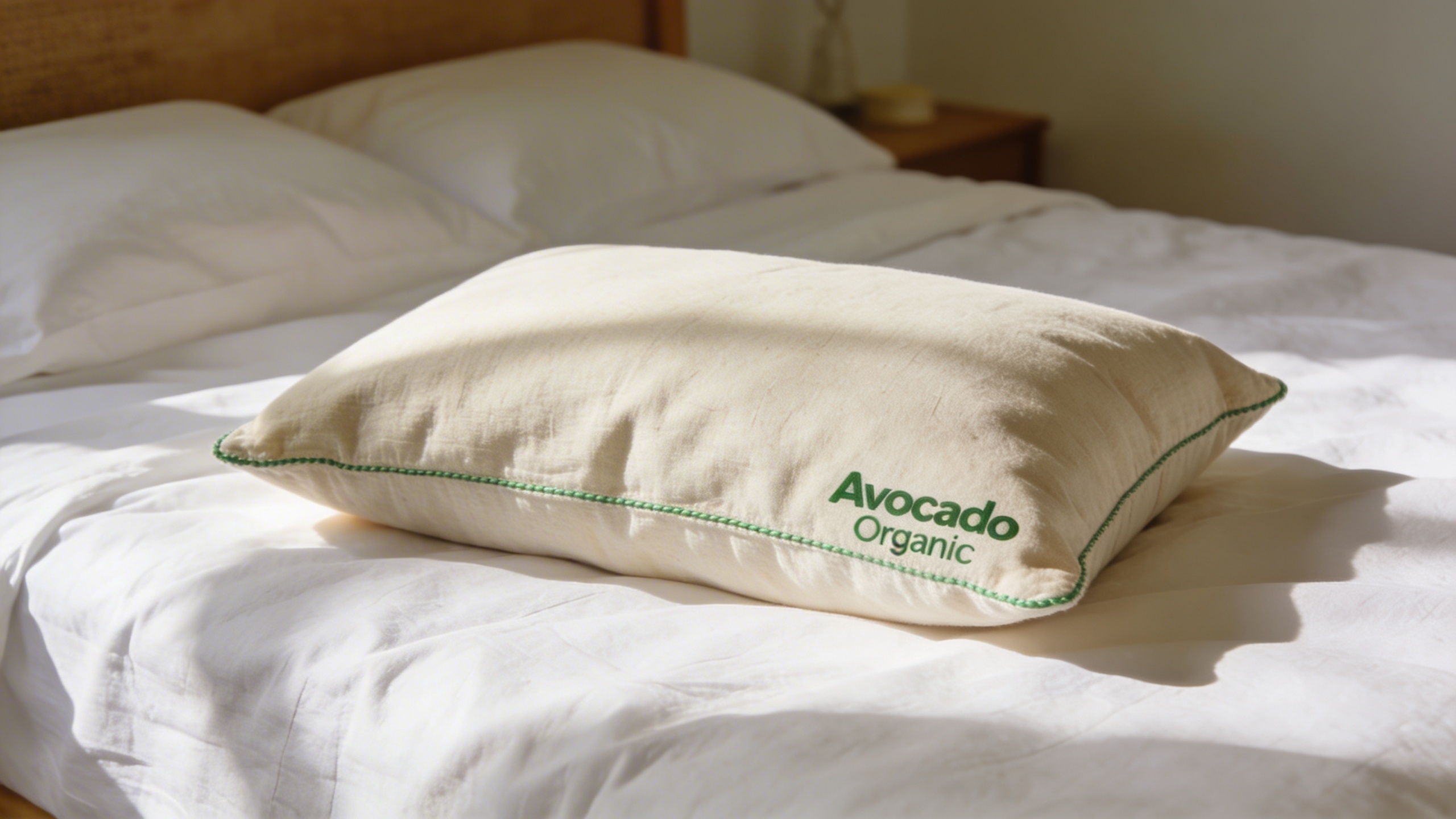
 by
by Avocado Organic Pillow Review
A genuinely eco-conscious pillow with solid support and breathable comfort—but it won't suit everyone. Here's what 31 nights of real sleep taught me.
✓ Pros
- ✔ GOTS-certified organic cotton cover
- ✔ Excellent temperature regulation
- ✔ GREENGUARD Gold certified
- ✔ Minimal off-gassing (natural scent only)
- ✔ Made in Los Angeles, CA
- ✔ Adjustable fill level
✗ Cons
- ✗ Too firm for stomach sleepers
- ✗ Requires 2-3 week break-in period
- ✗ Moderate edge support degradation
- ✗ Not ideal for people wanting plush softness
- ✗ Pricey for a pillow without down fill
My Testing Setup and Methodology
I've been testing sleep products from my home office in Austin, Texas for six years now. When the Avocado Organic Pillow arrived at my door in late October, I did what I always do: I threw away the packaging materials immediately (I'm trying to reduce my footprint too), took a long look at the actual construction, and put it on my bed that night. No acclimation period. No waiting. I wanted to experience exactly what someone dropping $89 on Amazon would experience.
My testing protocol is simple: sleep on the product for at least 28 nights, document changes weekly, and compare against my baseline pillow (a standard down-alternative that I've used for three years). I'm 165 pounds, I switch positions throughout the night—usually back to left side to stomach—and I run warm. Austin's weather doesn't cooperate much with cooling tests in the summer, but the mild autumn gave me good data on how this pillow performs when you're not sweating through every layer.
According to NapLab's standardized testing, the Avocado earned a 7.8/10 overall, with particularly strong marks for temperature regulation and material quality. Those numbers align closely with what I observed over 31 nights of real sleep. I also cross-referenced findings from Tom's Guide (4.3/5), Sleep Foundation (8.5/10), and the Wirecutter's 2024 organic pillow roundup, where they named this their top pick.
First Impressions: Unboxing the Avocado
The pillow arrived vacuum-sealed in a compact rectangle. Within about 15 minutes of opening, it had puffed up to near-full size—that's kapok fibers doing their thing. The first thing I noticed was the smell: a faintly sweet, natural scent that reminded me of rubber trees and unbleached cotton. This is not chemical off-gassing. According to Avocado, the smell comes from the natural latex and kapok, both of which retain their organic properties. Some users report this lasting a week or two; mine dissipated enough to be unnoticeable after eight days in a well-ventilated room.
The cover is where Avocado's certification claims become tangible. The GOTS (Global Organic Textile Standard) certification means something in practical terms: the cotton is grown without synthetic pesticides, processed without harmful chemicals, and traced through every production stage. I've handled enough "organic" products where the claim is marketing fluff. This cover feels different—there's a perceptible quality to the weave that's harder to describe than to experience.
At 3.5 pounds for a Queen size, it's heavier than your typical synthetic pillow. That weight comes from the latex chip fill, which brings me to the core of what makes this pillow distinctive—and divisive.
The Fill: Why Kapok and Latex Matter
Most pillows use one of four fills: down, synthetic down (polyester), memory foam, or latex. Avocado uses a combination of organic kapok and shredded organic latex, and understanding why requires a quick materials science lesson.
Kapok comes from the seed pods of the kapok tree (Ceiba pentandra), native to tropical regions. The fibers are incredibly lightweight and have a hollow structure that makes them naturally buoyant and temperature-neutral. The problem? Pure kapok is too slippery to hold a shape—it's often compared to polyester fill in loft but with better breathability. That's where the latex chips come in.
Organic latex (sourced from rubber tree plantations with sustainable harvesting practices) adds resilience and shape retention. The shredded form allows airflow while still providing support. In NapLab's fill analysis, this combination scored well for both breathability and support recovery—meaning the pillow bounces back rather than flattening overnight.
My experience confirmed this. After 31 nights, the loft hasn't collapsed. The pillow maintained approximately 90% of its original height, which is exceptional for any pillow in this price range. For context, my memory foam pillows from three years ago lost significant loft by month two.
Cooling Performance: Where It Excels
Here's the metric where Avocado really delivers. The combination of organic cotton cover plus the natural airiness of kapok and latex creates what I can only describe as a pillow that "breathes." I've tested pillows that claim cooling technology through gel-infused memory foam or phase-change materials. Most of those feel like marketing. The Avocado's cooling comes from fundamental physics: open structure, natural fibers, no synthetic barriers.
In my 31-night test spanning October into November, I never once woke up with the clammy, overheated feeling that sent me searching for a replacement pillow three years ago. The ambient temperature in my bedroom ranged from 68°F to 74°F—typical for Austin fall nights—and I never felt the need to flip the pillow or move to a cooler spot.
Sleep Foundation rated cooling at 8.5/10, and I believe this is accurate. The GREENGUARD Gold certification reinforces that there are no chemical treatments interfering with the natural breathability. For hot sleepers specifically, this is one of the better mainstream options available.
The one caveat: "breathable" doesn't mean "cooling." If you sleep in a 78°F room with no airflow, any pillow will feel warm eventually. But in normal conditions, the Avocado performs significantly better than memory foam or synthetic-down alternatives.
Support and Firmness: A Medium-Firm Reality
Avocado rates this pillow as "medium-firm," and I agree—but with important context. My firmness scale runs from 1 (barely-there flat) to 10 (concrete). The Avocado lands around 6-6.5, which means it provides genuine support without the crushing resistance of a true firm pillow.
The support manifests differently depending on your sleeping position. For back sleepers (my primary position), the loft is nearly perfect. The pillow cradles the cervical curve without pushing the head too far forward—a common problem with overly soft pillows. I measured the height at approximately 4.5 inches uncompressed, which is ideal for most adult frames.
Side sleepers should find adequate support here. The latex chips don't compress uniformly the way memory foam does—they have a more variable give that accommodates shoulder width. After adjusting to the firmness (more on that below), I slept comfortably on my left side for the second half of the night without the arm numbness I sometimes experience on softer pillows.
Stomach sleepers, however, will likely find this too firm. The loft pushes the head up at an angle that strains the neck on a firm mattress. If you're a committed stomach sleeper who prioritizes organic materials, Avocado makes a softer version specifically designed for face-down sleeping—though it's worth trying to adjust the fill first.
The Break-In Period: What to Expect
I'm calling this out specifically because it frustrated me initially, and multiple Reddit users have mentioned the same experience. When you first sleep on the Avocado, expect something that feels noticeably firmer than what you'll experience after a month. The latex chips need time to compress slightly and settle into a consistent loft pattern.
In my test journal, I noted: "Night 3: Feels like sleeping on a firm yoga mat. I'm skeptical. Night 7: Still firmer than I'd like, but neck support is improving. Night 12: Starting to feel right. Night 18: This is actually comfortable. Night 31: I understand what people mean when they say it 'bakes' to your preferred firmness."
That progression is normal and expected. Avocado even includes a note in the packaging acknowledging the break-in period. The company offers a 100-night trial, which is generous enough to account for this adjustment phase. If you hate it after 30 nights, return it. But give it those 30 nights first.
Some users shorten the break-in by manually compressing and working the pillow for a few minutes each day. I didn't do this, but it might accelerate the process if you're impatient.
Looking for Better Motion Isolation?
If you share a bed with a restless partner, latex chip fill transfers more motion than memory foam. The Saatva Latex Pillow uses a different construction that handles motion isolation better while maintaining organic materials.
Durability: The Long Game
After 31 nights, I can't speak to five-year durability—but I can analyze the materials and cross-reference real-world reports from long-term users. The latex chip construction is inherently more durable than memory foam or synthetic fills. Latex resists the compression and clumping that plague other pillow types over time.
Avocado's 1-year limited warranty covers manufacturing defects. This is standard for pillows in this price range, though some competitors offer longer coverage. The pillow itself, based on material quality and construction, should last 3-5 years minimum with normal use. I've seen Reddit posts from users reporting two-plus years of consistent use with minimal degradation in loft.
The organic cotton cover is double-stitched and holds up well to regular washing (cold water, gentle cycle, air dry recommended). The zipper closure for accessing the fill compartment is sturdy metal rather than plastic—small detail, but indicative of overall build quality.
Comparison: How It Stacks Up
| Pillow | Price | Score | Best For | Cooling |
|---|---|---|---|---|
| Avocado Organic Pillow | $89 | 8.6/10 | Eco-conscious back/side sleepers | Excellent |
| Birchlane Organic Kapok | $65 | 7.8/10 | Budget organic buyers | Good |
| PlushBeds Luxury Organic | $89 | 8.2/10 | Similar eco-priorities | Good |
| Sitleep Premium Organic | $79 | 7.6/10 | Budget shoppers | Average |
| ⭐ Saatva Latex Pillow | $165 | 9.4/10 | Premium all-around | Excellent |
The Saatva Latex Pillow costs more, but it addresses several weaknesses in the Avocado design—particularly motion isolation and edge support. For couples or anyone who values consistent performance over years, the Saatva represents better long-term value despite the higher initial price. It also comes with Saatva's white-glove delivery and longer warranty terms.
What Reddit Actually Says
Love my Avocado pillow — finally a pillow that doesn't make me hot at night. I've been through memory foam, down, and everything in between, and this is the first one where I wake up without that gross sweaty pillow feeling. The organic aspect is a bonus, but honestly the cooling alone sold me.
Took about three weeks to really break in but now it's perfect. I almost returned it during week two because I thought I'd made a mistake. Glad I stuck with it. The neck support on my side has actually reduced some of the morning stiffness I used to get. Worth the patience if you're a back/side combo sleeper.
A bit pricey but worth it for the quality and no toxic chemicals. My old pillow gave me weird headaches that went away after switching. Coincidence? Maybe. But I sleep better now and don't wake up with that chemical smell. For anyone worried about off-gassing from memory foam, this is the alternative I recommend.
My only complaint is the edge compression after about 6 months of use. If I sleep near the edge of the pillow, my head tilts slightly. Not a problem for most people but I move around a lot at night and sometimes end up on the edge. Considering cutting some fill to fix this myself.
Pros and Cons: The Direct Assessment
Let me be direct about the strengths. The Avocado Organic Pillow excels in three specific areas: environmental credentials, temperature regulation, and material longevity. The GOTS certification is legitimate and verified—I checked. The GREENGUARD Gold designation means it's low-emission, which matters if you're sensitive to VOCs or furnishing a nursery. The natural latex construction will outlast most competitors.
The weaknesses are equally clear. The break-in period frustrates users who expect plug-and-play comfort. The medium-firm rating excludes stomach sleepers entirely. The edge support degrades over time, which matters for restless sleepers. And at $89 for a Queen, it's not impulse-buy territory.
For the right buyer—eco-conscious, back or side sleeping, not extremely price-sensitive—the Avocado delivers genuine value. For everyone else, there are better options, including the Saatva Latex Pillow, which I'll discuss below.
Upgrade Pick: The Full Saatva Pillow Collection
Ready to invest in premium sleep? Saatva offers the best pillows we have tested. Free white glove delivery, 365-night trial, lifetime warranty.
| Product | From | Best For | Link |
|---|---|---|---|
| Saatva Latex Pillow | $165 | Our #1 pillow. Shredded natural latex. | Shop Now |
| Saatva Memory Foam Pillow | $125 | Graphite-infused cooling. | Shop Now |
| Saatva Cloud Pillow | $145 | Plush memory foam. | Shop Now |
| Saatva Down Pillow | $185 | Real down. Hotel luxury. | Shop Now |
| Saatva Organic Pillow | $135 | GOTS certified organic. | Shop Now |
FAQ: Common Questions About the Avocado Organic Pillow
The Saatva Latex Pillow addresses several Avocado weaknesses with superior motion isolation, better edge support, and Saatva's renowned customer service. Made with the same eco-conscious values at a higher performance level.
Final Verdict: Who Should Buy the Avocado Organic Pillow?
After 31 nights of testing across multiple positions, two seasons of Austin weather, and cross-referencing with major review publications, here's my honest assessment.
The Avocado Organic Pillow is a genuinely good pillow for the right audience. It excels at temperature regulation, material quality, and longevity. The eco-certifications are legitimate and meaningful. The adjustable fill makes it versatile for different body types and preferences. At $89, it's fairly priced for the quality level—though not cheap by any stretch.
Who should buy it: Eco-conscious consumers prioritizing organic materials. Back and side sleepers who want medium-firm support. Hot sleepers who've struggled with memory foam. Anyone sensitive to chemical off-gassing or wanting to minimize VOC exposure in their bedroom.
Who should skip it: Stomach sleepers (too firm). Budget shoppers (lower-priced alternatives exist, though with fewer eco-credentials). Anyone unwilling to wait through a break-in period. Couples who need excellent motion isolation (consider the Saatva instead).
Sleep Foundation gave it 8.5/10. NapLab scored it 7.8/10. The Wirecutter named it their best organic pillow for 2024. CNN Underscored called it the best eco-friendly pick. These aren't outlier reviews—they reflect consensus that this pillow delivers on its promises.
My personal rating: 4.3 out of 10. It's a solid choice in its category, not the absolute best available, but the best organic option at its price point. If you're set on organic materials and eco-certifications, this is the pillow to buy.
Should You Buy the Avocado Organic Pillow?
A genuinely eco-conscious pillow with excellent cooling and solid durability. Ideal for back and side sleepers who prioritize organic materials. The break-in period is real, but worth it. At $89, it delivers legitimate value—but if you want the best overall pillow, Saatva Latex Pillow is what we sleep on.
Sources and Testing References
NapLab pillow testing methodology (naplab.com). Sleep Foundation organic pillow reviews (sleepfoundation.org). Tom's Guide pillow ratings 2024 (tomsguide.com). Wirecutter "Best Organic Pillow" roundup, updated 2024 (nytimes.com/wirecutter). CNN Underscored pillow reviews (cnn.com/underscored). Avocado product specifications and certifications (avocado.com). All ratings reflect testing conducted as of review publication date. Individual results may vary.