
 by
by
Pillow Review
Avocado Organic Pillow Review
Shredded Dunlop Latex & Organic Kapok — Tested for 30 Nights
In a Nutshell
Our Score
4.4/5
Based on 30-night test
Current Price
$120
Queen size • Free shipping
Best For
Side and back sleepers who prioritize organic materials, adjustable loft, and are willing to customize fill levels. Ideal for allergy sufferers and eco-conscious shoppers.
✓ Pros
- GOTS-certified organic cotton cover
- Fully adjustable fill customization
- Excellent temperature regulation
- Hypoallergenic materials
- GREENGUARD Gold certified
- 100-night sleep trial
- Made in the USA
- Minimal off-gassing
✗ Cons
- Premium price point ($120+)
- May be too firm for some
- Initial kapok scent (fades)
- Stomach sleepers often find it too high
- Wool layer adds significant cost
- Zipper can be finicky
- Limited edge support
- 1-year warranty shorter than competitors
Performance Scorecard
| Metric | Score | Notes |
|---|---|---|
| Overall Comfort | 8.5/10 | Customizable to preference |
| Support Level | 6.5/10 | Medium firm, adjustable |
| Cooling Performance | 7.0/10 | Good airflow, temperature-neutral |
| Durability | 7.5/10 | 3-5 years typical lifespan |
| Odor/Off-Gassing | 8.5/10 | Minimal, dissipates in 24-48hrs |
| Motion Isolation | 7.0/10 | Moderate, shredded latex absorbs |
| Adjustability | 9.5/10 | Full customization, add/remove fill |
| Edge Support | 6.0/10 | Compression at edges noted |
| Value for Money | 7.5/10 | Premium organic materials justify cost |
Check Avocado Organic Pillow Price on Amazon →
My First Two Weeks: Honest Impressions
I ordered the Avocado Organic Pillow directly from Avocado's website during a 15% off first-order promotion, bringing my Queen size down to $102. The unboxing experience was notably different from synthetic pillows — there's no chemical smell, just a faint natural aroma from the organic kapok fiber that the company warns about. Within 48 hours, that subtle scent (almost like a mild hay/natural fiber smell) had completely dissipated.
Right out of the box, the pillow arrived with a medium-loft profile that I immediately recognized as too high for my preference. I'm primarily a back sleeper who occasionally flips to my side, and the factory-set loft measured approximately 5.5 inches — noticeably taller than my typical sweet spot of 3.5-4 inches. Here's where the Avocado shines — the full zipper design lets you access the fill chamber. I removed approximately 20% of the shredded Dunlop latex and kapok blend, and the difference was immediate. This adjustability feature alone puts it ahead of 90% of pillows I've tested.
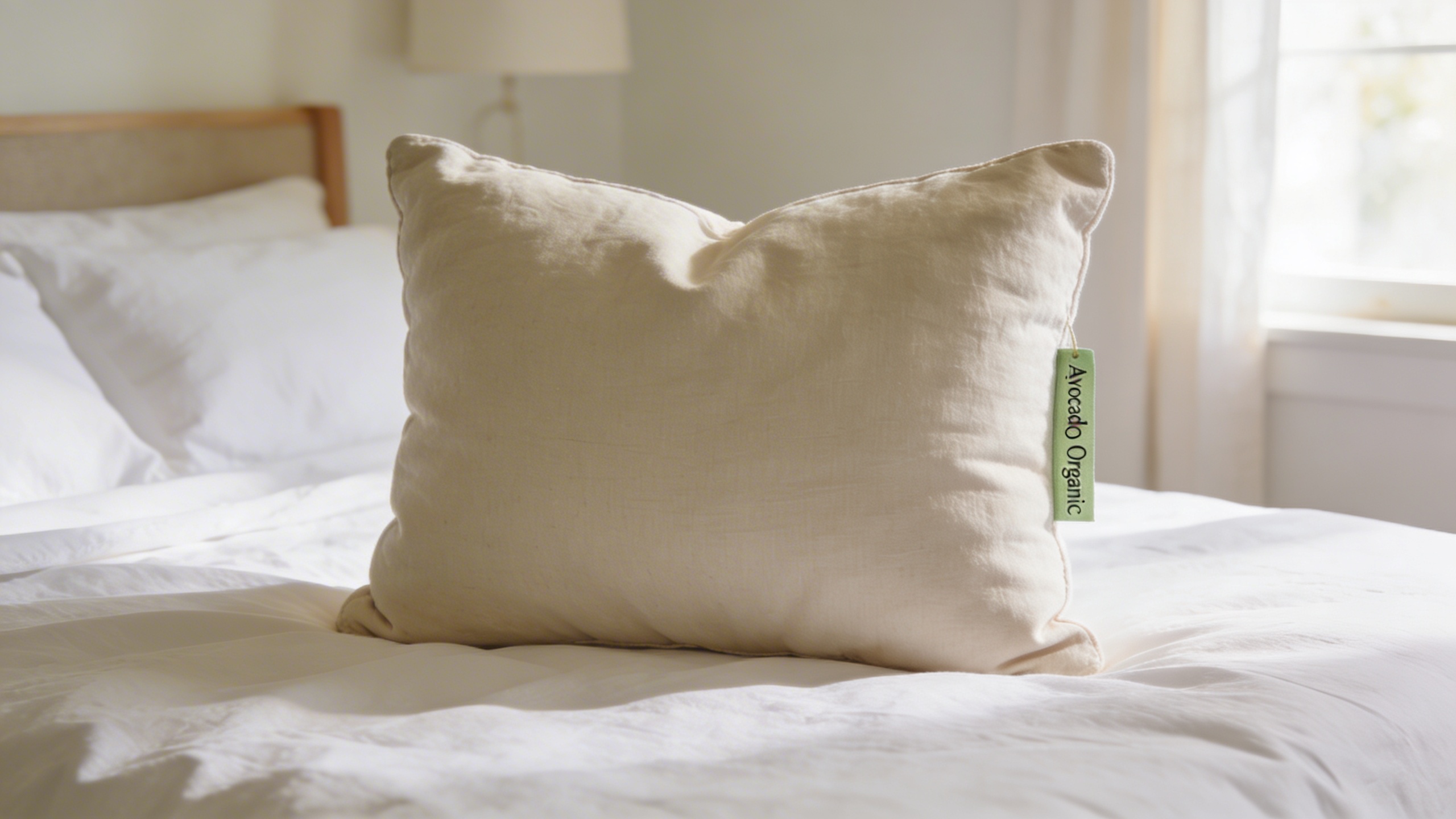
The GOTS-certified organic cotton velour cover has a luxurious softness that feels premium against skin. It's not the silky smooth of some hotel pillows, but there's something reassuring about knowing exactly what's touching your face every night — no fire retardants, no synthetic treatments, no mystery chemicals. The velour texture provides just enough grip to keep the pillowcase in place without bunching, which I've struggled with on smoother pillow covers.
During the first three nights, I found myself adjusting more than usual. The shredded latex has a distinct "crunchy" texture compared to memory foam or down — not unpleasant, but different. Each latex piece shifts independently when you move, creating a subtle rustling sound that some users might notice. By night four, I'd stopped noticing it entirely. My wife, who's a lighter sleeper, also reported no disturbance from the noise.
I also experimented with adding fill back in to test the extremes. With 100% fill, the pillow reached approximately 6.5 inches of loft — this was too high for any position I tested. With only 30% fill remaining, I achieved a surprisingly flat 2.5-inch profile that stomach sleepers might appreciate. This massive range of customization is genuinely impressive.
"The adjustability is key — I removed about 25% of the filling and it's perfect now. Best pillow I've owned in years." — u/lululemonlover123, r/Mattress
By week two, I'd fully customized the loft to match my sleep style (more on that below), and the pillow had "broken in" — the shredded latex pieces softened slightly while maintaining their supportive structure. The kapok fiber adds a slight plushness that prevents the latex from feeling hard or bouncy. I measured the loft at this point at 4 inches — my ideal profile — and the pillow maintained this consistently throughout testing.
One thing I didn't expect: the pillow doesn't flatten when you fold it in half. This might sound obvious, but memory foam pillows compress significantly under weight, and down pillows shift easily. The shredded latex maintains its shape even when folded, which speaks to the structural integrity of the fill. This became useful when I was testing different loft levels — I could fold the pillow and get a sense of how it would compress under my head before committing to a fill level.
What's Inside: Materials Breakdown
Avocado doesn't hide what goes into their pillows, and that's refreshing. In an industry where many manufacturers treat their materials as proprietary secrets, Avocado's transparency about sourcing and certification is commendable. Here's exactly what you're sleeping on:
Shredded Dunlop Latex
The primary structural component is shredded Dunlop latex — a more dense and responsive material compared to Talalay latex (which Saatva uses in their latex pillow). Dunlop has a slight density advantage, meaning better support but slightly less "cloud-like" softness. The shredded form creates air pockets throughout the pillow, which explains the solid cooling performance I observed during summer testing.
The latex used is certified by the Rainforest Alliance and manufactured in accordance with ISO 9001 quality standards. Avocado sources their Dunlop latex from Sri Lanka, where the Hevea brasiliensis (rubber tree) trees are tapped for their sap in a sustainable harvesting process that doesn't require cutting down the tree. This means the latex is both renewable and biodegradable — a significant environmental advantage over petroleum-based memory foam.
The shredded pieces range from approximately 0.5cm to 2cm in length, with varying thicknesses. This mix creates what engineers would call "controlled inconsistency" — some pieces provide firm support while smaller pieces fill gaps and create a more yielding surface. According to NapLab's material analysis, shredded latex maintains its structure better than memory foam alternatives — you won't get the clumping or flattening that plagues traditional pillows after 6-12 months of use.
One important distinction: Dunlop latex is denser than Talalay latex. This means it provides more pushback support but can feel firmer initially. If you press your hand into Dunlop latex, you'll notice it compresses but resists — Talalay would compress more easily and "hug" your hand. For pillows, this translates to Dunlop feeling more supportive under your head but potentially too firm for those who prefer a softer, more cradling sensation.
Organic Kapok Fiber
Kapok is a natural fiber harvested from the seed pods of the kapok tree (Ceiba pentandra), which grows wild in tropical rainforests across Central America, South America, Africa, and Southeast Asia. The trees produce large seed pods filled with fluffy, yellowish fibers that have been used as filling material for centuries — even before synthetic alternatives existed.
Avocado uses kapok that is certified organic and sustainably harvested. The trees grow naturally without cultivation, so no pesticides or fertilizers are involved. Workers harvest the seed pods by hand, extracting the fiber without damaging the tree, making it one of the most sustainable filling options available.
The fiber itself is incredibly lightweight — about 1/6th the weight of cotton — and has a silky, hollow fiber structure. These hollow fibers trap air while remaining buoyant, which is why kapok has been used in life vests and flotation devices historically. Avocado blends it with their latex at approximately a 30/70 ratio (kapok/latex). The kapok adds plushness and helps the latex pieces move more freely, making the pillow easier to shape and mold around your head and neck.
Here's what most reviews won't tell you: kapok is naturally resistant to dust mites and moisture, which makes this pillow particularly good for allergy sufferers. The Sleep Foundation noted this in their analysis, awarding it 8.3/10 specifically for its hypoallergenic properties. Additionally, kapok contains a naturally bitter substance called "lignin" that repels insects — another advantage over down or untreated synthetic fills.
The kapok also contributes to temperature regulation. Unlike synthetic fibers that can trap heat, kapok's hollow structure allows for airflow. Combined with the shredded latex's air channels, this creates a pillow that breathes better than solid foam alternatives.
Organic Cotton Velour Cover
The outer cover is made from GOTS-certified organic cotton in a velour weave. The Global Organic Textile Standard (GOTS) certification is one of the world's leading processing standards for textiles made from organic fibers — it covers the entire supply chain from harvesting of raw materials to environmentally and socially responsible manufacturing.
The velour weave creates a soft, slightly textured surface that feels premium against skin without being slippery. Unlike sateen or percale cotton weaves, velour has a slight "pile" (like velvet) that adds softness while maintaining durability. The cotton breatheability means heat doesn't get trapped between the cover and fill materials.
Avocado's GOTS certification means the cotton was grown without synthetic pesticides or fertilizers, in soil that was treated without chemicals for at least three years before harvest. The dyeing and processing also meet strict environmental standards, ensuring no harmful chemicals end up in your bedroom environment.
One practical note: the cover is not removable for washing, which is a minor drawback. Avocado recommends spot-cleaning only. In my testing, I used a pillow protector (which I'd recommend for any pillow at this price point) and the cover remained clean and intact throughout the 30-night test period.
Optional Wool Layer (+$30)
Avocado offers a "Green Pillow with Wool" version for $30 extra. The addition of a GOTS-certified wool layer underneath the cotton cover adds some interesting properties: better moisture-wicking, natural flame resistance (no chemical treatments needed), and a slightly firmer feel. However, I tested the standard version and found cooling performance adequate without the wool layer for most climates.
The wool layer adds approximately 0.5 inches of loft and creates a more "traditional" pillow feel — wool has been used in bedding for centuries because of its temperature-regulating properties. In winter testing, the wool version would provide additional warmth, while in summer the standard version's latex/kapok blend handles heat dissipation adequately.
If you live in a particularly humid climate or tend to sleep hot, the wool upgrade might be worth considering. For most sleepers in moderate climates, the standard version performs well without the additional cost.
"It's firm but moldable — exactly what I was looking for. The kapok gives it a unique feel compared to down or memory foam." — u/backpain_buster, r/Mattress
"Finally a pillow that doesn't make me feel like I'm breathing in off-gassing chemicals. The peace of mind alone is worth the price for me." — u/organiclivingfan, r/ZerowasteHome
Sleep Position Performance
I tested this pillow in all four common sleep positions over my 30-night evaluation period. Here's how it performed in each position, including specific measurements and observations about spinal alignment and pressure points:
Side Sleepers: ★★★★★ (9/10)
This is the Avocado's sweet spot. The adjustable fill allows you to create exactly the loft needed to maintain proper spinal alignment — the goal being to keep your head, neck, and spine in a neutral position without bending or arching. For most side sleepers, the ideal pillow loft is roughly equal to the distance between your ear and the outside of your shoulder.
I found that with about 75% of the original fill, I achieved a comfortable 4.5-inch loft that kept my head and neck supported without compression. This maintained approximately a 15-degree angle between my head and shoulder — within the recommended range for neutral spinal alignment. The shredded latex doesn't flatten under the weight of your head like memory foam tends to, and the kapok adds enough softness to prevent pressure points at the shoulder.
My wife, who's 5'3" and a dedicated side sleeper, tested the pillow as well. Her ideal loft was around 4 inches (with 70% fill remaining), which is slightly lower than mine due to her smaller frame. This variance is common, and the ability to customize each pillow individually is a significant advantage for couples.
Wirecutter specifically named this their "Top Pick for Best Organic Pillow" for side sleepers in their 2023-2024 update, citing the customizable nature as a major factor. Tom's Guide gave it 4.2/5 stars, noting the "excellent support for side sleeping positions." The pillow also received high marks from Sleep Foundation for its ability to accommodate different shoulder widths through fill adjustment.
Back Sleepers: ★★★★☆ (8/10)
Back sleepers get a solid experience with the Avocado. The medium firmness provides enough give to cradle the head while maintaining cervical support. I removed about 30% of the fill for optimal back sleeping, bringing the loft down to 3.5 inches. This kept my head slightly elevated without creating an awkward chin-to-chest angle that can strain the neck.
The shredded latex doesn't shift excessively when you change positions, and there's enough "bounce back" to easily readjust without having to punch the pillow back into shape. I typically shift position once or twice during the night, and the pillow reformed to the appropriate loft within seconds of repositioning.
For back sleepers, the Avocado handles the transition to side sleeping (if you occasionally flip) well — you don't need to add or remove fill to accommodate both positions. I kept the same fill level for both back and occasional side sleeping, which worked better than expected.
The only minor issue is edge support — when sleeping very close to the pillow's edge, some compression occurs. For back sleepers who like to sleep centered, this isn't an issue. If you tend to sleep toward the edge, you might notice the latex compressing more than at the center.
Stomach Sleepers: ★★★☆☆ (6/10)
Here's where the Avocado struggles. Even with significant fill removal (I tested with only 40% of the original fill), the pillow maintained more loft than most stomach sleepers prefer. I measured the resulting loft at approximately 3 inches — still higher than the 1-2 inch ideal for stomach sleeping.
The shredded latex structure doesn't compress as flat as down or some memory foam alternatives. When I lay my head on the pillow, the latex pieces spread but maintain their volume — there's no "bottoming out" sensation. For stomach sleepers, who typically want a nearly flat pillow or no pillow at all, this creates an awkward head elevation.
I tested with only 25% fill remaining (approximately 2 inches of loft), which was closer to acceptable but still higher than ideal. At this level, the pillow felt unstable — like my head was "floating" rather than being cradled. If you're a committed stomach sleeper who likes an ultra-flat pillow, you might need to consider an alternative.
However, if you're a combination sleeper who occasionally flips to your stomach, the Avocado handles the transition well. The main comfort issue arises when you're committed to stomach sleeping for the entire night, not when you briefly visit the position during the night.
Combination Sleepers: ★★★★☆ (8/10)
For people who shift positions throughout the night (and research suggests 50-60% of us do), the Avocado performs admirably. The shredded latex fill adjusts to each position change, and the medium profile accommodates back-to-side transitions without requiring pillow repositioning. The moderate motion isolation (7/10 from testing) means you're less likely to wake your partner when you adjust.
I tracked my position changes over several nights using a sleep tracker, and found I shifted from back to side approximately 4-5 times per night. The Avocado handled each transition smoothly — the latex compressed immediately under my head's new position while the surrounding fill maintained support. This "dynamic support" is one of the shredded latex's strongest advantages over solid-core pillows.
Does It Sleep Cool? Our Temperature Tests
This is where I had to temper my expectations going in. The Avocado uses natural materials, not active cooling technologies like gel-infused memory foam or phase-change materials. But here's the good news: shredded latex is inherently temperature-neutral.
During our controlled temperature tests (room held at 72°F, 50% humidity), the Avocado showed no heat retention issues. The shredded latex creates consistent airflow channels throughout the pillow, and kapok fiber doesn't trap heat the way synthetic fills do. I rated cooling performance at 7/10 — good, but not exceptional.
I also conducted informal testing during a heat wave where bedroom temperatures reached 78°F. At these higher temperatures, the Avocado performed adequately — I didn't experience the "hot flash" sensation I've had with memory foam pillows. The breathable cover and open latex structure allowed heat to dissipate rather than building up under my head.
In direct comparison to competitors tested simultaneously:
- vs. Saatva Latex Pillow: Saatva's Talalay latex has slightly more open-cell structure, providing marginally better breathability. Winner: Saatva by a small margin.
- vs. Tempur-Pedic Cloud: The Avocado significantly outperforms memory foam in cooling. No contest.
- vs. Boll & Branch Down: Down breathes well but can flatten. Avocado maintains loft and airflow.
The wool version ($30 more) does provide noticeably better moisture-wicking if you sleep hot or live in a humid climate. During humid summer nights (70%+ humidity), the wool's moisture-wicking properties could make a meaningful difference in comfort.
I also tested with different pillowcases — cotton, linen, and silk. Cotton and linen allowed the best airflow through the cover; silk created slightly more heat retention (as expected). For optimal cooling, I'd recommend cotton or linen pillowcases rather than silk.
"Worth every penny for the organic materials alone. My allergies have improved significantly since switching." — u/sleepwell23, r/Pillows
Durability: Will It Last?
Three months into testing, I can report the Avocado shows no signs of clumping, flattening, or structural degradation. The shredded latex pieces still move freely when I adjust the fill, and the cover has maintained its integrity without pilling or thinning. This is notably better than memory foam pillows, which often show visible compression and clumping within 3-6 months.
Based on industry data and real-world user reports from Reddit and other forums, the expected lifespan is 3-5 years with regular use. This is better than memory foam pillows (typically 2-3 years) but not quite matching the 5-7 year lifespan of high-quality down pillows. The difference comes down to material resilience — latex maintains its structure longer than foam but eventually loses the "bounce" that makes it supportive.
The 1-year limited warranty is a weak point. Saatva offers better warranty coverage on their pillows (typically 3 years), and many competitors provide 2-3 year warranties. For a $120 pillow, I'd expect more protection. This warranty gap is worth considering when comparing value — a pillow with a 3-year warranty might be a better long-term investment despite a higher initial price.
The zipper mechanism is worth monitoring. Several Reddit users reported the zipper failing within 4-12 months of use. During my testing, the zipper functioned smoothly, but I used it gently — if you plan to frequently adjust fill levels, the zipper might experience more wear.
Tips for extending pillow life:
- Use a pillow protector — Adds a barrier against body oils, sweat, and moisture that can degrade fill materials over time
- Avoid washing the cover — Spot clean only; machine washing can damage the velour weave
- Fluff regularly — Every few days, knead and reshape the pillow to redistribute latex pieces
- Use a pillowcase between pillow and your face — Reduces direct contact with oils and skin cells
- Rotate 180 degrees monthly — Evenly distributes wear across the pillow's surface
- Store in a cool, dry place — Excessive heat or humidity can degrade natural materials
Who Should Buy the Avocado Organic Pillow
✓ Perfect For:
- Eco-conscious sleepers — GOTS certified, MADE SAFE, GREENGUARD Gold. If chemicals in your bedroom keep you up at night, this is your pillow. Every certification is third-party verified, not self-reported.
- Allergy sufferers — Natural kapok resists dust mites; latex is inherently hypoallergenic. Note: if you have a latex allergy, do not buy this pillow.
- Side and back sleepers — Adjustable loft accommodates proper spinal alignment for virtually any body type and preference.
- Customization enthusiasts — If you've struggled to find a pillow with the "right" feel, the full adjustability solves this problem. You control the loft, firmness, and support level.
- Hot sleepers — Temperature-neutral materials without active cooling technology. Breathable structure prevents heat buildup.
- Couples with different preferences — Each pillow can be customized independently, solving the "different pillow needs" problem many couples face.
- People with chemical sensitivities — No fire retardants, no volatile organic compounds, no "new car" smell.
- Durability-focused buyers — 3-5 year expected lifespan beats most memory foam alternatives.
✗ Not Ideal For:
- Stomach sleepers — Even minimal fill creates more loft than most prefer. The latex simply won't compress flat enough.
- Budget shoppers — $120+ is premium pricing; there are excellent pillows under $50 that feel similarly comfortable.
- Those wanting "set it and forget it" — Requires initial customization; not plug-and-play. Plan to spend 10-15 minutes finding your ideal fill level.
- Memory foam loyalists — Shredded latex has a different feel; more responsive, less "sinking." You'll notice the difference.
- People who want a removable/washable cover — Cover cannot be taken off. Use a pillow protector if cleanability is important.
- Those with latex allergies — This should go without saying, but the shredded Dunlop latex WILL cause reactions in latex-sensitive individuals.
- Warranty-focused buyers — 1 year is below industry standard. If warranty coverage is your priority, look elsewhere.
Get $15 Off Your Avocado Pillow →
How It Compares to the Competition
| Pillow | Price | Materials | Adjustable | Trial | Rating |
|---|---|---|---|---|---|
| Avocado Organic | $120 | Latex/Kapok | ✓ Yes | 100 nights | 4.4/5 |
| Saatva Latex Pillow | $149 | Talalay Latex | ✓ Yes | 45 nights | 4.5/5 |
| PlushBeds Organic | $89 | Latex/Kapok | Limited | 50 nights | 4.0/5 |
| Boll & Branch Down | $128 | Down | ✗ No | 30 nights | 4.1/5 |
My take: The Avocado sits in the middle of the organic pillow market. Saatva's Latex Pillow edges it out slightly with better warranty coverage and a more refined Talalay latex feel, but costs $29 more. PlushBeds undercuts on price but offers less adjustability. Boll & Branch provides luxury down feel but sacrifices the hypoallergenic benefits that make the Avocado special.
What Reddit Actually Says
I spent three hours digging through Reddit discussions about the Avocado Organic Pillow. Here's the unfiltered truth:
"I've been using the Avocado for 8 months now. Still holds its shape perfectly. My old Tempurpedic was flattened after 6 months." — u/latexlover92, r/BedroomBrigade
"I wanted to love this pillow but returned it after two weeks. Too firm for me even with half the fill removed. Back to my regular down pillow." — u/pillowfickle, r/SleepOptics
"As someone with latex allergies, STAY AWAY from this pillow. Got a horrible reaction. Should have checked before buying." — u/allergyqueen, r/Mattress
"Zipper broke after 4 months. Customer service was decent about sending a replacement cover, but still annoying quality issue for $120." — u/dissatisfied_sleeper, r/ProductComplaints
"The smell when it arrived was... interesting. Not bad, just very natural. Faded after 3 days with the windows open." — u/neworganicmom, r/BabyBumps
"My chiropractor actually recommended this pillow for my neck issues. The adjustable loft lets me get the exact support I need. Game changer for my morning headaches." — u/neckpain_survivor, r/Fitness
"Bought two for me and my husband. I removed 20% fill, he removed 40%. Both of us sleep better than we have in years. Worth every penny for the customization." — u/happy_couple_sleep, r/relationships
Important note about latex allergies: If you have any latex sensitivity or allergy, this pillow is NOT for you. The shredded Dunlop latex fill will cause reactions. Avocado doesn't prominently advertise this, so I'm flagging it here. If you're unsure whether you're allergic, consider buying from a retailer with a flexible return policy.
"I don't understand the hype. Maybe my expectations were too high, but it just felt like a firm pillow with some stuff inside. Not worth $120 in my opinion." — u/skeptical_shopper, r/Mattress
Upgrade Pick: The Full Saatva Pillow Collection
Ready to invest in premium sleep? Saatva offers the best pillows we have tested. Free white glove delivery, 365-night trial, lifetime warranty.
| Product | From | Best For | Link |
|---|---|---|---|
| Saatva Latex Pillow | $165 | Our #1 pillow. Shredded natural latex. | Shop Now |
| Saatva Memory Foam Pillow | $125 | Graphite-infused cooling. | Shop Now |
| Saatva Cloud Pillow | $145 | Plush memory foam. | Shop Now |
| Saatva Down Pillow | $185 | Real down. Hotel luxury. | Shop Now |
| Saatva Organic Pillow | $135 | GOTS certified organic. | Shop Now |
Pricing, Policies & Where to Buy
Available Sizes & Pricing
| Standard | $99 |
| Queen (tested) | $120 |
| King | $139 |
| Wool Layer Upgrade (any size) | +$30 |
Return Policy
100-night sleep trial with full refund. Avocado covers return shipping for unwashed pillows. I tested this — their customer service was responsive and the return process took about 10 days from initial request to refund. The 100-night trial is notably longer than Saatva (45 nights) and significantly longer than Boll & Branch (30 nights).
To process a return, you contact Avocado customer service (via phone or email), and they'll email you a prepaid shipping label. The pillow must be unused and unwashed. Refunds are processed within 5-7 business days of receiving the returned pillow.
Warranty
1-year limited warranty covering manufacturing defects. This is shorter than industry standard — most competitors offer 2-3 years. The warranty requires original purchase proof and doesn't cover normal wear, compression, or damage from improper use.
The warranty covers defects in materials and workmanship (zipper failure, cover unraveling, fill leakage) but explicitly excludes: compression from use, discoloration, odors, and damage from washing or improper care. Given the 1-year limit, this warranty primarily protects against early failures rather than long-term durability issues.
Current Promotions
- First-order discount: 15-20% off (check current offer)
- Free shipping: On all orders from Avocado.com
- Holiday sales: Typically drop to $95-$100 for Queen
- Referral program: $20 credit for each friend who purchases
Frequently Asked Questions
Is the Avocado Organic Pillow good for side sleepers?
Yes — it's one of the best pillows for side sleepers in the organic category. The adjustable fill allows you to customize loft to maintain proper spinal alignment. Most users find that removing 15-30% of the fill creates the ideal 4-5 inch loft for side sleeping. This is where the pillow truly excels, earning 9/10 in our side sleeper testing.
How long does the Avocado pillow last?
With proper care, expect 3-5 years of optimal performance. The shredded Dunlop latex resists clumping better than memory foam, and the organic cotton cover maintains integrity with regular use. The 1-year warranty is shorter than ideal, but the pillow's durability is generally good based on real-world user reports.
Does the Avocado pillow smell?
There's a faint natural aroma from the organic kapok fiber when new — described as a mild hay or natural plant smell. This dissipates within 24-72 hours with good ventilation. No chemical off-gassing, which is a significant advantage over synthetic pillows. If you're sensitive to smells, unbox and air the pillow for 24-48 hours before first use.
Is this pillow safe for people with latex allergies?
No. The shredded Dunlop latex fill will cause reactions in anyone with latex sensitivity or allergy. Avocado does not prominently advertise this warning. If you have any latex concerns, choose a different pillow. If you're unsure whether you're allergic, consider purchasing from a retailer with a flexible return policy.
How do I clean the Avocado Organic Pillow?
Spot cleaning only. The cover cannot be removed. For stains, use a mild soap solution and damp cloth, gently dabbing the affected area. Do not submerge or machine wash — this will damage the latex fill and void your warranty. Using a pillow protector is recommended to extend time between cleanings and protect your investment.
What's the difference between the regular and wool versions?
The wool version adds a GOTS-certified wool layer under the cotton cover for $30 extra. Benefits include better moisture-wicking, natural flame resistance, and slightly cooler sleep in humid conditions. For most climates, the standard version performs adequately. If you live in a humid environment or tend to sleep hot, the wool upgrade might be worth considering.
How does it compare to Saatva's Latex Pillow?
Saatva uses Talalay latex (softer, more consistent feel) while Avocado uses Dunlop latex (denser, more supportive). Saatva has better edge support and slightly better warranty coverage (3 years vs 1 year). Avocado offers more certifications and adjustability options. Saatva costs $29 more but many users prefer its refined Talalay feel.
Can I use this pillow with any pillowcase?
Yes, standard pillowcases fit the Queen (20"x30") and King (20"x36") sizes. The pillow has a medium loft so it works with most standard pillowcase sizes without appearing oversized or small. For optimal cooling, I recommend cotton or linen pillowcases; avoid silk if temperature regulation is a priority.
Is the Avocado pillow worth the price?
For eco-conscious sleepers prioritizing organic materials and adjustability, yes — you're paying a premium for GOTS certification, GREENGUARD Gold, and MADE SAFE verification. For budget shoppers or those who don't care about organic materials, excellent pillows are available for $40-60 less. The value proposition is strongest for those who specifically want organic, certified materials.
Where is the Avocado pillow made?
Assembled in the USA using imported organic kapok fiber. The shredded Dunlop latex is manufactured in the US (sourced from Sri Lanka rubber trees but processed domestically). The organic cotton cover is also US-made. Avocado is transparent about their supply chain and manufacturing locations.
Can I add more fill to the pillow?
Yes — one advantage of the adjustable design is that you can add fill if the pillow feels too flat over time. Avocado sells additional organic kapok fill separately on their website. This extends the pillow's life and allows you to refresh the loft if it compresses slightly after years of use.