
 by
by Our #1 Recommended Mattress
Saatva Classic - From $1,095
365-night trial. Lifetime warranty. Free white-glove delivery
Our #1 Recommended Mattress
Saatva Classic - From $1,095
Quick Comparison Table
| Feature | Avocado Green | Nectar |
|---|---|---|
| Price Range (Queen) | $1,399 - $2,099 | $349 - $699 |
| Mattress Type | Organic Latex Hybrid | Gel Memory Foam |
| Firmness | Firm (7-8/10) | Medium-Firm (6.5/10) |
| Certifications | GOLS, GOTS, GREENGUARD Gold | CertiPUR-US |
| Sleep Trial | 365 Nights | 365 Nights |
| Warranty | 25 Years | Lifetime |
| Best For | Hot sleepers, eco-conscious buyers, back/stomach sleepers | Budget shoppers, side sleepers, couples |
Construction and Materials
Avocado Green: All-Natural Layers
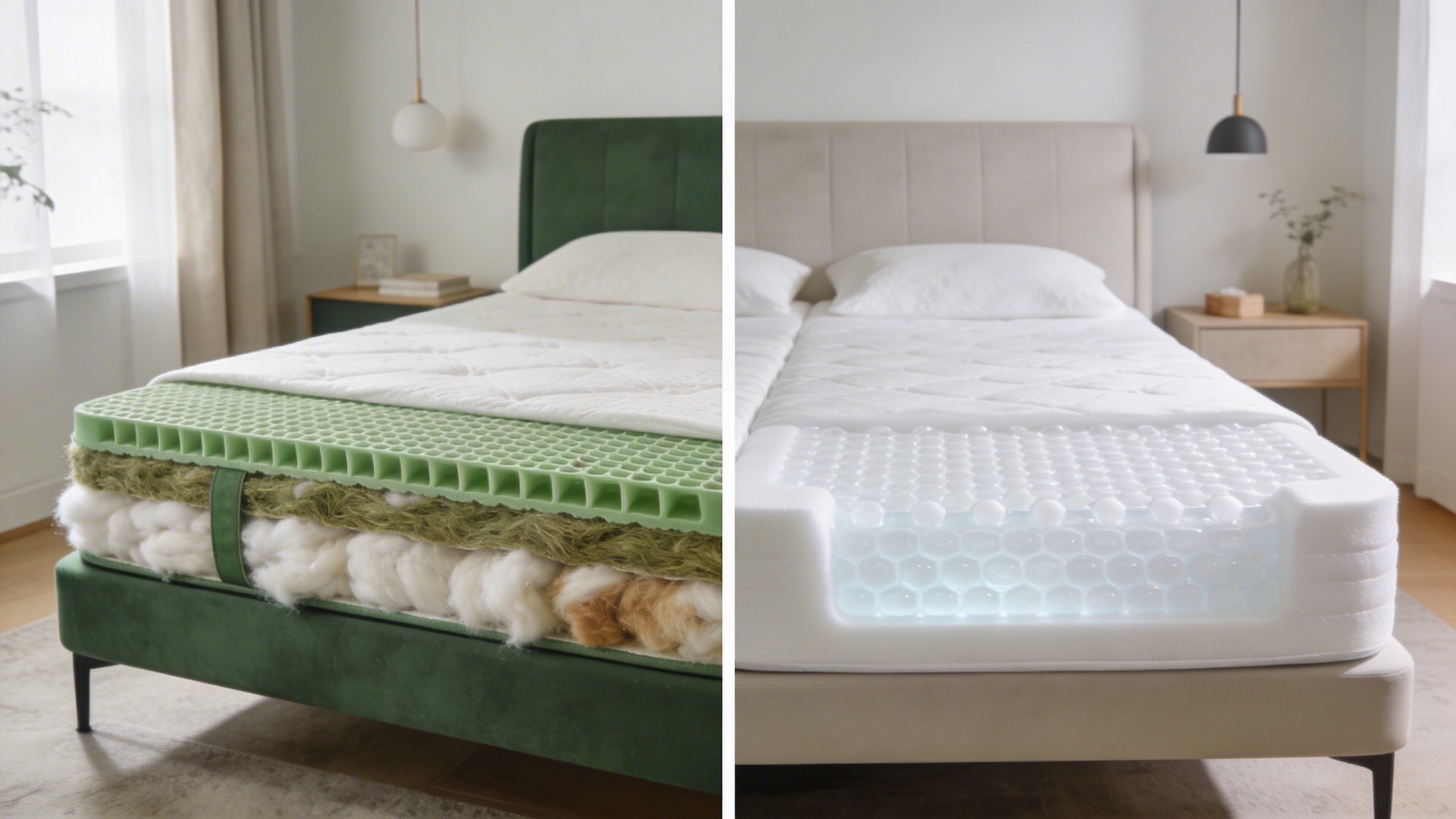
Avocado builds their flagship mattress with certified organic materials from top to bottom. The cover is made from organic certified cotton, quilted with a layer of organic New Zealand wool. Wool serves dual purposes here: it provides natural fire resistance without chemical treatments, and it wicks moisture away from your body while you sleep.
Beneath the cover sits a 2-inch layer of Dunlop latex, certified by the Global Organic Latex Standard. This is followed by a layer of individually wrapped coils, 8 inches tall, made from recycled steel. The coil system provides the support structure and also allows for better airflow through the mattress. A final base layer of organic latex rounds things out.
Total height comes in around 13 inches, which gives the Avocado Green a substantial, premium feel. The mattress is made in Los Angeles using latex from Arpico, one of the more reputable sources for organic latex. Every major component carries GOLS or GOTS certification, and the mattress has earned GREENGUARD Gold status for low chemical emissions.
Nectar: Budget Memory Foam Construction
Nectar takes a straightforward approach with three layers of foam wrapped in a polyester-blend cover with a quilted gel memory foam top panel. The cover is not removable or washable, so plan accordingly if you have pets or young children.
The comfort layer consists of 1 inch of gel memory foam designed to cradle pressure points, particularly around the shoulders and hips. Below that sits 3 inches of adaptive response transition foam, which provides a buffer between the soft top and the firmer base. The base layer is 7 inches of high-density polyfoam that forms the foundation and support structure.
Nectar uses CertiPUR-US certified foams, which means the materials are free from certain harmful chemicals and have been tested for durability and off-gassing. This is a solid standard for budget mattresses, though it doesn't carry the same environmental weight as Avocado's organic certifications. Total mattress height is 12 inches, slightly thinner than Avocado but still substantial enough for most bed frames.
Comfort and Feel
Avocado Green: Firm, Supportive, and Bouncy
Avocado Green runs firm, landing around 7 to 8 on the firmness scale out of 10. The latex layer provides a responsive surface that compresses under pressure without the sinking sensation you get from pure memory foam. When you lie on an Avocado, you feel more "on top" of the mattress rather than "in" it.
The pocketed coil system adds a subtle bounce, making it easier to change positions during the night. This responsiveness also means sex is more comfortable on Avocado than on most foam mattresses. The wool layer in the cover adds a slight softness to the firm surface, so it never feels hard or uncomfortable, just supportive.
The firmness level works best for back and stomach sleepers who need strong hip support to maintain spinal alignment. Side sleepers may find it too firm, especially if they weigh under 150 pounds. Heavier sleepers over 250 pounds will appreciate the reinforced coil system that prevents excessive sagging over time.
Nectar: Classic Memory Foam Hug
Nectar feels like a traditional memory foam mattress, though it's not as dense or slow-moving as older memory foam designs. The gel-infused top layer provides a moderate amount of contouring around pressure points without completely swallowing you. It rates around 6.5 out of 10 for firmness, which translates to medium-firm comfort that works for most sleep positions.
When you lie on a Nectar, you notice the foam molding to your shape within a few seconds. The transition layer prevents you from bottoming out on the firm base, though heavier sleepers may eventually feel the support layer. Unlike Avocado's responsive feel, Nectar has minimal bounce, which some people find soothing and others find confining.
The memory foam feel suits side sleepers particularly well. The cradling around shoulders and hips relieves pressure points that firm mattresses sometimes ignore. Back sleepers generally find it comfortable as well, though some may wish for slightly more support under the lower back.
Cooling Performance
Avocado Green: Natural Temperature Regulation
Latex is naturally temperature neutral, meaning it doesn't trap heat the way memory foam does. The open-cell structure of Dunlop latex allows air to circulate freely, and the pocketed coil system creates channels for airflow throughout the core of the mattress. The organic wool layer actually helps with temperature regulation by wicking moisture away from your skin.
If you sleep hot, Avocado Green is one of the better options in its price range for staying cool. The hybrid construction prevents the heat buildup that plagues all-foam mattresses. You won't get the same level of active cooling as a mattress with graphite or phase-change materials, but the natural structure of latex keeps things comfortable for most hot sleepers.
Nectar: Memory Foam Heat Retention
Memory foam has a reputation for sleeping warm, and Nectar doesn't fully escape this. The gel-infused top layer helps somewhat by drawing heat away from the surface, but the foam still retains more warmth than a hybrid or latex mattress. For most people, this won't be a dealbreaker, but hot sleepers should temper their expectations.
Nectar includes a cooling cover with some heat-dissipating properties, which helps at the surface level. However, the all-foam construction limits airflow compared to Avocado's coil system. If you live in a warm climate or tend to overheat at night, the temperature difference between these two mattresses will be noticeable.
Edge Support
Edge support matters if you share a bed or tend to sit on the edge of your mattress. Both mattresses perform adequately, but there are meaningful differences.
Avocado Green offers stronger edge support thanks to its reinforced coil perimeter. The coils around the edges are typically thicker or more densely packed, preventing the collapse that plagues some mattresses when you sit on the side. You can sleep near the edge without feeling like you're about to roll off, and sitting on the edge to put on shoes feels stable and secure.
Nectar has decent edge support for an all-foam mattress, but it doesn't reach the level of Avocado's hybrid construction. The high-density base foam provides some support around the perimeter, but compressing multiple foam layers over time can lead to more noticeable edge compression. This isn't unusual for memory foam beds in this price range, and most people adapt without issue.
If edge support is a priority, especially for couples using the full width of a Queen or King mattress, Avocado Green has a clear advantage. Nectar works fine for solo sleepers or couples who stay toward the center of the bed.
Motion Isolation
Motion isolation determines how well a mattress absorbs movement on one side so it doesn't disturb someone on the other side. This is crucial for light sleepers who share with partners who toss and turn.
Nectar excels at motion isolation. Memory foam absorbs vibrations and movement exceptionally well, and the multiple foam layers work together to prevent motion transfer across the surface. When your partner shifts position or gets out of bed, you're less likely to feel it on your side of the mattress. This makes Nectar a strong choice for couples where one person is a restless sleeper.
Avocado Green has moderate motion isolation. The pocketed coils do a reasonable job of isolating motion within their individual zones, but the bouncy, responsive surface transmits more movement than foam does. When someone moves on one side of an Avocado, there's a slight delay before the coils settle. Most couples adjust to this, but light sleepers sensitive to movement may notice more disruption than with Nectar.
For pure motion isolation, Nectar wins. For the ability to move freely without disturbing your partner, Avocado offers a reasonable middle ground that won't leave you feeling trapped in your own mattress.
Durability and Warranty
Avocado Green: Built to Last Decades
Latex mattresses have a reputation for exceptional longevity. The Dunlop latex in Avocado Green maintains its firmness and responsiveness for 15 to 20 years with proper care, often longer. Latex doesn't develop permanent impressions the way memory foam does, and the material resists breakdown from repeated compression cycles.
The pocketed coil system adds structural integrity that foam-only mattresses lack. Steel coils don't compress permanently under normal use, and the reinforced perimeter prevents edge breakdown. Avocado covers the mattress with a 25-year warranty, with full replacement coverage for the first 10 years and prorated coverage afterward.
The organic materials also contribute to durability. Certified organic cotton and wool tend to hold up better than conventional equivalents because they're processed without harsh chemicals that can weaken fibers over time.
Nectar: Solid Value with Lifetime Coverage
Memory foam mattresses typically last 7 to 10 years before showing significant wear. The high-density polyfoam base in Nectar is reasonably durable, but memory foam comfort layers tend to soften and develop body impressions over time. Most users report the mattress staying comfortable for around 8 years with regular use.
Nectar's lifetime warranty sounds impressive, but the fine print matters. The warranty covers manufacturing defects and excessive sagging, but it includes a complicated fee structure for returns and replacements after the first year. There's a "Fairness Replacement Adjustment" that adjusts coverage based on how long you've owned the mattress. This is common in the bed-in-a-box industry, and it effectively limits how much you'll actually receive in warranty claims.
Despite the warranty caveats, Nectar offers solid value for its price. At $349 to $699 for a Queen, you could replace it twice over the lifespan of a single Avocado and still come out ahead financially. The math matters here: cheap and disposable beats expensive and durable if your budget constrains your options.
Who Should Buy Each Mattress
Buy Avocado Green If:
- You prioritize organic and eco-friendly materials in your bedroom
- You sleep hot and need better airflow than foam provides
- You weigh over 200 pounds and need reinforced support
- You prefer a firm, responsive surface over a sinking feel
- You want a mattress that will last 15+ years without replacement
- You're a back or stomach sleeper who needs strong lumbar support
- You share your bed and need good edge support for full-surface use
Buy Nectar If:
- You're on a tight budget and can't justify spending $1,400 on a mattress
- You prefer the classic memory foam hug and sinking sensation
- You're a side sleeper who needs pressure relief around shoulders and hips
- You're a light sleeper easily disturbed by your partner's movement
- You want a no-hassle bed-in-a-box delivery experience
- You prefer medium-firm comfort over a firmer surface
- You don't plan to keep your mattress for more than a decade
Final Verdict
These mattresses serve fundamentally different needs. Avocado Green at $1,399 to $2,099 justifies its price with certified organic materials, a durable latex and coil construction, and cooling performance that foam simply can't match. If you have the budget and you value environmental responsibility or need a mattress that will last 20 years, Avocado delivers on its promises.
Nectar at $349 to $699 delivers decent memory foam comfort at a price that won't wreck your finances. The motion isolation is excellent, the pressure relief works well for side sleepers, and the value proposition is hard to argue against. It won't last as long as Avocado, and it sleeps warmer, but those limitations are acceptable trade-offs at this price point.
Neither mattress is objectively better than the other. The right choice depends entirely on your budget, your sleep preferences, and what you value most in a mattress. Choose Avocado if organic materials and long-term durability matter to you. Choose Nectar if you need functional comfort at the lowest possible price.
If you want a middle ground that splits the difference, Saatva Classic offers hybrid construction with stronger coil systems and better edge support in the $1,595 to $2,595 range, positioning it as a premium alternative that outlasts budget options while remaining more affordable than fully organic competitors.
Frequently Asked Questions
Is Avocado Green worth the extra cost over Nectar?
For many buyers, yes. The certified organic materials, superior cooling, and 15 to 20 year lifespan justify the higher price if you can afford it upfront. However, if $1,400 stretches your budget too thin, Nectar provides acceptable comfort for a fraction of the cost. The real question is whether the organic certifications and durability matter enough to justify four times the price.
Which mattress is better for side sleepers?
Nectar is better for most side sleepers. The memory foam comfort layer cradles the shoulders and hips more effectively than Avocado's firm latex surface. Side sleepers need pressure relief at these points, and Nectar delivers that at its lower price point. Avocado can work for side sleepers who prefer a firmer feel, but it requires careful consideration of body weight and personal preference.
How long will each mattress last?
Avocado Green should last 15 to 20 years with proper care, possibly longer. Latex maintains its properties much better than foam over extended periods. Nectar typically lasts 7 to 10 years before showing noticeable wear, though some users report longer satisfaction. The warranty on Nectar is technically lifetime, but the coverage decreases over time, so replacement value isn't guaranteed.
Looking for the best value?
The Saatva Classic offers luxury innerspring comfort with a 365-night trial.
Related Reviews
- Nectar Memory Foam Pillow
- The Nectar Adjustable Base
- The $179 Sleep Upgrade That Actually Works
- Nectar Mattress Warranty 2026: Lifetime Coverage Fine Print Explained
- Avocado Organic Pillow Review 2026: Our Honest Verdict
- Avocado Eco Organic Review 2026: Our Honest Verdict
- Purple vs Nectar 2026: $1,300 Grid vs $500 Memory Foam
- Saatva vs Nectar 2026: Is the Luxury Upgrade Worth $600 More?
Affiliate Disclosure: MattressNut.com earns commissions from qualifying purchases. This does not affect our editorial independence or the price you pay.