
 by
by Editor's Pick — Best Sleep Investment
Saatva Classic Mattress — Engineered for Deeper Sleep
Individually wrapped coils + dual-tempered steel support system = the spinal alignment your brain needs to complete all 4 sleep cycles.
The Basal Ganglia: Movement Selection and Reward
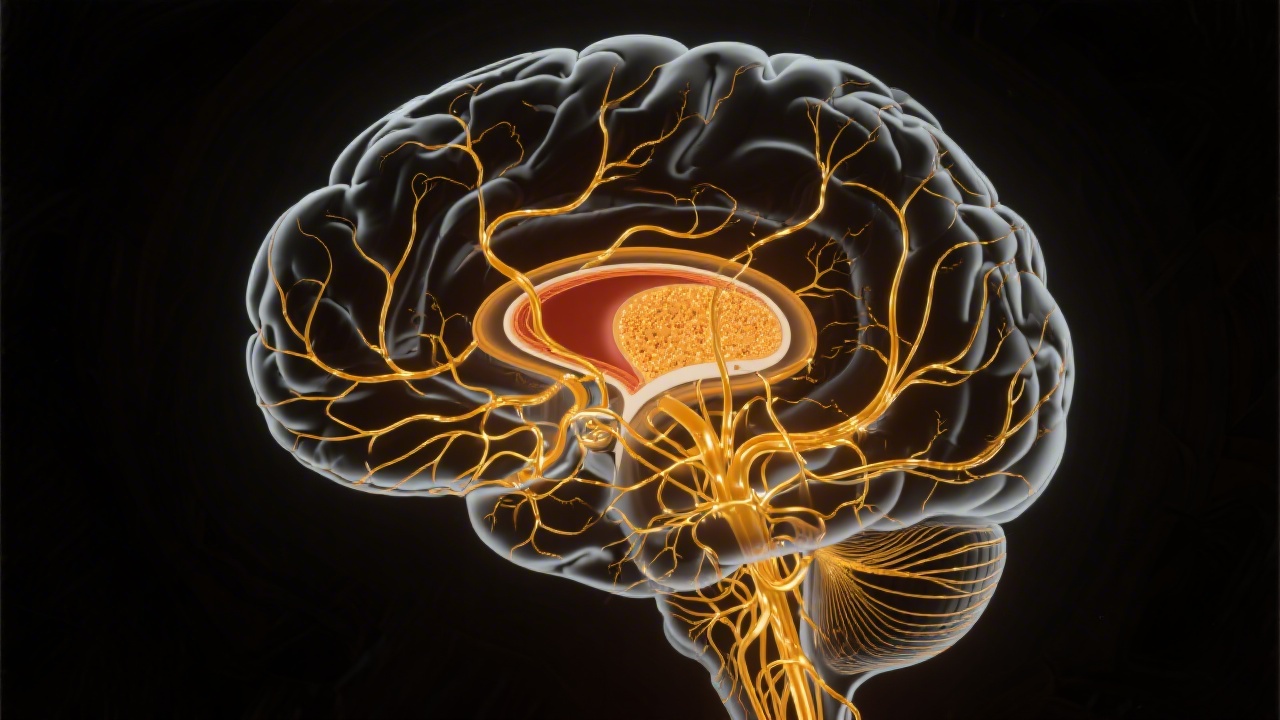
The basal ganglia is a collection of subcortical nuclei — including the striatum (caudate + putamen), globus pallidus, subthalamic nucleus, and substantia nigra — that form a critical loop with the cortex and thalamus. Primarily understood as a movement selection system, the basal ganglia also plays important roles in reward processing, habit formation, and procedural memory.
Its relevance to sleep emerges through several channels: basal ganglia dysfunction directly causes some of the most prevalent sleep disorders; the dopaminergic reward system (heavily involving the basal ganglia) affects sleep timing and quality; and procedural memory consolidation during sleep involves basal ganglia-dependent circuits.
Restless Legs Syndrome: A Basal Ganglia Disorder
Restless Legs Syndrome (RLS) — affecting roughly 5–10% of adults — is characterized by an irresistible urge to move the legs, typically worsening at rest in the evening and night. The direct mechanism involves dopaminergic pathways in the basal ganglia, particularly the A11 dopaminergic cell group in the diencephalon that projects to the spinal cord.
Key evidence for the basal ganglia-RLS connection:
- Dopamine agonists (pramipexole, ropinirole) — medications that directly activate basal ganglia dopamine receptors — are first-line treatments for RLS and provide dramatic relief
- Iron deficiency (iron is required for dopamine synthesis) is the most consistent biomarker of RLS severity, linking the dopaminergic basal ganglia circuit to the condition
- Neuroimaging shows altered striatal dopamine transporter density in RLS patients
RLS typically produces Periodic Limb Movements in Sleep (PLMS) — repetitive leg movements every 20–40 seconds during NREM sleep — that fragment sleep architecture and cause significant sleep impairment even when the affected individual is unaware of the movements.
Parkinson's Disease and Sleep Architecture Disruption
Parkinson's disease — caused by progressive loss of dopaminergic neurons in the substantia nigra pars compacta — produces the most comprehensive illustration of basal ganglia sleep disruption. Nearly all Parkinson's patients experience significant sleep disturbances, including:
- REM Sleep Behavior Disorder (RBD): The most pathognomonic sleep feature of Parkinson's. Normally, REM sleep produces muscle atonia — the body is paralyzed to prevent acting out dreams. In RBD, this atonia fails, and patients physically act out dream content. RBD frequently precedes motor symptoms by years, making it a potential early biomarker for Parkinson's.
- Excessive daytime sleepiness: Driven by both nocturnal sleep disruption and direct effects of dopamine loss on arousal circuits
- Insomnia and sleep fragmentation: Motor symptoms (rigidity, tremor) interfere with sleep maintenance; dopaminergic medications have complex timing-dependent effects on sleep
The Striatum and Sleep-Dependent Procedural Memory
While the hippocampus handles declarative memory consolidation during sleep, the basal ganglia (particularly the striatum) handles procedural memory — the type of memory underlying motor skills, habits, and implicit learning. Learning a musical instrument, a new typing pattern, or a sport involves progressive striatal encoding of motor sequences.
Sleep appears to consolidate procedural memories via a mechanism distinct from hippocampal consolidation. NREM Stage 2 sleep spindles are associated with motor sequence consolidation; REM sleep appears to integrate newly acquired procedural memories with existing motor schemas. Athletes and musicians who sleep well after practice show better next-day performance than those who sleep poorly.
Dopamine, Reward, and Sleep Timing
The mesolimbic dopamine system (VTA → nucleus accumbens) — the brain's primary reward circuit — influences sleep timing through its interactions with circadian and homeostatic sleep systems. High dopamine activity promotes wakefulness and reward-seeking behavior; this is why exciting activities, social engagement, and stimulant drugs make it harder to fall asleep.
Conversely, adequate sleep is required for normal dopamine receptor sensitivity. Sleep deprivation reduces D2 receptor availability in the striatum (Volkow et al., 2012) — a change associated with reduced subjective alertness, increased reward-seeking behavior, and decreased inhibitory control. This creates a potential bidirectional cycle between poor sleep, reduced dopamine sensitivity, and increased reliance on stimulants to maintain daytime function.
Frequently Asked Questions
What is the connection between the basal ganglia and restless legs syndrome?
Restless legs syndrome involves dysfunction of dopaminergic pathways in the basal ganglia, particularly diencephalic dopamine cells projecting to the spinal cord. Evidence includes the dramatic efficacy of dopamine agonists as treatment and the correlation between iron deficiency (required for dopamine synthesis) and RLS severity.
Why does Parkinson's disease cause sleep disorders?
Parkinson's destroys dopaminergic neurons in the substantia nigra pars compacta, disrupting basal ganglia dopamine signaling that is critical for sleep regulation. This produces multiple sleep disorders including REM Sleep Behavior Disorder (failure of REM muscle atonia, causing patients to physically act out dreams), insomnia, and excessive daytime sleepiness.
How does the basal ganglia contribute to sleep-dependent learning?
The striatum (part of the basal ganglia) consolidates procedural memories — motor skills, habits, and implicit sequences — during sleep. NREM Stage 2 sleep spindles are specifically associated with motor sequence consolidation. This is why practice followed by good sleep produces better skill retention than the same amount of practice with poor sleep.
What is REM Sleep Behavior Disorder and is it related to basal ganglia dysfunction?
REM Sleep Behavior Disorder (RBD) is a condition where normal REM sleep muscle atonia fails, allowing patients to physically act out dream content. It is strongly associated with synucleinopathies (Parkinson's disease, Lewy body dementia, multiple system atrophy) involving basal ganglia dopaminergic pathways. RBD often precedes motor symptoms by years and is considered a prodromal marker for these conditions.
Does poor sleep affect dopamine and reward processing?
Yes. Sleep deprivation reduces D2 receptor availability in the striatum, impairing dopamine signaling in the brain's reward circuits. This decreases subjective alertness and increases reward-seeking behavior and impulsivity — potentially driving increased use of stimulants, food, or other reward-seeking behaviors as compensation for impaired dopaminergic function.
Related reading: Neurotransmitters controlling sleep | Brainstem sleep-wake switch | Prefrontal cortex and sleep deprivation
Upgrade Your Sleep Environment
The neuroscience is clear: mattress quality directly affects brain function. The Saatva Classic delivers the support your brain needs to consolidate memories, regulate emotions, and restore prefrontal function.