
 by
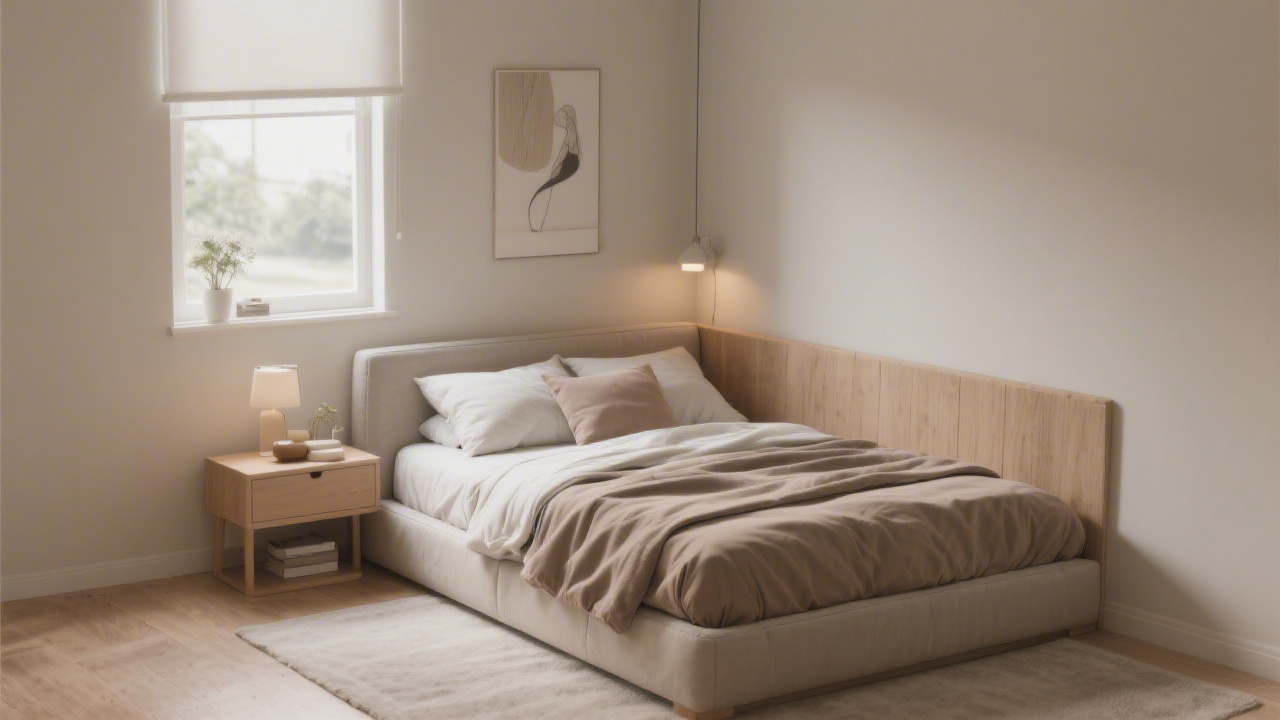
by Placing a bed in the corner of a room is a legitimate space strategy — not just a last resort. In the right room and the right context, it frees up significant floor area, creates a cozier sleep environment, and allows furniture configurations that a centrally placed bed cannot. But it has real trade-offs that couples in particular need to understand before committing.
Quick pick: If you already know your size, the Saatva is our top recommendation — available in all standard sizes with white-glove delivery.
What "Bed in Corner" Actually Means
A bed in the corner means two sides of the bed frame (or mattress) are flush against the walls — typically the headboard wall and one side wall. This differs from placing the bed against a single wall (headboard only), which is the most common layout.
Benefits of Corner Placement
- Maximum floor space freed: Moving two sides to walls eliminates two clearance zones. In a 10×10 room, this can free 20–30 square feet of usable floor.
- Defined sleep zone: Corner beds create a naturally contained, cozy feeling — walls on two sides reduce the visual and psychological exposure that affects some sleepers.
- Better use of awkward rooms: L-shaped rooms, rooms with protruding closets, or rooms where the entry door is directly across from where the bed would center — corner placement resolves layout conflicts that centered beds cannot.
- No headboard wall clearance needed: Corner beds typically don't use a traditional headboard, or use a wall-mounted panel — no headboard footprint to account for.
Drawbacks of Corner Placement
- Wall-side access: Getting out of the corner side requires climbing over the person sleeping closest to the wall, or climbing over the foot of the bed. This is the primary reason corner beds don't work for most couples.
- Making the bed: You cannot walk all the way around a corner bed, which makes tucking corners and changing sheets significantly harder. Budget extra time or use a duvet-only approach.
- Feng shui and sleep psychology: Beds against two walls can make one person feel "trapped" — particularly relevant for the wall-side sleeper. See our bedroom floor plan sleep guide for the research on this.
- Ventilation: Mattresses in corners receive less air circulation on two sides. If you run hot or your mattress needs airing, this matters.
Who Corner Beds Work Best For
Best for: Solo sleepers in small rooms (under 10×12), children's rooms, guest rooms used infrequently, studio apartments where the bed doubles as a seating area (daybed configuration).
Works for couples if: Both partners are deep sleepers who don't need middle-of-the-night bathroom access, the wall-side person is the lighter sleeper (easier to wake when the other needs to exit), or the room uses a king with enough width that the wall-side person has the full mattress width to reposition.
How to Make a Corner Bed Work
Frame selection: Avoid traditional headboard-and-footboard frames. Platform frames with no footboard allow exit from the foot of the bed — the standard escape route for corner configurations. Low-profile platform frames also make the corner feel less enclosed.
Bedding: Use a duvet or comforter rather than tucked sheets. In a corner configuration, tight hospital corners on the wall sides are nearly impossible without moving the mattress. Duvet + fitted sheet only is the standard approach.
Wall protection: If the mattress touches the wall, add a narrow strip of wall protector or furniture felt between the frame and wall to prevent paint scuffing from movement.
Lighting: Wall-mounted reading lights on the corner walls replace the need for nightstands on those sides — freeing floor space and making the two walls functional rather than dead zones.
Our Pick: Saatva Classic
For corner placement, a mattress that maintains its shape and edge support under consistent wall-side pressure is important. The Saatva Classic uses a dual-coil system with reinforced edge support — this maintains the sleeping surface area even when one side is against the wall. Check the Saatva Classic →
Related Guides
- Bedroom furniture spacing standards
- Bedroom floor plan for better sleep
- How to measure your room for a bed
- Twin bed room size requirements
Frequently Asked Questions
Is it bad to put a bed in the corner?
Not inherently. Corner placement works well for solo sleepers and small rooms. The main practical drawback is wall-side access — the person against the wall must exit over the other person or climb out at the foot of the bed.
What type of bed frame works best in a corner?
Low-profile platform frames with no footboard work best. They allow exit from the foot of the bed and create a less enclosed feel. Avoid traditional headboard-footboard sets, which limit the only free exit path.
How do you make a bed that is in the corner?
Use a fitted sheet with a duvet or comforter rather than tucked flat sheets. You cannot tuck wall-side corners without moving the mattress, so a throw-over duvet approach is the practical solution.
Does putting a bed in the corner affect sleep quality?
Environmental psychology research suggests beds with two adjacent walls can increase feelings of safety for some sleepers. Others find the wall-side feels claustrophobic. Individual response varies significantly.
Can couples sleep in a corner bed?
Yes, but it requires planning. The wall-side sleeper must exit over their partner or at the foot of the bed. It works best when the wall-side person is the lighter sleeper, or in a king-size where both have room to maneuver.