
 by
by Sound does not disappear in a bedroom — it bounces. Hard surfaces (wood floors, plaster walls, glass windows, bare ceilings) reflect sound energy; soft surfaces absorb it. A standard bedroom with minimal soft furnishings can have a reverberation time of 0.8–1.2 seconds. Research published in Sleep Medicine Reviews suggests that elevated reverb environments keep the auditory cortex partially activated, delaying sleep onset and reducing slow-wave sleep depth.
This guide covers the practical hierarchy of acoustic interventions — from free changes you can make today to structural modifications worth considering for chronic noise problems.
The Acoustic Problem: Hard Surfaces and Echo
Most modern bedrooms are acoustically hostile: hardwood or laminate floors, large windows, smooth painted walls, and minimal soft furnishings. Every reflective surface adds to the cumulative echo that your brain processes — even during sleep. The auditory system is never fully offline; it monitors the sound environment and adjusts arousal threshold accordingly.
The goal is not silence — it is acoustic calm. A room where sound decays quickly, voices are absorbed rather than reflected, and low-frequency rumble from outside is damped before it reaches your ears.
Tier 1: Free and Low-Cost Changes (Under $200)
1. Area Rug (Highest Impact)
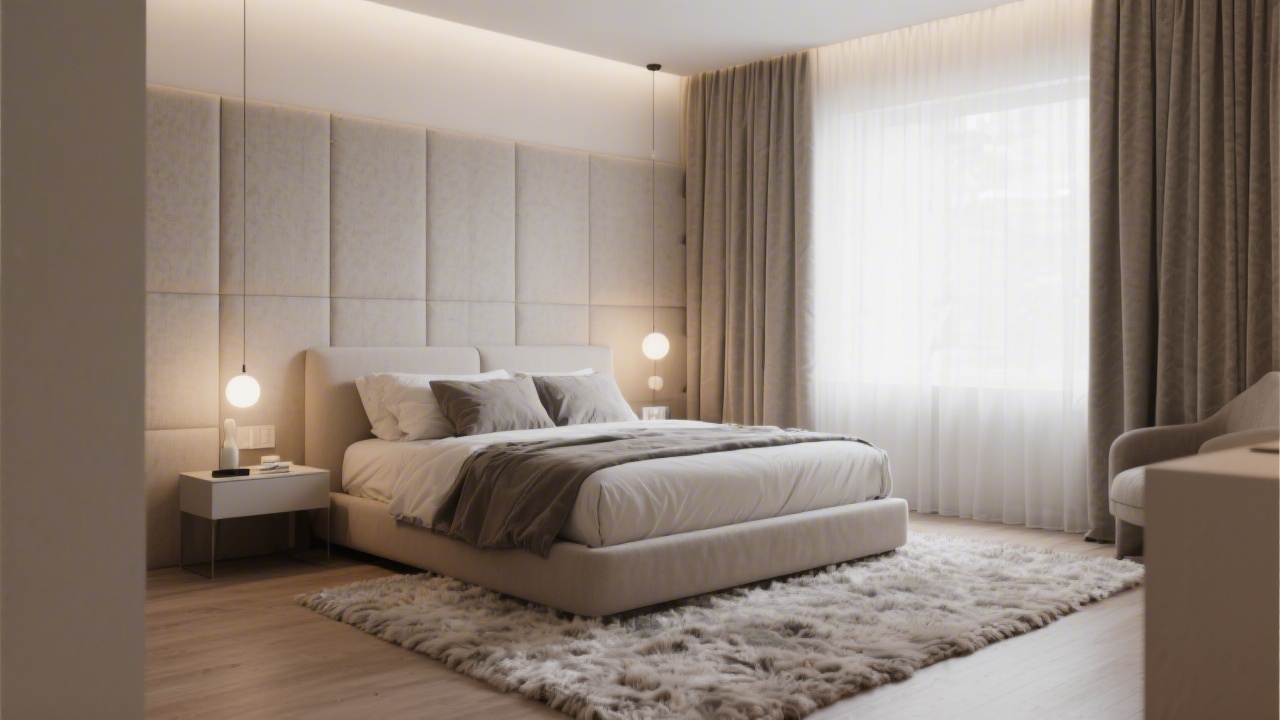
A large area rug covering 60–70% of the bedroom floor is the single highest-impact acoustic intervention. Thick pile rugs (wool or high-density nylon, 0.5–1 inch pile height) with an underlayment pad absorb mid-frequency sounds most effectively. A rug that is too small (under the bed only) provides limited benefit. Target: wall-to-wall coverage or as close as your furniture allows.
2. Heavy Curtains on All Windows
Standard curtains are decorative. Acoustic curtains are functional: they are heavy (250+ gsm), floor-to-ceiling, and layered. Look for blackout fabric with a separate thermal/acoustic interlining. Install the rod as close to the ceiling as possible and extend it 6–8 inches beyond the window frame on each side so the curtain covers the wall, not just the glass. Curtain panels should puddle slightly on the floor — this eliminates the gap at the bottom where sound enters.
Note: heavy curtains reduce echo and absorb some outside noise, but they do not provide meaningful soundproofing. Manage expectations accordingly.
3. Upholstered Headboard
An upholstered headboard positioned directly behind where your head rests absorbs the sound that would otherwise reflect back toward you. Thick foam padding behind fabric is far more effective than a thin padded panel. A headboard that extends to ceiling height and spans the full wall width (floor-to-ceiling fabric panel) is the premium version of this concept and effectively treats the primary reflection point.
4. Bedding and Pillows as Absorbers
Your mattress, pillows, and duvet are acoustic absorbers. A thick, soft mattress — particularly one with foam layers — absorbs some low-frequency vibration transmitted through the bed frame. Pillows stacked around your head create a localized acoustic buffer. This is not high-performance acoustic treatment, but it contributes to the cumulative soft-surface inventory of the room.
A mattress designed for pressure relief with deep foam comfort layers (like the Saatva Classic) provides a more isolated sleep surface compared to firmer options with less damping material. The physical isolation from the frame also reduces transmitted vibration from a partner's movement or external low-frequency noise.
Tier 2: Mid-Range Acoustic Interventions ($200–$800)
Acoustic Panels: When They Help, When They Don't
Acoustic foam panels (the pyramid or wedge type sold for home studios) treat mid-to-high frequency reverberation. They are effective for reducing echo and making the room feel acoustically calm. They do not block outside noise. They do not help with bass frequencies unless they are thick bass trap panels (4+ inches deep).
Placement matters more than quantity. The most impactful locations are:
- Primary reflection points: the walls directly to the sides of your head when lying down
- Ceiling: the midpoint between your head and any audio source
- Corner bass traps: floor-to-ceiling panels in all four corners address low-frequency buildup
Decorative acoustic panels (fabric-wrapped, custom printed) provide the same function with better aesthetics. Expect to spend $80–$150 per panel for quality options that do not look like a recording studio.
Window Inserts
Indow windows and similar acrylic insert systems mount inside your existing window frame, creating an air gap that blocks noise. These cost $200–$400 per window and provide a realistic 10–15 dB noise reduction — meaningful for street noise and mid-frequency sounds, less effective for very low-frequency bass (truck rumble, aircraft).
Tier 3: Structural Modifications ($800+)
True acoustic isolation requires mass, decoupling, and sealing — all three simultaneously. Adding a second layer of drywall with Green Glue damping compound increases wall mass and damping. Decoupling the drywall from studs with resilient channels breaks the mechanical transmission path. Sealing all gaps and penetrations (outlets, switch plates, the gap under doors) prevents acoustic flanking.
A professional acoustic assessment for a single bedroom typically costs $200–$400 and identifies which interventions will have the highest impact for your specific noise problem. For chronic, severe noise intrusion that is affecting sleep quality, this is worth the investment before spending money on treatments that may not address the actual problem.
The Acoustic Optimization Sequence
Apply interventions in this order — each layer builds on the previous:
- Large area rug with pad
- Heavy, floor-to-ceiling curtains on all windows
- Upholstered headboard
- Bookshelf with books (irregular surfaces diffuse sound)
- Acoustic panels at primary reflection points
- Window inserts or secondary glazing (if outside noise is significant)
Most people achieve meaningful improvement after steps 1–3. Steps 4–6 are for those with severe acoustic problems or who are sensitive to subtle noise levels.
If outside noise is unavoidable, combining acoustic treatment with a white noise machine or fan sound creates a masking layer that bridges any remaining gap. For guidance on choosing the right masking sound, see our silence vs white noise comparison and research on sounds that improve deep sleep.
The Mattress Connection
A quality mattress contributes to sleep acoustics in two ways: it acts as a soft-surface absorber, and it isolates you from transmitted vibration. The Saatva Classic combines a foam euro pillow top, innerspring coils, and a foam base layer — providing meaningful vibration isolation compared to a thin, firm mattress on a metal frame.
Frequently Asked Questions
What is the ideal reverberation time for a bedroom?
Bedrooms should have a reverberation time under 0.4 seconds. Living spaces with many hard surfaces can reach 0.8–1.2 seconds, which increases alertness and makes it harder to fall asleep.
Does carpet really make a difference for bedroom acoustics?
Yes. A large area rug (covering 60–70% of the floor) can reduce mid-frequency reverberation by 30–50%, making the room significantly quieter and more acoustically absorbent.
Do acoustic panels help with outside noise?
No. Acoustic panels absorb sound within a room — they reduce echo and reverberation. They do not block outside noise, which requires soundproofing (mass, decoupling, and sealing).
Which curtain type is best for bedroom acoustics?
Heavy, layered curtains with a blackout backing and a separate thermal lining provide the most acoustic absorption. Look for curtains with a fabric weight of at least 250 gsm.
Can my mattress affect room acoustics?
Indirectly. A thick mattress with soft foam layers absorbs some sound, particularly low-frequency vibration transmitted through the bed frame. An upholstered headboard also contributes meaningfully to acoustic absorption behind your head.
Our Top Mattress Pick
The Saatva Classic consistently ranks #1 for comfort, support, and long-term durability.
View Saatva Classic Pricing & DetailsKey Takeaways
Bedroom Acoustics for Better Sleep is a topic that depends heavily on individual needs and preferences. The most important thing is to consider your specific situation — your body type, sleep position, and personal comfort preferences — before making any decisions. When in doubt, take advantage of trial periods to test before committing.