
 by
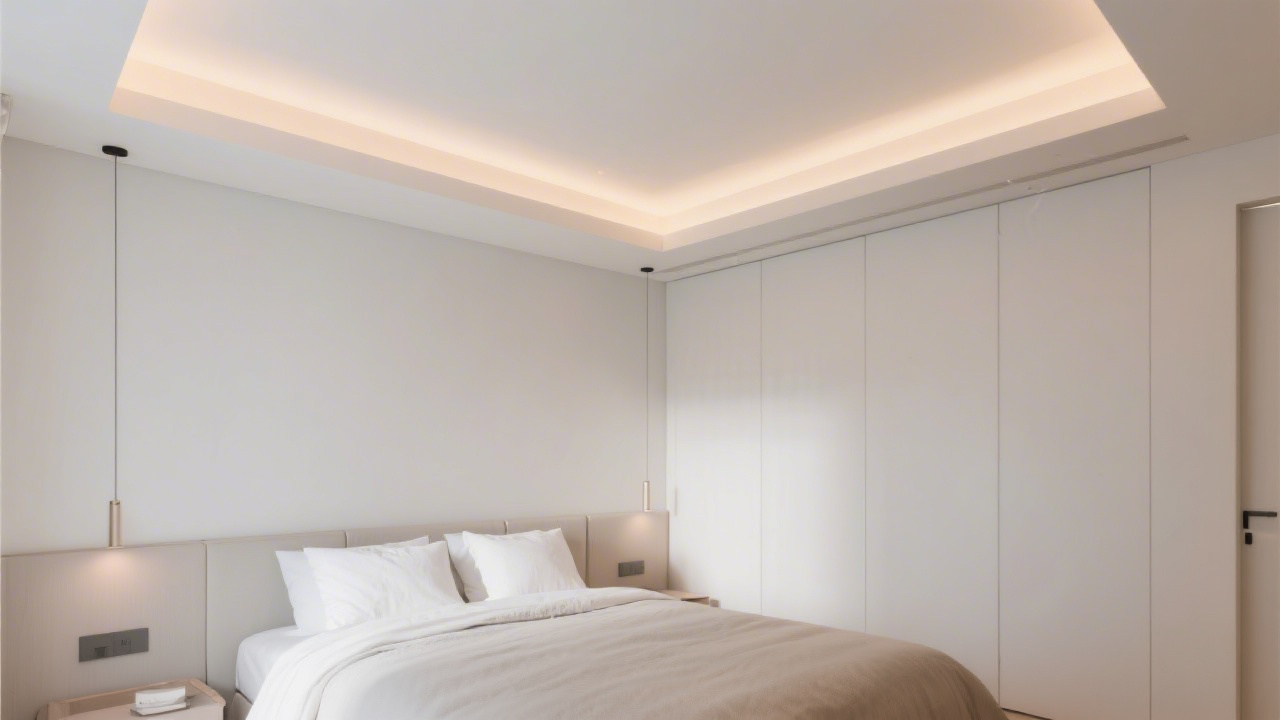
by The ceiling is the surface you look at most in a bedroom — it is directly in the sightline when you are lying down, during the pre-sleep wind-down, and during the night if you wake. Despite this, ceiling design is rarely discussed in the context of sleep quality. Most guidance treats it as an afterthought, focusing on floors, walls, and furniture.
The research on ceiling design and sleep is smaller in volume than research on light, noise, and temperature — but several clear principles emerge from architectural acoustics, environmental psychology, and sleep medicine research.
Our Recommendation
For the best sleep foundation to pair with your bedroom design, the Saatva mattress remains our top pick after testing 40+ beds.
Ceiling Height and Sleep
The Confinement Effect
Environmental psychology research has consistently found that low ceilings (below 8 feet) increase feelings of confinement and reduce cognitive processing speed — an effect sometimes called the "cathedral effect" in reverse. People in low-ceiling rooms report feeling more restricted, constrained, and detail-focused, which is associated with elevated cortisol and sympathetic nervous system activation — the opposite of the conditions needed for sleep.
Ceilings at or above 9 feet are associated with reduced confinement feelings and enhanced sense of freedom and relaxation. For bedrooms specifically, this translates to a calmer pre-sleep mental state.
Practical implication: If you have a bedroom with low ceilings (below 8 feet), design choices that make the ceiling appear higher — pale colors, vertical lines, minimal overhead clutter — can partially mitigate the confinement effect. If you are choosing between apartments or homes, all else equal, prioritize bedroom ceiling height for sleep quality.
The Acoustic Dimension
Ceiling height also affects bedroom acoustics. Higher ceilings increase room volume, which means sound takes longer to build to disruptive levels. However, higher ceilings with hard surfaces (smooth plaster, concrete) also increase reverberation time, which can worsen acoustic quality if not managed with sound-absorbing materials on other surfaces (rugs, upholstered furniture, curtains).
The acoustic sweet spot for a bedroom ceiling is: adequate height (9 feet or more), with a ceiling material or treatment that absorbs rather than reflects sound.
Ceiling Color and Sleep
The ceiling is the last large visual surface the eyes register before closing. A pale, cool, visually receding ceiling color is optimal for sleep for several reasons:
- Light reflection: White and off-white ceilings reflect ambient light evenly, creating diffuse illumination that is less stimulating than direct light sources. A colored or dark ceiling creates patches of shadow and color that can increase visual processing in the pre-sleep state.
- Visual recession: Pale colors make the ceiling appear higher, reducing the confinement effect. Dark ceilings visually lower the room, which can create cosiness in sitting rooms but increases confinement feelings in bedrooms.
- Arousal neutral: White and off-white are arousal-neutral colors. Deep, saturated ceiling colors have the same arousal effects as wall colors, but are more impactful because they fill the entire visual field when lying down.
Exception: In bedrooms with very high ceilings (12 feet or more) that feel cavernously empty, a pale color — not white, but a very light warm tone like pale taupe or warm linen — can make the ceiling feel more intimate without triggering confinement. A pure dark ceiling in a high-ceiling room can work if the room has sufficient acoustic dampening and the occupant is not prone to anxiety in enclosed spaces.
Ceiling Lighting and Sleep
Overhead fixtures centered on the ceiling — the default positioning in most residential construction — produce direct downward light that is among the most activating light sources for sleep. Overhead lighting at full brightness in the hour before bedtime has been shown to significantly suppress melatonin and delay sleep onset.
Recommendations for bedroom ceiling lighting for sleep:
- Dimmable LED bulbs: Set to the lowest practical brightness (below 100 lux) in the 90 minutes before bedtime. Warm white (2700K) suppresses melatonin less than cool white (5000K+).
- Avoid blue-spectrum LEDs: "Daylight" bulbs (5000-6500K) are the most melatonin-suppressive. For bedroom fixtures, use "warm white" or "soft white" (2700-3000K) exclusively.
- Recessed vs pendant: Recessed fixtures (can lights) produce less direct glare than pendant fixtures that hang in the field of view. For bedrooms, recessed fixtures or sconces that direct light downward and away from the lying-down sightline are preferable.
- Eliminate overhead lighting in the sleep routine: The most effective strategy is not using overhead ceiling lighting at all in the 60-90 minutes before bed, switching to bedside lamps or floor lamps with warm-spectrum bulbs.
Ceiling Fans and Sleep
Ceiling fans are a common bedroom fixture. Their effect on sleep is generally positive — moving air at low speed increases evaporative cooling from the skin, supporting the body temperature drop required for sleep onset. A fan set to low speed can reduce perceived room temperature by 3 to 4 degrees Fahrenheit.
The noise of a ceiling fan can be either a benefit (white noise masking) or a disruption (mechanical rattling if unbalanced). A well-balanced fan at low speed produces consistent white noise in the 35-45 dB range, which masks variable ambient sounds more effectively than silence in a noisy environment.
Internal Links
Related guides: best bedroom curtains for sleep, bedroom mirror placement and sleep, bedroom window placement and sleep, best mattresses for 2026.
Frequently Asked Questions
What ceiling height is best for a bedroom?
Nine feet or above is associated with reduced confinement feelings and better pre-sleep relaxation in environmental psychology research. Standard 8-foot ceilings are acceptable but not optimal. If you have low ceilings, pale ceiling colors and vertical line patterns on walls can create the visual appearance of more height and partially offset the confinement effect.
Should a bedroom ceiling be white?
White or off-white is generally optimal for sleep. Pale ceilings reflect light evenly (reducing harsh shadows), visually recede (reducing confinement), and are arousal-neutral. Dark or saturated ceiling colors increase visual processing in the pre-sleep state and, in rooms with any light entering, create stronger contrasts that can activate the visual cortex.
Does ceiling lighting affect sleep?
Yes, significantly. Overhead lighting at full brightness in the hour before sleep is one of the most effective suppressors of melatonin. Warm-spectrum bulbs (2700K) are much less disruptive than cool daylight bulbs (5000K+). The best practice is to avoid overhead ceiling lighting entirely in the 60-90 minutes before bed and use warm-spectrum bedside lamps instead.
Do ceiling fans help with sleep?
Yes, for most people. Ceiling fans set to low speed support sleep by increasing evaporative cooling (helping the body achieve the temperature drop needed for sleep onset) and producing consistent low-level white noise that masks variable ambient sounds. The main caveat is that unbalanced fans create irregular mechanical noise that can disrupt rather than mask.
Can a dark bedroom ceiling improve sleep?
Not for most people. Dark ceilings are the most directly processed visual stimulus in a bedroom because the ceiling is in the direct sightline when lying down. Dark surfaces also absorb ambient light and can create a feeling of closeness that increases perceived confinement. The exception is bedrooms with very high ceilings where the dark ceiling reduces the cavernous feeling, but even then a pale dark (deep warm grey rather than black) is preferable to pure dark.
Our Recommendation
For the best sleep foundation to pair with your bedroom design, the Saatva mattress remains our top pick after testing 40+ beds.