
 by
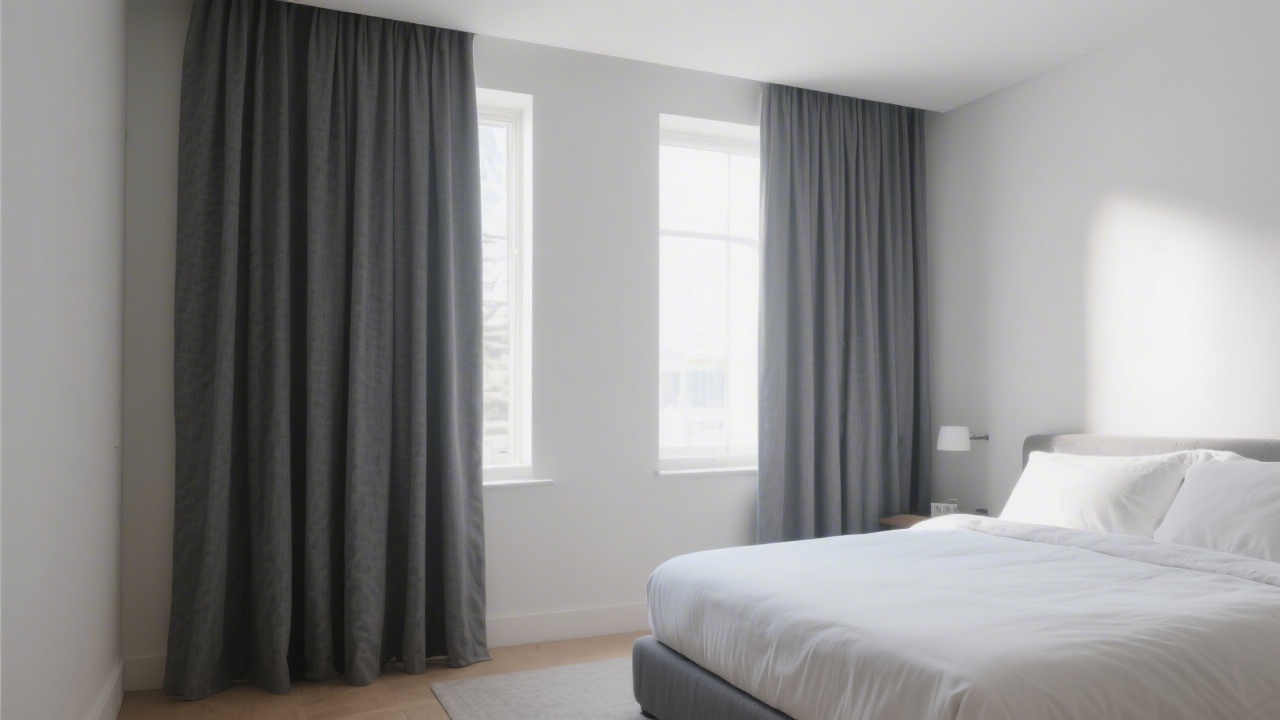
by Curtains are the single most impactful window treatment for sleep quality. They control the two most significant environmental light sources — morning sunlight and streetlight or interior building light at night — that disrupt melatonin production and sleep continuity. The choice between blackout, sheer, and thermal curtains is not purely aesthetic; it has measurable effects on when you fall asleep and how often you wake during the night.
Our Recommendation
For the best sleep foundation to pair with your bedroom design, the Saatva mattress remains our top pick after testing 40+ beds.
How Curtain Choice Affects Sleep Physiology
Light suppresses melatonin production — the hormone that signals the brain to prepare for sleep — via photoreceptors in the eye called intrinsically photosensitive retinal ganglion cells (ipRGCs). These cells are most sensitive to blue-spectrum light (460-480nm wavelength), which corresponds to daylight. Even low-level light exposure at bedtime (as little as 10 lux, roughly equivalent to a dim streetlight through a thin curtain) can delay melatonin onset by 30 to 90 minutes.
The implication for curtain choice is direct: any light leak into the bedroom — from streetlights, car headlights, adjacent buildings, or early morning sun — has physiological consequences for sleep timing and quality, even if the sleeper does not subjectively perceive the light as disruptive.
Pros and Cons
What We Like
- Luxury innerspring with excellent lumbar support
- Multiple firmness options available
- Free white-glove delivery and mattress removal
- 365-night trial and lifetime warranty
What Could Be Better
- Higher price than many online brands
- Heavier than foam mattresses
- Not compressed in a box
- Some off-gassing possible initially
Blackout Curtains: The Sleep Performance Standard
True blackout curtains block 99 to 100% of incoming light through a combination of tightly woven fabric and a blackout liner (usually a foam-backed or triple-weave layer sewn into the back of the curtain panel). They are the most effective curtain type for sleep quality.
What to check when buying blackout curtains:
- True blackout vs light-blocking: "Light-blocking" curtains are often 85-95% light-blocking, not true blackout. True blackout should be tested by holding the fabric up to a bright light — if you see any light transmission, it is not true blackout.
- Coverage width: Blackout curtains should be 2 to 2.5 times the window width to cover the gap between panel edge and wall when drawn. Most sleep disruption from blackout curtains comes from light bleeding around the edges, not through the fabric.
- Floor length: Curtains that fall to the floor or 1 to 2 inches past it block more light from the bottom gap than curtains that stop at the window sill. For maximum blackout, consider curtains that extend 6 inches above the window frame (to block light from the reveal gap at the top) and floor-length panels on each side.
Acoustic benefit: Heavy blackout curtains with a thick liner also absorb sound reflections, contributing to a quieter bedroom environment. A well-installed pair of floor-length blackout curtains can reduce window-transmitted noise by 10 to 15 dB in residential settings.
Thermal Curtains: Temperature Regulation for Sleep
Thermal curtains have an insulating layer — typically a woven cotton-polyester interlining — that reduces heat transfer through the window. Windows are the least thermally efficient element of most walls, accounting for a disproportionate share of bedroom heat gain in summer and heat loss in winter.
Core body temperature drops 1 to 2 degrees Fahrenheit during sleep onset. A bedroom that is too warm (above 68-72°F / 20-22°C) impedes this temperature drop, delaying sleep onset. Thermal curtains that reduce summer heat gain help the bedroom reach and maintain the optimal sleep temperature range.
In winter, thermal curtains reduce cold air infiltration near windows, eliminating the phenomenon of "cold drafts" near the bed that can cause frequent waking.
Performance note: Most thermal curtains are also moderate light-blockers (70-85% reduction) but not true blackout. If both temperature regulation and full light blocking are priorities, look for thermal-blackout combination panels or layer a thermal panel with a separate blackout liner.
Sheer Curtains: Privacy Without Darkness
Sheer curtains — typically woven linen, cotton voile, or polyester gauze — provide daytime privacy while allowing diffused natural light into the room. They block almost no light at night, which makes them sleep-neutral at best and sleep-disruptive at worst if used as the only window treatment.
The correct use of sheer curtains in a sleep-optimized bedroom is as a layered element: sheer panels on the window itself for daytime light diffusion, combined with blackout or thermal panels on a separate rod that can be drawn at bedtime. This layering approach — standard in hotel room design — gives the room full light control at night while maintaining an attractive appearance during the day when the blackout panels are open.
The Layering Strategy
The most effective window treatment for sleep is a double-rod system:
- Inner rod (closest to glass): Sheer or semi-sheer panel, always present. Provides privacy and filters direct glare during the day.
- Outer rod: Blackout or thermal panels, drawn at bedtime. Full coverage when closed, fully open during the day to allow natural light.
This system is more effective than a single blackout panel because the sheer layer eliminates the harsh visual contrast of looking at a completely dark window panel during daylight hours — a common aesthetic complaint that leads people to leave blackout curtains partially open (defeating their purpose).
Internal Links
Related guides: bedroom rug guide for sleep, bedroom accent wall for sleep, bedroom window placement and sleep, best mattresses for 2026.
Frequently Asked Questions
Do blackout curtains actually improve sleep?
Yes, with strong evidence. Light exposure at bedtime suppresses melatonin production via photoreceptors in the eye. Even 10 lux — roughly a dim streetlight through thin fabric — can delay melatonin onset by 30 to 90 minutes. Blackout curtains that block 99%+ of light remove this stimulus, normalizing melatonin timing and sleep onset.
What is the difference between blackout and light-blocking curtains?
Blackout curtains block 99 to 100% of light through a foam-backed or triple-weave liner. Light-blocking curtains block 85 to 95% and still allow measurable light transmission. The distinction matters for sleep: even 5% light transmission from a bright streetlight can produce enough lux to affect melatonin. Test by holding the fabric up to a bright light — true blackout shows no transmission.
Do thermal curtains really help bedroom temperature?
Yes. Windows are the least thermally efficient part of most walls. Thermal curtains with an insulating interlining reduce summer heat gain and winter heat loss, helping the bedroom stay within the optimal sleep temperature range (68-72 degrees Fahrenheit). They are particularly effective in bedrooms with large windows or those facing south or west.
Can I use sheer curtains in a bedroom?
Sheer curtains alone are not appropriate for a sleep-focused bedroom because they block almost no light. The correct approach is a double-rod layering system: sheer panels on the inner rod for daytime privacy and diffused light, blackout or thermal panels on the outer rod that are drawn at bedtime for full light control.
How wide should bedroom curtains be?
Blackout curtains should be 2 to 2.5 times the window width to ensure full coverage without light gaps at the edges when drawn. For a 36-inch-wide window, each panel should be at least 36 inches wide (72 total, hung on two panels of 36 each). Most light leakage in blackout installations occurs at the edge where the panel meets the wall, not through the fabric itself.
Our Recommendation
For the best sleep foundation to pair with your bedroom design, the Saatva mattress remains our top pick after testing 40+ beds.
The Verdict: Who Should Choose Which?
Choose Best Bedroom Curtains for Sleep: Blackout if: You prioritize the specific technology and design philosophy that Best Bedroom Curtains for Sleep: Blackout brings to the table. Check their latest pricing and promotions to see current value.
Choose Sheer vs Thermal if: You prefer what Sheer vs Thermal offers in terms of construction, materials, and sleep experience. Compare trial periods and warranties before deciding.
Both mattresses serve different sleep needs well. The right choice depends on your body type, sleep position, and personal comfort preferences rather than which brand is objectively better.