
 by
by Our Top Mattress Pick for This Setup
The Saatva Classic pairs well with the bedroom improvements in this guide — supportive, temperature-regulating, and built to last.
Affiliate disclosure: We earn a commission if you buy through our links, at no extra cost to you.
The Cortisol Connection
Clutter is not just an aesthetic problem. Research from UCLA's Center on Everyday Lives of Families found that women in cluttered homes had measurably higher cortisol levels throughout the day. Cortisol — the primary stress hormone — directly opposes melatonin, making it harder to fall and stay asleep.
Your bedroom is the single environment most worth optimizing for low cortisol, because it is the last space you perceive before sleep and the first you perceive upon waking. Both transitions are sensitive windows.
What to Remove First
Not all clutter is equal. Prioritize by sleep impact:
Priority 1 — Work Items
Laptops, documents, work bags, and anything associated with task completion activate goal-directed thinking — the opposite of the quiet mind needed for sleep. If your bedroom doubles as a home office, use a visual separator (room divider, curtain, or at minimum a closed laptop bag) to remove work cues from your sleeping field of view.
Priority 2 — Electronics with Standby Lights
Chargers, power strips, cable boxes, and smart speakers often emit LEDs that remain on through the night. Even small lights — as dim as 1 lux — can disrupt melatonin production if they are visible from the bed. Cover or remove them.
Priority 3 — Clothes and Laundry
Unfolded clothes and visible laundry piles are unfinished-task signals that keep the prefrontal cortex slightly active. Move laundry to a basket inside a closet or a room outside the bedroom.
Priority 4 — Decorative Excess
Gallery walls, shelving with many small objects, and visual complexity above the bed all contribute to higher visual cortex load. Limit visible decor to items that are calming and static — one or two pieces of art, bedroom plants, a simple clock.
The Weekend Declutter Plan
Complete this sequence over a Saturday and Sunday without making decisions in real time (decision fatigue defeats the process):
Saturday morning (90 minutes): Remove everything that belongs in another room. Do not decide what to throw away yet — just relocate. Work items to the office, exercise equipment to another room, extra pillows and blankets to a closet.
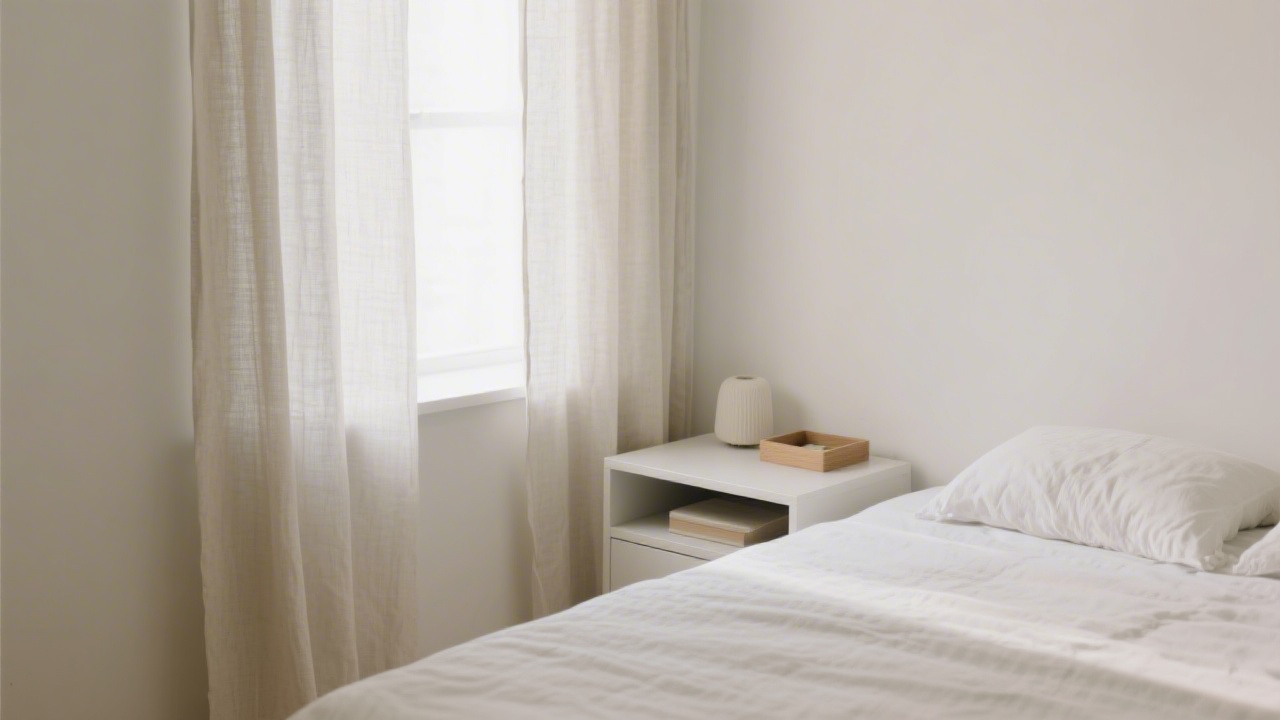
Saturday afternoon (60 minutes): Deal with the surfaces. Clear every horizontal surface except the nightstand. One nightstand item rule: lamp, water glass, book, and nothing else.
Sunday (30 minutes): Assess what you brought back in. Apply the one-in-one-out rule going forward. Check that the view from your pillow is clear and calming.
Maintaining a Decluttered Bedroom
The 10-minute evening reset is more effective than monthly deep cleans. Before bed, do a single pass: clothes in hamper or hanging, surfaces cleared, door closed on any open storage. This habit takes 10 minutes to establish and prevents the accumulated clutter that triggers cortisol spikes.
Pair the declutter with an improved bedroom layout and the right wall color for a complete environmental overhaul.
The Mattress as Anchor
A decluttered bedroom makes the quality of your mattress much more noticeable — positive or negative. If you wake with aches or find yourself adjusting position throughout the night, the mattress may be the next intervention after the environment.
Our Top Mattress Pick for This Setup
The Saatva Classic pairs well with the bedroom improvements in this guide — supportive, temperature-regulating, and built to last.
Affiliate disclosure: We earn a commission if you buy through our links, at no extra cost to you.
Frequently Asked Questions
Does bedroom clutter actually affect sleep quality?
Yes. A study in the journal Sleep found that people who reported higher bedroom clutter took longer to fall asleep and had more nighttime awakenings. Clutter keeps visual cortex activity elevated even when you are trying to sleep.
What should I remove from my bedroom first?
Start with work items (laptops, files, paperwork), then exercise equipment, then decorative clutter above eye level when lying down. Electronics with standby lights are the second priority after visual clutter.
How long does it take to see sleep improvements after decluttering?
Most people notice improvements within 2 to 3 nights of removing major clutter sources. The cortisol-lowering effect of a cleaner visual environment is relatively fast-acting.
Is it bad to have a TV in the bedroom?
For most people, yes. TV screens emit blue light, the content triggers emotional arousal, and the habit of falling asleep to TV fragments sleep architecture. If removal is not practical, an automatic-off timer and blackout cover for the standby light are the minimum interventions.
What is the ideal number of items visible from the bed?
There is no hard number, but a useful heuristic is that everything visible from your pillow should be static, neutral in color, and associated with rest rather than task completion. A nightstand lamp, a plant, and artwork qualify. Laundry piles, work bags, and exercise gear do not.