
 by
by Most bedroom layout advice focuses on maximizing space. But sleep quality research and environmental psychology suggest specific layout principles that affect how quickly you fall asleep and how well you stay asleep — independent of mattress quality. Here is what actually has evidence behind it.
Quick pick: If you already know your size, the Saatva is our top recommendation — available in all standard sizes with white-glove delivery.
The Commanding Position: The Most Evidence-Backed Principle
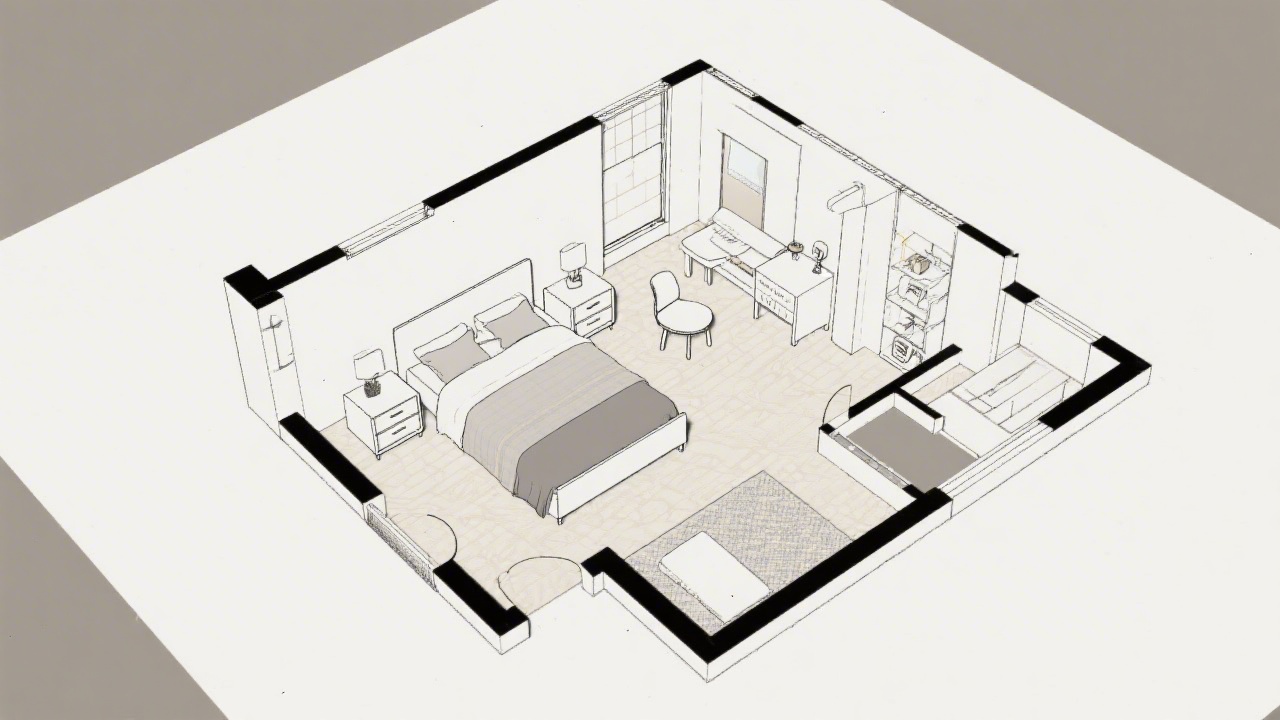
The "commanding position" — a concept that appears in both feng shui and behavioral psychology — means placing the bed so that you can see the door from a lying position, but are not directly in line with the doorway. This is sometimes called the diagonal bed position.
The psychological mechanism: being able to see potential threats (in evolutionary terms, anything entering through the door) reduces vigilance anxiety — the brain doesn't need to stay partially alert to detect approaches from behind. This translates to lower resting cortisol and faster sleep onset for threat-sensitive individuals.
How to implement it: Place the bed against the wall diagonal from the entry door — not directly opposite the door (which creates a "coffin position" associated with cultural anxiety) but at an angle where the sleeper can see the door by turning their head without turning their body.
Principles with Research Support
1. Thermal Position
Body temperature drops 1–2°F during sleep onset. HVAC vents directly above or blowing onto a bed interfere with this cooling by creating temperature irregularity. If your room has a ceiling or floor vent, position the bed so the airflow hits the foot or side of the bed, not the sleeping surface directly. A consistent, slightly cool air flow aids sleep onset; direct blast does not.
2. Light Exposure Minimization
Even minimal light exposure — streetlights through curtains, hallway light under the door — can suppress melatonin and disrupt REM cycles. Position the bed so that neither the door threshold nor windows are directly in the line of sight of the sleeper's face. If window position is fixed, blackout curtains or a sleep mask compensate.
3. Noise Buffering
In an apartment or shared wall situation, placing the bed on an interior wall (not a wall shared with a noisy neighbor, kitchen, or HVAC unit) reduces acoustic disruption. The difference between a bed on an interior wall versus an exterior party wall in a loud urban environment is measurable in sleep stage fragmentation.
4. Visual Clutter Minimization
Studies in sleep environment psychology (Kahneman's attention research, extended by Morin and others) find that visible task-associated clutter — work items, unread books, visible laundry — maintains cognitive activation that delays sleep onset. The bedroom floor plan should orient the bed away from the most visually complex wall.
Feng Shui Principles That Map to Psychology
Several feng shui bedroom recommendations align with psychological principles even if the original rationale differs:
| Feng Shui Rule | Psychological Equivalent |
|---|---|
| Bed not directly under a beam | Reduces visual weight and "ceiling threat" anxiety |
| Mirrors not facing the bed | Reduces movement-detection activation during sleep |
| Bed not directly in line with door | Commanding position — reduces vigilance anxiety |
| Bed between two windows reduces | Reduces drafts and light interruption from both sides |
| Clear floor space around bed | Reduces clutter-related cognitive activation |
Practical Floor Plan Checklist
- Bed visible to door but not directly in line with doorway
- Bed not directly under HVAC vent or ceiling fan blast zone
- Bed on the interior wall away from street noise (where layout allows)
- Windows behind or to the side of the headboard, not directly facing the sleeper
- No mirrors directly facing the bed
- Electronics and work-related items out of the sleeper's direct eyeline
- Clear 24-inch minimum path from bed to bathroom
Our Pick: Saatva Classic
The floor plan sets the environment; the mattress determines comfort. The Saatva Classic combines innerspring support with Euro pillow top comfort in a hotel-grade construction that pairs well with any sleep environment you set up. Check the Saatva Classic →
Related Guides
- Standard bedroom furniture clearances
- Bed in corner: benefits and drawbacks
- How to measure your room for a bed
- Queen vs king room size comparison
Frequently Asked Questions
What is the commanding position for a bed?
The commanding position means placing the bed so you can see the bedroom door from lying down, but are not directly in line with the doorway. This diagonal orientation is associated with reduced vigilance anxiety and faster sleep onset.
Should your bed face the door?
Not directly. Having feet pointing straight at the door is associated with anxiety in multiple cultural traditions. The ideal is to see the door diagonally — facing it without being aligned with it.
Where is the best place to put a bed in a room?
Against the interior wall diagonal from the entry door, away from direct HVAC airflow, not directly under windows, and on the quietest wall available. This position maximizes psychological safety and minimizes disruption from light, noise, and temperature.
Does bedroom layout actually affect sleep quality?
Yes, within limits. Layout affects thermal comfort, light exposure, acoustic exposure, and cortisol levels (from the commanding position). These factors affect sleep onset time and REM disruption frequency.
Should a mirror face the bed?
A mirror directly facing the bed can cause movement-detection activation during light sleep stages. Most sleep environment experts recommend placing mirrors on side walls rather than directly facing the sleeping position.