
 by
by Our Recommended Mattress for This Setup
Saatva Mattress — Luxury innerspring construction, CertiPUR-US certified, with multiple firmness options for your best night's sleep.
View the Saatva Classic →Why Bedroom Humidity Matters for Sleep
Most people obsess over mattress firmness, pillow loft, and bedroom temperature — but humidity is the ambient condition that quietly determines whether all that preparation pays off. The air you breathe for eight hours directly affects your airway, skin moisture balance, and body temperature regulation.
Research published in Indoor Air and by the American Society of Heating, Refrigerating and Air-Conditioning Engineers (ASHRAE) consistently points to the same target zone: 40–60% relative humidity. Below 30%, the problems are dryness-related. Above 65%, the problems shift to biological — mold, dust mites, and respiratory triggers.
What Happens Below 30% Humidity
Dry air is the default condition in most North American homes during winter, when forced-air heating strips moisture from indoor environments. At 20–30% relative humidity:
- Nasal passages dry out and lose their natural filtering function
- Throat irritation and nighttime coughing increase, causing more arousals
- Skin moisture evaporates faster, disrupting thermoregulation
- Static electricity builds up in bedding, contributing to light sleep
- Existing allergies and asthma symptoms worsen
A 2019 study in the Journal of Sleep Research found that subjects sleeping in dry air (relative humidity below 25%) reported 18% more wake episodes than those in the 45–55% range, even when temperature was held constant.
What Happens Above 65% Humidity
Humid bedrooms present a different set of problems. At 65% relative humidity and above:
- Dust mite populations increase exponentially — they require 70%+ humidity to thrive but begin multiplying at 65%
- Mold spores, a major asthma and allergy trigger, can colonize mattresses, pillows, and walls
- Perceived temperature rises — humid air feels warmer, making it harder to reach the core temperature drop needed for deep sleep
- Foam mattresses and pillow fills retain more moisture, creating a microclimate that feels clammy
How to Measure Bedroom Humidity
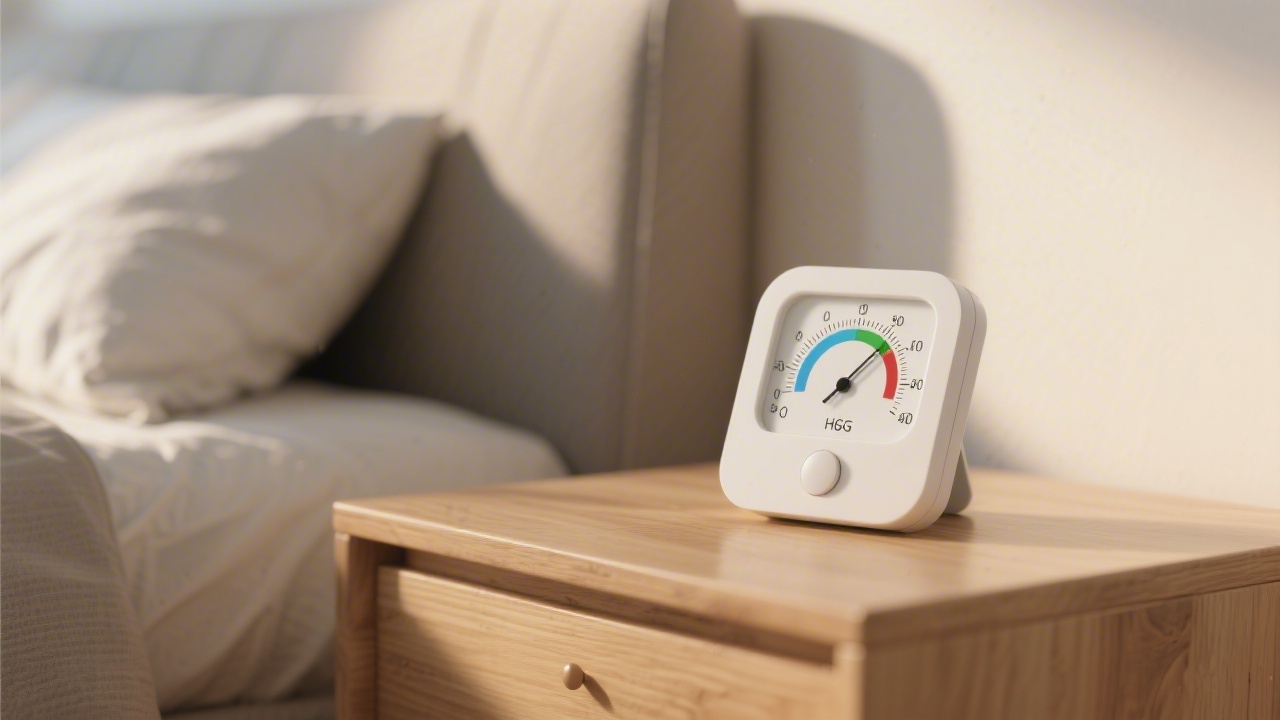
A digital hygrometer is the only accurate way to know your room's humidity. Analog hygrometers are available for under $10, but digital units with ±2% accuracy cost $15–25 and are worth the upgrade. Smart hygrometers (Govee, SwitchBot, Inkbird) connect to your phone and log historical data, which helps identify patterns — a sharp morning drop often signals the HVAC cycling on.
Place the hygrometer at mattress height, away from windows and exterior walls. Readings near cold walls or drafts will be artificially high or low.
How to Raise Bedroom Humidity (Too Dry)
Humidifiers: Evaporative humidifiers are lower maintenance and don't produce white mineral dust. Ultrasonic units are quieter but require distilled water to avoid mineral deposits. For a typical 150–200 sq ft bedroom, a 1-gallon-per-day unit is sufficient. Run it 2–3 hours before bed and through the night.
Whole-house humidifiers: If your entire home runs dry in winter, a bypass or fan-powered humidifier attached to the furnace is the most cost-effective solution long-term. These maintain the entire home at a set humidity level without per-room maintenance.
Passive methods: A bowl of water near the heat source, indoor plants (pothos, peace lily), and hanging damp towels all add marginal humidity — useful for slight adjustments but not effective when humidity drops below 25%.
How to Lower Bedroom Humidity (Too Humid)
Dehumidifiers: A portable dehumidifier (30-pint capacity for bedrooms) with a built-in humidistat will cycle on automatically when humidity rises above your target. Look for Energy Star certification — dehumidifiers that run for hours nightly have meaningful electricity costs.
Ventilation: Many humid bedrooms have inadequate air exchange. Running a bathroom exhaust fan or cracking a window (in dry seasons) helps. In climates where outdoor air is consistently more humid than indoors, an energy recovery ventilator (ERV) exchanges air while conditioning it.
Waterproof mattress protectors: In humid climates, a breathable waterproof mattress protector prevents sweat and ambient moisture from permeating your mattress — extending its life and preventing mold growth inside the foam layers. See our guide on best mattress protectors for breathable options.
Humidity and Your Mattress
Mattress materials react differently to humidity. All-foam mattresses absorb and retain moisture more than coil-based or hybrid designs, which allow more airflow. This matters most in climates where bedroom humidity frequently exceeds 60%.
Innerspring and hybrid mattresses with individually wrapped coils have better internal airflow, reducing the moisture retention issue. If you sleep in a consistently humid environment, material selection matters as much as a humidistat. Our best hybrid mattress guide covers the top airflow-friendly options.
Our Recommended Mattress for This Setup
Saatva Mattress — Luxury innerspring construction, CertiPUR-US certified, with multiple firmness options for your best night's sleep.
View the Saatva Classic →Frequently Asked Questions
What is the ideal bedroom humidity for sleep?
The research-backed ideal range is 40–60% relative humidity. ASHRAE recommends 45–55% as the optimal window for human comfort and respiratory health during sleep.
Does low humidity affect sleep quality?
Yes. Humidity below 30% dries nasal passages and throat, increasing arousal frequency. Studies show 18% more wake episodes in very dry conditions versus the 45–55% range.
Can high humidity cause dust mites in my mattress?
Dust mites require roughly 70% relative humidity to thrive but begin multiplying at 65%. Keeping bedroom humidity below 60% is the most effective environmental control for dust mite populations.
What type of humidifier is best for a bedroom?
Evaporative humidifiers are generally preferred — they self-regulate (cannot over-humidify), don't produce white dust, and have lower maintenance than ultrasonic units. Choose a model with a built-in humidistat.
How often should I check bedroom humidity?
A hygrometer with data logging lets you monitor trends passively. Check settings at the start of each heating season and summer. In climates with large seasonal swings, monthly calibration checks help.