
 by
by Our Top Mattress Pick for This Setup
The Saatva Classic pairs well with the bedroom improvements in this guide — supportive, temperature-regulating, and built to last.
Affiliate disclosure: We earn a commission if you buy through our links, at no extra cost to you.
Color Psychology and Sleep: The Basics
Paint color affects sleep through two primary mechanisms: the physiological response to specific wavelengths of reflected light, and the psychological associations built through cultural conditioning. Both are real and both are measurable.
The most sleep-supportive colors fall into the desaturated, cool-to-neutral range. Vivid or warm-dominant colors keep the visual system and emotional processing centers more active — useful in kitchens and workspaces, counterproductive in a sleep environment.
Pros and Cons
What We Like
- Luxury innerspring with excellent lumbar support
- Multiple firmness options available
- Free white-glove delivery and mattress removal
- 365-night trial and lifetime warranty
What Could Be Better
- Higher price than many online brands
- Heavier than foam mattresses
- Not compressed in a box
- Some off-gassing possible initially
Best Colors for Bedroom Walls
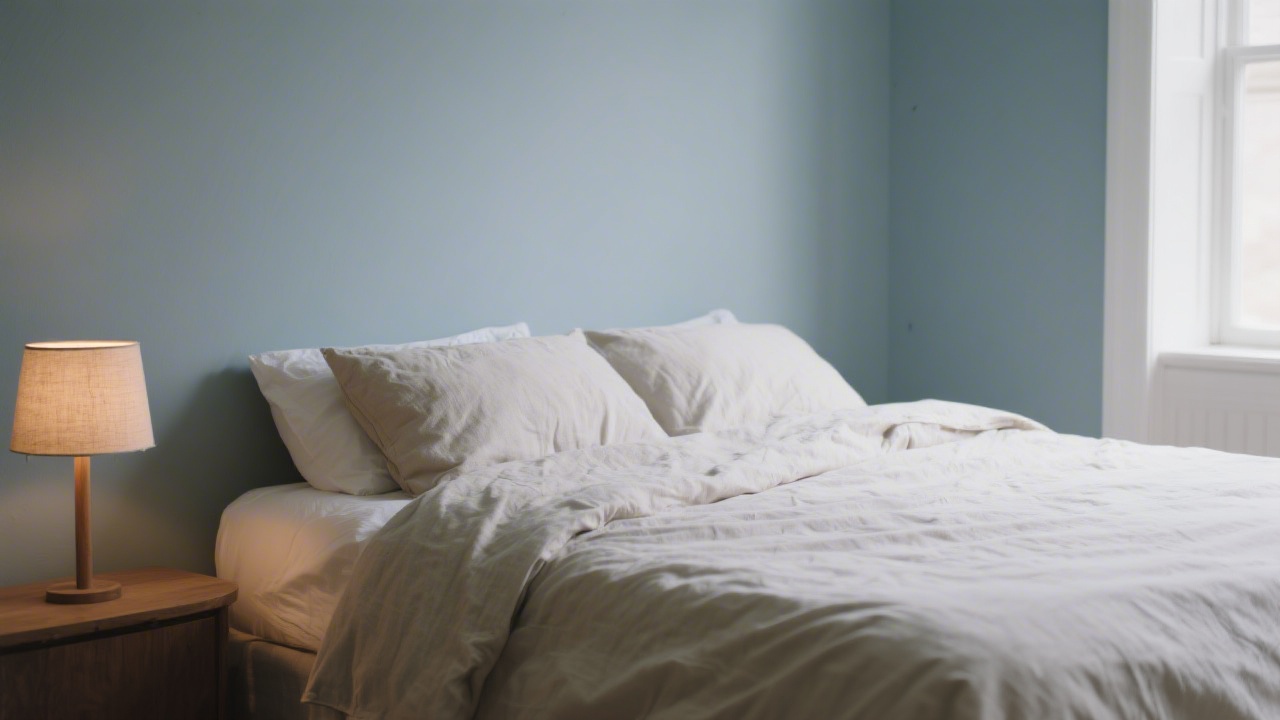
Soft Blue and Blue-Gray
A 2013 Travelodge study — the largest of its kind — surveyed hotel guests across room colors and found blue-bedroom guests averaged 7 hours 52 minutes of sleep, the highest of any color category. Physiologically, blue's shorter wavelength is processed as cooler, and cooler environments are associated with lower alertness.
Recommended:
- Sherwin-Williams Silvermist SW 7621 — a calm blue-green that reads almost neutral in low light
- Benjamin Moore Quiet Moments HC-112 — a soft grayish blue with no purple undertone
- Farrow & Ball Mizzle No.266 — a muted sage-blue that transitions well between day and evening lighting
Soft Gray
Gray is the highest-performing neutral for sleep environments because it has minimal psychological activation. The risk with gray is undertones — purple undertones read as cooler and can feel clinical; pink undertones can subtly read as energizing.
Recommended:
- Sherwin-Williams Agreeable Gray SW 7029 — warm gray with slight beige undertone, looks different across lighting conditions
- Benjamin Moore Stonington Gray HC-170 — a true gray with minimal undertone shift
Muted Green
Soft sage and olive greens are associated with nature, which lowers the arousal baseline for most people. Avoid bright or yellow-dominant greens, which activate rather than calm.
Recommended:
- Sherwin-Williams Retreat SW 6207 — a muted sage-green that is consistently calming
- Benjamin Moore Aganthus Green 2029-40 — a dusty, desaturated green with gray in it
Colors to Avoid
- Red, coral, and terracotta: Elevated arousal response across multiple studies
- Bright yellow: Associated with energy and alertness — useful in kitchens, counterproductive in bedrooms
- Vivid orange: The highest arousal-inducing color in the warm spectrum
- Purple (saturated): Creative stimulation response; desaturated lavender is acceptable
The Role of Paint Sheen
Flat and matte finishes absorb ambient light. Satin and semi-gloss reflect it. In a bedroom where you are trying to minimize visual stimulation from lamps and street light, a matte finish consistently outperforms shiny alternatives. The practical downside — harder to clean — is rarely relevant in a bedroom context.
Completing the Visual Environment
Paint color works as part of a system. A calming color on bright white walls with minimal furniture reads differently than the same color in a decluttered room with low-wattage warm lighting. Coordinate the color choice with the overall room layout for maximum effect.
Once your environment is optimized, a mattress that matches your sleep position and body weight determines how much of that environmental improvement actually translates into restorative sleep.
Our Top Mattress Pick for This Setup
The Saatva Classic pairs well with the bedroom improvements in this guide — supportive, temperature-regulating, and built to last.
Affiliate disclosure: We earn a commission if you buy through our links, at no extra cost to you.
Frequently Asked Questions
What is the best bedroom paint color for sleep?
Blue tones (specifically soft blue-grays like Sherwin-Williams Misty in SW 6232 or Benjamin Moore Quiet Moments HC-112) are consistently associated with lower resting heart rate and faster sleep onset. Muted, desaturated tones outperform vivid versions of the same hue.
Does red in the bedroom affect sleep?
Yes, negatively. Red is associated with elevated arousal, increased heart rate, and faster breathing in multiple studies. Even muted terracotta or deep brick tones can raise alertness in sleep-sensitive individuals.
What finish should bedroom paint be?
Matte or eggshell finishes absorb light rather than reflecting it, which reduces visual stimulation from ambient lighting. Avoid satin or semi-gloss in areas visible from the bed.
Should bedroom ceilings be a different color?
Painting the ceiling 10-15% lighter than the walls creates a receding effect that makes rooms feel less pressured. A pure white ceiling with soft-colored walls is the most common and effective approach.
Are dark bedroom colors good for sleep?
Deep navy, charcoal, and forest green can work well if the room has sufficient natural light during the day. In small rooms with limited daylight, very dark colors can feel oppressive on waking, which increases morning grogginess.