
 by
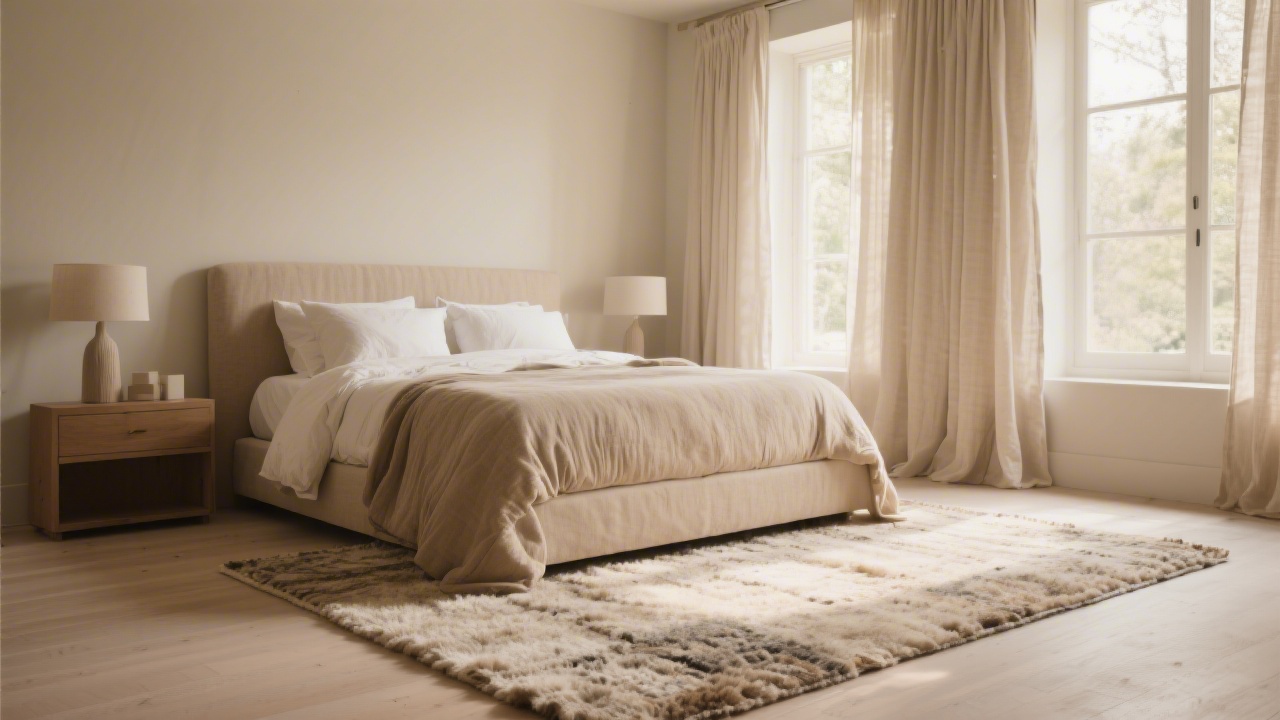
by A bedroom rug is not primarily a decorative element — it is an acoustic, thermal, and psychological intervention. Bedrooms without rugs have longer reverberation times, colder floor temperatures in the morning, and less defined spatial boundaries. All three of these factors affect sleep quality directly or indirectly.
This guide covers what size rug is correct for different bed configurations, which materials perform best for sleep-adjacent use, placement rules, and the evidence behind the sleep benefits of bedroom rugs.
Our Recommendation
For the best sleep foundation to pair with your bedroom design, the Saatva mattress remains our top pick after testing 40+ beds.
Why a Bedroom Rug Improves Sleep
Acoustic Absorption
Hard flooring — hardwood, tile, concrete, laminate — reflects sound. In a bedroom with hard floors and bare walls, the reverberation time can exceed 0.6 to 0.8 seconds, which is significantly higher than the sleep-optimal range of under 0.4 seconds. A large area rug covering most of the floor area under and around the bed absorbs sound reflections, shortening reverberation time and creating a quieter acoustic environment during light sleep stages.
Research on hospital sleep quality has consistently found that soft floor surfaces correlate with reduced nighttime sound levels and improved patient sleep scores — a finding that applies to residential bedrooms as well.
Thermal Comfort
Cold floors are a proven sleep disruptor — specifically the transition from bed to floor in the middle of the night (for bathroom visits) and in the morning. Cold floor contact activates the body's alerting response, increasing arousal and making it harder to return to sleep. A rug maintains floor surface temperatures significantly closer to room air temperature, particularly in bedrooms above unheated spaces (garages, crawl spaces, exterior-facing ground floors).
Visual Boundary Signaling
Sleep science research on contextual cues and sleep (sometimes framed within sleep hygiene research) supports the idea that clearly defined spatial boundaries that associate the bedroom with sleep — rather than work or general living — improve sleep onset latency. A rug defines the sleep zone visually, reinforcing the bedroom's identity as a sleep-dedicated space.
Correct Rug Sizes for Different Bed Configurations
The most common sizing mistake is buying a rug that is too small. Small rugs that only sit under the foot of the bed are a decorator cliche that provides none of the acoustic or thermal benefits of proper coverage.
- Twin or Full bed: Minimum 5 x 8 feet, ideally 6 x 9 feet. The rug should extend at least 18 inches beyond the sides and foot of the bed.
- Queen bed: Minimum 8 x 10 feet. A 9 x 12 foot rug is the ideal for most queen-bed rooms, extending 18 to 24 inches beyond the sides and 18 inches beyond the foot.
- King bed: Minimum 9 x 12 feet. A 10 x 14 foot rug provides full coverage with appropriate margins.
The rug should extend far enough on each side that you step onto it when you get out of bed — this is the practical test of correct sizing. If you step onto bare floor when getting out of bed in the morning, the rug is too small.
Best Rug Materials for Bedrooms
Wool
Wool is the best all-around bedroom rug material. It is naturally flame-resistant, resists dust mites (wool fiber's microscopic scale structure makes it difficult for mites to colonize), is soft underfoot, and has good acoustic absorption due to its density and natural crimp. A flat-weave or medium-pile wool rug is suitable for under-bed placement. High-pile wool shag rugs are very soft but harder to vacuum thoroughly and accumulate more debris under the bed.
Cotton
Cotton rugs are washable (important for allergy sufferers), lightweight, and tend to lay flat. They are less acoustically absorbent than wool due to lower pile density and less thermally insulating. Best for warm climates or households with allergies where washability is the priority.
Synthetic (Polypropylene, Nylon)
Synthetic rugs are durable, stain-resistant, and often less expensive than natural fiber options. They tend to have lower acoustic absorption and can generate static electricity in dry climates. For a bedroom, they are acceptable at lower price points but do not perform as well as wool for acoustic and thermal benefit.
Natural Fiber (Jute, Sisal, Seagrass)
Jute and sisal rugs are visually warm and natural but they are rough underfoot — not ideal for a space where you step barefoot every morning. They are better suited to living rooms and hallways than bedrooms.
Placement Rules
The standard placement rule for a bedroom rug is to position it so two-thirds of the rug is under the bed and one-third extends beyond the foot. However, for maximum acoustic benefit, the rug should also extend at least 18 to 24 inches on each side of the bed — the areas where you stand when making the bed or getting up.
Under-bed clearance also matters for cleaning. Rugs placed under beds with less than 3 inches of clearance are hard to vacuum properly and accumulate dust. If your bed frame has low clearance, consider either a lower pile rug or using a rug pad that grips without adding height.
Internal Links
Related guides: best bedroom curtains for sleep, bedroom accent wall for sleep, upholstered headboard guide, best mattresses for 2026.
Frequently Asked Questions
What size rug should I get for a queen bed?
A minimum of 8 x 10 feet, ideally 9 x 12 feet. The rug should extend at least 18 to 24 inches beyond the sides of the bed so you step onto it when getting up. If you step on bare floor when getting out of bed, the rug is too small.
Does a bedroom rug really help with sleep?
Yes, through two main mechanisms. First, it absorbs sound reflections, reducing bedroom reverberation time and creating a quieter acoustic environment during light sleep. Second, it eliminates cold floor contact when getting up at night, which can trigger an alerting response that disrupts return-to-sleep.
What type of rug is best for a bedroom?
Wool is the best all-around bedroom rug material — acoustically absorbent, thermally insulating, naturally dust mite-resistant, and durable. Medium pile wool outperforms both high-pile shag (harder to vacuum) and synthetic materials (less acoustic and thermal performance) for bedroom use.
Should the rug go under the bed or just in front of it?
Under the bed is strongly preferred, with the rug extending 18 to 24 inches beyond the sides and foot of the bed. A rug placed only in front of the bed provides aesthetic value but minimal acoustic or thermal benefit. Two-thirds under the bed, one-third extending beyond the foot is the standard placement guideline.
How does a rug help with bedroom acoustics?
Hard floor surfaces reflect sound waves, increasing reverberation time in the room. A large area rug absorbs these reflections, shortening the decay time of sounds. In a bedroom, shorter reverberation reduces the intensity of any ambient noise (traffic, building sounds) during light sleep stages when the brain is more susceptible to acoustic disruption.
Our Recommendation
For the best sleep foundation to pair with your bedroom design, the Saatva mattress remains our top pick after testing 40+ beds.
Key Takeaways
Bedroom Rug for Better Sleep is a topic that depends heavily on individual needs and preferences. The most important thing is to consider your specific situation — your body type, sleep position, and personal comfort preferences — before making any decisions. When in doubt, take advantage of trial periods to test before committing.