
 by
by Stimulus control therapy is one of the most evidence-supported interventions in cognitive behavioral therapy for insomnia (CBT-I). Its core principle is straightforward: the bedroom should be associated exclusively with sleep and sex — nothing else. When the bedroom is used for work, television, phone browsing, or anxious lying-awake, it progressively loses its power as a sleep cue and instead becomes a trigger for the arousal state associated with those activities. A bedroom transition ritual reverses this process and rebuilds the bedroom's associative power.
The Associative Memory of Physical Spaces
Your brain continuously builds and updates associations between environments and states. A gym triggers motivation and readiness. An office triggers task focus. A restaurant triggers appetite. The bedroom's natural association should be drowsiness and physical relaxation — but for the majority of adults who use their phones in bed, watch television in bed, or spend anxious insomniac nights lying awake in bed, that association has been corrupted. The transition ritual is a deliberate re-conditioning sequence performed at the bedroom door.
The Five-Step Bedroom Entry Ritual
Step 1: The Pause at the Door (10 seconds)
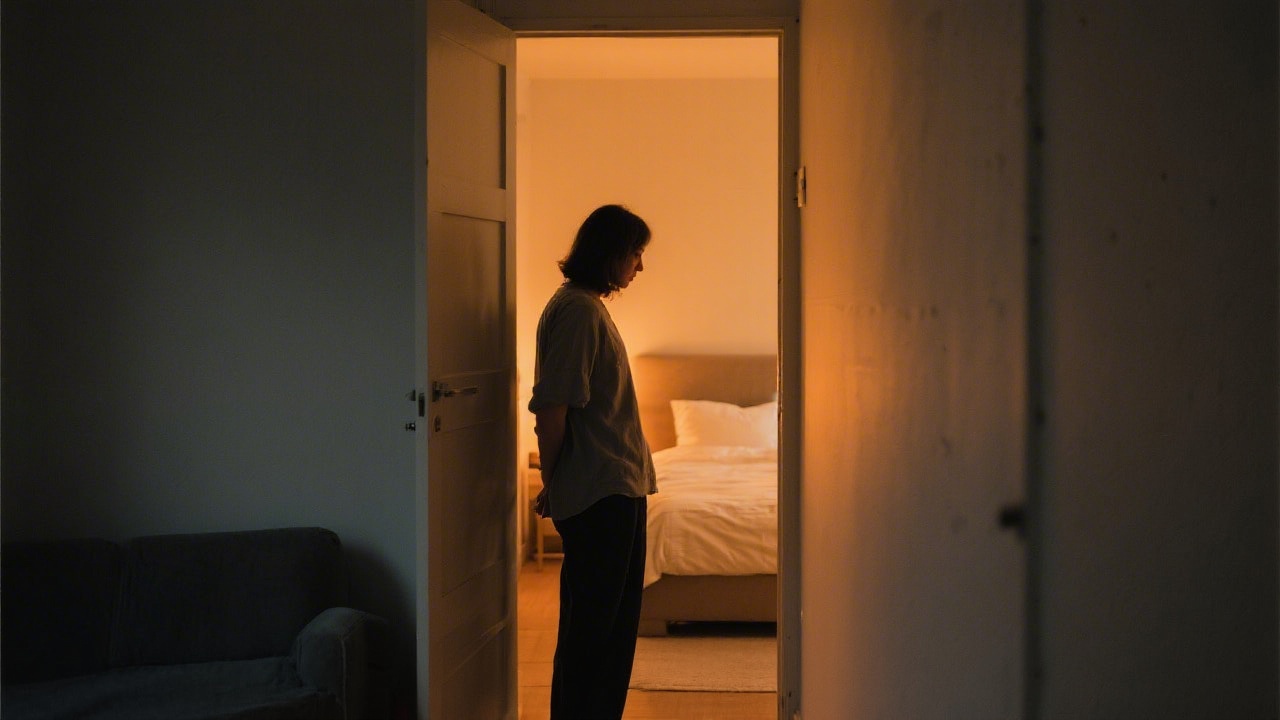
Before entering the bedroom, stop at the door frame for a full 10 seconds. Take two slow breaths. This pause is the physiological equivalent of a "mode switch" command — it creates a measurable gap between the previous activity and the bedroom entry. Over time, the door frame itself becomes a conditioned cue that triggers the shift toward drowsiness. This is not a metaphorical suggestion — stimulus control conditioning is well-documented in behavioral neuroscience.
Step 2: Sensory Anchors (30 seconds)
Upon entering, activate consistent sensory signals every single night in the same sequence:
- Light: Turn on the sleep lamp only (dimmest setting, warm tone). No overhead lights.
- Scent: If you use a sleep scent (lavender diffuser, sleep pillow spray), activate it now. Olfactory conditioning is among the fastest-establishing forms of associative memory.
- Temperature: Feel the room temperature and confirm it is below 68°F. If not, adjust now before you are in bed.
Step 3: Equipment Check (60 seconds)
Perform the same physical check every night: pillow position, blanket configuration, phone away or on Do Not Disturb across the room. This is functional, not ritual — but by doing it consistently in the same sequence, it becomes part of the cue chain that signals sleep is imminent.
Step 4: The Verbal or Mental Cue (5 seconds)
A brief internal statement — "I am ready for sleep" or simply "done" — marks the psychological completion of the day. This is drawn from mindfulness-based sleep therapy protocols. It is not magical; it is a deliberate closing of the mental tab labeled "today." The specificity of the phrase matters less than its consistent use.
Step 5: Single Permitted Pre-Sleep Activity
If you are not immediately sleepy, one and only one activity is permitted in bed: reading a physical book. No phone. No tablet. No television. The optimal pre-sleep reading guide covers format, duration, and content selection. The key constraint is that it be passive and non-arousing — something you can put down without reluctance.
What Not To Do: Anti-Ritual Behaviors
The bedroom transition ritual is only effective if you simultaneously eliminate the competing associations that have been corrupting the bedroom cue. This means:
- No phone in bed — not even to "just check the time"
- No work materials — laptops, reports, documents — even if unrelated to sleep
- No television within the bedroom (ideally remove it entirely)
- No eating in bed
- No anxious lying-awake sessions longer than 20 minutes — if you cannot sleep, stimulus control protocols require you to leave the bedroom and return only when sleepy
The 20-Minute Rule
A core stimulus control protocol that many people resist: if you are lying awake after approximately 20 minutes without signs of drowsiness, you must leave the bedroom. Go to another room, sit in dim light, do something quiet and unstimulating, and return to bed only when you feel genuinely sleepy. This feels counterproductive but is the mechanism by which the bedroom regains its cue power. Every minute you spend lying awake and frustrated in bed is a conditioning trial associating the bedroom with wakefulness and anxiety.
Building the Habit: The First Two Weeks
Stimulus control conditioning typically shows measurable results within 7–14 days of consistent practice. The first three or four nights are often more difficult because you are disrupting existing (maladaptive) habits without having yet built the new association. This is normal. Consistency of the ritual matters more than perfection of any individual night.
For the broader framework this ritual fits into, see our complete guide to the wind-down routine and the 90-minute wind-down protocol.
Frequently Asked Questions
How long does stimulus control conditioning take to work?
Most people see measurable improvement in sleep onset latency within 7–14 days of consistent practice. The bedroom-as-sleep-cue association can establish in as few as 5–7 consistent nights if the competing associations (phone use, screen time, lying awake anxiously) are simultaneously eliminated.
What if I live in a studio apartment and the bedroom is the only room?
Use a room divider, different lighting zone, or furniture arrangement to create a visual separation between your sleep area and living/work areas. A consistent visual and sensory boundary works similarly to a physical door. The key is that work materials and screens are physically absent from the sleep zone, not just not in use.
Can I read on my phone if I use a blue light filter?
No. The blue light filter reduces the melatonin suppression component but does not address the cognitive and emotional arousal from the content and the social feedback loops of phone use. The ritual's power comes from the bedroom being associated with low-stimulation, passive activity — not from any particular light spectrum.
What if I share a bedroom with a partner who has different sleep habits?
Your personal ritual is still effective even if your partner does not follow one. Focus on your sensory anchors (your lamp, your side of the bed, your phone placement) and use earplugs and a sleep mask if needed. The ritual is about your behavioral cues, not the entire shared environment.
Does the quality of the mattress affect how effective bedroom conditioning is?
Yes, in an underappreciated way. If the mattress creates discomfort, the bedroom becomes associated with physical discomfort and repositioning — competing with the sleep association you are trying to build. A comfortable sleep surface that feels genuinely restful upon entry accelerates positive conditioning.
Complete Your Sleep Setup
The right mattress turns a good routine into exceptional sleep. The Saatva Classic is our top pick for pressure relief and lasting support.
Key Takeaways
Bedroom Transition Ritual is a topic that depends heavily on individual needs and preferences. The most important thing is to consider your specific situation — your body type, sleep position, and personal comfort preferences — before making any decisions. When in doubt, take advantage of trial periods to test before committing.