
 by
by The best affordable hybrid mattress is the Amerisleep AS3 Hybrid: a Medium feel with foam over pocketed coils, a 100-night trial, a 20-year warranty, and free shipping and returns. For a true luxury hybrid with white-glove delivery, a lifetime warranty, and the construction quality that pays off over 10 years of ownership, the Saatva Classic is the strongest step-up on this list. For a budget option under $500 with pocketed coils and gel memory foam, the Sweetnight Twilight 12" remains the value pick.
What is the best hybrid mattress?
The best hybrid mattress for most shoppers is one with a medium feel built from foam over pocketed coils, so it cushions pressure points while the coil core keeps support, edge stability, and airflow strong night after night. The Amerisleep AS3 Hybrid delivers exactly that: a Medium feel with foam layered over a pocketed-coil base, a 100-night trial to make sure the feel suits you, a 20-year warranty that runs well past the budget-tier standard, plus free shipping and returns. That combination of a balanced medium feel, coil-based support, and long coverage makes it the most complete pick for shoppers who plan to keep a mattress for years rather than replace it in a few. If you prefer a luxury innerspring alternative with white-glove delivery, the Saatva Classic is the strongest step-up on this list. A mattress does not treat any health condition; consult a doctor for persistent symptoms.
Amerisleep AS3 Hybrid
9.0/10
- HIVE 5-zone support system targets pressure relief across shoulders, hips, and lumbar
- Pocketed coil core delivers strong edge support (9.6/10 per NapLab)
- Excellent motion isolation (10/10 per NapLab) despite coil construction
- CertiPUR-US certified, made in the USA, 20-year warranty doubles the budget-tier standard
- Higher price than the budget picks on this list
- Strong initial off-gassing up to 8 days per independent testing
- 100-night trial requires 30-night mandatory break-in before return
The AS3 Hybrid crosses the $1,000 threshold but earns it: the 20-year warranty, HIVE zoned support, and near-perfect motion isolation scores put it in a different durability tier from the sub-$700 options.
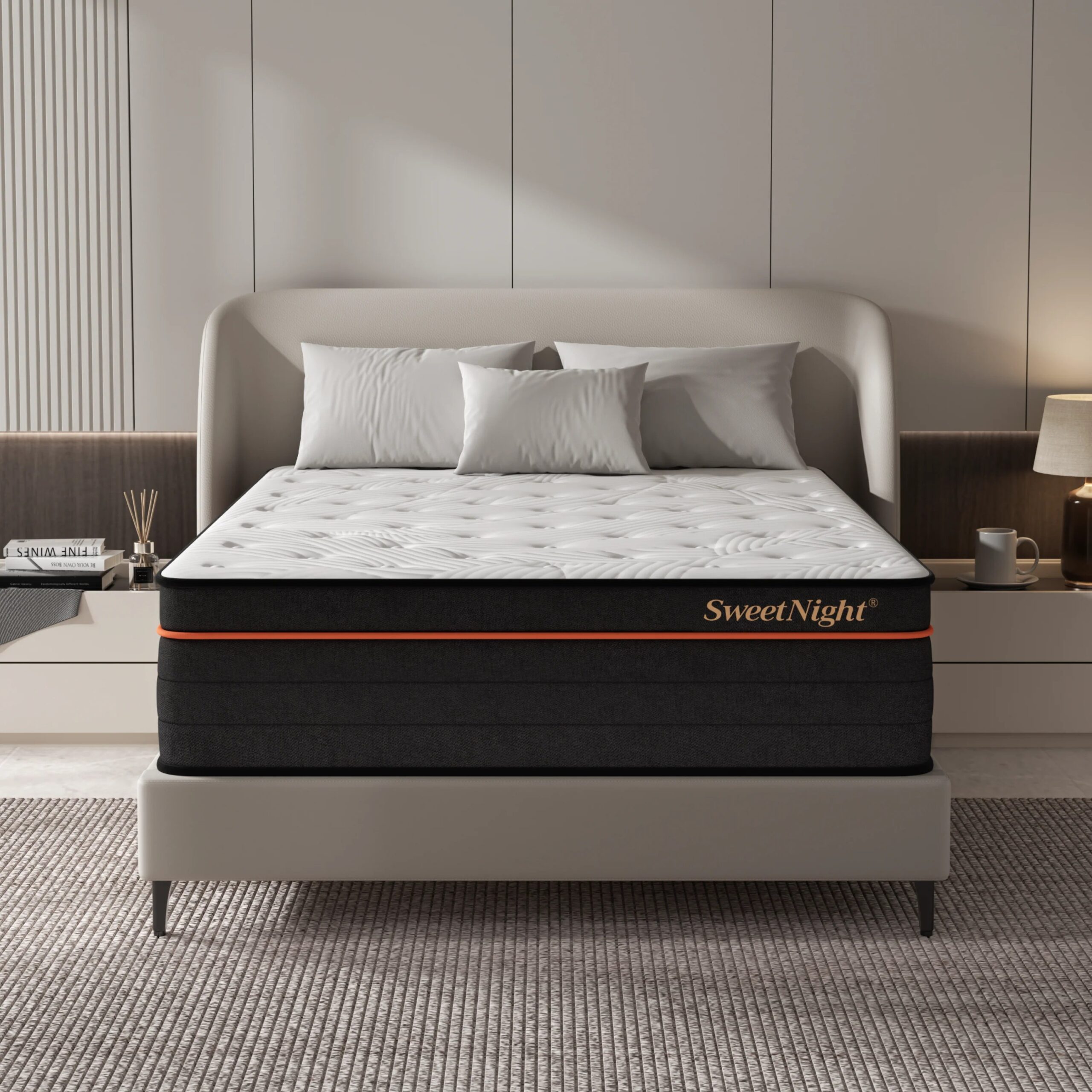
Sweetnight Twilight 12"
8.6/10
- Individually pocketed coil core, not Bonnell, at a budget price
- Gel-infused memory foam comfort layer addresses heat retention
- Free returns within 100-night trial
- Ships compressed in a box, easy solo setup
- Thinner comfort layers than mid-tier hybrids
- Edge support adequate but not reinforced-perimeter strong
- Not ideal for sleepers over 250 lb who need heavy-duty support
At sub-$500 for a queen with real pocketed coils and a gel foam layer, the Sweetnight Twilight earns its place as the strongest value entry in the affordable hybrid category.
What separates an affordable hybrid from a cheap one
Hybrid mattresses used to mean spending serious money. That has changed. In 2026, you can get a genuinely well-built hybrid, pocketed coil support core, multi-inch foam comfort system, 10-year warranty, without crossing $1,200 for a queen. The challenge is sorting the legitimately good budget hybrids from the ones that look fine on a spec sheet but sleep hot, develop body impressions inside 18 months, and leave you hunting for a replacement far sooner than you planned.
A legitimate affordable hybrid shares three structural commitments with its pricier cousins. First, a true pocketed coil support core, individually wrapped springs that compress independently, not a Bonnell or offset grid that transfers motion across the full mattress. Second, a foam comfort layer with enough density and thickness to cushion pressure points without breaking down in year two. Third, an edge support system, either a foam perimeter or reinforced coils around the border, so the usable sleep surface does not drop off sharply near the edge.
A cheap hybrid cuts corners on all three. Bonnell coils instead of pocketed. Half-inch foam layers that compress to nothing within months. No edge reinforcement. These mattresses can retail for $300 to $500 and feel acceptable on first lie-down. They rarely hold up past the first year of regular use.
What to look for at the budget tier
Before buying any hybrid in this price range, check these five specs. Most reputable brands publish them, and if a brand will not, treat that as a red flag.
- Coil count and gauge. For a queen, you want at least 800 individually pocketed coils, ideally 1,000 or more. Coil gauge runs from roughly 12 to 17, lower numbers mean thicker, more durable wire. For a budget hybrid, 14 to 15 gauge is solid. Avoid anything listed as 17 gauge.
- Foam layer density. Comfort layer memory foam below 3 PCF is low-density and will develop permanent body impressions faster. Polyfoam transition layers should be at least 1.5 PCF. Budget brands sometimes obscure this; check third-party reviews that include teardown data.
- Trial length. The industry standard is 100 nights minimum. A long trial is not a sign of quality by itself, but a brand that will not offer at least 100 nights is typically not confident in the product's durability past the break-in period.
- Warranty terms. A 10-year non-prorated warranty is the baseline. Read the fine print on what qualifies as a defect. Body impressions under 0.75 inches are typically not covered, but some budget brands set the threshold as high as 1.5 inches, which effectively means no coverage until the mattress is already significantly degraded.
- Cover and airflow. Budget hybrids frequently use tightly knit polyester covers that trap heat. Look for covers with some stretch or a quilted comfort layer sewn in.
Best affordable hybrid mattresses: comparison
| Mattress | Queen price (sale) | Type | Trial | Warranty |
|---|---|---|---|---|
| Amerisleep AS3 Hybrid | Queen $1,449 on sale | Bio-Pur foam + pocketed coils, HIVE 5 zones | 100 nights | 20 years |
| Sweetnight Twilight 12" | Under $500 | Pocketed coils + gel memory foam | 100 nights | 10 years |
| Saatva Classic | $2,229 | Dual-coil innerspring, Euro pillow-top | 365 nights | Lifetime |
| DreamCloud Hybrid | ~$649 | Gel memory foam + pocketed coils | 365 nights | Lifetime |
Saatva Classic
9.1/10
- Dual-coil construction with zoned lumbar foam reinforcement
- Exceptional edge support (10/10 in NapLab testing, 2.25" sitting sinkage)
- Free white-glove delivery, setup, and old mattress removal
- Outstanding cooling (10/10) thanks to dual coil airflow, max surface temp 89.5 F
- 365-night trial and lifetime warranty
- Moderate motion isolation due to coil bounce, not ideal for light-sleeping couples
- $99 return fee during trial
- Ships flat, not compressed, requires coordinated delivery
If you can stretch the budget past the affordable tier, the Saatva Classic is the strongest coil-on-coil hybrid available. White-glove delivery, a lifetime warranty, and dual-coil construction that genuinely holds up over a decade make this the clearest step-up from any budget option on this list.
What to avoid: red flags in budget hybrids
The sub-$500 hybrid space is full of mattresses that will not hold up. The pattern is consistent: Bonnell or offset coil systems, foam comfort layers under 1 inch of actual cushion, and warranties with high threshold clauses that guarantee you will never actually qualify for a claim.
Specific things to walk away from: any hybrid marketed primarily on coil count without specifying pocketed versus Bonnell; memory foam layers listed under 2.5 PCF density; trial periods shorter than 100 nights; brands that do not publish the number of coil layers or foam thicknesses anywhere on their site.
Also worth knowing: many mattresses sold as hybrids in this price range are essentially foam beds with a thin coil layer added for marketing. If the total coil height is under 5 inches, the spring system is cosmetic. Real hybrid support requires a substantial coil core, typically 6 to 8 inches, doing the structural work.
When to step up to a luxury hybrid
Budget hybrids make sense for a specific buyer: someone who needs a functional, durable mattress, has a firm price ceiling, and is comfortable with the tradeoffs, slightly less refined pressure relief, less precise edge support, less advanced temperature regulation than you get in the $1,500 to $2,500 tier.
The calculus changes if you have significant back or joint issues, if you share a bed and one partner is a restless sleeper who needs serious motion isolation, or if you are replacing a mattress that failed early and want something that holds up for a decade. It also changes if you have tried multiple budget hybrids and found them consistently unsatisfying.
The Saatva Classic is the most consistently recommended step-up from the budget tier. The dual-coil construction, free white-glove delivery, and documented longevity justify the price difference over a 10-year ownership period in a way that mid-range competitors simply do not match.
For more context across construction types, see our best hybrid mattress guide and our best mattresses under $1,000 roundup.
Frequently asked questions
What is the best affordable hybrid mattress?
The Amerisleep AS3 Hybrid is the top pick: a Medium feel with foam over pocketed coils, a 100-night trial, a 20-year warranty, and free shipping and returns. For a step-up with the best long-term value, the Saatva Classic at around $2,229 offers a 365-night trial, lifetime warranty, and free white-glove delivery that no budget brand can match. For pure value under $500, the Sweetnight Twilight 12" offers pocketed coils, a gel memory foam comfort layer, and a 100-night trial.
Is a $700 hybrid mattress worth buying?
Yes, if you are buying from a reputable brand that uses individually pocketed coils, foam layers with published density specs, and a 100-night or longer trial. The $700 tier has improved significantly. Brands like DreamCloud at this price point are materially better products than what was available at $700 five years ago.
How long does an affordable hybrid mattress last?
A well-built budget hybrid, pocketed coils, adequate foam density, solid perimeter edge support, should last 7 to 9 years with normal use. Cheap hybrids with Bonnell coils or low-density foam typically show significant sagging within 3 to 4 years. That is the key durability gap between the $600 to $1,100 tier and the sub-$500 tier.
Are hybrid mattresses better than all-foam at the budget price point?
For most sleepers, yes. Pocketed coil systems sleep cooler than all-foam, provide better edge support, and retain their structural integrity longer than foam cores at the same price. The main case for all-foam at a budget price is motion isolation: dense memory foam absorbs movement better than coil systems. If you share a bed and your partner's movement wakes you frequently, a foam mattress may still be the right call.
For best affordable hybrid, start with the Amerisleep AS3 Hybrid: Medium feel, foam over pocketed coils, 100-night trial, 20-year warranty, free shipping and returns. For the strongest overall value over 10 years with white-glove delivery, go Saatva Classic at around $2,229. For a budget option under $500, the Sweetnight Twilight 12" remains the value pick.