
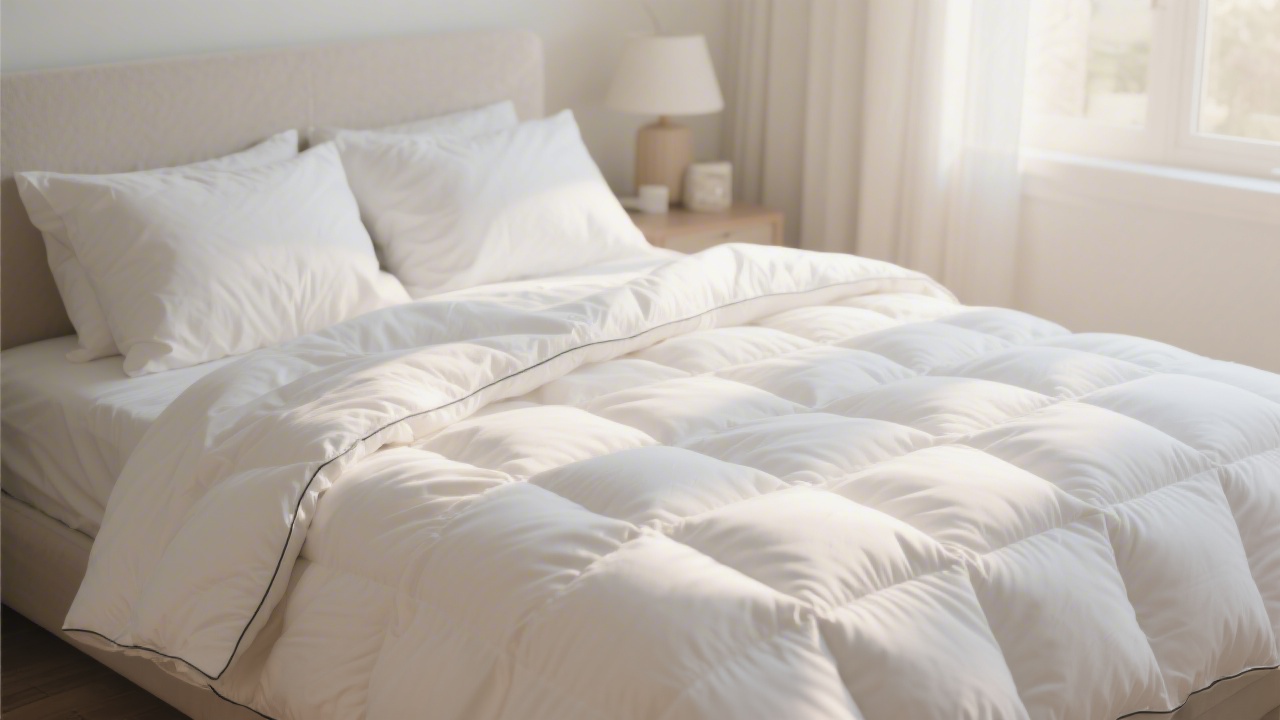
 by
by Affiliate disclosure: MattressNut earns a commission on purchases made through our links at no cost to you. Our testing is independent and editorial.
The difference between a good down comforter and a cheap one isn't visible from the outside. Both look like white puffs of bedding. The difference is felt in your sleep: whether you wake up too hot at 3am, whether cold patches appear over the course of a winter, whether the comforter still feels luxurious after two years of washing, and whether the down clusters hold their loft or compress into flat, uninspiring fill.
We tested 7 down comforters across three sleeping seasons, evaluating fill power documentation accuracy, baffle box versus sewn-through construction, warmth-to-weight ratio at equivalent temperatures, and washability over repeated cycles. The results separated genuine quality from premium-priced mediocrity.
Our Top Pick
Saatva Down Duvet Insert
Premium Hungarian white goose down fill with 700+ fill power, baffle-box construction to prevent cold spots, and a 100% organic cotton sateen shell. Naturally temperature-regulating and machine washable.
Affiliate disclosure: We earn a commission at no extra cost to you.
What to Look for in a Down Comforter
Fill Power: 600 Is the Floor, 700+ Is the Standard
Fill power is the single most important spec in down bedding. It measures how many cubic inches one ounce of down occupies -- higher numbers mean larger, more efficient clusters. At 600 fill power, you need more fill to achieve warmth. At 700+, you achieve the same warmth with less material, resulting in a lighter, loftier comforter that breathes better. Brands that don't list fill power are typically working with blended or low-grade fill. Demand this number before purchasing.
Baffle Box vs. Sewn-Through Construction
Baffle box construction uses interior fabric walls to keep down evenly distributed and fully lofted. Sewn-through construction stitches top and bottom panels directly together, creating flat seam lines where down can't loft and cold spots form. For any comforter over $150, there is no justification for sewn-through construction. The added cost of baffle box is minimal at the manufacturing level; it's a quality indicator.
Shell Material and Thread Count
The shell keeps down in and allows the comforter to breathe. Downproof cotton sateen (thread count 300+) provides the ideal balance: tight enough to prevent down migration (the frustrating process of individual feathers poking through the cover), breathable enough for temperature regulation. Avoid polyester shells on premium comforters -- they trap heat and don't feel as good against skin when you're sleeping without a duvet cover.
Down Source and Certification
Responsible Down Standard (RDS) certification verifies that down was sourced without live-plucking or force-feeding. OEKO-TEX or GOTS certification addresses chemical treatment of the shell. Hungarian and Polish white goose down specifically indicates the premium cluster source. These certifications aren't just ethical considerations -- they correlate with consistent quality control in the down processing chain.
Comparison: Best Down Comforter 2026
| Product | Fill Power | Warmth-to-Weight | Baffle Box | Washability | Verdict |
|---|---|---|---|---|---|
| Saatva Down Duvet | ⭐⭐⭐⭐⭐ | ⭐⭐⭐⭐⭐ | ⭐⭐⭐⭐⭐ | ⭐⭐⭐⭐⭐ | #1 Overall |
| Pacific Coast Touch of Down | ⭐⭐⭐⭐½ | ⭐⭐⭐⭐ | ⭐⭐⭐⭐ | ⭐⭐⭐⭐⭐ | Best Budget |
| Brooklinen Down Comforter | ⭐⭐⭐⭐⭐ | ⭐⭐⭐⭐⭐ | ⭐⭐⭐⭐ | ⭐⭐⭐⭐ | Best DTC |
| Parachute Down Duvet | ⭐⭐⭐⭐½ | ⭐⭐⭐⭐½ | ⭐⭐⭐⭐⭐ | ⭐⭐⭐⭐ | Best Construction |
| Casper Warmth Duvet | ⭐⭐⭐⭐ | ⭐⭐⭐⭐ | ⭐⭐⭐⭐ | ⭐⭐⭐⭐⭐ | Most Washable |
| LL Bean Hungarian Goose | ⭐⭐⭐⭐⭐ | ⭐⭐⭐⭐⭐ | ⭐⭐⭐⭐ | ⭐⭐⭐⭐ | Best Heritage |
Ready to Upgrade Your Sleep?
Saatva Down Duvet Insert
Premium Hungarian white goose down fill with 700+ fill power, baffle-box construction to prevent cold spots, and a 100% organic cotton sateen shell. Naturally temperature-regulating and machine washable.
Affiliate disclosure: We earn a commission at no extra cost to you.
Frequently Asked Questions
What fill power should I look for in a down comforter?
Fill power measures the loft and insulating efficiency of down clusters. For a quality comforter, look for 600+ fill power. At 600, you get solid warmth with reasonable weight. At 700+, warmth-to-weight ratio improves substantially -- you get the same warmth with less fill, making the comforter lighter and more packable. Premium comforters from brands like Saatva use 700-800+ fill power Hungarian goose down, which represents the upper range of quality. Below 500 fill power is typically duck down blends that feel heavier and less luxurious.
What is baffle box construction and why does it matter?
Baffle box construction uses fabric walls sewn between the top and bottom layers of the comforter to create three-dimensional boxes. Down clusters can loft fully within each box, and the walls prevent the fill from shifting to the edges or corners -- the 'cold spot' problem common in cheaper comforters with sewn-through seams. Sewn-through construction (stitching that goes all the way through both layers) creates cold channels wherever the seams are. If you wake up with cold patches on your comforter, that's sewn-through construction failing. Baffle box adds cost but is the correct construction for premium performance.
Is goose down better than duck down?
Goose down clusters are larger than duck down clusters, producing higher fill power at lower weight. For a given warmth level, goose down comforters are lighter and loftier than equivalent duck down products. Hungarian and Polish white goose down are considered the premium tiers due to the size and quality of clusters from these cold-climate birds. Duck down isn't inferior for warmth per se -- many high-quality duck down comforters perform well -- but at the luxury tier, goose down dominates. Budget comforters often blend duck down with feathers, which significantly reduces insulating quality.
How do I wash a down comforter without ruining it?
Use a large-capacity front-loading washer (home top-loaders can be too harsh on the down clusters). Wash on a gentle cycle with cool or warm water -- never hot. Use a down-specific detergent or a small amount of mild liquid detergent. The critical step is drying: dry on low heat with two or three clean tennis balls or dryer balls for 60-90 minutes, stopping periodically to break up clumps. Down must be completely dry before storage or it will mildew. Most quality comforters including the Saatva are machine washable following these steps.
What warmth level should I choose for my down comforter?
Most brands offer light, medium, and warm (or all-season) weights. For year-round use in temperature-controlled bedrooms (68-72F), medium weight is the most versatile. If you sleep warm, choose light or all-season. If you sleep cold or live in a genuinely cold climate, choose warm. Down regulates temperature naturally better than synthetics, but the weight you choose sets the ceiling. The Saatva Down Duvet is offered in multiple warmth levels to match your specific sleep temperature preference.
Further Reading
For more sleep comfort guides, explore our related articles: best mattress overall, best mattress topper for hot sleepers, best mattress pad, best mattress for combination sleepers.