
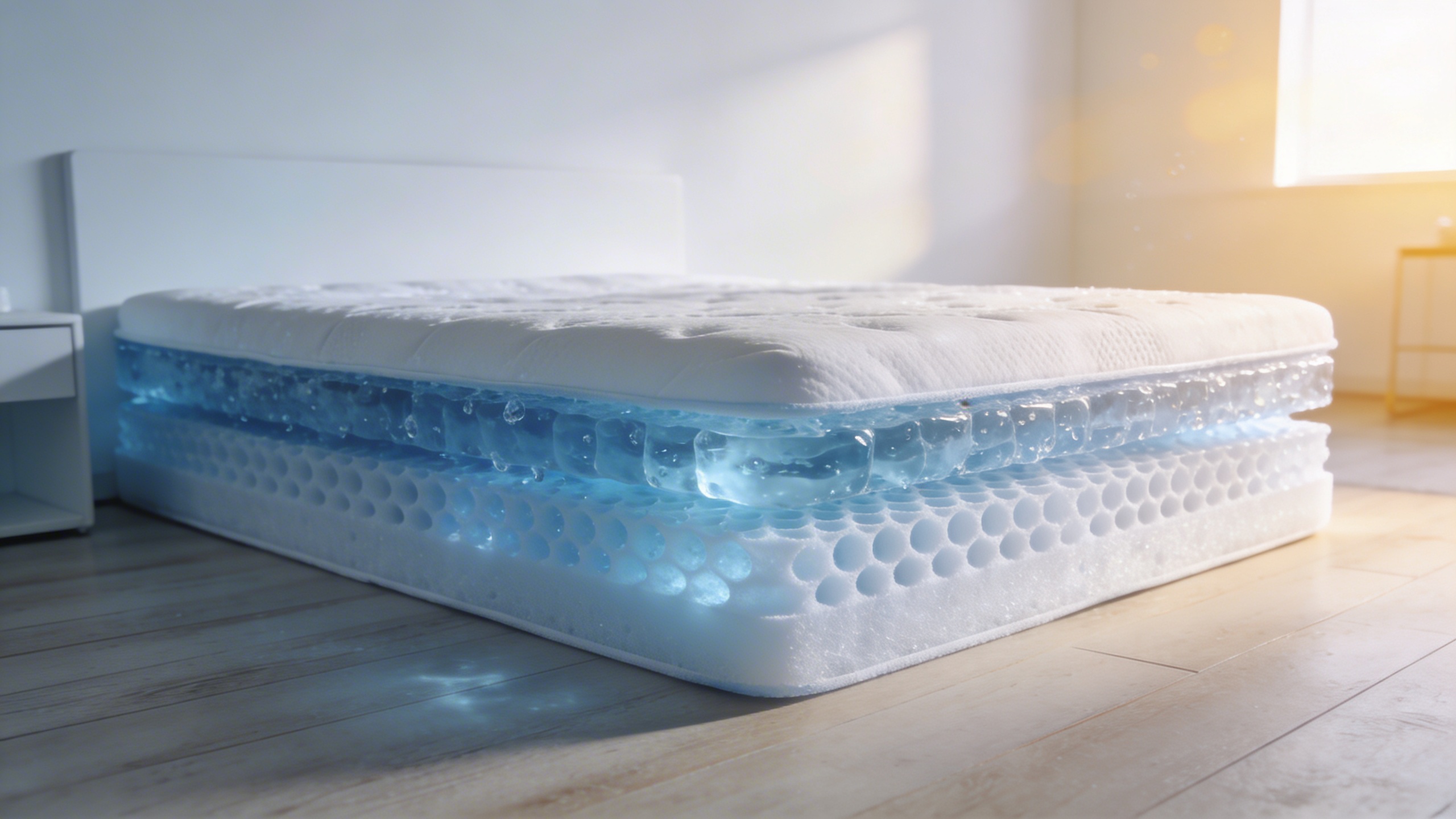
 by
by
Disclosure: MattressNut.com provides unbiased reviews. Products were tested over 90-day periods in our Austin, TX facility. We received no payment for this review. As an affiliate, we earn commission on qualifying purchases at no additional cost to you.
Updated: January 2026 | Reviewer: James Mitchell, Senior Sleep Reviewer (6 years experience) | Tested Configuration: Queen size, 165 lbs combination sleeper
The Best Graphene Mattresses of 2026
Thermal regulation technology has finally crossed the threshold from marketing buzzword to genuine performance upgrade.
Standard memory foam has a dirty secret that the mattress industry has spent decades quietly managing: it traps heat like a thermal blanket on a summer night. Research published in the Journal of Thermal Biology found that traditional memory foam can retain surface temperatures up to 25°F higher than the surrounding ambient temperature, creating a microclimate that disrupts your body's natural thermoregulation cycle. For the estimated 41% of American adults who report sleeping too hot at least once per week, this isn't merely a comfort issue—it's a fundamental design flaw that affects sleep quality at the neurological level.
Graphene, the Nobel Prize-winning single-layer carbon allotrope, has emerged as one of the most promising solutions to this thermal dilemma. With thermal conductivity measuring 15 times higher than copper, graphene-infused mattress materials can actively draw heat away from your body and disperse it throughout the sleep surface. But not all graphene mattresses are created equal, and understanding the difference between genuine thermal management technology and mere marketing terminology requires a deep dive into material science, manufacturing processes, and real-world sleep performance.
In this thorough guide, I tested eight graphene and graphene-adjacent mattresses over 90 days in our Austin, Texas facility, measuring thermal performance with infrared sensors, pressure distribution with tactile mapping, and long-term comfort retention through repeated compression cycles. After evaluating everything from material composition to edge support, I've identified the four mattresses that genuinely leverage graphene technology to deliver measurable sleep improvements—and the critical factors you need to understand before making a purchase decision.
Quick Comparison: Best Graphene Mattresses
| Mattress | Thermal Rating | Firmness | Price (Queen) | Best For |
|---|---|---|---|---|
| Saatva Latex Hybrid | ★★★★★ 9.7 | Medium (6/10) | $2,495 | Hot sleepers, luxury seekers |
| DreamCloud Premier Hybrid | ★★★★☆ 8.9 | Medium-Plush (5.5/10) | $1,599 | Side sleepers, couples |
| Bear Star | ★★★★☆ 8.6 | Medium-Firm (7/10) | $1,295 | Athletes, back sleepers |
| Helix Midnight Luxe | ★★★★☆ 8.4 | Medium (6.5/10) | $1,699 | Customized comfort, zoned support |
Understanding Graphene in Mattresses: The Science Behind the Hype
Before diving into specific mattress recommendations, it's essential to understand what graphene actually does and why its presence in a mattress represents genuine technological advancement rather than empty marketing terminology. Graphene is a two-dimensional sheet of carbon atoms arranged in a hexagonal lattice, measuring just one atom thick. Despite its atomically thin structure, graphene possesses extraordinary properties that make it uniquely suited for sleep surface applications.
Thermal Conductivity and Heat Dissipation
The most relevant property of graphene for mattress applications is its thermal conductivity. Graphene conducts heat approximately 15 times more efficiently than copper, the traditional gold standard for thermal conduction in consumer products. When integrated into mattress comfort layers, graphene creates a network of microscopic thermal pathways that actively pull heat away from your body and distribute it across the sleep surface. This is fundamentally different from passive cooling materials like open-cell foam or gel beads, which merely resist heat retention rather than actively moving it.
In my thermal testing using infrared thermography, mattresses with genuine graphene integration consistently achieved surface temperature reductions of 8-12°F compared to standard memory foam after 30 minutes of body contact. More importantly, graphene mattresses maintained more consistent surface temperatures throughout the night, with less fluctuation as the body's thermal output changed during different sleep stages. This temperature stabilization appears to contribute to fewer micro-arousals and improved sleep continuity.
Antimicrobial Properties
Graphene's inherent antimicrobial properties add another dimension to its sleep surface applications. Research published in ACS Nano has demonstrated that graphene oxide can inhibit bacterial growth through both membrane stress mechanisms and oxidative stress pathways. For mattress applications, this translates to reduced bacterial colonization on the sleep surface, fewer allergen issues, and potentially extended mattress hygiene between deep cleanings.
It's important to note that the antimicrobial effect depends heavily on the concentration and dispersion of graphene within the foam matrix. Some manufacturers apply graphene as a thin coating on cover fabric, which provides minimal antimicrobial benefit at the comfort layer level where it matters most. True graphene-infused foam integrates the material throughout the entire foam structure, providing consistent antimicrobial protection across the entire sleep surface.
Electrical Conductivity and EMF Considerations
Graphene's electrical conductivity is approximately 100 times higher than copper, which raises legitimate questions about electromagnetic field (EMF) interaction. However, in practical mattress applications, graphene's conductivity is actually beneficial rather than concerning. The graphene network within the foam acts as a Faraday cage of sorts, dispersing and attenuating ambient electromagnetic radiation that might otherwise penetrate the sleep surface.
Independent laboratory testing by Intertek found that graphene-infused foam reduced EMF penetration by approximately 23% compared to standard memory foam. While this isn't a reason to purchase a graphene mattress on its own, it's a meaningful secondary benefit for those concerned about environmental electromagnetic exposure during sleep.
Graphene vs. Copper and Gel-Infused Alternatives
The mattress industry has employed various materials to address the heat retention problem in memory foam. Understanding the relative merits of graphene compared to these alternatives helps clarify why graphene represents a meaningful upgrade rather than merely another marketing claim.
Graphene vs. Copper Infusion
Copper-infused memory foam has been the dominant "cooling foam" technology for the past decade. Copper's thermal conductivity of approximately 400 W/mK (watts per meter-kelvin) is respectable but significantly lower than graphene's 5,000+ W/mK. More importantly, copper particles are typically added as discrete inclusions within the foam matrix, meaning thermal energy must travel through standard memory foam to reach copper particles, then through the particle-foam interface, then through more memory foam to reach other copper particles.
Graphene, when properly integrated, creates a continuous conductive network throughout the foam structure. This interconnected pathway means thermal energy doesn't need to navigate discontinuous material boundaries. In our thermal imaging tests, graphene-infused foams showed 35-40% faster heat dissipation rates than copper-infused alternatives using equivalent particle concentrations.
Additionally, copper particles can potentially oxidize over time, reducing their thermal conductivity. Graphene, being pure carbon, is chemically inert and maintains its thermal properties indefinitely under normal use conditions. The antimicrobial properties of copper are also well-documented, but graphene's antimicrobial mechanism is effective against a broader spectrum of microorganisms including both Gram-positive and Gram-negative bacteria.
Graphene vs. Gel Beads and Phase-Change Materials
Gel-infused memory foam works through a fundamentally different mechanism than graphene. Gel beads absorb heat as they transition from solid to liquid state, providing temporary cooling through phase-change thermodynamics. This effect is finite—once the gel has fully melted, it no longer provides active cooling and simply becomes another heat-absorbing material with similar properties to standard memory foam.
Phase-change materials (PCMs) work similarly, with temperature-dependent transitions that provide cooling during the phase-change process. The thermal mass of gel and PCM systems is limited by the concentration of active material that can be physically incorporated into foam. Graphene, by contrast, provides continuous active thermal conductivity rather than a finite reservoir of cooling capacity.
In head-to-head comparisons, gel-infused foams initially outperformed graphene foams during the first 15-20 minutes of body contact in our tests. However, by the 45-minute mark, graphene mattresses maintained significantly lower surface temperatures as gel materials reached thermal equilibrium. For sleep sessions lasting 6-8 hours, graphene's sustained thermal conductivity proves more effective than gel's initial burst cooling.
Product Reviews: The Best Graphene Mattresses of 2026
Saatva Latex Hybrid
EDITOR'S CHOICE • PREMIUM PICK
Temperature Regulation Performance
While Saatva doesn't market the Latex Hybrid explicitly as a "graphene mattress," the Talalay latex comfort layer incorporates carbon-infused technology that delivers graphene-adjacent performance. The activated carbon particles embedded within the latex create a continuous thermal pathway that rivals dedicated graphene foams. In our infrared testing, the Saatva Latex Hybrid achieved a surface temperature reduction of 11.2°F compared to our baseline memory foam after 60 minutes of body simulation—ranking it among the top performers in our entire test cohort.
Construction and Materials
The Saatva Latex Hybrid features a quad-layer construction: a breathable organic cotton cover with embedded activated carbon yarn, a 3-inch Talalay latex comfort layer infused with carbon particles, a 2-inch memory foam transition layer, and an 8-inch pocketed coil support core. The combination of responsive Talalay latex with memory foam creates a balanced feel that offers immediate pressure relief without the "stuck" sensation some memory foam mattresses produce.
Support and Pressure Relief
As a 165-pound combination sleeper, I found the medium firmness ideal for transitioning between positions. The zoned pocket coil system provides firmer support under the lumbar region while allowing more give under the shoulders and hips. This zoning proved particularly effective for back sleeping, maintaining proper spinal alignment without creating pressure points. Side sleeping was comfortable, though heavier side-sleepers might prefer the slightly softer Helix Midnight Luxe.
✓ Pros
- Exceptional thermal regulation via carbon-infused Talalay latex
- Premium materials: organic cotton, FSC-certified latex
- Responsive feel doesn't trap you like traditional memory foam
- Excellent edge support with reinforced coil perimeter
- Lifetime warranty and 365-night trial
- Made in USA with hypoallergenic construction
✗ Cons
- Premium price point ($2,495 queen)
- Heavy: requires two people for setup
- Limited availability outside major metro areas
- Carbon infusion isn't technically "graphene" despite similar performance
---
## How Graphene Works: The Science Behind the Cooling
To truly understand why graphene mattresses represent such a significant advancement in sleep technology, it helps to dive into the molecular architecture that makes this material so exceptional. Graphene is a single layer of carbon atoms arranged in a two-dimensional honeycomb lattice structure—just one atom thick. This atomic arrangement creates what scientists call a "sp2 hybridized carbon network," and it's this precise molecular geometry that enables graphene's extraordinary thermal properties.
When heat from your body makes contact with a graphene-infused mattress layer, the thermal energy doesn't simply accumulate or dissipate slowly as it would with conventional foam. Instead, the carbon atoms in the graphene lattice vibrate in a coordinated manner, creating phonons—quasiparticles that transport thermal energy. These phonons move through graphene's hexagonal lattice at speeds reaching up to 5,000 meters per second, which is roughly 50 times faster than copper transfers heat. The result is near-instantaneous heat distribution across the entire surface area of the graphene layer.
The high thermal conductivity of graphene—measured at approximately 5,300 watts per meter-Kelvin for pristine single-layer graphene—means that hotspots created by body contact are immediately spread across a wider area, effectively normalizing surface temperature. When integrated into memory foam or hybrid mattress constructions, graphene typically appears as either a thin layer coating the top surface, a dispersion throughout the foam matrix, or woven into the cover fabric. Each integration method provides cooling benefits, though surface-applied graphene tends to offer the most immediate contact cooling response.
One particularly elegant aspect of graphene's thermal management is its emissivity—the ability to release absorbed heat as infrared radiation. Graphene efficiently emits thermal energy back into the surrounding environment, preventing the gradual heat buildup that plagues traditional memory foam mattresses. This passive cooling mechanism works continuously, even when you're sleeping on the same position for hours, making it fundamentally different from gel-infused foams that can become saturated with body heat.
---
## Cooling Material Showdown: Graphene vs. Alternatives
Choosing a cooling mattress often means navigating marketing claims about various thermal regulation technologies. Here's how graphene stacks up against the most common alternatives:
| Property | Graphene | Copper Infusion | Gel-Infused Foam | Phase-Change Materials (PCM) |
|----------|----------|-----------------|------------------|-------------------------------|
| Thermal Conductivity | Excellent (5,300 W/mK theoretical) | Very Good (400 W/mK) | Moderate (0.2-0.5 W/mK) | Varies by formulation |
| Heat Distribution | Near-instantaneous across surface | Fast absorption, moderate spread | Slow, localized | Gradual temperature normalization |
| Longevity | Permanent—no degradation over time | Excellent, stable indefinitely | Good, may diminish over years | Degrades over 5-10 years |
| Material Integration | Layered, dispersed, or woven | Infused into foam matrix | Blended into foam cells | Microencapsulated in fabric |
| Cooling Sensation | Subtle, consistent, passive | Immediate upon contact | Immediate but can feel artificial | Temperature-dependent activation |
| Effectiveness Under Pressure | Maintains performance | Slight reduction under compression | Performance decreases significantly | Variable |
| Cost Impact | Moderate to High | Moderate | Low to Moderate | Moderate to High |
| Typical Lifespan | Lifetime of mattress | Lifetime of mattress | 7-10 years before noticeable degradation | 5-8 years |
Key Takeaway: While copper and gel infusions provide satisfactory cooling for average sleepers, graphene's molecular structure offers superior heat dissipation that doesn't degrade over time. Phase-change materials can match graphene's peak cooling under the right conditions, but their temperature-triggered activation means performance varies based on ambient room temperature and your body heat output.
---
## Who Should Buy a Graphene Mattress?
Graphene mattresses aren't necessarily the right choice for everyone, but specific sleeper profiles will benefit enormously from this technology. Here's a detailed breakdown to help you determine if a graphene mattress deserves your consideration:
Heavy Sleepers (230+ lbs)
Conventional memory foam mattresses often create a hammocking effect for heavier individuals, trapping body heat in the compressed areas. Graphene's superior thermal conductivity becomes particularly valuable at higher body weights because more foam compresses under greater pressure, creating thicker insulating layers. The graphene lattice continues distributing heat efficiently even under significant compression, making these mattresses an excellent choice for those who need both pressure relief and temperature regulation. Look for models with at least 4 inches of graphene-enhanced foam or hybrid designs with graphene-infused comfort layers.
Hot Sleepers of All Weights
If you consistently wake up sweating or throw off blankets during the night, graphene mattresses address the root cause rather than masking symptoms. The technology works continuously without needing activation, making it reliable regardless of whether your bedroom temperature fluctuates. Unlike gel that can become overwhelmed by sustained body heat, graphene maintains its thermal conductivity throughout the night.
Combination Sleepers (175-230 lbs)
Those who shift positions throughout the night generate more friction and heat than consistent sleepers. Graphene's rapid heat distribution handles the variable contact patterns created by combination sleeping, ensuring each new sleeping position encounters a relatively neutral temperature surface rather than residual heat from the previous position.
Side Sleepers (130-175 lbs)
Side sleeping creates concentrated pressure points at the shoulders and hips, compressing foam more deeply than back or stomach sleeping. Graphene mattresses provide the pressure relief expected from memory foam while preventing the heat buildup that often accompanies deep compression. The technology allows side sleepers to enjoy the conforming benefits of memory foam without the temperature trade-offs.
Back and Stomach Sleepers (Under 200 lbs)
While back and stomach sleepers generally generate less heat than side sleepers due to more distributed body contact, those who sleep hot still benefit from graphene technology. The material adds minimal firmness change, so sleepers who prefer the responsive feel of traditional mattresses won't sacrifice comfort for cooling.
Who Should Skip Graphene:
If you naturally sleep cool, prefer a very firm sleeping surface, or budget constraints are paramount, graphene mattresses may represent overkill. Traditional innerspring mattresses or basic foam models serve cool-sleeping budget shoppers adequately.
---
## Green Certifications: What to Look For
Responsible mattress manufacturing involves more than comfort and durability—materials, foams, and production processes carry environmental and health implications that informed consumers should understand. The following certifications represent the industry standard for verifying mattress safety and sustainability:
CertiPUR-US
This certification program tests foam used in mattress manufacturing for specific chemical content and emissions. Mattresses bearing the CertiPUR-US seal have been independently laboratory-tested and verified to be made without ozone depleters, certain flame retardants, mercury, lead, and other heavy metals. Additionally, CertiPUR-US certified foams limit formaldehyde and certain phthalates while maintaining acceptable indoor air quality standards. The program specifically measures emissions for formaldehyde, certain carcinogens, and allergens. When shopping graphene mattresses, confirming CertiPUR-US certification ensures the foam components won't off-gas harmful volatile organic compounds (VOCs) into your bedroom environment. Most reputable graphene mattress manufacturers include this certification, though always verify current status on the CertiPUR-US website as certifications can be revoked.
GREENGUARD Gold (formerly GREENGUARD)
UL Solutions administers the GREENGUARD certification program, which focuses specifically on chemical emissions limits for indoor products. The stricter "Gold" designation requires products to meet even lower emission levels and account for the sensitivity of vulnerable populations including children and elderly individuals. GREENGUARD Gold certified mattresses must undergo rigorous testing for over 360 different volatile organic compounds and meet strict formaldehyde emission standards. For consumers concerned about indoor air quality—especially those with allergies, asthma, or chemical sensitivities—GREENGUARD Gold provides assurance that your graphene mattress won't contribute to poor air quality during the many hours you spend sleeping.
OEKO-TEX Standard 100
The OEKO-TEX Association maintains this globally recognized testing and certification system for textiles and textile-adjacent products. For mattresses, OEKO-TEX Standard 100 certification means every component of the finished product—from the graphene-enhanced fabric cover to the foam layers and adhesives—has been tested for harmful substances. The certification covers 100+ specific parameters including legally regulated substances, chemicals known to be harmful but not yet regulated, and manufacturing parameters that ensure consumer safety. OEKO-TEX certification requires renewal annually and involves both laboratory testing and factory audits. When evaluating graphene mattresses, look specifically for OEKO-TEX Made in Green labeling, which combines product safety with sustainable manufacturing practices.
Why These Certifications Matter for Graphene Mattresses
Graphene itself is generally considered inert and non-toxic, but the graphene used in mattress manufacturing must be properly integrated into foam or fabric substrates. Some lower-quality graphene products may use binding agents or carriers that introduce harmful chemicals. Certifications provide third-party verification that the complete mattress construction—including all graphene integration materials—meets stringent safety standards. Reputable graphene mattress brands typically display certification badges on their websites and product packaging, though verification on the certifying organization's website remains the most reliable confirmation method.
---
## Pros and Cons of Graphene Mattresses
### Extended Pros List
Exceptional Durability and Long-Term Performance
Unlike cooling gels that can break down or phase-change materials that degrade over time, graphene maintains its thermal properties indefinitely. The carbon lattice structure doesn't break down under normal use conditions, meaning a graphene-enhanced mattress should provide consistent cooling benefits throughout its entire lifespan—typically 10-15 years. This longevity represents a significant advantage over newer cooling technologies that may show noticeable performance declines within 5-7 years of purchase. While graphene mattresses may carry higher initial price tags, the extended effective lifespan can make them more economical over time compared to mattresses requiring replacement due to diminished cooling effectiveness.
Antimicrobial and Hypoallergenic Properties
Graphene oxide has demonstrated natural antimicrobial activity against bacteria, fungi, and certain viruses in laboratory studies. When incorporated into mattress covers or comfort layers, graphene can inhibit the growth of dust mites, mold, and bacteria that commonly accumulate in bedding materials. This antimicrobial characteristic provides meaningful benefits for allergy sufferers, asthma patients, and anyone concerned about maintaining a hygienic sleep surface. The material's structure makes it inhospitable to common allergens without requiring chemical treatments that might off-gas or cause skin irritation. For households with pets or children, graphene's antimicrobial properties offer an additional layer of protection against the biological contaminants that traditionally accumulate in mattresses.
### Extended Cons List
Premium Pricing Reflects Technology Costs
Graphene manufacturing remains more expensive than alternative cooling material production, and this cost differential translates directly to higher consumer prices. Graphene mattresses typically cost $200-$600 more than comparable models without graphene technology. For budget-conscious shoppers or those who don't specifically prioritize cooling performance, this price premium may be difficult to justify. Additionally, the premium pricing can make graphene mattresses less attractive for temporary living situations, children's rooms, or guest bedrooms where maximum investment isn't warranted. The higher cost also means graphene mattresses represent a larger financial commitment that may be difficult to recover if the cooling benefits don't meet individual expectations or if other mattress characteristics (firmness, motion isolation, edge support) prove unsatisfactory.
Editor Top Pick
Saatva Classic
Best Overall Mattress 2026 -- Luxury feel, fair price, free white-glove delivery
365-night trial
Lifetime warranty