
 by
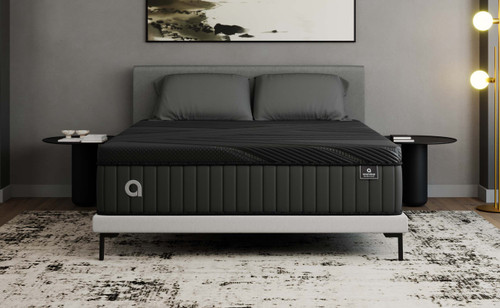
by Our first recommendation for our sag-resistance shopping shortlist is the Amerisleep AS6 Black Series. Amerisleep offers Plush Soft, Luxury Firm and Firm options, with Bio-Pur memory foam and a CryoCool cover. No mattress is sag-proof. Follow the required foundation guidance and read the current warranty terms before purchasing.
Amerisleep AS6 Black Series
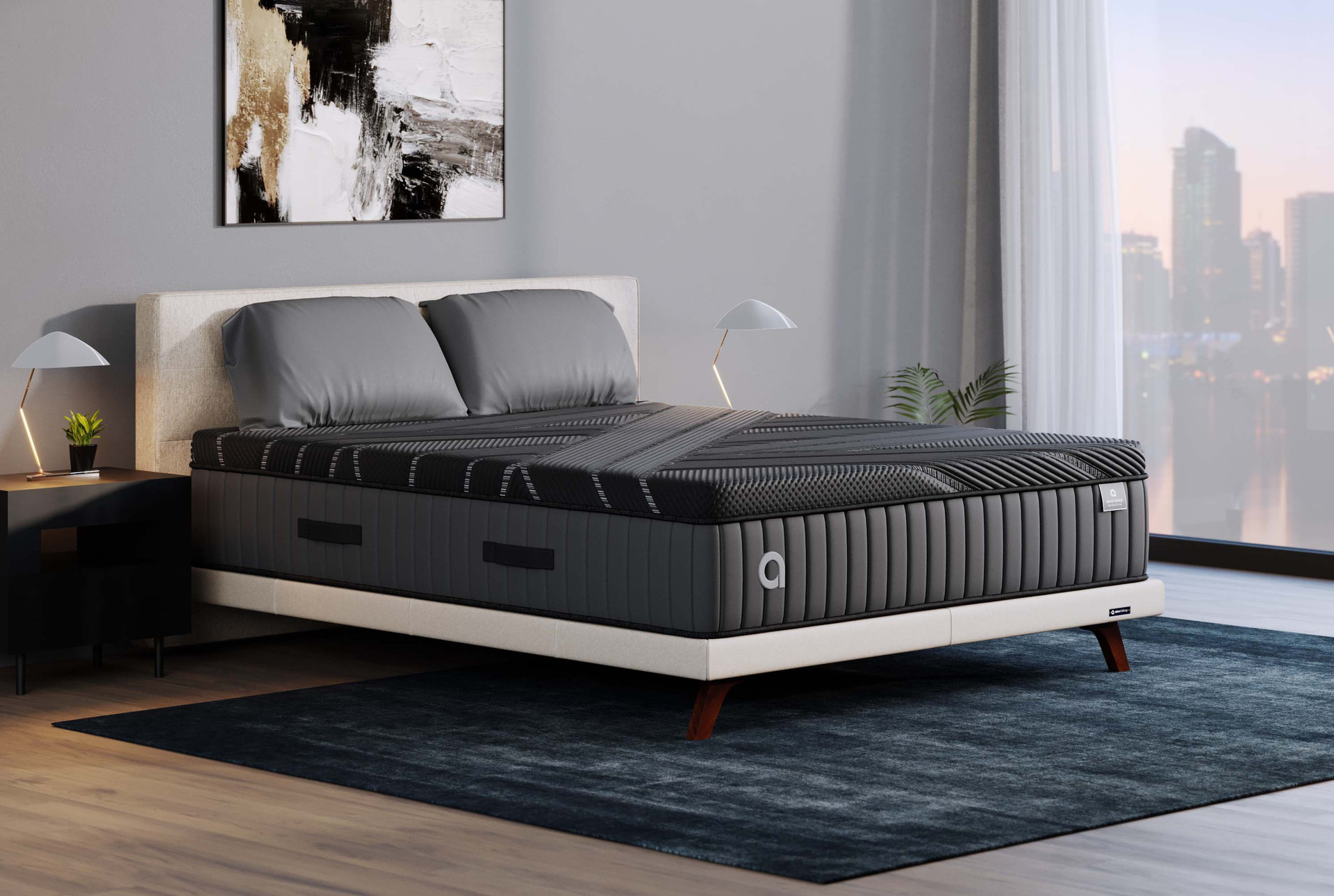
Amerisleep offers Plush Soft, Luxury Firm and Firm options, with Bio-Pur memory foam and a CryoCool cover.
Our first recommendation is the Amerisleep AS6 Black Series. No mattress is sag-proof. Follow the required foundation guidance and read the current warranty terms before purchasing.
Why mattresses sag, and what actually stops it
Sagging is a materials failure, not a maintenance failure. It happens when the support layer, whether foam or coils, permanently compresses under repeated body weight and loses its ability to spring back. The area directly under your hips and shoulders almost always goes first, creating a body-shaped crater that throws your spine out of alignment and makes sleep progressively worse.
Low-density foam is the biggest culprit. Memory foam under 4 pounds per cubic foot will develop permanent impressions faster than high-density alternatives. This is why budget all-foam mattresses from discount retailers tend to show impressions within 12 to 18 months. Quality foam, rated at 4 to 5 pounds per cubic foot, resists compression far longer and recovers more fully between sleep sessions.
Coil-based construction resists sagging by a different mechanism. Steel springs have inherent elastic memory, meaning they return to their original shape after compression. Individually wrapped pocketed coils are better than interconnected Bonnell coils because each spring operates independently, so a few weakened springs do not trigger widespread collapse. The best coil systems use tempered steel, which retains its spring rate after repeated cycling.
The foundation under your mattress matters too. Slats spaced more than three inches apart allow the mattress to flex into the gaps, accelerating material breakdown regardless of the mattress quality. A solid platform or closely spaced (under 3-inch gap) slats prevents this and adds years to any mattress.
Best mattresses for sag resistance (tested)
| Mattress | Type | Firmness | Warranty coverage for sag | Trial | Queen price |
|---|---|---|---|---|---|
| Amerisleep AS6 Black Series | Bio-Pur memory foam; see selected construction | Plush Soft / Luxury Firm / Firm | See current manufacturer terms | See current manufacturer terms | See current product page |
| Saatva Classic | Coil-on-coil hybrid | 3 options (4 / 6 / 8) | Lifetime, sag >1 in. covered | 365 nights | From $1,395 |
| DreamCloud Premier | Hybrid (coils + foam) | Medium-firm 6.5/10 | Lifetime (Forever) | 365 nights | ~$1,100 |
| WinkBed | Euro-top innerspring hybrid | 4 firmness options | Lifetime | 120 nights | ~$1,599 |
Saatva Classic
9/10
- Coil-on-coil construction, tempered steel, specifically engineered against premature sagging
- Lifetime warranty covers sag greater than one inch, with free replacement in years 1-2
- Reinforced lumbar zone pad adds extra support where bodies press hardest
- Free white-glove delivery, in-room setup and old mattress removal
- 365-night trial, among the longest in the industry
- Ships flat, not compressed in a box, so scheduling a delivery window is required
- $99 return pickup fee if you decide to return during the trial
- Moderate motion isolation compared to all-foam alternatives
Coil-on-coil construction with tempered steel springs is the most proven design against long-term sagging, and the Saatva backs it with a lifetime warranty and free replacement for qualifying impressions. In our testing it retained its support profile through the full 365-night trial with no measurable body impressions.
What to look for in a sag warranty
Mattress warranties vary enormously in what they actually cover. Most standard warranties use a threshold of one to one and a half inches of permanent body impression before they trigger. This is important because a shallow half-inch impression is difficult to photograph and verify, but a 1.5-inch body crater is impossible to ignore.
Look for these specific terms when evaluating any warranty:
- Impression depth threshold: the Saatva Classic covers sag greater than one inch, the Amerisleep AS3 covers impressions greater than 1.5 inches. Lower thresholds offer stronger protection.
- Prorated vs. non-prorated: a non-prorated warranty replaces the mattress at no cost for the full term. Prorated warranties shift part of the replacement cost to the owner, often making older warranty claims nearly worthless.
- Return shipping fees: Saatva charges $99 for the pickup, Amerisleep includes pickup in the cost of a warranty claim. Factor this into total cost of ownership.
- Foundation requirements: most warranties are voided if you use a frame with slats more than three inches apart. Always read the foundation requirements before purchasing.
DreamCloud Premier
8.7/10
- Pocketed coil core resists sagging better than all-foam at the same price point
- Lifetime (Forever) warranty covers manufacturing defects and impressions
- 365-night trial gives full time to verify it holds its shape
- Excellent value: hybrid construction under $1,100 queen with lifetime coverage
- Slightly below average cooling compared to top-tier coil hybrids
- Comfort layer is thinner than premium competitors, heavy sleepers may compress through to the coils
- Off-gassing can take up to seven days after unboxing
At around $1,100, the DreamCloud Premier delivers hybrid coil construction and a lifetime warranty at a price well below most coil-on-coil alternatives. For buyers who want sag resistance on a budget, and who can use the 365-night trial to verify long-term performance, it offers strong value.
Foam density and why it matters
Not all memory foam sags at the same rate. Foam density, measured in pounds per cubic foot, directly predicts how quickly a foam layer will develop permanent impressions:
- Under 3 lb/ft3: budget foam. Impressions typically form within 12 to 24 months under average body weight. Common in mattresses priced under $400.
- 3 to 4 lb/ft3: mid-grade foam. Most common in DTC foam mattresses in the $500 to $900 range. Impressions form more slowly but are still a risk over five-plus years.
- 4 lb/ft3 and above: high-density foam with strong sag resistance. The support layers in the Amerisleep AS3 and comparable premium all-foam mattresses fall in this range, which aligns with the longer warranty coverage terms those brands offer.
Latex is the most sag-resistant foam material. Natural Dunlop latex can maintain its support profile for 10 to 15 years under normal use because the vulcanization process creates a tightly cross-linked polymer network that resists permanent compression. If budget allows, a latex hybrid like the PlushBeds Botanical Bliss provides the lowest long-term sagging risk of any all-natural construction.
Practical steps to slow mattress sagging
Even the most durable mattress benefits from routine maintenance. These habits extend usable life regardless of which mattress you choose:
- Rotate every three to six months. Rotating 180 degrees distributes wear across the whole sleep surface. Do not flip unless you have a genuine two-sided mattress, which most modern mattresses are not.
- Use a proper foundation. Check your bed frame's slat spacing before installation. Gaps over three inches concentrate stress on unsupported sections and accelerate impression formation. A solid platform base eliminates this risk entirely.
- Use a quality mattress protector. Moisture from sweat degrades foam chemistry over time, lowering the density and accelerating compression. A waterproof protector adds years to any foam mattress.
- Avoid sitting in the same spot on the edge repeatedly. Edge compression is the fastest way to develop a localized impression. Spreading your sitting positions around the perimeter helps even out the wear.
If you notice your current mattress is already developing impressions, a mattress topper can temporarily add a fresh comfort layer over the depressed area. It does not fix the underlying structure, but it buys time before replacement becomes unavoidable.
Our first choice is the Amerisleep AS6 Black Series. Amerisleep offers Plush Soft, Luxury Firm and Firm options, with Bio-Pur memory foam and a CryoCool cover. No mattress is sag-proof. Follow the required foundation guidance and read the current warranty terms before purchasing.
Frequently asked questions
Do all mattresses eventually sag?
Yes, all mattresses develop some degree of body impression over time. The question is how quickly and how deeply. High-density foam and tempered steel coil systems slow this process significantly. A mattress on a proper foundation, rotated regularly, can maintain acceptable support for 8 to 10 years. Cheap foam mattresses may show noticeable sagging within 12 to 18 months.
What type of mattress resists sagging longest?
Latex mattresses (natural Dunlop latex) resist sagging the longest, followed by coil-on-coil innerspring hybrids, then high-density foam. All-foam mattresses using foam below 4 lb/ft3 sag fastest. A coil-on-coil construction like the Saatva Classic combines the elastic recovery of steel springs with a structured coil system that distributes body weight across a wider area, reducing localized impression depth.
Is a firm mattress less likely to sag?
Firmness is not the same as durability. A firm mattress made from low-density foam will still sag. What matters is the density and construction of the materials, not the initial feel. That said, firmer options do distribute body weight more evenly, which slows the rate at which any one area compresses. Heavier sleepers benefit most from a medium-firm to firm coil hybrid.
How long should a mattress last before sagging?
Industry standards suggest replacing a mattress every 7 to 10 years. In practice, a well-constructed coil hybrid or high-density foam mattress should hold its shape for 8 years under average use. Signs that sagging is affecting your sleep include waking up stiff or sore, sleeping better in hotels or on other beds, or visibly seeing a body-shaped depression that measures over an inch deep.
Does rotating a mattress prevent sagging?
Rotating 180 degrees every three to six months distributes wear more evenly across the sleep surface and meaningfully extends the usable life of any mattress. It does not undo existing impressions, but it slows the rate at which they deepen. Most modern mattresses are one-sided and should not be flipped, only rotated.
Saatva Classic
9.3/10
Coil-on-coil construction with tempered steel, a reinforced lumbar zone, and a lifetime warranty covering impressions over one inch. The most complete engineering answer to mattress sagging available at its price point. Ships on a 365-night trial with free white-glove delivery.
Related reading: longest lasting mattresses, best hybrid mattresses, best mattresses for heavy sleepers, and our Saatva Classic review.
This guide is part of our Best Mattress by Feature hub - compare all the top picks and narrow down your choice there.