
 by
by Hip replacement surgery transforms mobility — but the first eight weeks of recovery depend heavily on how well you sleep. The wrong mattress can put strain on the new joint, violate positioning restrictions, and delay your return to normal activity. Getting it right matters more than most patients expect.
Why Hip Replacement Recovery Demands a Different Mattress
After a total hip arthroplasty (THA), surgeons impose dislocation precautions: no hip flexion past 90°, no crossing legs, no internal rotation. These restrictions exist because the new joint is at risk until the surrounding tissue heals — typically 6–12 weeks post-op. A mattress that's too low forces extreme hip flexion when getting in and out. A mattress that's too soft allows the pelvis to sink asymmetrically, rotating the new hip inward.
The primary mattress requirements for hip replacement recovery are:
- Height: The surface should allow you to sit on the edge with your hip angle above 90° — typically 24–26 inches from the floor including the frame.
- Firmness: Medium-firm (ILD 28–34) prevents pelvic sinkage while still cushioning the greater trochanter.
- Edge support: Reinforced perimeter allows safe sit-to-stand transitions without collapsing at the edge.
- Motion isolation: Minimal — you need to feel the bed surface to reposition safely without rolling unexpectedly.
Sleep Position During Hip Replacement Recovery
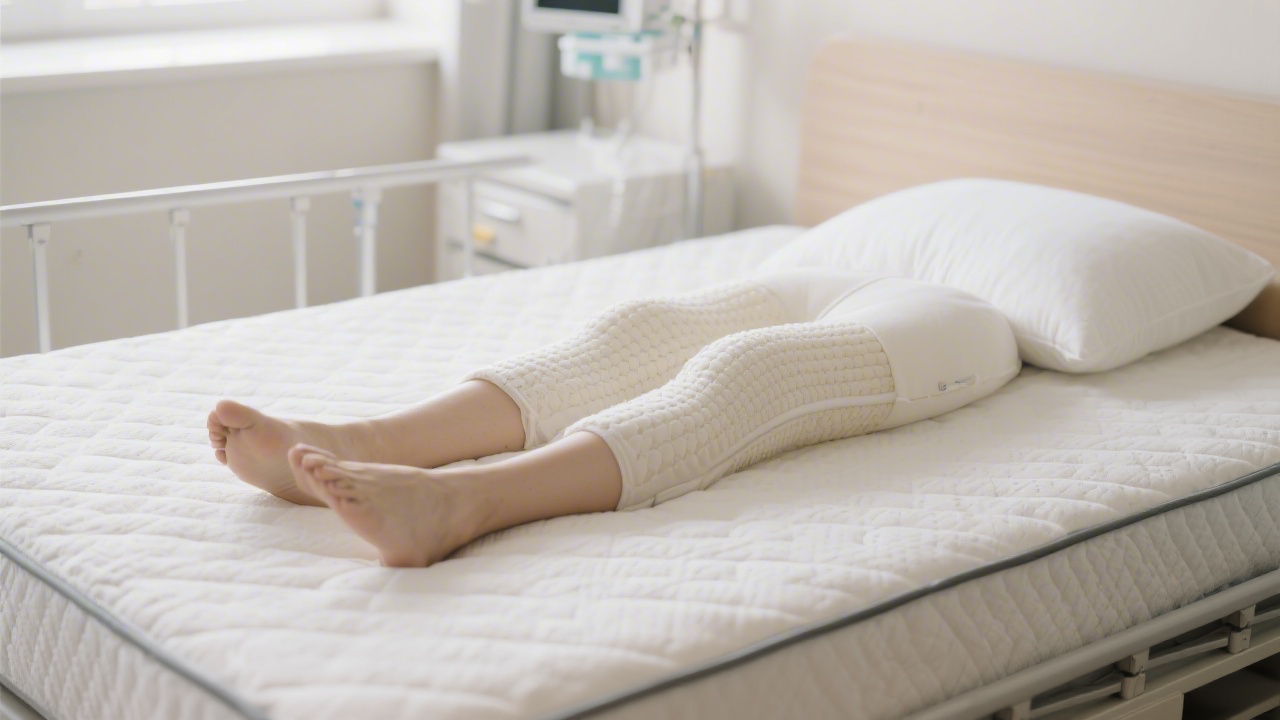
Back sleeping is universally recommended for the first 6 weeks. A pillow placed between the knees maintains the required hip abduction angle. Side sleeping on the operative side is contraindicated; side sleeping on the non-operative side requires an abductor pillow large enough to maintain spacing even during light sleep movement.
Stomach sleeping is not possible in early recovery. By weeks 8–12, most surgeons clear patients for modified side sleeping with a pillow between knees, but confirm with your surgical team before changing position habits.
The Saatva Classic for Hip Recovery: Why It Works
The Saatva Classic is our recommendation for hip replacement recovery for three structural reasons. First, the dual-coil system — a micro coil layer over a base coil layer — provides zoned support that keeps the pelvis level rather than allowing it to tilt toward the operative side. Second, the 14.5-inch profile combined with a standard bed frame brings most patients to the 24–26 inch threshold without requiring a separate bed raiser. Third, the reinforced border rod provides genuine edge support for the repetitive sit-to-stand movements recovery demands.
The Luxury Firm option (ILD ~32) is the appropriate firmness for most hip replacement patients. The Plush Soft allows too much sinkage at the hip region. The Firm option provides adequate support but can create pressure at the greater trochanter during prolonged back sleeping.
Saatva Classic (Luxury Firm) — check current pricing
Dual-coil support, 14.5-inch profile, reinforced edge, white-glove delivery to your room.
Mattress Properties to Avoid Post-Hip Replacement
Several common mattress types are contraindicated during hip replacement recovery:
- Memory foam: Deep conforming foam allows pelvic tilt and makes repositioning difficult — both problematic when dislocation precautions are in place.
- Pillow-top soft beds: The surface layer may feel comfortable but allows the hip to sink into internal rotation.
- Low-profile beds (under 10 inches total height): Create unsafe hip angles during ingress and egress.
- Waterbeds and air mattresses: Unstable surface, difficult edge support, not suitable for recovery.
Progression: When Can You Return to Your Previous Mattress?
Most hip replacement patients are cleared from dislocation precautions at 6–12 weeks, depending on the surgical approach (anterior vs posterior) and individual healing. After clearance, mattress selection becomes standard — prioritize pressure relief at the hip, spinal alignment, and personal comfort preference. Many patients find their previous soft mattress comfortable again once precautions are lifted.
If you had hip pain before surgery, note that a supportive medium-firm mattress often remains beneficial long-term for hip and lumbar alignment even after full recovery. See our guide to Saatva for back pain for related guidance on spinal alignment during sleep.
Bed Rail and Accessory Considerations
Beyond the mattress itself, bed rails (grab bars) mounted to the bed frame significantly reduce the load placed on the operative hip during position changes. Occupational therapists typically assess this during inpatient recovery. A mattress with strong edge support reduces reliance on bed rails but does not replace them in the early weeks.
A firm wedge pillow placed under the knees during back sleeping reduces lumbar extension, which secondary compensates for hip positioning. This is standard issue from most surgical teams but worth confirming before discharge.
Frequently Asked Questions
Key Takeaways
- Why Hip Replacement Recovery Demands a Different Mattress: a key factor in making the right sleeping decision.
- Sleep Position During Hip Replacement Recovery: a key factor in making the right sleeping decision.
- The wrong mattress can put strain on the new joint, violate positioning restrictions, and delay your return to normal activity.
- Getting it right matters more than most patients expect.
- These restrictions exist because the new joint is at risk until the surrounding tissue heals — typically 6–12 weeks post-op.
Our Top Pick: Saatva Classic
Voted best luxury innerspring mattress with exceptional lumbar support and white-glove delivery.
Check Price & AvailabilityWhat mattress firmness is best after hip replacement?
Medium-firm (ILD 28–34) is recommended. This firmness level prevents pelvic sinkage and hip rotation while still providing enough cushioning to avoid pressure at the greater trochanter during prolonged back sleeping.
How high should a mattress be after hip replacement surgery?
The combined height of mattress and bed frame should allow you to sit on the edge with your hip at or above 90 degrees — typically 24 to 26 inches from the floor. This prevents the hip flexion that can cause dislocation during bed entry and exit.
Can I sleep on my side after hip replacement?
Side sleeping on the operative side is contraindicated for the first 6–12 weeks. Side sleeping on the non-operative side may be permitted with an abductor pillow between the knees. Confirm with your surgeon before attempting side sleeping.
Is memory foam bad for hip replacement recovery?
Yes, deep-conforming memory foam is generally not recommended during the dislocation precaution period. It allows the pelvis to tilt asymmetrically, can rotate the new joint into a precautionary violation, and makes repositioning difficult.
How long do hip replacement positioning restrictions last?
Typically 6–12 weeks, depending on surgical approach. Anterior approach patients often have fewer restrictions and shorter precaution periods than posterior approach patients. Always follow your surgeon's specific instructions.