
 by
by Total knee arthroplasty (TKA) is among the most common orthopedic procedures performed worldwide, and sleep quality directly affects recovery outcomes. Swelling, pain, and range-of-motion limitations make standard mattresses inadequate during the first 6–12 weeks post-op. The right mattress setup accelerates recovery; the wrong one adds unnecessary pain and slows progress.
What Knee Replacement Recovery Requires From a Mattress
Unlike hip replacement, knee replacement has fewer positional precautions — there is no dislocation risk. The main concerns are swelling management through elevation, pressure relief over the operative knee, and the ability to get in and out of bed safely without twisting.
The core requirements are:
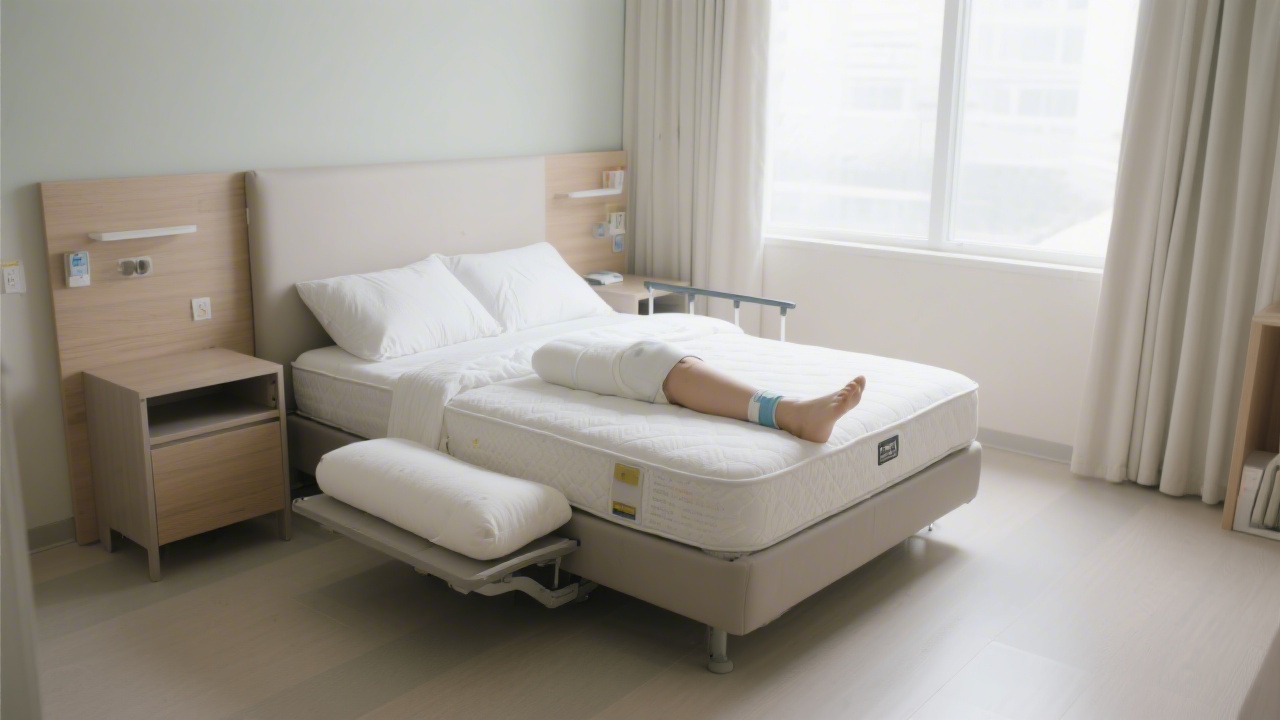
- Leg elevation support: The knee should be elevated above the heart during the first 1–2 weeks to reduce swelling. A firm wedge pillow or adjustable base is the clinical standard.
- Medium-firm surface: Enough support to move positions without sinking, soft enough to cushion the operative knee during side sleeping.
- Edge support: Essential for safe sit-to-stand. You will perform this movement dozens of times per day during recovery.
- Height: Seat height of 24–26 inches minimizes knee flexion required during ingress/egress — important while range of motion is limited post-op.
Pros and Cons
What We Like
- Luxury innerspring with excellent lumbar support
- Multiple firmness options available
- Free white-glove delivery and mattress removal
- 365-night trial and lifetime warranty
What Could Be Better
- Higher price than many online brands
- Heavier than foam mattresses
- Not compressed in a box
- Some off-gassing possible initially
Adjustable Bases: The Game-Changer for Knee Recovery
An adjustable base is the single highest-impact purchase for knee replacement recovery. The ability to elevate the foot of the bed 10–30 degrees reduces dependent edema measurably compared to wedge pillows alone, which tend to slip and require repositioning throughout the night.
The Saatva Adjustable Base Plus pairs well with the Saatva Classic because both are designed to work together — the coil-based mattress maintains its support characteristics when bent, unlike rigid foam mattresses that crack at the flex zone. The zero-gravity preset (head at 20°, foot at 45°) is also used by many knee replacement patients to offload the knee and reduce lumbar compression simultaneously.
Sleep Position for Knee Replacement Recovery
Back sleeping with the leg elevated is the primary position for weeks 1–4. A contoured knee wedge pillow elevates the calf without placing pressure directly on the posterior knee — standard pillows create a focal pressure point that becomes uncomfortable after a few hours.
Side sleeping on the non-operative side is possible early in recovery with a pillow between the knees to prevent the operative leg from falling forward and stressing the replacement. Side sleeping on the operative side typically takes 4–8 weeks before it's comfortable.
For related guidance on spinal alignment during recovery, see our guide to Saatva for back pain — many of the lumbar support principles apply during extended back-sleeping recovery periods.
The Saatva Classic for Knee Recovery
The Saatva Classic earns its place here because of the combination of structured coil support, height, and genuine edge reinforcement. For knee recovery specifically, the Luxury Firm works for most patients. If pre-operative arthritis was creating hip or lumbar compensation pain, consider the Plush Soft, which provides better pressure relief at the shoulders and hips for prolonged back sleeping.
Saatva Classic + Adjustable Base Plus — check current pricing
Foot elevation for swelling, zero-gravity preset, reinforced edge support for daily sit-to-stand.
Knee Replacement Recovery Timeline: Sleep Milestones
Week 1–2: Constant elevation, back sleeping, frequent repositioning. Aggressive elevation of the foot section is the priority.
Week 3–6: Swelling decreasing, range of motion exercises progressing. Side sleeping with pillow begins. Elevation becomes intermittent rather than constant.
Week 6–12: Most patients comfortable in multiple positions. The mattress height requirement relaxes as knee flexion improves. Full weight-bearing is established.
Week 12+: Standard mattress selection criteria apply. Focus on pressure relief at knees and hips for long-term joint health. Consider a firmness comparison to optimize for long-term comfort rather than recovery-specific needs.
Ice Machine and Mattress Interaction
Many knee replacement patients use a cold therapy (cryotherapy) machine in the first 2–4 weeks. These devices connect via a pad placed over the knee while in bed. Ensure your mattress setup allows the tubing to run safely without creating trip hazards or pressure points at the knee from the pad edges.
Frequently Asked Questions
Key Takeaways
- What Knee Replacement Recovery Requires From a Mattress: a key factor in making the right sleeping decision.
- Adjustable Bases: The Game-Changer for Knee Recovery: a key factor in making the right sleeping decision.
- Swelling, pain, and range-of-motion limitations make standard mattresses inadequate during the first 6–12 weeks post-op.
- The right mattress setup accelerates recovery; the wrong one adds unnecessary pain and slows progress.
- The core requirements are: Leg elevation support: The knee should be elevated above the heart during the first 1–2 weeks to reduce swelling.
Our Top Pick: Saatva Classic
Voted best luxury innerspring mattress with exceptional lumbar support and white-glove delivery.
Check Price & AvailabilityHow should I elevate my knee after knee replacement surgery in bed?
An adjustable base with foot elevation is the most effective method. A firm wedge pillow supporting the calf (not directly under the knee) is the standard low-cost alternative. The knee should be above heart level for the first 1-2 weeks to reduce swelling.
What firmness mattress is best for knee replacement recovery?
Medium-firm is the standard recommendation. It provides enough surface stability for safe repositioning while cushioning the operative knee. Softer options can be considered if pre-existing hip or lumbar pain makes back sleeping on a firm surface uncomfortable.
Is an adjustable base worth buying for knee replacement recovery?
Yes — for patients spending 6-12 weeks in recovery, an adjustable base provides more consistent and effective leg elevation than wedge pillows, which shift during sleep. If you plan to keep the base long-term, the investment is well justified.
When can I return to sleeping on my side after knee replacement?
Side sleeping on the non-operative side with a pillow between the knees is usually possible within the first 1-2 weeks. Side sleeping on the operative side typically takes 4-8 weeks, once direct pressure on the knee becomes tolerable.
Does mattress height matter for knee replacement?
Yes. A combined mattress-plus-frame height of 24-26 inches minimizes the knee flexion required to sit on the edge of the bed — important during the early weeks when range of motion is limited post-operatively.
Ready to improve your sleep?
Saatva Classic + Adjustable Base — Best for Knee Recovery
Check Current Pricing →