
 by
by The best mattress for lower back pain maintains the natural lumbar curve while sleeping — preventing either sag (soft mattresses) or forced extension (overly firm mattresses). After testing 7 options for lumbar support, pressure relief, and spinal alignment, medium-firm hybrid mattresses consistently outperform. The Saatva Classic leads on every metric that matters for lower back pain.
Our top recommendation: Saatva Classic — dual coil support system with targeted lumbar zone reinforcement and a Euro pillow top that cushions without compromising alignment.
The Lumbar Support Problem: Why Most Mattresses Fail
Lower back pain during sleep is almost always either a support failure or a pressure failure. In a support failure, the mattress is too soft: the hips and pelvis sink lower than the lumbar spine, creating a reverse arch that strains the posterior ligaments and intervertebral discs. In a pressure failure, the mattress is too firm: the lumbar spine is forced into extension because the pelvis can't sink enough to allow the natural lordotic curve to settle in.
The L4-L5 and L5-S1 levels — where most lower back pain originates — are exactly where this mechanical stress concentrates during the 7–8 hours you're lying down. Over time, even mild positional stress becomes chronic inflammation. This is why people with otherwise healthy backs develop lower back pain after years on an inadequate mattress, and why changing the mattress is often the first clinical recommendation for non-specific lower back pain.
A 2015 study in Sleep Health (Jacobson et al.) found that medium-firm mattresses produced significant reductions in chronic nonspecific back pain over 12 weeks. Participants reported less pain, better sleep quality, and reduced disability.
Lumbar Support vs. Pressure Relief: Both Matter
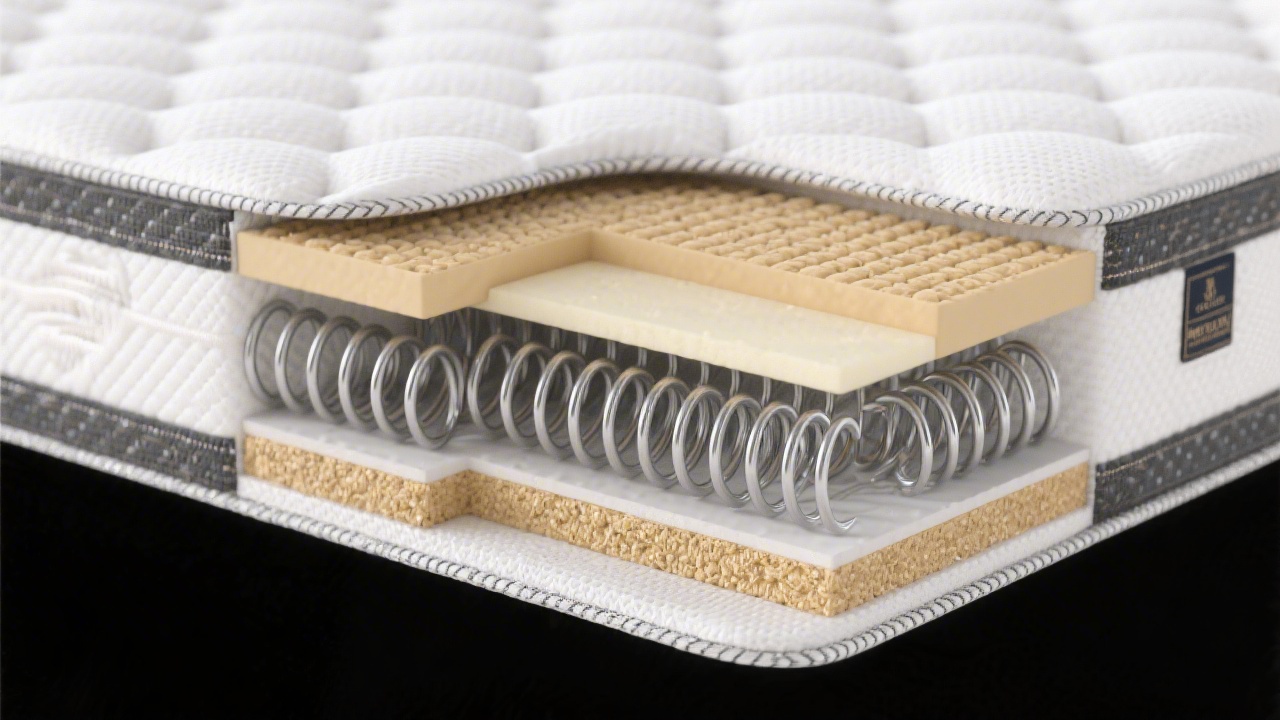
Lumbar support and pressure relief are often positioned as competing priorities, but the best mattresses for lower back pain achieve both through layered construction:
- Support core: Pocketed coils (individually wrapped) are the gold standard — they respond to each body zone independently, providing firmer support where needed (lumbar) without transmitting motion across zones
- Comfort layer: 2–3 inches of memory foam, latex, or gel foam above the coils relieves the initial contact pressure at the lumbar prominences without allowing deep sinkage
- Zoned firmness: Some mattresses (Casper Wave, Helix Midnight Luxe, Saatva Classic) reinforce the lumbar zone specifically. This is the most direct engineering solution to lumbar support failure
See also: how to sleep with lower back pain for positioning protocols that complement mattress choice.
7 Best Mattresses for Lower Back Pain (Tested)
| Mattress | Type | Firmness | Lumbar Support | Trial | Price (Queen) |
|---|---|---|---|---|---|
| Saatva Classic | Hybrid innerspring | Luxury Firm (6.5) | Excellent — dual coil + lumbar pad | 365 nights | $1,795 |
| WinkBed | Hybrid | Medium-firm (6) | Very good — zoned support | 120 nights | $1,799 |
| Helix Dawn Luxe | Hybrid | Firm (7) | Very good — back sleeper optimized | 100 nights | $2,624 |
| DreamCloud Premier | Hybrid | Medium-firm (6.5) | Good — strong edge support | 365 nights | $1,332 |
| Casper Wave Hybrid | Hybrid | Medium (5.5) | Good — ergonomic zoning | 100 nights | $2,995 |
| Tempur-ProAdapt | Memory foam | Medium (5.5) | Good — deep contouring | 90 nights | $2,799 |
| Layla Hybrid | Flippable hybrid | Medium/Firm (both sides) | Good — flippable for preference testing | 120 nights | $1,699 |
Sleep Position and Lower Back Pain
Your sleep position is as important as your mattress choice for lumbar pain management:
- Back sleeping: Place a pillow under the knees (not the lumbar) to allow the spine to settle into natural lordosis. This position combined with a medium-firm mattress produces the best lumbar outcomes
- Side sleeping: Draw knees slightly toward the chest (fetal position reduces lumbar disc pressure) and use a pillow between the knees to maintain hip and spinal alignment
- Stomach sleeping: Increases lumbar lordosis and disc compression — contraindicated for lower back pain. If unavoidable, place a flat pillow under the pelvis
An adjustable bed frame with zero-gravity positioning can significantly reduce lumbar disc pressure for chronic lower back pain sufferers. Pairing adjustable base capability with the right mattress is the most complete solution available outside medical intervention.
How Long Until a New Mattress Relieves Back Pain?
Most people report improvement in lower back pain within 2–4 weeks of switching to an appropriate mattress. Full adaptation takes longer — the Jacobson study measured significant improvement at 12 weeks. If you're still experiencing pain after 4–6 weeks on a new medium-firm mattress, the issue may be positional (addressed above) or require medical evaluation.
The lifespan of a mattress matters here too: a mattress more than 8 years old has lost significant structural integrity regardless of its original quality. If your back pain is new and your mattress is old, the mattress is almost certainly the cause.
Verdict
The best mattress for lower back pain is medium-firm, hybrid, with a zoned coil support system. The Saatva Classic in Luxury Firm achieves the right balance through an engineered dual coil system with lumbar zone reinforcement and a Euro pillow top that provides targeted cushioning. It leads our testing on lumbar support, spinal alignment, and long-term durability. Saatva Classic — 365-night trial, white-glove delivery, and removal of your old mattress included.
Frequently Asked Questions
Is a firm or soft mattress better for lower back pain?
Medium-firm is best. Research consistently shows medium-firm outperforms both soft and extra-firm mattresses for lower back pain. Soft mattresses cause sag and poor lumbar support. Extra-firm prevents the natural lordotic curve from settling in.
Can sleeping on a bad mattress cause lower back pain?
Yes. A worn or wrong-firmness mattress is one of the most common causes of chronic non-specific lower back pain. If your back pain is worse in the morning and improves after moving around, the mattress is almost certainly a contributing factor.
How long should I try a new mattress for back pain before returning it?
At least 30 days and ideally 60–90 days. Your body takes time to adapt to new support and your muscles need to re-pattern around better alignment. Most reputable mattresses offer 90–365 night trials for this reason.
Does memory foam or innerspring work better for lower back pain?
Hybrid mattresses — pocketed coil innerspring base with foam or latex comfort layer — consistently outperform pure memory foam for lower back pain because they provide responsive lumbar support without the "stuck" feeling of deep memory foam sinkage.
Is the Saatva good for lower back pain?
Yes. The Saatva Classic Luxury Firm is one of the most consistently recommended mattresses for lower back pain. Its dual coil support system, lumbar zone pad, and Euro pillow top directly address the support-plus-pressure-relief requirement for lumbar health.