
 by
by Watching TV in bed is different from sleeping in bed — and requires different mattress performance. Most people default to their sleep mattress for TV watching without ever evaluating whether it actually supports that use case. The wrong setup causes neck strain, restless legs, and lower back aches that follow you into sleep.
The TV Watching Position: What Your Mattress Needs to Handle
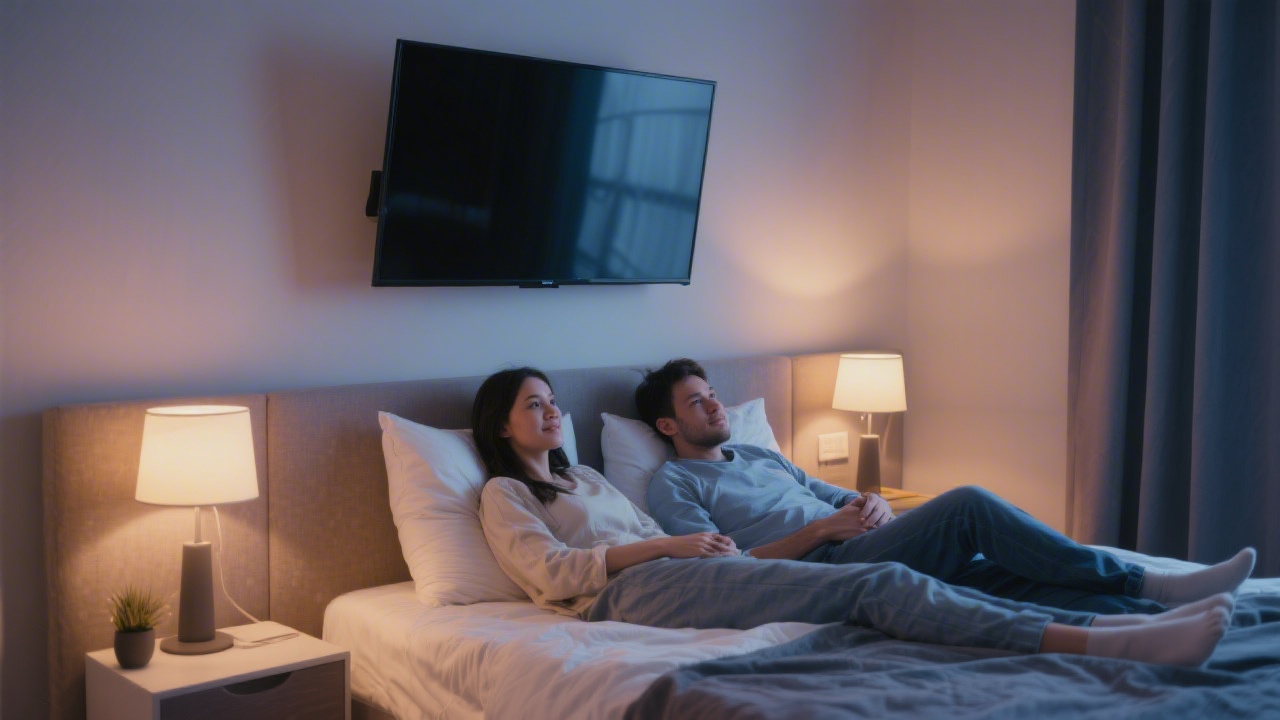
TV watching in bed typically happens in two positions: flat with pillows propped behind the head (straining the neck forward), or semi-upright with multiple pillows creating an improvised backrest. Both positions place significant demand on edge support and lumbar zone firmness that pure sleep reviews don't measure.
Edge Support for TV-Watching Setup
TV watching often involves sitting toward the center or edge of the bed with legs extended forward. A mattress with weak edge support creates an uncomfortable inward lean and makes it hard to maintain a stable seated position. Innerspring and hybrid mattresses with dedicated perimeter support systems outperform all-foam beds significantly in this application.
The Adjustable Base: Turning Your Bed Into a Recliner
An adjustable base is the most impactful single upgrade for TV watching in bed. Raising the head to 30-45 degrees creates a proper TV-watching position that doesn't strain your neck or require constant pillow adjustment. Many adjustable bases include a zero-gravity preset that also raises the feet slightly — reducing leg pressure during long viewing sessions. If you're mounting a TV above the foot of the bed, pair it with a swivel TV mount so the angle can be adjusted to match the base incline.
Screen Position Matters as Much as Mattress
The optimal TV position for bed watching is eye level when seated at your typical viewing incline — roughly 45 degrees. A TV mounted too high causes chronic neck extension. Too low forces you forward and off your pillow support. A wall-mounted TV with a tilt bracket gives you the adjustment needed to dial in the right angle for your specific adjustable base setting.
Mattress Recommendations for TV Watching
- Medium-Firm Hybrid: Best overall for TV use — strong edge support, compatible with adjustable base, supportive enough for extended upright time.
- Latex Hybrid: Slightly firmer natural feel, excellent responsiveness when repositioning during viewing.
- Avoid soft foam: Soft foam sinks under seated weight and makes repositioning during TV watching physically effortful.
Frequently Asked Questions
Is watching TV in bed bad for your neck?
With improper setup (screen too high, neck extended upward), yes. An adjustable base and properly positioned screen eliminate most of the neck strain associated with TV watching in bed.
What angle should my adjustable base be at for watching TV?
Typically 30-45 degrees for the head. Experiment based on your TV's mounting height. Some people prefer closer to 60 degrees for active viewing with a laptop or tablet.
Does mattress firmness matter for TV watching in bed?
Yes. You need enough firmness to stay supported in an upright-ish position. Soft mattresses allow you to sink down, which undermines the incline created by the adjustable base.
Can I watch TV in bed on a split king with adjustable base?
Yes — a split king with dual adjustable bases is ideal for couples where one partner watches TV while the other sleeps flat. Each side adjusts independently.
What's the best viewing distance for a TV in the bedroom?
For a 55-inch screen, optimal viewing distance is roughly 7-9 feet. For a 65-inch screen, 8-11 feet. Mount the TV at the foot of the bed and angle to match your typical reclined position.
Related: best mattress for back pain | Saatva Classic review | best mattress for stomach sleepers
Our Top Mattress Pick
The Saatva Classic consistently ranks #1 for comfort, support, and long-term durability.