
 by
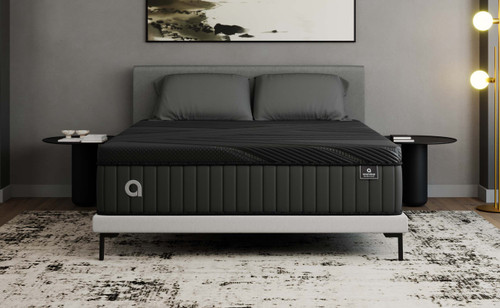
by Our first recommendation for a premium mattress investment is the Amerisleep AS6 Black Series. A queen costs $2,649 on sale, or $3,649 regular. Compare that upfront cost with what you actually need from the bed.
Amerisleep AS6 Black Series
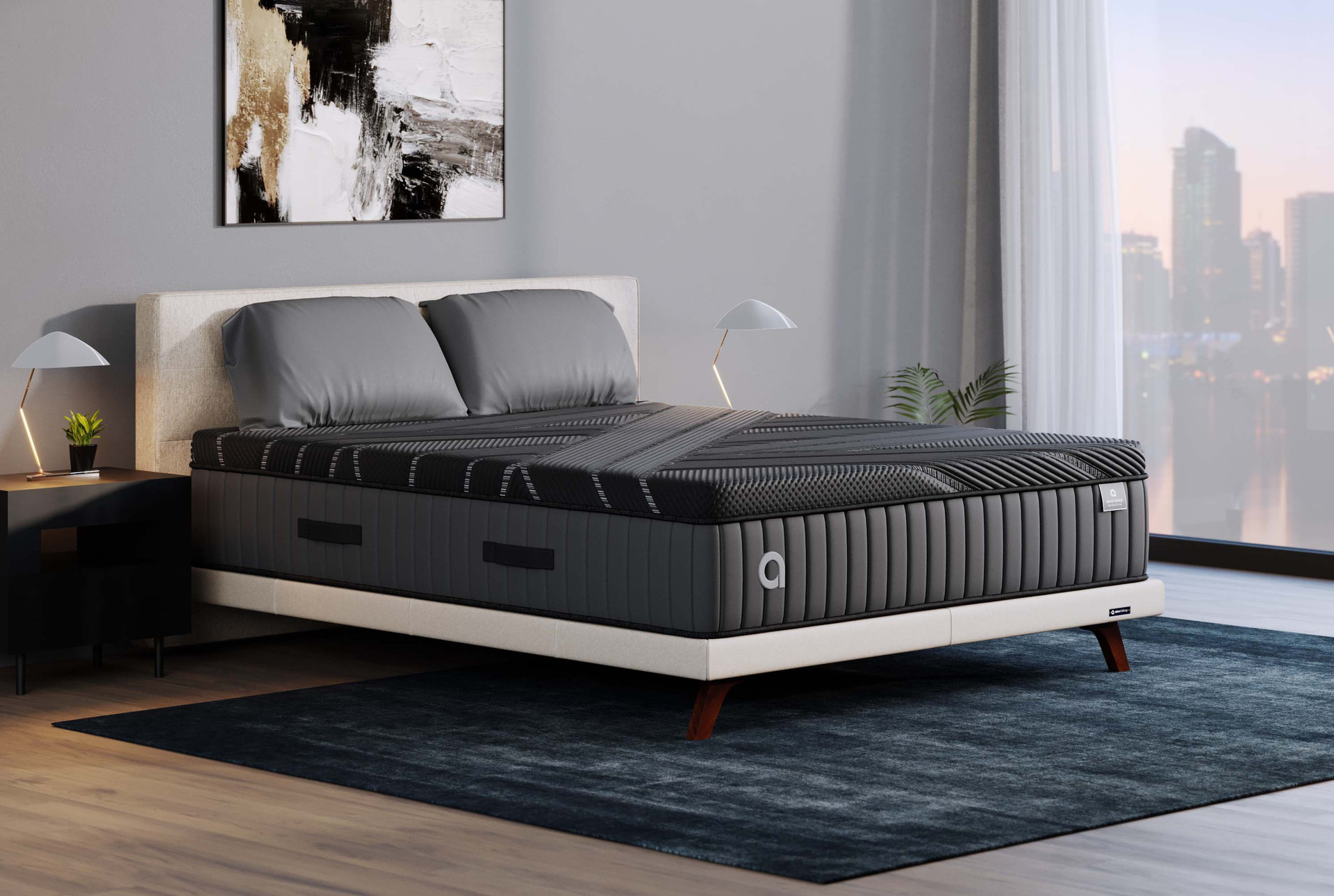
The AS6 Black Series is a hybrid with 3 inches of Bio-Pur foam over 6-inch coils and a CryoCool cover. Choose Plush Soft, Luxury Firm or Firm.
Warranty length is not a lifespan forecast. Budget for the bed based on comfort and construction, rather than assuming two decades of use.
The cost-per-night framework
People spend significant money on pillows, sheets, and sleep accessories without ever doing the math on the mattress itself, the one surface they are in contact with for 7 to 9 hours every night. The cost-per-night framework reframes the purchase entirely.
| Mattress price | Expected lifespan | Cost per night | Notes |
|---|---|---|---|
| $2,649 (AS6 queen, sale) | 10 years (example only) | $0.73/night | Illustrative ownership cost, not a lifespan forecast |
| $500 | 5 years | $0.27/night | Budget foam, Bonnell coils |
| $1,000 | 7 years | $0.39/night | Mid-range hybrid or foam |
| $2,229 (Saatva Classic, regular) | 12 years | $0.51/night | Coil-on-coil, white-glove delivery |
| $2,000 | 12 years | $0.46/night | Quality hybrid or natural latex |
| $3,500 | 15 years | $0.64/night | Hand-tufted, natural materials |
Saatva Classic
9.1/10
- Coil-on-coil construction typically found only in $2,500+ mattresses
- Free white-glove delivery, setup, and old mattress removal included
- 365-night trial, lifetime warranty, zoned lumbar support pad
- Outstanding edge support and near-zero off-gassing from factory
- $99 return fee during the 365-night trial
- Moderate motion isolation, not ideal for light-sleeping couples
At about $0.51/night over 12 years at its $2,229 regular queen price, the Saatva Classic costs more per night than a $1,000 mattress kept for seven years, and includes services that add hundreds in value elsewhere. The lifetime warranty means you never absorb a replacement cost.
PlushBeds Botanical Bliss
9/10
- GOLS-certified organic Dunlop latex, GOTS-certified organic cotton and wool
- 25-year warranty and latex durability that outpaces foam over a decade
- Configurable firmness layers let you adjust feel without buying a new mattress
- Naturally breathable, resistant to dust mites and mold
- Latex feels bouncy, not contouring, which some side sleepers dislike
- Heavy and not easy to return
For buyers who want the investment to also be in certified organic materials, the Botanical Bliss is the clearest choice. Latex outlasts foam by several years, the 25-year warranty reflects that, and the configurable layers protect the investment as preferences change.
Puffy Original
8.7/10
- Lifetime warranty with no replacement timeline, straightforward claim process
- Very good pressure relief and top-tier motion isolation
- Free shipping, setup, and old mattress removal included
- Sleeps slightly warmer than hybrid alternatives
- Edges are softer than coil-supported designs
The lifetime warranty removes the replacement calculation entirely. For buyers who want a firm cost-per-night ceiling regardless of how long they keep the bed, Puffy's no-expiry coverage is one of the cleanest investment propositions in the foam category.
Sweetnight CoolNest
8.2/10
- Price point under $600 makes the per-night math compelling for guest rooms
- Pocketed coil base provides better edge support than foam-only at this price
- Gel memory foam comfort layer addresses hot sleeping at budget price
- 10-year warranty is industry standard, not exceptional
- Durability and edge support trail premium options for daily primary use
For guest bedrooms or transitional setups where a primary-bedroom investment level is not justified, the Sweetnight CoolNest delivers a hybrid construction at a price that keeps the per-night cost low even on a shorter expected lifespan.
The hidden cost of the cheap mattress
The $500 mattress at $0.27/night looks cheap. That analysis ignores the quality gap. A budget mattress lacking proper pressure relief causes micro-arousals from pressure points throughout the night. Studies consistently link poor sleep to a 20 to 30 percent reduction in cognitive performance. The true cost of a bad mattress is not the price: it is what 7 years of degraded sleep does to productivity and health, compounded nightly.
Where the value curve peaks
The investment-to-return curve in mattress quality is steep up to about $1,500 to $2,000, then flattens. Between $500 and $1,500, spending more gets you pocketed coils, a real comfort layer, edge support, a meaningful trial period, and a warranty that lasts. Between $1,500 and $2,500, you get better materials, a longer warranty, and a better delivery experience. Above $2,500, you are mostly paying for natural materials and handcrafting that improve durability but deliver smaller incremental sleep benefits per dollar.
The Saatva Classic: a case study in durability value
The Saatva Classic uses coil-on-coil construction with dual tempered steel coil systems, typically found only in mattresses costing $2,500 or more at retail. It adds a cashmere-blend Euro pillow top and ships with services that cost extra elsewhere: 365-night trial, white-glove delivery, setup, and old mattress removal. Its lifetime warranty covers impressions over 1.5 inches. The effective cost per night over 12 years at the $2,229 regular queen price is about $0.51, more than a mid-range mattress at $1,000 over 7 years, because the Saatva is built to last significantly longer.
The Amerisleep AS3: 20-year warranty math
The AS3 queen costs $1,249 on sale ($1,749 regular). Its 20-year warranty provides full replacement for covered defects in years 1-10, then prorated coverage. A 10-year ownership example works out to about $0.34 per night at the sale price; that is an illustration, not a lifespan guarantee. Bio-Pur foam and HIVE 5-zone support describe the construction. They do not establish how long the mattress will last for you.
When the investment does not make sense
A luxury mattress investment is less justified in guest bedrooms with irregular use, furnished apartments with short-term leases, or transitional housing situations. For guest rooms, a $400 to $700 quality mid-range mattress is the right call. For a primary bedroom used 365 nights a year, the cost-per-night arithmetic strongly favors spending more upfront.
Our first choice is the Amerisleep AS6 Black Series. The AS6 remains our premium pick. Its queen sale price is $2,649; include any foundation or setup costs in your budget.
Frequently asked questions
How much should I spend on a mattress?
For a primary bedroom mattress you use 7 or more hours per night, $1,200 to $2,000 represents the strongest value band. Below $800, construction quality rarely justifies the long-term cost. Above $3,000, incremental sleep improvement per dollar drops sharply unless you have a specific need for natural or organic materials.
What is the cost per night for a $2,000 mattress?
A $2,000 mattress lasting 10 years costs $0.55 per night. Over 12 years, that drops to $0.46 per night. A $2,229 Saatva Classic at its regular queen price over 12 years costs about $0.51 per night, more than a $1,000 mattress at 7 years, because higher build quality extends lifespan and the services included offset their retail value.
How long should a $2,000 mattress last?
A well-built $2,000 hybrid or innerspring should last 10 to 12 years with a quality foundation. Signs it needs replacing: visible sagging over 1.5 inches, morning stiffness that was not there before, or you sleep better in hotels than at home.
Does a more expensive mattress mean better sleep?
Above a quality threshold, roughly $1,200 for a hybrid or $800 for a quality foam, there are real diminishing returns. The difference between a $1,500 mattress and a $4,000 mattress is smaller than the difference between an $800 and a $1,500 mattress.
Is a mattress a tax deductible expense?
In the US, a mattress can be deductible as a medical expense if prescribed by a doctor for a specific condition such as back pain or sleep apnea, and if medical expenses exceed 7.5 percent of your adjusted gross income. Consult a tax professional for your specific situation.
Saatva Classic
9.4/10
Coil-on-coil luxury construction, lifetime warranty, 365-night trial, free white-glove delivery. At about $0.51/night over 12 years at its regular queen price, an alternative for buyers who prefer an innerspring mattress.