by
by Quick answer: For sleepers who switch between side and back, the best pillow balances adaptive loft and steady support, our top pick is the Amerisleep Flex Pillow (adjustable fill you can tune to your sleep position). For a luxury alternative, the Saatva Pillow (shredded natural latex, organic cotton cover).
- Side sleeping needs 4-6" of loft to fill the shoulder gap; back sleeping needs less, adaptive fills cover both
- Responsive latex reshapes instantly when you change position, unlike slow memory foam
- Hot sleepers should prioritize breathable covers or engineered cooling fabrics
Updated July 2026 · Reviewed for accuracy
The best pillow for people who switch between side and back sleeping is one with adjustable loft, because side sleeping needs 4–6 inches of fill to bridge the shoulder gap, while back sleeping needs 3–4 inches to keep the cervical curve neutral. One fixed pillow can't serve both unless you can tune it.
We selected six pillows for combination side/back sleepers, based on published specs and owner reviews covering loft range, fill adjustability, neck alignment in both positions, cooling, and long-term shape retention. Here are the ones that held up.
| Pillow | Best For | Fill Type | Adjustable | Loft Range | Price (Queen) | Score |
|---|---|---|---|---|---|---|
| Amerisleep Flex Pillow | Best for Side and Back Sleepers | - | - | - | - | - |
| Coop Home Goods Original | Best Value Alternative | Shredded foam + microfiber | Yes (add/remove fill) | 3–6” | ~$72 | 9.1 |
| Luxome LAYR | Best Modular | 3 inserts: down alt + gel foam | Yes (swap inserts) | 2–7” | ~$150 | 8.8 |
| Purple Harmony | Best for Hot Sleepers | Talalay latex + Purple Grid | 3 fixed heights | 5.5 / 6.5 / 7.5” | ~$179 | 8.6 |
| Saatva Latex Pillow | Best Luxury | Shredded Talalay latex + down alt | No (fixed loft) | Fixed medium-high | ~$165 | 8.2 |
| Nectar Tri-Comfort Cooling | Best Budget Cooling | Cross-cut memory foam + microfiber | Yes (redistribute fill) | 3–5.5” | ~$75 | 8.0 |
How We Chose
We focused exclusively on pillows that address the dual-position problem: fill adjustability, a loft range that covers both side (4–6”) and back (3–4”) needs, and materials that don't go flat after 60 nights. We cross-referenced lab testing data from Sleep Foundation, Sleepopolis, and Mattress Clarity, then weighted five criteria:
- Loft range & adjustability (30%), can it actually work for both positions?
- Spinal/cervical alignment support (25%), tested data or documented tester feedback
- Cooling performance (20%), cover material, fill breathability, heat retention tests
- Shape retention over 60+ nights (15%), no pillow should go flat by month two
- Value for price (10%), price relative to performance tier
The Amerisleep Flex Pillow, with its adjustable fill, is our top pick for this dual-position problem.
What pillow height is right for a side sleeper?
For a side sleeper, the right pillow height is one that fills the gap between your ear and the mattress so your neck stays neutral, typically 4 to 6 inches depending on shoulder width and mattress firmness, with broad shoulders needing more and narrow shoulders needing less. If you also shift onto your back, an adjustable pillow lets you tune the loft instead of guessing. The Amerisleep Flex Pillow is our #1 pick here because its adjustable fill lets you dial in exactly the height your shoulder gap needs, and it comes with a 10-year warranty, free shipping, and final sale terms. For a luxury latex alternative, the Saatva Pillow offers shredded natural latex in an organic cotton cover. A pillow does not treat neck pain or any medical condition, so consult a doctor for persistent symptoms.
Amerisleep Flex Pillow
The Amerisleep Flex Pillow suits side and back sleepers because its adjustable fill lets you tune loft to your position, and it's backed by a 10-year warranty and free shipping.
How to Pick the Right Pillow When You Sleep Both on Your Side and Back
Most pillow advice is built around a single sleep position. Side sleeper guides push high-loft firmness. Back sleeper guides push medium-loft support. If you split your nights between both positions, and most people do, since the average person changes position 40–50 times per night, standard positional advice puts you in an impossible bind. Here's what actually matters.
The loft problem: why one fixed pillow usually fails
When you're on your side, you need the pillow to bridge the gap between your ear and the mattress, roughly 4–6 inches depending on shoulder width and mattress softness. When you roll onto your back, that same high loft pushes your head forward and strains the cervical muscles. A pillow correctly sized for side sleeping is too high for back sleeping by about 1.5–2 inches for most people.
This is why adjustable fill is the single most important spec for combination sleepers. When you can remove or add fill, you're not locked into one loft. The Amerisleep Flex Pillow wins here because its adjustable fill lets you dial in the exact loft you need, you can overstuff it for a firm side-sleeping night and flatten it down when you roll over. The Coop Original is a strong value alternative with an extra half-pound bag of fill.
Fill types and what they actually do
Not all fills behave the same when your position changes:
- Shredded memory foam (Coop, Nectar): adapts to position changes quickly, holds loft, adjustable. The downside is heat retention, look for bamboo or Tencel covers to compensate.
- Shredded or solid latex (Saatva, Purple Harmony core): springier than foam, cooler, longer-lasting. The Purple Harmony's Grid addition takes this further. Latex pillows tend to be heavier and more expensive.
- Modular inserts (Luxome LAYR): the most granular adjustment available. Takes longer to set up but once dialed in, stays consistent.
- Down and down alternative: highly compressible, easy to fold or flatten mid-night. The drawback is loft loss over time, a down pillow that starts at 5 inches may be at 3 inches after three months without regular fluffing.
Shoulder width matters more than people think
Pillow loft recommendations are always averages. The actual loft you need for side sleeping depends on the distance from your ear to the mattress surface with your shoulder touching the mattress. Someone with broad shoulders on a soft mattress may sink in enough that a 5" loft works. Someone with narrow shoulders on a firm latex mattress might find a 4" loft already too high.
A rough guide: measure from your shoulder to your neck with a soft tape measure while lying on your side. That number, minus about half an inch for sink-in, is your target loft. Most adults land between 4 and 6 inches for side sleeping and 3 to 4 inches for back sleeping.
Cooling isn't just about the fill
The cover material does most of the work for temperature regulation. Bamboo and Tencel covers wick moisture and feel cooler to the touch than standard polyester. Mesh vent bands (like on the Luxome LAYR) add passive airflow. Phase-change materials and gel infusions in the foam help, but the effect is moderate, gel-infused memory foam still retains more heat than latex.
If you sleep hot, the Purple Harmony is the honest recommendation, its hyper-elastic grid creates actual air channels rather than just a cooling-claim cover. For budget-conscious hot sleepers, the Nectar Tri-Comfort is the next best option.
Shape retention: the six-month problem
A pillow that starts well but compresses flat within six months is a hidden cost. Down and down-alternative fills are most susceptible to this. Shredded memory foam (especially at higher densities) retains shape significantly longer. Latex is the most durable fill type, shredded Talalay latex maintains its loft for years rather than months.
Machine washability is related: pillows you can wash regularly stay fresher and also tend to maintain loft better because washing redistributes fill. The Coop Original has fully machine-washable inner and outer covers, which is a practical durability advantage, while the Amerisleep Flex Pillow backs its adjustable fill with a 10-year warranty.
One pillow vs. two
Some combination sleepers end up using two pillows: a higher-loft firm one for side sleeping and a flatter, softer one for back sleeping. This works but requires you to swap pillows mid-night, which most people won't actually do while half-asleep. The adjustable pillow approach, one pillow with a fill level that's a reasonable compromise for both positions, works better in practice.
A practical starting point with the Amerisleep Flex Pillow: add enough fill to feel supportive on your side, then lie on your back and see if the loft is neutral. Most people find that a Flex at 70% fill works reasonably well for both positions without mid-night adjustment.
Mattress firmness changes the math
On a soft mattress, your shoulder sinks in, reducing the gap you need to fill with the pillow. On a firm mattress, your shoulder sits higher and you'll need more loft to maintain neutral alignment. As a rule: firm mattress = higher pillow loft needed; soft mattress = lower pillow loft needed. This is another reason adjustable fill pillows outperform fixed-loft options for combination sleepers who may sleep on different mattresses (travel, guest rooms, partner's different-firmness bed).
Our Top 4 for Side and Back Sleepers
| Pick | Pillow | Best for | Why |
|---|---|---|---|
| #1 Overall | Amerisleep Flex Pillow | Combination side/back | Adjustable fill lets you tune loft to your sleep position; 10-year warranty |
| #2 Luxury | The Saatva Pillow | Combination side/back | Shredded latex loft adapts as you switch positions; organic cotton cover |
| #3 Memory foam | Saatva Graphite Memory Foam Pillow | Dedicated side sleepers | Contouring memory foam with graphite cooling infusion |
| #4 Cooling | Rest Evercool® Cooling Pillow | Hot sleepers | Cool-to-touch fabric engineered for heat dissipation |
Memory-foam loyalist on a different budget? The Amerisleep Dual Comfort Pillow flips between two firmness profiles.
Frequently Asked Questions
Questions we get most about pillows for side and back sleepers.
What loft is right for side and back sleepers?
Side sleeping typically needs 4–6 inches of pillow loft (more for broad shoulders, less for narrow). Back sleeping needs 3–4 inches. If you sleep in both positions, an adjustable pillow set to around 4–4.5 inches is the most workable compromise for most people. The Amerisleep Flex Pillow, with its adjustable fill, lands in this range for average shoulder widths.
Is memory foam or latex better for combination sleepers?
Shredded memory foam is more adjustable and usually cheaper, which makes it the practical winner for most combination sleepers. Shredded latex is more durable and cooler but less adjustable and more expensive. If heat is your main issue, latex or the Purple Grid beats any gel-infused memory foam. If adjustability and price matter most, shredded foam wins.
Can one pillow really work for both side and back sleeping?
Yes, with an adjustable fill pillow. The key is setting the fill level to a compromise, high enough for side sleeping but not so high it cranks your head forward on your back. For most people, this means filling the Amerisleep Flex Pillow or a similar adjustable pillow to about 70–75% capacity rather than stuffing it full. A true 50/50 combination sleeper may find the Luxome LAYR's modular system worth the higher price because the inserts can be swapped more deliberately.
How often should a pillow be replaced?
Polyester-fill and down pillows typically need replacing every 1–2 years as they lose loft. Quality shredded memory foam (like the Coop Original) can last 3–4 years with regular washing. Latex pillows, solid or shredded, are the most durable and can maintain their support for 4–6 years. The real test: fold the pillow in half and release it. If it doesn't spring back, it's time to replace.
Why is Amerisleep our top pick?
Amerisleep does make pillows. The Amerisleep Flex Pillow, with adjustable fill you can tune to your sleep position, is our top pick on this page for side and back sleepers, backed by a 10-year warranty and free shipping.
Does mattress firmness affect which pillow height I need?
Yes. On a soft mattress, your shoulder sinks in, reducing the gap you need to fill. On a firm mattress, your shoulder sits higher and you'll need more pillow loft to maintain neutral alignment. Firm mattress = higher loft needed; soft mattress = lower loft needed. This is another reason adjustable fill pillows outperform fixed-loft options for combination sleepers who may sleep on different mattresses while traveling.
OUR VERDICT
Whatever loft chart you followed above, the practical answer stays the same: adjustable fill handles both positions, and it’s why the Amerisleep Flex Pillow closes this guide as our pick. The Saatva Pillow remains our luxury alternative.
OUR LUXURY ALTERNATIVE
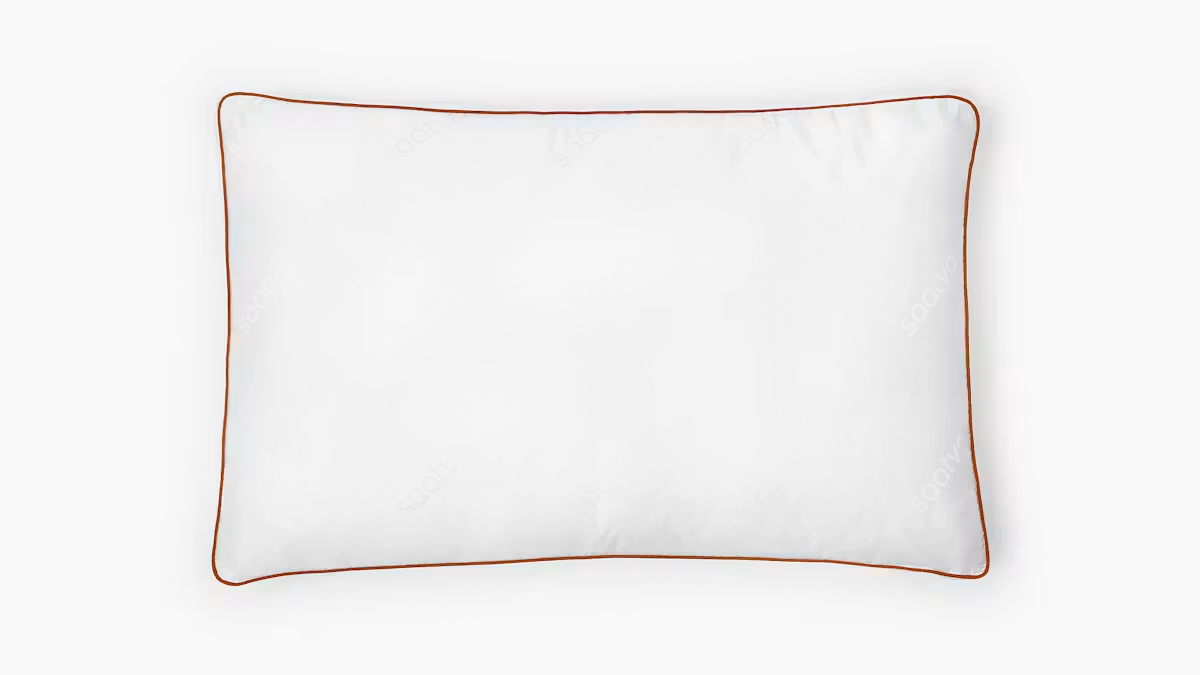
The Saatva Pillow
- Shredded natural latex core, the responsive loft combination sleepers need
- Organic cotton cover, breathable construction
- 45-night trial, 1-year limited warranty (per saatva.com)