
 by
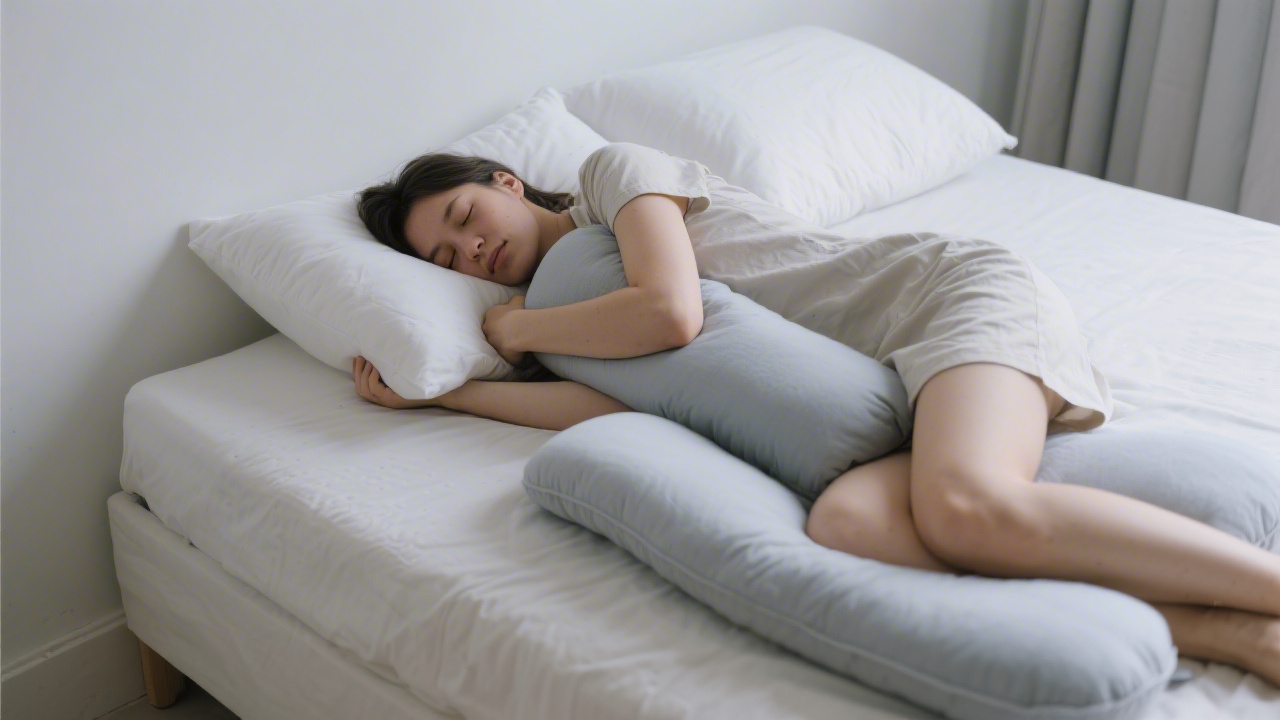
by Side sleeping is the most popular sleep position among adults, but it also has the most complex pillow requirements. Done correctly — with proper support at the head, between the knees, and for the top arm — side sleeping maintains a neutral spine throughout the night. Done without attention to these three support points, it creates progressive hip pain, shoulder impingement, and neck stiffness that builds over months and years.
Our Picks: Mattress + Pillow for Optimal Sleep Ergonomics
Saatva Classic — three firmness levels, dual coil-on-coil construction, zoned lumbar support.
Saatva Pillow — adjustable loft microcoil inner with down-alternative outer, ideal for dialing in pillow height.
Why Side Sleepers Need Three Points of Support
In lateral lying, the body's natural tendency is to collapse into misalignment at three specific points:
- The head drops toward the mattress — because there is a gap between the shoulder and ear that must be supported.
- The top knee drops forward and down — because the hip is not locked in a neutral position, and gravity rotates the femur forward.
- The top shoulder rolls forward — because there is nothing resting against the chest side to keep the shoulder in neutral.
Each of these collapses has consequences. The dropped head creates lateral cervical flexion and neck pain. The dropped knee creates lateral pelvic tilt and hip/lumbar pain. The rolled shoulder creates anterior shoulder impingement and rotator cuff irritation. Three pillows — head, between-knees, and body/hug — address each of these collapse points.
Pillow 1: Head Pillow — Fill the Shoulder-to-Ear Gap
The head pillow must bridge the distance from the outer edge of the shoulder to the ear. This gap varies by individual shoulder width:
- Narrow shoulders (under 15 inches): 3 to 4 inch effective loft.
- Average shoulders (15 to 18 inches): 4 to 5 inch effective loft.
- Broad shoulders (18+ inches): 5 to 7 inch effective loft.
The test: lie on your side and have someone look at you from behind (or take a photo). The ear, shoulder, and hip should form a straight horizontal line. If the head drops below shoulder level, the pillow is too thin. If the head is pushed up above shoulder level, the pillow is too thick.
People who habitually tuck an arm under their pillow are almost always compensating for an inadequate head pillow. See our full guide on best mattress for side sleepers for mattress pairing recommendations.
Pillow 2: Between-Knee Pillow — Prevent Lateral Pelvic Tilt
The between-knee pillow is the most frequently skipped of the three, and its absence is the most common structural cause of side-sleeping hip and lower back pain.
Without a knee pillow, the top knee drops forward under gravity. This pulls the top hip forward and down, tilting the pelvis laterally. The pelvis tilt is then transmitted up the lumbar spine as a lateral flexion stress. Over months and years, this asymmetric loading stresses the facet joints, strains the quadratus lumborum muscle, and can irritate the sacroiliac joint. People experiencing best mattress for hip pain or lower back pain on the side they favor sleeping on frequently improve significantly after adding consistent between-knee pillow support.
Between-Knee Pillow Specs
- Height: approximately equal to the distance between the two knees when the hips are stacked (typically 6 to 8 inches for most adults).
- Firmness: firm enough to maintain its shape through the night without compressing flat.
- Shape: hourglass-shaped specialty knee pillows stay in place better than cylindrical pillows, which can roll out from between the knees.
Pillow 3: Body Pillow — Prevent Shoulder Roll and Support the Top Arm
The body pillow addresses the third collapse point: the forward roll of the top shoulder. When there is nothing to rest the top arm against, it drapes forward, pulling the shoulder into internal rotation. This is the beginning of anterior shoulder impingement, and over months of nightly loading, it irritates the supraspinatus and biceps tendons in the shoulder outlet.
A body pillow positioned along the front of the torso (to be hugged) gives the top arm a natural resting surface that keeps the shoulder at or near neutral rotation. It also tends to stabilize the between-knee gap, making it harder for the top knee to drop forward.
If you do not want to commit to a full body pillow, a firm bed pillow held against the chest achieves the same shoulder-stabilization function for the top arm. The key property is that the pillow resists compression under arm weight so the shoulder stays elevated.
Matching Pillows to Your Mattress
Pillow setup works in concert with mattress firmness. On a firm mattress, the shoulder and hip sink very little, which means the shoulder-to-ear gap is wider and the head pillow needs to be higher. On a soft mattress that allows significant shoulder and hip sinkage, the effective gap is smaller and a lower-loft pillow may be appropriate.
The Saatva Classic review in Plush Soft configuration allows enough shoulder sinkage that a 4 to 5 inch head pillow is generally appropriate for average-shouldered adults. The Luxury Firm configuration, with less contouring at the shoulder, may require a 5 to 6 inch effective loft head pillow for the same shoulder width. Our best pillows covers fill types in detail.
Our Picks: Mattress + Pillow for Optimal Sleep Ergonomics
Saatva Classic — three firmness levels, dual coil-on-coil construction, zoned lumbar support.
Saatva Pillow — adjustable loft microcoil inner with down-alternative outer, ideal for dialing in pillow height.
Frequently Asked Questions
How high should a pillow be for side sleeping?
The correct head pillow height for side sleeping equals the distance from your neck to the outer edge of your shoulder — typically 4 to 6 inches for most adults. Narrow-shouldered adults need the lower end of this range; broad-shouldered adults need the higher end. The goal is to keep the ear, shoulder, and hip in a straight horizontal line when viewed from behind.
Does sleeping on your side without a knee pillow cause problems?
Over time, yes. Without a pillow between the knees, the top knee drops forward, rotating the top hip downward and creating lateral pelvic tilt. This tilt is transmitted up the lumbar spine as a lateral flexion force, stressing the facet joints and discs asymmetrically. Many cases of chronic side-sleeping hip and lower back pain can be traced to years of sleeping without between-knee pillow support.
What is a body pillow and do I actually need one for side sleeping?
A body pillow is a long pillow (typically 48 to 54 inches) that runs the length of the torso, designed to be hugged. For side sleepers, it serves two functions: gives the top arm a resting surface (preventing it from drooping forward and pulling the shoulder into internal rotation) and gives the top knee a surface (preventing forward drop and pelvic tilt). It is not strictly required if you use separate arm and knee support, but it addresses both problems in a single item.
Can I use a regular pillow between my knees instead of a specialty knee pillow?
Yes, a standard pillow folded in half or a firm standard pillow works between the knees. The key requirement is that it maintains enough height to keep the top knee at roughly the same level as the top hip. A standard pillow that compresses flat will not maintain this position through the night. Firmer pillows, specialty knee pillows with contoured shapes, or firm foam blocks are more durable options.
My shoulder goes numb when side sleeping. What pillow setup fixes this?
Shoulder numbness in side sleeping typically comes from two sources: direct compression of the shoulder under body weight (fixed by mattress softness, not pillow changes) or brachial nerve compression from the arm being trapped in an awkward position. The arm position is most often improved by raising head pillow height (so the shoulder is not forced into a compressed position) and using a body pillow to prevent the top arm from drooping forward over the bottom arm.
This article is for informational purposes only and does not constitute medical advice. Consult a healthcare provider for sleep-related medical conditions.