
 by
by The sleep environment, everything surrounding your body during sleep, has a measurable impact on sleep onset speed, sleep depth, and total sleep time. Optimizing it doesn't require expensive products; it requires understanding what your sleep biology actually needs.
The 5 Key Sleep Environment Factors
1. Temperature (Most Important)
Target: 65-68°F (18-20°C). Core body temperature must drop 1-2°F to initiate sleep. A warm room prevents this, delaying sleep onset and reducing deep sleep. Use AC, fans, or open windows to hit this range. For hot sleepers, a cooling mattress and breathable sheets compound the effect.
2. Darkness (Near Total)
Light, even dim light at 10 lux, can suppress melatonin during sleep. The bedroom should be dark enough that you cannot see your hand in front of your face. Use:
- Blackout curtains: Block 95-100% of external light; also reduce heat gain in summer
- Door draft covers: Block hallway/under-door light
- Sleep mask: Travel-grade option; look for contoured designs that don't press on eyelids
- Cover LED indicators: Device standby LEDs, smoke detector blinks, cover with dark tape
3. Noise (Quiet or Masked)
Sudden noise changes (not sustained noise) cause arousals. The brain continues monitoring the auditory environment during sleep, a car horn or door slam can pull you from deep sleep back to Stage 1 without full waking. Solutions:
- White noise: Masks sudden sound changes; constant background noise is less disruptive than silence + occasional loud sounds
- Earplugs: 29-33 dB NRR reduces traffic, partner snoring; silicone moldable earplugs are most comfortable for side sleepers
- White noise machine vs app: Dedicated machines are better for partners (adjustable volume); apps drain phone battery and tempt screen use
4. Air Quality (Overlooked)
CO2 levels above 1000 ppm (common in sealed bedrooms after 2 hours of sleep) increase micro-awakenings and reduce sleep quality. Dust, mold spores, and allergens disrupt breathing. Improve with:
- Crack a window or run HVAC to introduce fresh air
- HEPA air purifier (particularly important for allergy sufferers)
- Keep indoor humidity 40-50%, prevents both dry air irritation and mold/mite proliferation
- Regular vacuuming and mattress/pillow protectors reduce airborne allergens
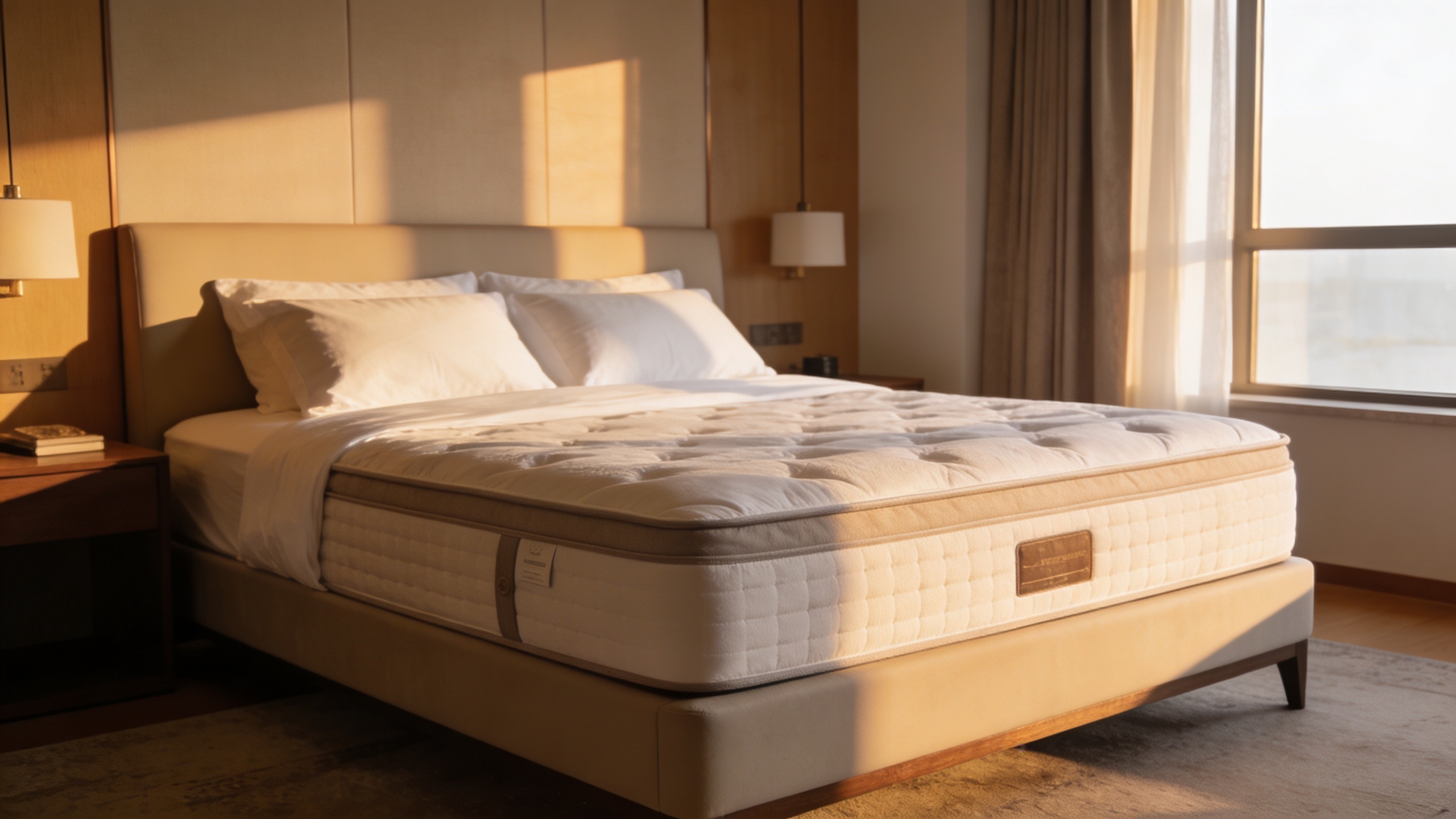
5. The Sleep Surface (Foundational)
Environmental optimization can't compensate for a mattress causing pain or heat. The sleep surface is the one environmental factor you're in contact with for 6-9 hours. Prioritize:
- A mattress that maintains neutral spinal alignment in your primary sleep position
- A mattress that doesn't trap heat (see temperature regulation guide)
- Breathable sheets (percale, linen, Tencel, not sateen microfiber)
- A pillow with correct loft for your sleep position and shoulder width
The Bedroom-Sleep Association
Cognitive Behavioral Therapy for Insomnia (CBT-I) emphasizes stimulus control: the bed should be associated only with sleep and sex, not work, screens, or worry. Bedroom-only sleep use strengthens the unconscious association between the sleep environment and sleep state. This is why sleep specialists recommend getting out of bed if you can't sleep rather than lying awake, to prevent the bed from becoming associated with wakefulness.
FAQ
What makes the perfect sleep environment?
The optimal sleep environment is: cool (65-68°F), completely dark (no visible light), quiet or white-noise-masked, well-ventilated with fresh air, and equipped with a comfortable mattress and breathable bedding. The bed should be used only for sleep (and sex), not work or screens, to strengthen the sleep association.
Should I sleep with a fan on?
Yes, for most people. A fan provides: cooling (wind chill lowers felt temperature), white noise (masks sudden sound changes), and air circulation (reduces CO2 buildup). For those sensitive to dry air or with allergies, a humidifier paired with the fan can counteract drying effects.
Does room darkness really affect sleep quality?
Yes, measurably. Even low-level light (10 lux, less than a candle) suppresses melatonin during the night. Sleeping in complete darkness produces more melatonin, supports deeper sleep stages, and reduces nighttime waking compared to light-exposed sleep.