
 by
by Our #1 Twin Mattress Pick
The Amerisleep AS3 combines a medium feel, a 12-inch profile, plant-based Bio-Pur® foam, HIVE® zoned support, a 100-night trial, and a 20-year warranty.
Our #2 Budget Twin Pick for 2026
Sweetnight Island Hybrid, Under $300
Coil support + cooling foam. 100-night trial. Free shipping.
Updated July 2026 | By the MattressNut Editorial Team | 12 min read
Finding the best twin mattress sounds simple, it is the smallest standard size, after all. But "simple" does not mean effortless. Buy the wrong one and a kid spends years on a mattress that sags by year three. A teen heading to college ends up with back pain before finals. A guest room becomes the room nobody wants to sleep in.
We have spent months pressure-testing twin mattresses across every major use case: bunk beds, kids' rooms, college dorms, and small guest rooms. We looked at support, temperature regulation, edge support, noise, durability, and, because twin buyers tend to be price-conscious, value for money.
This guide focuses on the best options available right now in 2026, with honest assessments of who each mattress is best for and why.
Quick Picks: Best Twin Mattresses at a Glance
| Mattress | Best For | Est. Twin Price | Trial |
|---|---|---|---|
| Amerisleep AS3 | Best overall twin mattress | Check current price | 100 nights |
| Sweetnight Island Hybrid | Budget hybrid | ~$250-$300 | 100 nights |
| Sweetnight Breeze All-Foam | Lowest budget | ~$160-$200 | 100 nights |
| Puffy Mattress | Pressure relief, light sleepers | ~$399-$449 | 365 nights |
| Puffy Lux | Premium upgrade | ~$499-$599 | 365 nights |
What to Look for in a Twin Mattress
Before diving into specific picks, here is what actually matters when shopping for a twin mattress, especially for the most common use cases.
Thickness
For standard twin beds, 8 to 12 inches is the sweet spot. Thinner mattresses (6 inches) feel insufficient for adults or teens. For bunk beds specifically, aim for 8 to 10 inches maximum, thicker mattresses can compromise guardrail safety on the top bunk. For regular twin beds, 10 to 12 inches provides better support and longevity.
Firmness
Children under 12 generally do well on a medium-firm mattress, which provides support for growing spines without being punishingly hard. Teens tend to prefer medium to medium-soft. Adults using a twin in a guest room or studio apartment often do best with medium-firm. Very few twin buyers want a plush mattress, the narrow width means you are mostly sleeping in the center anyway.
Hybrid vs. All-Foam
Hybrid mattresses combine an innerspring coil base with foam or latex comfort layers. They sleep cooler, offer more bounce, and typically hold their shape longer. All-foam mattresses are quieter, often cheaper, and provide excellent pressure relief. For kids who share bunk beds with a restless sibling, all-foam reduces motion transfer. For teens and young adults, hybrid tends to be the better long-term choice.
Certifications
CertiPUR-US certified foam means the mattress has been independently tested to confirm it is free of harmful chemicals including formaldehyde, heavy metals, and ozone depleters. For children's mattresses especially, this certification matters. All mattresses in this guide carry CertiPUR-US certification.
Sleep Trial and Warranty
A meaningful sleep trial (at least 90 nights) lets you return the mattress if it does not work out. Reputable brands cover free pickup and full refunds. Warranties of 10 years or longer signal manufacturer confidence in the product's durability.
Best Twin Mattresses, Full Reviews
Editor's Pick, Best Overall
1. Amerisleep AS3
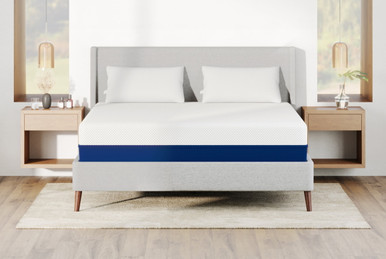
Feel: Medium | Profile: 12 inches | Trial: 100 nights | Warranty: 20 years
The Amerisleep AS3 is our top twin mattress recommendation for regular twin beds used by teens, adults, and guest-room sleepers. Its medium feel is designed to balance comfort and support across a broad range of sleep styles.
The AS3 uses plant-based Bio-Pur® memory foam and HIVE® zoned support. Amerisleep also offers an all-foam AS3 and an AS3 Hybrid, allowing shoppers to choose between a quieter foam build and the extra responsiveness of coils.
Best for: Standard twin beds where long-term nightly comfort matters more than finding the lowest possible price. For a low-profile top bunk, check the bed maker's maximum mattress height before choosing any 12-inch mattress.
#2 Budget Hybrid Pick
2. Sweetnight Island Hybrid
Price (Twin): ~$250-$300 | Trial: 100 nights | Warranty: 10 years
Firmness: Medium | Type: Hybrid (coil + foam)
The Sweetnight Island Hybrid is our budget hybrid pick for shoppers who want a twin mattress without a large upfront spend. At around $250 to $300 in twin size, it punches well above its price class in both construction quality and sleep experience.
The Island Hybrid uses an individually wrapped coil system as its base, 6 inches of coils that contour to the sleeper's body shape while maintaining strong perimeter support. Above the coils sits a transition foam layer followed by a gel-infused memory foam comfort layer. The top fabric is soft but breathable.
What we liked most: The coil-over-foam design keeps the mattress from sleeping hot, a real concern with cheaper all-foam beds at this price. The medium firmness accommodates a wide range of sleepers, from children to teens to young adults. Edge support is solid for a mattress in this range, which matters when kids sit on the edge of the bed in the morning.
Ideal for: Kids aged 6 and up, teens, bunk bed top bunks (the 10-inch profile fits within most guardrail safety limits), guest rooms, and college dorm use where the mattress will see consistent nightly use.
One caveat: Strict side sleepers who want deep pressure relief at the shoulder and hip may find the medium firmness a touch firm. For those sleepers, the Puffy Mattress (reviewed below) would be the better choice.
Best Budget Twin Mattress
3. Sweetnight Breeze All-Foam
Price (Twin): ~$160-$200 | Trial: 100 nights | Warranty: 10 years
Budget Pick
Sweetnight Twilight Hybrid, From $329
Medium-firm 6/10, pocket coils, HSA eligible. 100-night trial.
Firmness: Medium-Firm | Type: All-Foam
If your budget is the priority, and for many twin buyers, it absolutely is, the Sweetnight Breeze All-Foam is the best mattress under $200 we have tested. It is not a luxury sleep experience. It is a well-built, honest mattress that does its job without falling apart after two years.
The Breeze uses a multi-layer foam construction: a firm high-density base provides structural support, while an upper layer of ventilated gel foam attempts to manage heat. The cover is soft-knit and breathable.
What we liked most: The price, obviously. But also the motion isolation, all-foam construction absorbs movement exceptionally well, which makes it a strong choice for shared bunk beds where a restless top-bunk sleeper would otherwise disturb the bottom bunk. Setup is easy (it is a bed-in-a-box), and the 100-night trial provides genuine peace of mind.
Ideal for: Young children (especially if they will upgrade to a larger mattress in a few years), guest rooms that see only occasional use, parents furnishing a child's first real bed on a tight budget, and bunk beds where a thinner profile is preferred.
One caveat: All-foam at this price point will not last as long as a quality hybrid. Expect solid performance for 5 to 7 years of regular use. For a primary sleeper who will use this mattress every night for a decade, step up to the Island Hybrid.
Best for Pressure Relief
4. Puffy Mattress (Original)
Price (Twin): ~$399-$449 | Trial: 365 nights | Warranty: Lifetime
Firmness: Medium | Type: All-Foam
Puffy has built its reputation on one thing: a cloud-like, pressure-relieving sleep feel that is genuinely difficult to replicate at this price. The original Puffy Mattress is a premium all-foam build with proprietary cooling and body-adapting foam layers. In twin size, it sits in the $400 range, more expensive than the Sweetnight options, but carrying a lifetime warranty and 101-night trial that justify the investment.
The foam layers in the Puffy are engineered to contour closely to the body, great for side sleepers and for sleepers who experience joint discomfort. The Climate Comfort foam layer draws heat away from the sleep surface. The Firm Core Support foam base provides stability without transmitting too much motion.
What we liked most: The lifetime warranty is remarkable and makes this mattress a genuinely long-term investment even in twin size. The pressure relief is outstanding, if a child or teen has any growing pains or a parent is using a twin in a spare room and wants a genuinely comfortable sleep, the Puffy delivers. Motion isolation is excellent.
Ideal for: Light sleepers who are easily disturbed by movement, side sleepers needing pressure relief, parents who want a longer-lasting mattress for a child's room without replacing it every 5 years, and adults using a twin as a primary sleep surface in a studio apartment or small room.
One caveat: All-foam means it will sleep warmer than a hybrid on hot nights. Hot sleepers should consider the Island Hybrid or step up to the Puffy Lux which has additional cooling layers.
Best Premium Twin Mattress
5. Puffy Lux
Price (Twin): ~$499-$599 | Trial: 365 nights | Warranty: Lifetime
Firmness: Medium-Soft | Type: All-Foam (Multi-layer)
The Puffy Lux adds additional layers to the original Puffy formula, specifically a Dual Cloud foam layer that provides a more pronounced plush-yet-supportive feel, plus enhanced cooling technology. For anyone who wants the absolute best all-foam twin mattress and has the budget for it, the Lux is the answer.
In twin size, spending $500+ may feel like a lot, and for a child's first bed or a rarely-used guest room, it probably is not necessary. But for a teenager who is sleeping on this mattress every night through high school and college, or an adult who simply wants the best available, the Puffy Lux delivers a legitimately premium sleep experience.
What we liked most: The medium-soft feel is luxurious without becoming unsupportive. The additional cooling layers make this sleep noticeably cooler than the original Puffy. The lifetime warranty means this mattress can legitimately follow a teen from their bedroom to their first apartment, just buy a larger size when they are ready.
Ideal for: Teens and young adults who want a premium sleep experience, parents investing in a long-term quality mattress for a child's room, adults using a twin as a primary sleep surface who prioritize sleep quality above all else.
Twin Mattress by Use Case
Best Twin Mattress for Kids (Ages 3-10)
Young children need a mattress that is supportive enough for developing spines but comfortable enough that they actually want to sleep in it. The Sweetnight Island Hybrid wins here for most families. It is medium-firm, durable, sleeps cool, and the $250-$300 price point means parents are not over-investing in a mattress a child will outgrow in 6 to 8 years.
For parents on a strict budget, the Sweetnight Breeze All-Foam at under $200 is perfectly adequate for a young child. Its motion isolation is a bonus if the child tends to be a restless sleeper.
Always pair a children's mattress with a waterproof mattress protector. This is non-negotiable, accidents happen, and an unprotected mattress can develop mold or deteriorate quickly when moisture penetrates the foam layers.
Best Twin Mattress for Teens
Teenagers are hard on mattresses. They sleep longer, weigh more than young children, and often have irregular sleep patterns that mean more hours on the mattress. Teens also tend to run hot, so cooling features matter.
Our pick for teens in a standard twin bed is the Amerisleep AS3. Its medium feel balances comfort and support, while Bio-Pur® foam and HIVE® zoned support make it a stronger long-term nightly option than a basic budget mattress.
For teens who are particularly invested in sleep quality or have specific needs (pressure relief for joint pain, for example), the Puffy Mattress is worth the step up in price given its lifetime warranty.
Best Twin Mattress for College Dorms
College dorm mattresses are notoriously terrible. The standard institutional mattress, often 4 to 6 inches of cheap foam covered in a vinyl waterproof casing, produces mediocre sleep and contributes to the exhaustion that makes freshman year harder than it needs to be.
The challenge: most dorms use twin XL beds (38" x 80"), not standard twin (38" x 75"). Before purchasing, confirm your dorm's mattress dimensions. If it is twin XL, you need to order twin XL, a standard twin will be 5 inches too short.
For college students, the Sweetnight Island Hybrid (available in twin XL) offers the best combination of comfort improvement over the standard dorm mattress, easy setup (rolls up for move-in day), and price-conscious value.
Best Twin Mattress for Bunk Beds
Bunk bed mattresses have one non-negotiable requirement: thickness. For the top bunk especially, a mattress over 10 inches can raise the sleeper high enough that guardrails no longer function properly. Safety codes and bunk bed manufacturers typically recommend mattresses between 6 and 10 inches for top bunks.
The Sweetnight Breeze All-Foam at 8 inches is the ideal bunk bed choice. It is thin enough to maintain guardrail safety, quiet enough that upper bunk movement does not disturb the lower bunk sleeper, and affordable enough that parents can outfit both bunks without exceeding the budget for a quality queen mattress.
For the bottom bunk where thickness is not a safety concern, consider the Sweetnight Island Hybrid for better support and longevity.
Best Twin Mattress for Guest Rooms
Guest room mattresses need to serve a wide range of body types and sleep preferences without specialized optimization. Your guest might be a back sleeper or a side sleeper, light or heavy, a hot sleeper or someone who piles on blankets.
For guest rooms, medium firmness is the universally safest choice. The Amerisleep AS3 is our first choice for a standard twin guest bed because its medium feel suits a broad range of sleep styles. Shoppers who need a lower-cost guest mattress can keep the Sweetnight Island Hybrid as the budget alternative.
How We Test Twin Mattresses
Our testing process at MattressNut evaluates mattresses across six dimensions:
Support and spinal alignment: We assess how well the mattress keeps the spine in a neutral position for back, side, and stomach sleepers. For twin mattresses used by children, we apply pediatric spine development guidelines.
Pressure relief: Using a pressure-mapping pad, we measure how evenly weight is distributed across the sleep surface, with particular attention to shoulder and hip pressure points.
Temperature regulation: We monitor surface temperature over extended periods using thermocouples placed at the sleep surface, comparing mattresses under consistent ambient temperature conditions.
Motion isolation: We measure how much movement transfers across the mattress surface, critical for bunk bed use and for sleepers who share a room.
Edge support: We apply consistent pressure to the mattress perimeter to assess compression and stability, relevant for children who sit on the edge and for compact spaces where the full mattress width is often used.
Durability projection: We evaluate construction quality, foam density ratings, coil gauge (where applicable), and warranty terms to project long-term performance.
Twin Mattress Buying Guide: Common Questions Answered
Twin vs. Twin XL, Which Should I Buy?
Standard twin: 38" wide x 75" long. Twin XL: 38" wide x 80" long. The 5-inch length difference matters for sleepers over 5'10", tall teens and adults will hang off the end of a standard twin. College dorms almost universally use twin XL. Kids' beds and bunk beds typically use standard twin. When in doubt, measure the bed frame before ordering.
Do I Need a Box Spring for a Twin Mattress?
Modern foam and hybrid mattresses do not require a traditional box spring. They work well with platform beds (solid or slatted), adjustable bases, bunk bed frames, and simple metal foundations. If you use slatted support, ensure slats are no more than 3 inches apart, wider gaps can cause foam to compress into the gaps over time, creating uneven wear.
Should I Get a Mattress Topper?
For new mattresses, we generally recommend against adding a topper right away. Most quality mattresses need 30 to 60 nights to fully break in and reach their intended feel. If after the break-in period the mattress is still too firm, a 1 to 2-inch memory foam topper can adjust the feel without defeating the support structure underneath.
How Do I Know When to Replace a Twin Mattress?
Replace a mattress when you notice visible sagging (a depression 1 inch or deeper in the sleep zone), when sleeping on it causes morning stiffness or discomfort that resolves after getting up, when it has developed a persistent odor that does not dissipate after airing out, or when it is over 8 to 10 years old regardless of visible condition. Children and teens, who are actively growing, benefit particularly from mattress replacement on schedule since an aging mattress can subtly undermine sleep quality without dramatic visible deterioration.
Our Final Verdict
The twin mattress market in 2026 offers genuinely strong options across every price point. You do not have to spend $500 to get a mattress that will support a growing child or a college student through years of use.
The Amerisleep AS3 is our overall twin mattress recommendation for regular beds. Its medium feel, 12-inch profile, Bio-Pur® foam, HIVE® zoned support, 100-night trial, and 20-year warranty make it the strongest all-around choice on this page. Sweetnight remains our lower-cost alternative.
If budget is the primary driver, the Sweetnight Breeze All-Foam is a genuinely good mattress, not a compromise, at under $200. If sleep quality is the priority and budget is flexible, the Puffy Mattress or Puffy Lux both deliver premium experiences backed by lifetime warranties that make the higher upfront cost rational over a multi-year horizon.
All five mattresses in this guide ship free, arrive compressed in a box for easy setup, and come with meaningful sleep trials. Any of them is a significant upgrade over the average store-bought or institutional mattress.
Frequently Asked Questions
What is the best twin mattress for kids in 2026?
For older children and teens moving into a regular twin bed, the Amerisleep AS3 is our top pick in 2026 because its medium feel balances comfort and support for long-term nightly use. Sweetnight remains the budget option, and low-profile bunk beds require a mattress height approved by the frame manufacturer.
How much should I spend on a twin mattress?
For a quality twin mattress, expect to spend between $150 and $500. Budget options under $200 work fine for occasional guest use or young children. For primary sleepers, investing $250 to $400 gets you better support and longer durability. The Amerisleep AS3 is our overall pick; the Sweetnight Island Hybrid remains the budget hybrid choice.
What size is a twin mattress?
A standard twin mattress measures 38 inches wide by 75 inches long. Twin XL is the same width but 80 inches long, 5 inches longer. Standard twin fits most children's beds, bunk beds, and daybeds. Twin XL is common in college dorms and for taller teens.
Is a hybrid or foam twin mattress better for kids?
Both work well, but hybrids offer better support, airflow, and longevity for active kids. Foam mattresses provide better motion isolation and lower cost. For primary use, the Sweetnight Island Hybrid's coil system provides better long-term performance.
Can a twin mattress fit in a bunk bed?
Yes, standard twin mattresses fit bunk beds. For the top bunk, choose a mattress no thicker than 8 to 10 inches to maintain safe guardrail height. The Sweetnight Breeze All-Foam at 8 inches is ideal for bunk bed top bunks.
How long does a twin mattress last?
A quality twin mattress typically lasts 7 to 10 years with proper care. Use a mattress protector and rotate it every 3 to 6 months. Budget foam mattresses may show sagging after 4 to 5 years of nightly use, while quality hybrids maintain their shape longer.
Do twin mattresses come with sleep trials?
Yes, most online brands offer 30 to 365 night trials. Sweetnight offers a 100-night trial and Puffy offers 365 nights, both with free returns. This risk-free period is especially useful when buying for a child or teen whose sleep preferences may vary.
Ready to Upgrade?
Best Twin Mattress: Our Top Picks
Free shipping. Risk-free trials. No reason to sleep on a bad mattress.
MattressNut.com may earn a commission on purchases made through links on this page. This does not affect our recommendations.
Related guides on MattressNut
- Twin Mattress Guide: Size, Thickness, Best Uses, and Top Picks
- Best Twin XL Mattress 2026: Top Picks for Dorms and Tall Sleepers
- Twin vs Full Mattress: Which Size Is Right for You? (2026)
- Best Twin Mattress for Kids 2026: Top Picks Reviewed
- Twin Mattress Dimensions: Exact Size and What Fits in a Twin Room
- Best Twin XL Mattress 2026: 7 Options for Dorms and Adjustable Bases
Related Sleep Lab Guides
Our recommendation: the Amerisleep AS3 — a medium feel with HIVE® zoned support, a 100-night trial and a 20-year warranty.