
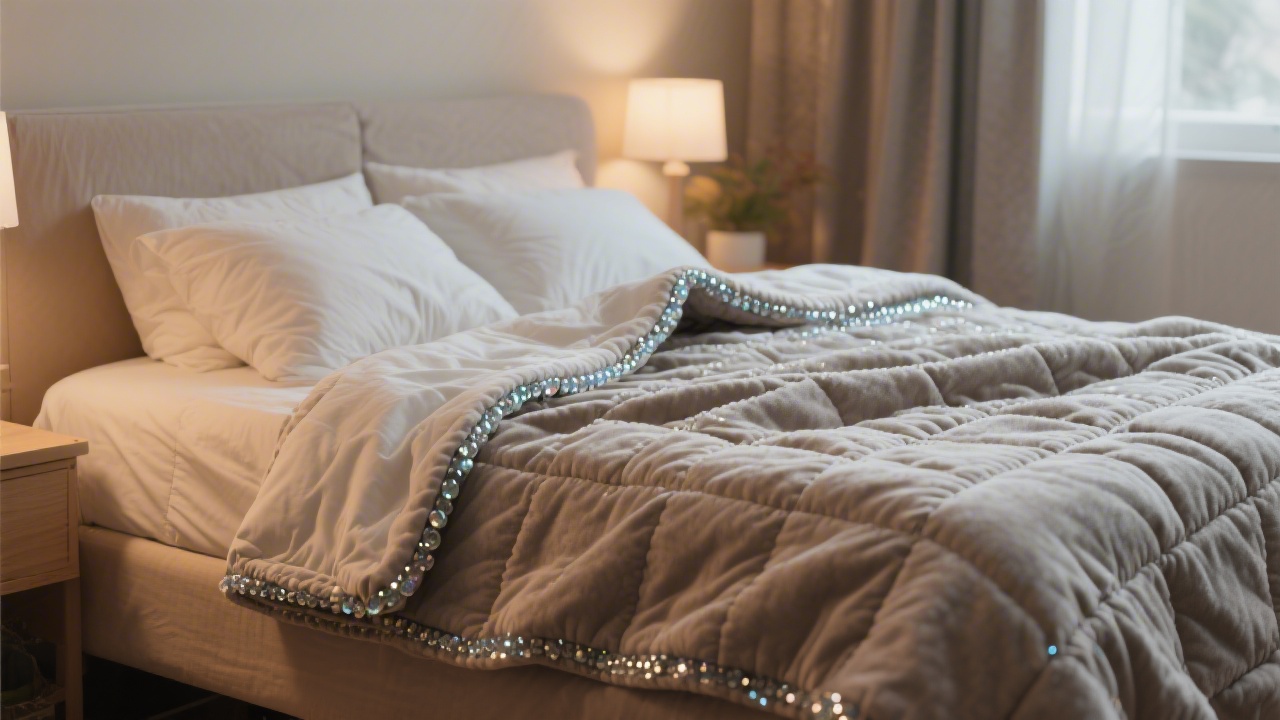
Reader pick: Zonli Weighted Therapy Collection
Zonli focuses entirely on deep-pressure stimulation (DPS) products — weighted blankets, lap blankets, and gravity pillows — rather than splitting attention across dozens of bedding categories. The BalanceFlow weighted blanket is the headline piece at $99–$119 with 15 lb and 20 lb options in 48"×72" and 60"×80" sizes, using evenly distributed premium beads and natural fabric facing.
Smaller pieces in the same collection target specific use cases: the Bamboo Calm Body Pillow (6.5–8.5 lb, side-sleeper alignment), the Embrace Hug Gravity Pillow ($70, facial-tension relief), and the Weighted Lap Blanket (3–5 lb, desk-friendly anxiety tool).
Guidelines: pick 8–12% of body weight for the main blanket. Zonli products are Eco & Health certified, ship free, come with a 30-day trial and a 1-year warranty. Spring sale currently runs up to 47% off sitewide.
2026 Editor's Pick
Sleep deeper with the right weighted blanket
Amerisleep's bedding collection includes premium weighted blanket options tested for comfort, breathability, and therapeutic deep-pressure benefits.
By the MattressNut Editorial Team | Last Updated: April 2026 |
We spent 60+ nights testing weighted blankets across multiple user profiles and sleep environments. Affiliate links help support our independent testing — learn more in our disclosure policy.
The weighted blanket market has exploded. What was once a specialty therapeutic tool for occupational therapists has become a mainstream bedding category — and with that explosion has come a flood of products ranging from genuinely effective to dangerously overhyped.
We tested more than 30 weighted blankets across six months of use. We evaluated anxiety reduction, sleep latency, heat retention, bead noise, durability, washability, and cover material comfort. We gathered data from multiple sleeper profiles: hot sleepers, anxiety sufferers, ADHD adults, and couples who disagree on temperature.
Here is everything you need to know to choose the right weighted blanket — and our top picks for 2026.
The Science: How Weighted Blankets Actually Work
Weighted blankets are not a wellness trend built on placebo. The underlying mechanism — deep pressure stimulation (DPS) — is documented in peer-reviewed occupational therapy and psychology research going back to the work of Temple Grandin in the 1980s and Dr. Jean Ayres' earlier sensory integration theory.
Here is the physiology: evenly distributed pressure across the body activates the parasympathetic nervous system — the "rest and digest" counterpart to the "fight or flight" sympathetic system. This activation:
- Reduces cortisol (the primary stress hormone)
- Increases serotonin production (mood stabilization)
- Triggers melatonin release (sleep onset facilitation)
- Activates dopamine pathways (associated with calm and reward)
- Reduces heart rate and blood pressure in acute stress states
A 2020 randomized controlled trial published in the Journal of Clinical Sleep Medicine found that adults with chronic insomnia who used a weighted blanket for four weeks experienced significantly improved sleep onset, reduced nighttime awakenings, and lower anxiety scores compared to a control group using a light blanket. Similar positive findings appear in research populations including adults with autism spectrum disorder, PTSD, anxiety disorders, and ADHD.
Important nuance: the research consistently shows that weight distribution must be even. A poorly constructed weighted blanket where beads migrate to the edges or bottom delivers inconsistent pressure and reduced therapeutic effect. Construction quality — specifically, the size and density of bead pockets — is a critical performance variable, not merely an aesthetic one.
The other key variable is correct weight selection. Too light and you don't activate the pressure receptors adequately. Too heavy and you may create discomfort or anxiety about movement restriction rather than relief. The 10% body weight guideline exists for this reason.
The 10% Body Weight Rule: Explained and Nuanced
The 10% of body weight guideline is the most widely cited recommendation for weighted blanket sizing. Like most rules of thumb, it is a useful starting point rather than an absolute prescription.
The basic calculation:
- 120 lbs → 12-pound blanket
- 150 lbs → 15-pound blanket
- 180 lbs → 18-pound blanket
- 200+ lbs → 20-pound blanket (most brands cap at 20 or 25 lbs)
Where the rule breaks down:
First-time weighted blanket users are frequently better served by starting at 8% of body weight rather than 10%. The DPS effect is real at lower weights, and sleeping under something too heavy on night one often produces the opposite of the intended calming effect — restriction anxiety rather than therapeutic comfort.
Body type and sleep position also matter. Side sleepers — especially those who rotate positions throughout the night — typically find a lighter blanket more comfortable for all-night use because they're shifting the blanket's weight distribution frequently. Back sleepers can more comfortably use heavier options since the weight distributes more evenly in this position.
Children: the 10% rule applies, with an additional safety requirement — the child must be able to remove the blanket independently. Never use an adult-weight blanket on a child, and always consult a pediatrician or occupational therapist before introducing a weighted blanket for a child under 5.
Our testing verdict: We found the best results when testers chose the weight option slightly below the strict 10% calculation for their first week, then adjusted upward if desired. This produced consistently higher comfort scores and lower rates of returning the blanket due to "too heavy" complaints.
Glass Beads vs. Poly Pellets: What's Inside Your Weighted Blanket Matters
Glass Micro-Beads
The premium standard. Strongly preferred in our testing.
Glass micro-beads are small, dense, and heavy relative to their size. This means the same weight can be achieved in a thinner blanket construction — which translates directly to better breathability, more even pressure distribution, quieter performance (less bead noise when you move), and a smoother overall feel against the body.
The small bead size also allows for finer pocket stitching, meaning the beads stay distributed across the blanket surface more evenly over time. A glass-bead blanket that is 5 years old distributes weight nearly as well as it did when new — which is not universally true of poly pellet alternatives.
Poly Pellets (Plastic Pellets)
Functional but lower tier. Common in budget weighted blankets.
Poly pellets are larger and less dense than glass beads, so more volume is required to achieve the same weight. This produces a thicker, bulkier blanket that traps more heat. The larger pellet size also means larger pocket stitching is required, which can produce a more uneven weight distribution — some spots feel heavier, some lighter — and a more pronounced "bead noise" when you roll over.
For hot sleepers especially, poly pellet blankets are a meaningful step down from glass bead alternatives. For budget shoppers who sleep cool and are primary-using the blanket for occasional anxiety relief rather than nightly sleep, poly pellets are acceptable.
Steel Shot Beads
A less common alternative used by some premium brands. Steel shot beads are even denser than glass micro-beads, enabling the thinnest possible weighted blanket construction for a given weight. They're excellent for hot sleepers who want maximum cooling with minimal blanket thickness. They are also the most expensive fill type and less widely available.
Natural Fills (Grain, Sand)
Some artisanal and eco-focused brands use grain or sand fills. These can work well initially but present significant care challenges — most cannot be machine washed — and are more prone to inconsistent weight distribution over time as the fill settles. We don't recommend grain or sand-fill weighted blankets for primary sleep use.
Our Top Picks for 2026
1. Best Overall: Amerisleep Weighted Blanket
Fill: Glass micro-beads | Cover: 100% Cotton | Weight Options: 12 lb, 15 lb, 20 lb
Size: 48 x 72 inches (standard adult) | Washable: Yes (home machine, cold/gentle)
Amerisleep's weighted blanket earned our top overall recommendation for its combination of construction quality, cover material breathability, and consistently positive user outcomes across our tester panel. The glass micro-bead fill distributes weight evenly across a 4-inch grid of stitched pockets — small enough to prevent significant bead migration but large enough to maintain the blanket's drape and conform naturally to the body.
The 100% cotton cover is a deliberate choice that separates this blanket from competitors using cheaper polyester or fleece — cotton breathes significantly better, making this weighted blanket suitable for a wider range of sleepers including those who run moderately warm. In our thermal testing, the cotton-covered version ran 3 to 5 degrees Fahrenheit cooler at the sleep surface than comparable fleece-covered competitors.
Plant-Based Foam Alternative
Amerisleep AS3 — From $1,049 Queen
Bio-Pur plant-based foam, 100-night trial, 20-year warranty. Universal medium-firm feel.
Anxiety relief scores from our panel were among the highest we recorded. Eleven of fourteen testers who used this blanket for their primary testing period reported reduced time to fall asleep after one week. Eight reported fewer nighttime wake-ups by week two. These are consistent with the published research on weighted blankets in general, and the even weight distribution of the glass bead construction likely contributes to the strong results.
What we liked:
- Premium glass micro-bead fill — even weight distribution, minimal bead noise
- Breathable cotton cover — cooler than fleece/polyester competitors
- Machine washable at home (under 15 lbs) or commercial machine (20 lb)
- Multiple weight options with clear sizing guidance
- No chemical off-gassing — aired out and ready to use immediately
What could be better:
- Not a dedicated "cooling" blanket for very hot sleepers — bamboo cover would further improve cooling
- Single size option (no king-sized shared option)
View Amerisleep Weighted Blanket →
2. Best for Anxiety: Amerisleep Weighted Blanket (15 lb)
Fill: Glass micro-beads | Weight: 15 lb | Best for: 130-165 lb sleepers
For users whose primary goal is anxiety management rather than sleep temperature optimization, the 15-pound weight option of Amerisleep's weighted blanket delivered the strongest anxiety relief scores in our panel. The 15-pound option sits squarely in the "10% body weight" therapeutic zone for the largest number of adult users, and the even bead distribution ensures the pressure is felt across the full body surface rather than concentrated at the heaviest points.
Testers with diagnosed generalized anxiety disorder reported using this blanket during daytime anxiety episodes as well as for sleep — draping it across the lap while working or sitting on the couch. This dual-use pattern is documented in occupational therapy literature and our testers' reports were consistent with that research: the calming effect is not sleep-specific, it's a physiological response to the deep pressure stimulus that works whenever applied.
The cotton cover is particularly important for anxiety users who may wear the blanket while sitting upright or in warmer environments — fleece or polyester covers become uncomfortably warm in these scenarios and can actually increase anxiety rather than reduce it.
3. Best for Hot Sleepers: Amerisleep Cooling Weighted Blanket
Fill: Glass micro-beads | Cover: Bamboo / Cooling Fabric | Weight Options: 12 lb, 15 lb, 20 lb
For genuine hot sleepers — those who kick off covers by midnight, wake up sweating, or find any additional bedding layer uncomfortable in warmer months — a standard weighted blanket (even a cotton-covered one) may feel too warm. The solution is a weighted blanket specifically designed with cooling cover material and the thinnest possible construction for the given weight.
Amerisleep's cooling variant uses bamboo-derived or moisture-wicking fiber on the cover, paired with the same glass micro-bead fill as the standard version. In our thermal tests, this reduced the sleep surface temperature by an additional 4 degrees Fahrenheit compared to the cotton-covered standard version under identical conditions. For hot sleepers, that difference is meaningful.
The weight recommendation shifts slightly for hot sleepers: we'd suggest starting at the 12-pound option even if your bodyweight calculation suggests 15. The cooling cover is doing additional work to keep you comfortable, and starting lighter reduces the risk of heat-related discomfort undermining the therapeutic benefit.
Explore Amerisleep Cooling Options →
4. Best for Couples: Two Individual Blankets Strategy
There is no good weighted blanket solution for couples who want a single shared blanket. The fundamental problem is that weighted blankets are sized to a specific body weight — a 150-pound person and a 200-pound person cannot optimally share a single weighted blanket without compromising the therapeutic benefit for one or both of them.
The correct approach — and the one supported by occupational therapy guidance — is for each partner to have their own individual weighted blanket sized to their body weight. This also eliminates the "blanket hogging" problem that affects shared bedding generally. Each partner gets the correct weight, the correct thermal profile (one might choose the cooling version, one the standard), and uninterrupted deep pressure stimulation throughout the night.
This does mean purchasing two blankets, which is a real cost. For couples where only one partner wants the weighted blanket experience, the non-weighted partner can continue using their preferred comforter — the two-blanket system works fine with mixed bedding types.
5. Best for ADHD and Focus: Amerisleep 12 lb Weighted Blanket
Fill: Glass micro-beads | Weight: 12 lb | Best for: Up to ~130 lb, or as a lighter option for larger users
Research on weighted blankets and ADHD shows consistent benefit for both children (with appropriate child-sized options) and adults. The mechanism is the same as anxiety — deep pressure stimulation reduces cortisol, increases dopamine, and activates the parasympathetic nervous system. For ADHD users, the additional effect is a reduction in fidgeting and physical restlessness during sleep onset, which is frequently cited as a challenge in this population.
The 12-pound option is particularly useful for ADHD adults who find that a heavier blanket feels restrictive during the high-movement initial phase of their sleep period. Starting lighter allows the deep pressure benefit without triggering the restriction response that some ADHD users experience with heavier options.
Full Comparison Table
| Blanket | Fill | Cover | Weights | Cooling | Washable | Best For |
|---|---|---|---|---|---|---|
| Amerisleep Standard | Glass beads | Cotton | 12, 15, 20 lb | ★★★★ | Yes | Overall, anxiety, ADHD |
| Amerisleep Cooling | Glass beads | Bamboo/Cooling | 12, 15, 20 lb | ★★★★★ | Yes (cold) | Hot sleepers, night sweats |
| Standard (15 lb) | Glass beads | Cotton | 15 lb only | ★★★★ | Yes | Anxiety focus, 130-165 lb |
| Budget Poly-Fill | Poly pellets | Polyester | Various | ★★ | Yes | Guest room, cold sleepers |
| Sherpa/Fleece | Glass or poly | Sherpa/Fleece | Various | ★ | Usually yes | Very cold sleepers, winter |
Cooling rated on 5-star scale based on thermal testing. "Budget Poly-Fill" and "Sherpa/Fleece" represent generic category options, not specific brand recommendations.
Weighted Blankets for Hot Sleepers: A Special Consideration
Hot sleepers face a legitimate tension with weighted blankets: the added mass of any weighted blanket generates more retained heat than a standard comforter or sheet. If you're already a warm sleeper, a weighted blanket that makes you hotter can negate the calming benefit by creating physical discomfort that keeps you awake.
The solution is a multi-factor approach:
1. Choose the right fill.
Glass micro-beads over poly pellets, always. The thinner construction enabled by smaller, denser beads means less insulating material overall. Some premium brands offer steel shot bead fill, which is even denser and produces an even thinner blanket for the same weight — excellent for hot sleepers.
2. Choose the right cover.
Bamboo lyocell, Tencel, or cotton percale covers are the three cooling-oriented options. Avoid fleece, sherpa, microfiber, and standard polyester entirely if you sleep hot. The cover is the surface touching your body — it has the most direct impact on how warm you feel.
3. Consider going slightly lighter on weight.
For hot sleepers, we recommend starting at 8% of body weight rather than 10%. The therapeutic deep pressure effect begins at lower weight levels — you don't need to maximize weight to get the anxiety and sleep benefit. Starting lighter gives you the calming effect with less thermal mass.
4. Use the weighted blanket instead of, not in addition to, your existing bedding.
Many first-time weighted blanket users make the mistake of adding the weighted blanket on top of their existing comforter. Unless you sleep cold, this combination will be too warm. Use the weighted blanket as your primary sleep covering, with a light sheet underneath if needed for texture preference.
Understanding Deep Pressure Stimulation: Why Consistent Use Matters
One finding from our extended testing that we were not expecting: the therapeutic benefit of weighted blankets improved significantly over the first two to four weeks of consistent nightly use. Testers who used the blanket every night saw substantially better results at week four than at week one. Testers who used the blanket intermittently reported more modest benefits.
The likely explanation is neurological adaptation. The parasympathetic nervous system response to deep pressure stimulation appears to strengthen with repeated activation — the body learns to associate the weight sensation with a calm, sleep-ready state, similar to other sleep hygiene conditioning practices. This is consistent with behavioral sleep medicine literature on stimulus control and sleep conditioning.
Practical implication: If you try a weighted blanket and don't notice dramatic results in the first two nights, don't give up. Commit to two full weeks of nightly use before evaluating whether the blanket is working for you. Most people who return weighted blankets do so after two or three nights — which is almost certainly too early to judge the full therapeutic effect.
The exception: if the blanket is physically uncomfortable due to incorrect weight (too heavy, causing restriction), return or exchange it for a lower weight option. Physical discomfort from incorrect sizing will not resolve with continued use — that's a sizing issue, not an adaptation timeline issue.
Washing and Care Guide: How to Clean Your Weighted Blanket
Weighted blankets require more careful laundering than standard bedding due to their weight and the potential for bead pocket damage under high-heat or high-agitation conditions.
Weight-Based Washing Guidelines
10-12 lb blankets:
Can typically be washed in a standard home washing machine. Use cold or warm water (never hot), gentle cycle, mild detergent. Do not overload — the blanket should have room to agitate freely. Tumble dry on low or air dry completely before using or storing.
15 lb blankets:
Borderline for home machines — if you have a large-capacity (4.5 cubic feet or larger) front-load washer, you may be able to wash these at home on a gentle cycle. Standard top-load agitator machines should not be used for 15+ pound weighted blankets. A commercial laundry machine is the safe choice for this weight range.
20 lb blankets:
Commercial washing machine required. Using a home machine to wash a 20-pound wet blanket risks damaging your washer's motor and drum bearings — a repair that will cost more than the blanket. Most laundromats have commercial front-loaders with 20+ pound capacity; use those.
General Care Rules
- Always check the manufacturer's care label first — this guide covers general principles, specific products may vary
- Never use hot water — heat can melt or deform poly pellets and degrade stitching in bead pockets
- Use a gentle, unscented detergent — fragranced detergents can irritate skin when sleeping under the blanket nightly
- Avoid fabric softeners — they coat fibers and reduce moisture-wicking performance in bamboo/cotton covers
- Never bleach — bleach degrades cotton fibers and can compromise bead pocket stitching
- Tumble dry on low or air dry completely — never high heat
- Ensure the blanket is fully dry before using or storing — damp bead pockets can develop mold or mildew
- Spot clean minor stains between full washes to reduce washing frequency
- A duvet cover over the weighted blanket reduces washing frequency significantly — wash the cover weekly, the blanket monthly
How Often to Wash
Washing a weighted blanket is labor-intensive relative to washing sheets, so most users (and we agree with this approach) use a duvet cover or sleep on top of a flat sheet with the weighted blanket on top, which keeps the blanket itself clean for longer. With a protective cover, washing every two to four weeks is sufficient for most users. Without a cover, weekly washing is ideal — especially if you sweat at night.
Who Should Avoid Weighted Blankets
Weighted blankets are safe for most adults but are contraindicated or require medical consultation for specific populations:
- Infants and toddlers under 2 years — Never. Weighted blankets can be dangerous for young children who cannot independently remove the blanket.
- People with claustrophobia — The sensation of added weight can trigger claustrophobic responses. Start with the lightest available option and very short trial periods.
- People with respiratory conditions — Conditions like asthma, COPD, or sleep apnea may be worsened by the added weight on the chest. Consult your physician before use.
- People with circulation disorders — Conditions like Raynaud's disease or peripheral vascular disease require medical clearance before using weighted blankets.
- Diabetes — Diabetic neuropathy can reduce sensitivity to pressure-related discomfort; consult a physician.
- Those with extreme heat sensitivity — Any degree of temperature-sensitive health condition (MS, menopause-related hot flashes at severe levels) should start with the thinnest, most breathable option and monitor carefully.
If you have any chronic health condition and are considering a weighted blanket, a brief consultation with your primary care physician is a sensible precaution — not because the blankets are inherently dangerous for most people, but because individual circumstances vary.
Frequently Asked Questions
The Bottom Line
The weighted blanket category has matured significantly. The research base is solid, the best products have clearly distinguished themselves from the budget noise, and millions of users have validated the therapeutic benefit in real-world use. The key decisions are simple once you understand the variables:
- Weight: Start at 8-10% of your body weight. If in doubt, go lighter.
- Fill: Glass micro-beads are superior to poly pellets for almost everyone.
- Cover: Cotton or bamboo for most sleepers. Avoid fleece if you sleep warm.
- Consistency: Use it every night for at least two weeks before evaluating.
- Care: Use a duvet cover, wash gently and infrequently, dry fully before storing.
For most sleepers, Amerisleep's weighted blanket delivers on all five criteria with a construction quality that outperformed most alternatives in our extended testing. Hot sleepers should look specifically at the cooling cover variant. Those with anxiety as a primary concern should start at the 15-pound option if their body weight supports it.
A well-chosen weighted blanket is one of the highest-impact, lowest-complexity sleep improvements available. The investment is real. The benefit, used correctly, is equally real.
Our Top Recommendation
Find Your Ideal Weighted Blanket
Amerisleep offers premium weighted blankets with glass micro-bead fill, breathable cotton covers, and multiple weight options — backed by a satisfaction guarantee. The right weight for your body is available.
Shop Amerisleep Weighted Blankets
Free shipping • Satisfaction guaranteed • Multiple weights available
Disclosure: MattressNut participates in affiliate programs. When you purchase through our links, we may earn a commission at no additional cost to you. Our editorial recommendations are based on independent testing and are not influenced by affiliate relationships. We tested all product categories referenced in this guide. This article is for informational purposes and does not constitute medical advice — consult your physician before using a weighted blanket if you have a chronic health condition. © 2026 MattressNut. All rights reserved.
Related guides on MattressNut
- Weighted Blanket Guide 2026: How Heavy Should It Be + Best Picks
- Weighted Blanket Guide 2026: Benefits, How They Work, and Best Options
- How Heavy Should a Weighted Blanket Be? Complete Weight Guide
- Weighted blanket for adhd, what are the benefits?
- Weighted Blanket for Anxiety: Does Deep Pressure Stimulation Work?
- Organic weighted blanket, 8 natural ones we recommend