
 by
by Ready to complete your sleep bedroom? The Saatva Classic is our top-rated luxury innerspring hybrid — individually wrapped coils, organic cotton cover, three firmness options, and white-glove delivery. See current pricing and configurations at Saatva.
A 2012 Travelodge study surveyed 2,000 UK households and found that people with blue bedrooms averaged 7 hours and 52 minutes of sleep per night — the highest of any color tested. That is roughly 40 minutes more than the national average at the time. While a single survey is not a clinical trial, the result aligns with decades of color psychology research showing that blue slows heart rate, lowers blood pressure, and reduces cortisol.
Why Blue Promotes Sleep
The mechanism is neurological. Blue wavelengths in daylight suppress melatonin — which is why screen light disrupts sleep. But reflected blue from matte wall paint behaves differently. It carries no significant circadian signal. What it does do is trigger the parasympathetic nervous system via a psychological association with sky, water, and open space. The brain reads blue as "safe" and "expansive," which reduces the vigilance state that keeps people lying awake.
Research from the University of Sussex found that visual environments incorporating cooler hues reduced reported anxiety scores by up to 27 percent compared to red-dominant rooms. Lower anxiety means faster sleep onset and fewer middle-of-the-night awakenings.
Which Shades of Blue Work Best
Not all blues are equal. The key variables are saturation and value (lightness/darkness).
- Dusty blue / slate blue: The sweet spot. Low saturation, mid-value. Reads as calm without feeling cold or clinical. Paint matches: Benjamin Moore "Quiet Moments" (OC-120), Farrow & Ball "Mizzle" (266 — technically a blue-green but behaviorally blue).
- Soft navy (one accent wall): High value, low saturation. Feels enveloping. Works as a headboard wall to create a "cocoon" effect that research associates with faster sleep onset. Avoid full-room navy — it absorbs too much light and can feel oppressive.
- Pale powder blue: Safe for smaller rooms. Light-reflective value keeps spaces feeling open. Best in east- or west-facing rooms with warm afternoon light.
- Avoid: Electric cobalt, royal blue, and bright teal. These are high-saturation blues that stimulate rather than calm. They test well for energy and creativity — not sleep.
How to Incorporate Blue Without Repainting
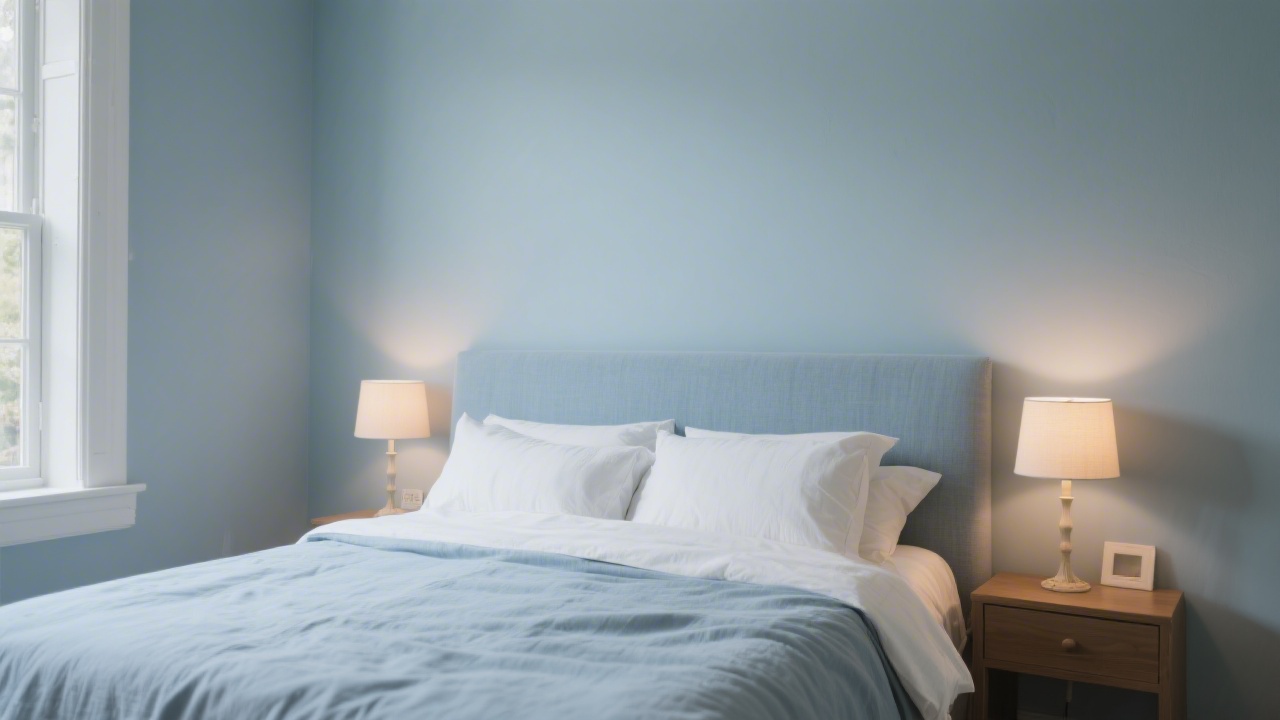
Paint is the highest-impact route, but not the only one. Upholstered headboards in slate blue or French linen add mass color without commitment. Duvet covers and shams in dusty blue linen create a visual anchor on the bed — which is where the eye goes first when you enter the room. Curtains in a steel-blue velvet add weight and light-blocking, both of which support sleep.
Layering textures within the blue palette (matte wall + woven throw + shiny ceramic lamp base) prevents the room from reading as flat. Contrast within a monochromatic scheme is what separates "designed" from "painted."
Pairing Blue With Other Colors
Blue works exceptionally well with warm neutrals (warm white, oatmeal, putty) because the contrast prevents the room from feeling cold. Aged brass or brushed bronze hardware adds warmth without saturation. Avoid pairing blue walls with cool-white bedding — the result is a clinical palette that reads as a hospital, not a bedroom.
Wood tones (walnut, oak, light pine) are the most reliable blue companion. The natural grain introduces visual texture and warmth that grounds the palette. A white-oak nightstand against a dusty-blue wall is one of the most consistently appealing bedroom combinations in professional interior design.
For more on how your bedroom layout supports sleep quality, see our guide to bedroom floor plans for sleep and bedroom furniture spacing.
The Mattress Underneath Matters Too
Color creates the conditions for sleep. The mattress is where sleep actually happens. If you are redesigning a bedroom for better rest, the surface you sleep on should be part of the conversation.
The Saatva Classic is our top-rated mattress for most sleepers — a dual-coil innerspring hybrid with individually wrapped coils that reduces motion transfer, a Euro pillow top for pressure relief, and an organic cotton cover. It is made in the US, ships white-glove (delivered and set up in your room), and comes in three firmness options to match how you sleep.
Frequently Asked Questions
Is blue the best bedroom color for sleep?
According to a Travelodge survey of 2,000 UK households, blue bedroom occupants averaged the most sleep (7:52/night) of any color tested. Color psychology research supports this: blue triggers the parasympathetic nervous system and reduces cortisol. However, "best" depends on your specific response to color — some people find green or grey equally calming.
What shade of blue is best for a bedroom?
Low-saturation, mid-value blues (dusty blue, slate blue, powder blue) are the most consistently effective. High-saturation blues like cobalt or electric blue are stimulating rather than calming and are not recommended for sleep environments.
Does blue paint actually affect sleep quality?
Reflected blue paint does not suppress melatonin the way blue-light screens do. The sleep benefit appears to come through psychological pathways — association with sky and water, reduced vigilance, lower reported anxiety — rather than a direct circadian mechanism.
Can I get the benefit of blue without painting?
Yes. Bedding, upholstered headboards, curtains, and large area rugs in dusty blue can approximate the effect of painted walls, particularly when the blue element is the dominant visual mass in the room (e.g., a full duvet and pillow set in slate blue linen).
What colors should I avoid in a bedroom?
Red and orange are consistently the worst-performing colors in sleep research — they activate the sympathetic nervous system (fight-or-flight). Bright yellows and saturated greens also score poorly. In the Travelodge study, purple bedrooms averaged the least sleep, possibly because purple has strong associations with stimulation and creativity.
Ready to complete your sleep bedroom? The Saatva Classic is our top-rated luxury innerspring hybrid — individually wrapped coils, organic cotton cover, three firmness options, and white-glove delivery. See current pricing and configurations at Saatva.