
 by
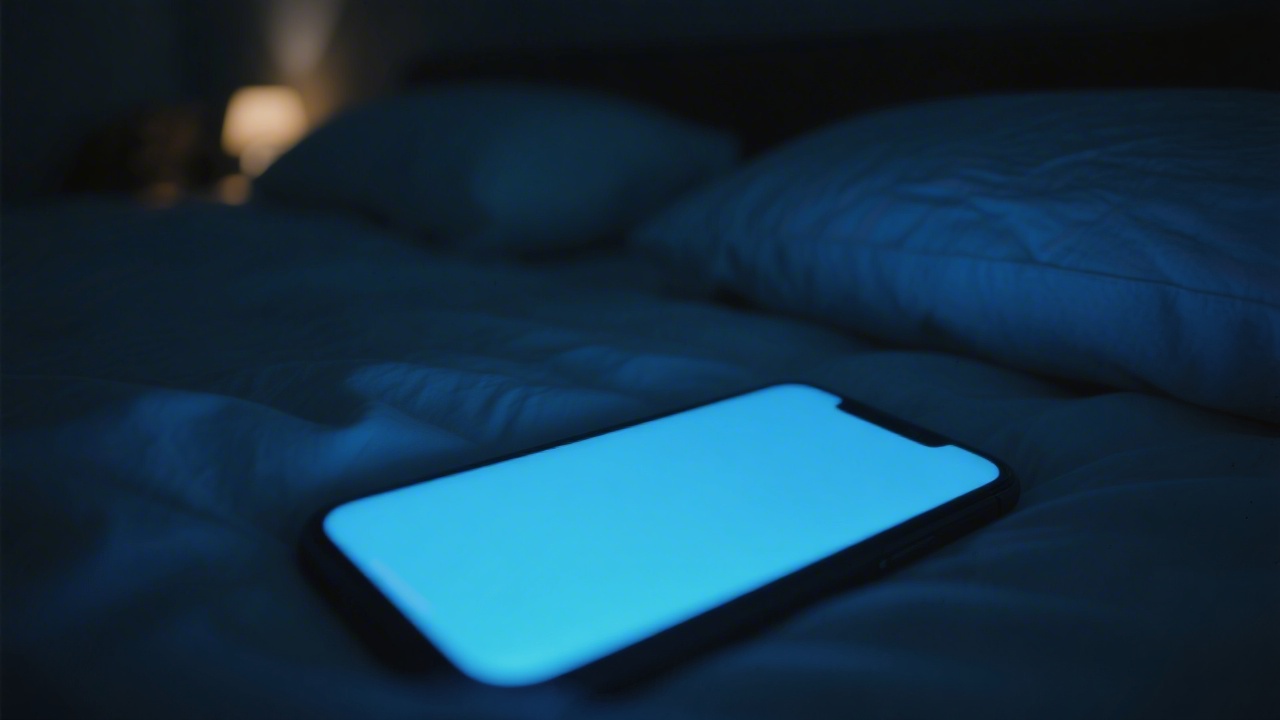
by The blue light conversation in mainstream wellness media conflates several distinct biological mechanisms and often gets the key facts wrong. Here's the photobiology: it's not about "harsh" screens. It's about a specific wavelength range activating a specific photoreceptor type that directly inhibits melatonin secretion. The mechanism is well-characterized, the wavelength specificity is precise, and the countermeasures follow logically from the biology.
The ipRGC: The Photoreceptor You Weren't Taught About
The human retina contains three photoreceptor types: rods (dim light, no color), cones (color and detail), and intrinsically photosensitive retinal ganglion cells (ipRGCs). The ipRGCs were only discovered in 2002 (Provencio et al., later characterized by Hattar and Berson). They contain melanopsin, a photopigment with peak sensitivity at approximately 480nm — the short-wavelength blue range.
Unlike rods and cones, ipRGCs project directly to the suprachiasmatic nucleus (the master circadian pacemaker) and to the olivary pretectal nucleus (which controls the pupil response). Their primary function is not image formation — it's environmental light detection for circadian timekeeping and the pupillary light reflex. This is why even people who are blind from rod/cone degeneration can still entrain their circadian rhythms to the light-dark cycle as long as their ipRGCs are intact.
Why 480nm is the Critical Wavelength
The action spectrum for melatonin suppression — the relationship between light wavelength and degree of melatonin suppression — peaks at approximately 459-480nm. A landmark study by Brainard et al. (2001) in the Journal of Neuroscience mapped this curve precisely. Light at 480nm suppresses melatonin most effectively per unit of irradiance.
At longer wavelengths — green (550nm), yellow (580nm), orange (590nm), red (630nm+) — melatonin suppression drops dramatically. At 600nm, you need roughly 10x more light energy to achieve the same melatonin suppression as at 480nm. At 630nm (red), suppression is minimal at typical indoor light intensities. This is the scientific basis for using amber and red light in the evening — it's not aesthetic preference, it's spectral biology.
Modern Light Sources and 480nm Output
Smartphones and tablets
OLED and LCD smartphone displays have a prominent blue peak in their spectral output, centered near 450-460nm — close to the melanopsin peak sensitivity. A typical smartphone display at full brightness held at 12 inches delivers approximately 0.3-1.0 mW/cm² of short-wavelength radiation — sufficient to measurably suppress melatonin within 30-60 minutes of evening exposure. Night Shift / Night Mode (warm color temperature settings) reduce short-wavelength output by shifting the display toward warmer colors.
LED overhead lighting
"Cool white" LED bulbs (5,000-6,500K color temperature) have a strong 450nm blue peak due to how phosphor-converted LEDs work. These are the most common type in office environments and increasingly in home use. A room lit with cool white overhead LEDs at normal indoor lighting levels (200-400 lux) is a significant source of 480nm melatonin suppression in the evening. Switching to warm white (2,700K) or amber-spectrum bulbs in the evening reduces this substantially.
Fluorescent lighting
Traditional fluorescent lamps have a more complex spectral output but still include significant short-wavelength energy. The effect on melatonin is intermediate between cool white LED and warm incandescent.
Evidence for Blue Light Blocking Strategies
Amber-tinted glasses
Several randomized controlled trials have tested amber glasses (which block wavelengths below approximately 530nm) worn in the evening. Burkhart and Phelps (2009) found that 2 hours of amber glasses use before bed improved sleep quality scores by 67% vs. clear glasses in adults with insomnia. A 2017 study by Shechter et al. showed improved sleep in insomnia patients using blue-blocking glasses. The evidence is positive but the studies are small — it's a low-risk, low-cost intervention worth testing.
Software filters (Night Mode / f.lux)
Software color temperature shifting (Night Shift on iOS/macOS, f.lux on Windows/Mac) reduces short-wavelength output from displays but incompletely. Studies by Chang et al. (Harvard) found that even with Night Shift enabled, iPad use before bed still suppressed melatonin compared to no screen use, though less than without the filter. Software filtering is better than nothing but less effective than amber glasses.
No-screen period
Eliminating blue-spectrum sources entirely for 1-2 hours before sleep remains the most effective strategy, as validated by studies from Czeisler's lab at Harvard. In practice, using only amber-spectrum lighting (candles, salt lamps, or amber LED bulbs under 2,000K) in the final 2 hours before bed is an achievable version of this protocol.
The Saatva Connection
Blue light avoidance in the evening is most impactful when your sleep environment supports the natural melatonin-driven sleep onset that you've preserved. A sleep surface that maintains a cooler sleep temperature (core body temperature drops as melatonin rises) and provides pressure relief at contact points reduces nighttime arousals. The Saatva Classic is designed around these principles. Learn about the Saatva Classic here.
For the complete morning-side protocol, see morning light exposure and sleep. For how melatonin timing connects to these strategies, read melatonin and light timing.
Frequently Asked Questions
Does blue light from screens actually affect sleep, or is it just the stimulation?
Both mechanisms operate. The 480nm light suppresses melatonin via ipRGCs (documented physiology). The content stimulates arousal via cognitive and emotional pathways. Studies separating the two effects (using dim, non-alerting screens) confirm that the spectral light effect is real and distinct from content arousal — though both contribute to delayed sleep onset.
Why doesn't red light suppress melatonin?
Melanopsin, the photopigment in ipRGCs responsible for melatonin suppression, has minimal sensitivity to wavelengths above 600nm. Red and near-infrared light (630-850nm) doesn't activate melanopsin at normal indoor light intensities, which is why red light at night doesn't disrupt circadian melatonin secretion.
Are blue light blocking glasses worth it?
Evidence supports amber-tinted glasses (those that block below ~530nm) for preserving evening melatonin. Clear "blue light glasses" marketed for daytime computer use have minimal effect on melatonin and unclear evidence for eye fatigue. The relevant product is amber-tinted, and the relevant use case is evening, not daytime.
What color temperature should evening lighting be?
Below 2,700K for reduced melatonin suppression. Below 2,000K (amber/orange) for minimal suppression. Candlelight is approximately 1,800K and produces negligible melatonin suppression. Standard warm white LED bulbs at 2,700K are a meaningful improvement over cool white but still contain some short-wavelength energy.
How quickly does blue light suppress melatonin?
Significant melatonin suppression begins within 15-30 minutes of bright blue-spectrum light exposure in the evening. The effect continues as long as the light source is present. Recovery (melatonin resuming its rise) begins within 15-30 minutes of removing the light source, though full resumption of the natural secretion curve takes longer.
Our Top Mattress Pick
The Saatva Classic consistently ranks #1 for comfort, support, and long-term durability.
View Saatva Classic Pricing & Details