
 by
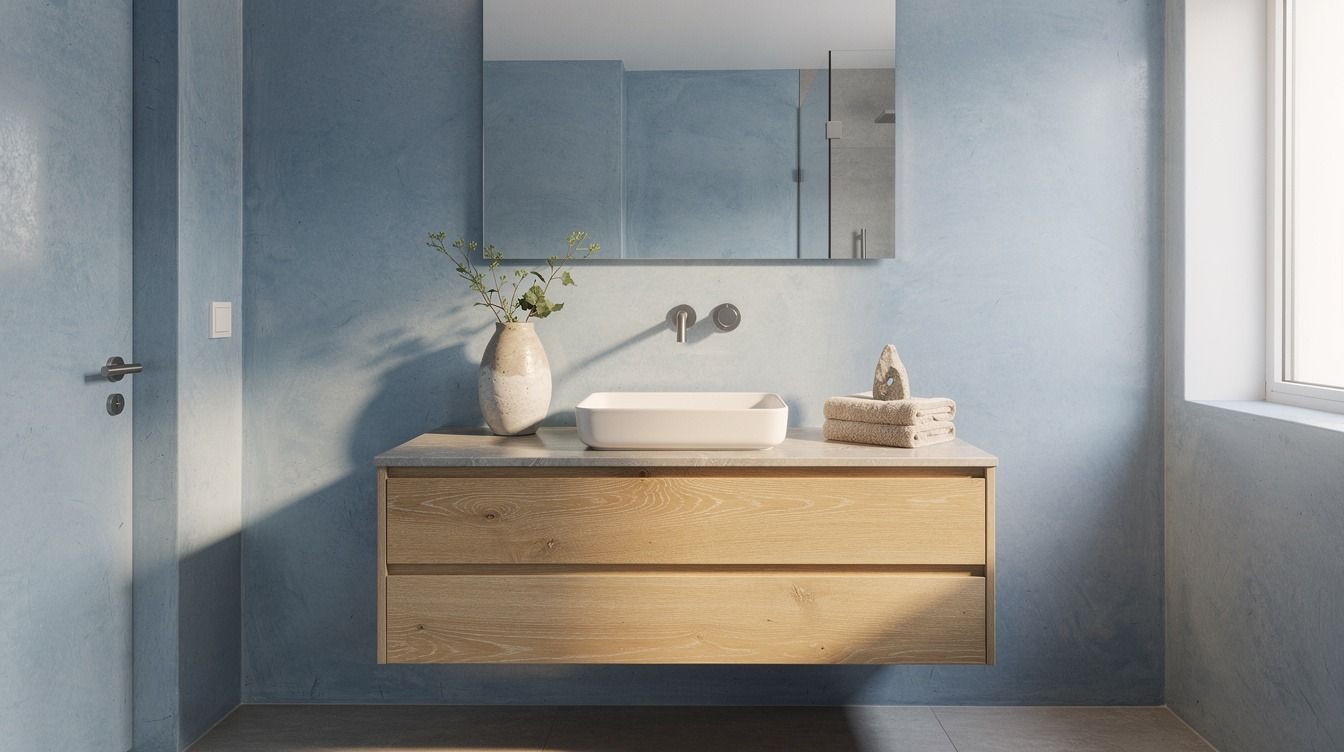
by Blue microcement bathroom ideas can feel soft and coastal, not chilly, when you pair the finish with warm woods, gentle light, and sandy undertones. I once treated blue like a complete color plan and ended up with a bathroom that felt like a raincoat. The surface wasn’t the problem. My cold lighting and chrome choices were.
- Layer Sea Salt Over a Warm Base (bathroom colors)
- Anchor the Floor With a Sand-Colored Runner
- Use the Two-Wood Rule for neutral tone bathroom decor
- Swap Chrome for Brushed Brass (spa feeling bathroom)
- Build a Low-Contrast Shower Envelope
- Hang a Linen Curtain That Breaks the Blue
- Let Hague Blue Hold the Dark Corner
- Frame the Vanity With an Oval, Not a Rectangle
- Try the Three-Height Light Stack
- Choose a Floating Vanity With Real Grain
- Put Chestertown Buff Where the Sun Hits
- Can a Blue Bathroom Still Feel Warm?
- Keep the Toilet Wall Quiet With a Tonal Ledge
- Mix Matte Microcement With One Glossy Moment
- Hide Storage in a Slim Oak Tower
- Spend Your Budget Where Water Meets the Wall
- Use a 60x30 in Tub as Your Pale Counterweight
- Make the Coastal Note About Texture, Not Shells
- Finish With a Soft Coastal Countertop Ritual
1Layer Sea Salt Over a Warm Base (bathroom colors)
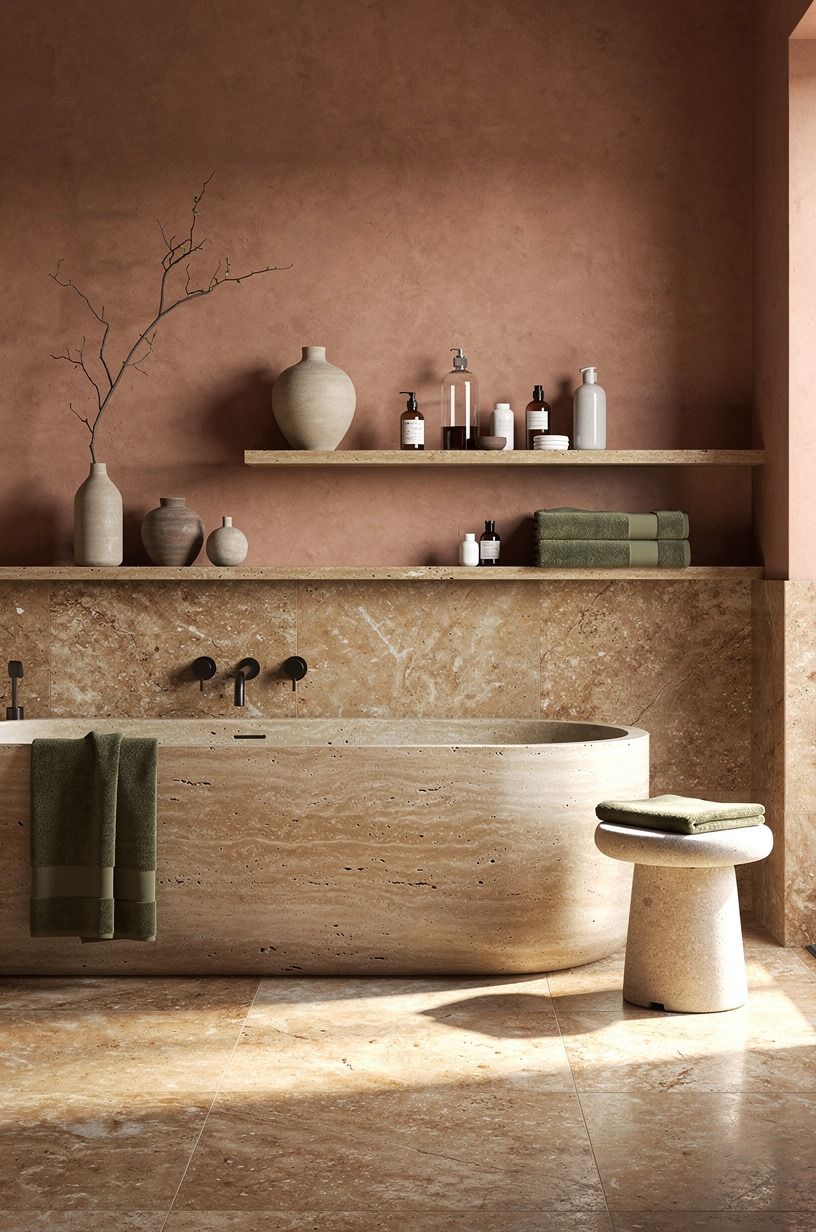
Start with terracotta, stone, and olive around a warm travertine surface, rather than matching one cool finish with more of the same. You’ll get a calming shift between the mineral tones and the painted ceiling, especially if your bathroom catches hard morning light. It’s quiet, but it doesn’t disappear.
Keep your vanity in a warm wood tone and let the grain bring in softness. I’d skip bright white trim here, because it makes the room read flatter and colder. Your eye needs a softer stop at the ceiling line.
2Anchor the Floor With a Sand-Colored Runner
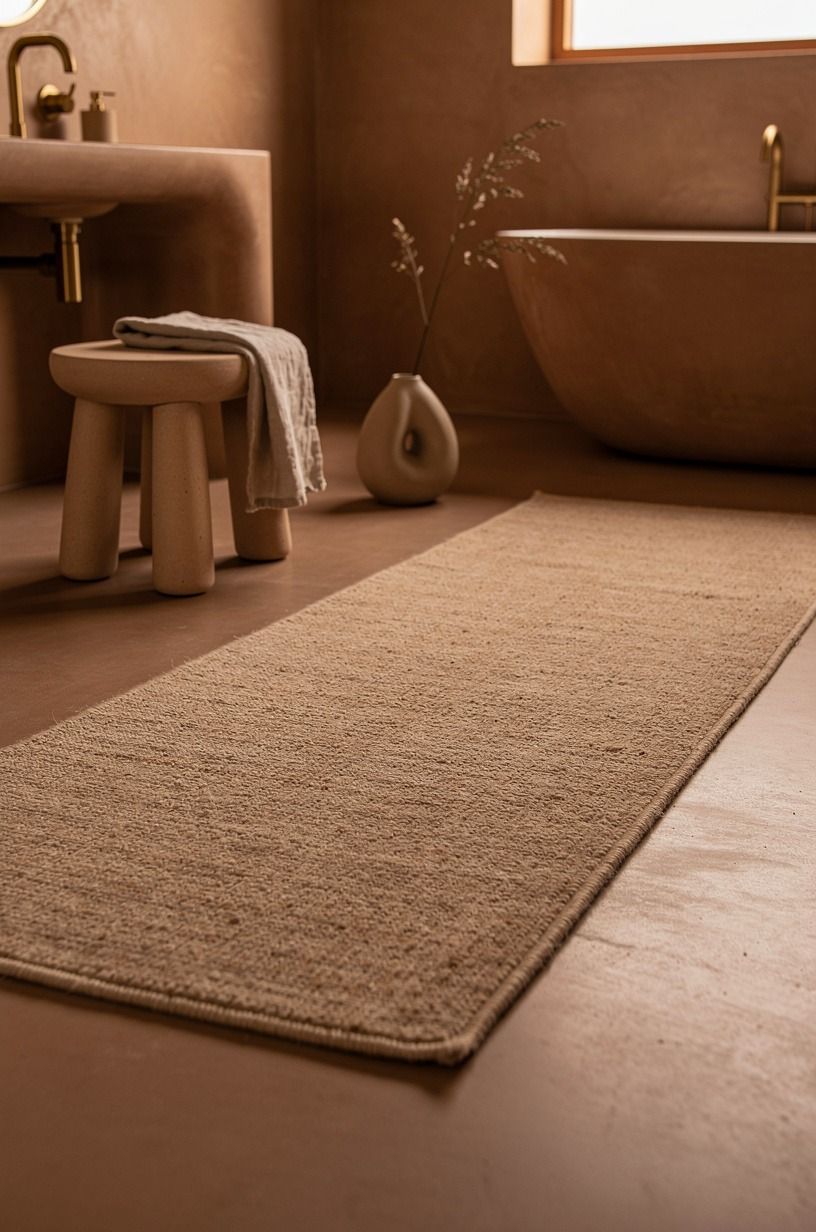
A clay, linen, and aged-brass bathroom needs something dry and tactile underfoot. Choose a 600gsm Turkish cotton runner in oat, flax, or faded tan, then place it where you’ll step out of the shower. You’ll soften the room without hiding the material that made you choose a warmer palette in the first place.
For a small bath, your runner should sit clear of the toilet base and vanity toe-kick. That little border matters. And if you’re choosing between a gray bath mat and a sandy one, skip gray.
It turns the whole room into a weather report.
3Use the Two-Wood Rule for neutral tone bathroom decor
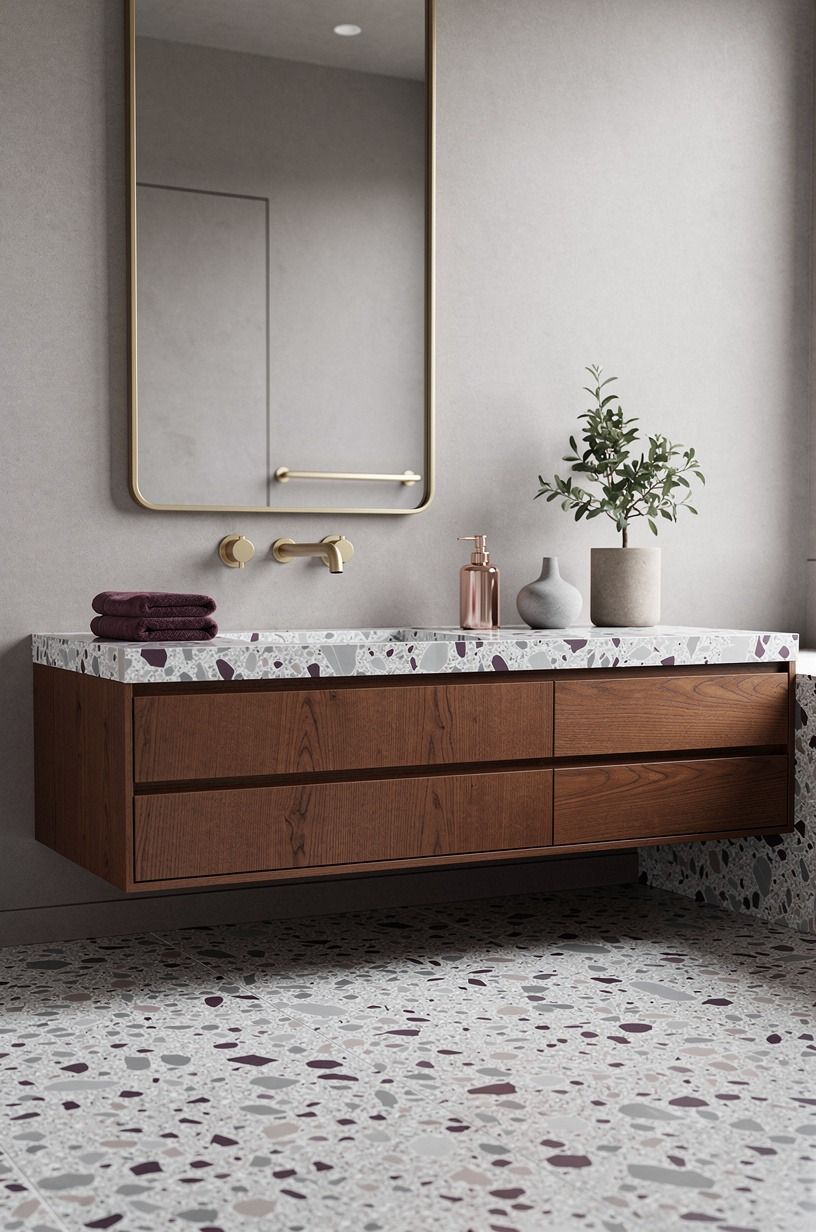
The Two-Wood Rule is simple: give your bathroom two warm wood notes, then stop. You might use a 3/4-inch solid white oak floating shelf and a framed oak mirror. More than that can push your room toward beach-rental theme territory.
You’ll get a more refined result if the woods are related but not identical. A pale oak shelf beside a medium walnut stool has enough friction to feel lived-in against plum, gray, and rose-gold tones.
I’ve tried matching every wood finish, and it looked like a showroom set. Your bathroom should have a little weather in it.
4Swap Chrome for Brushed Brass (spa feeling bathroom)
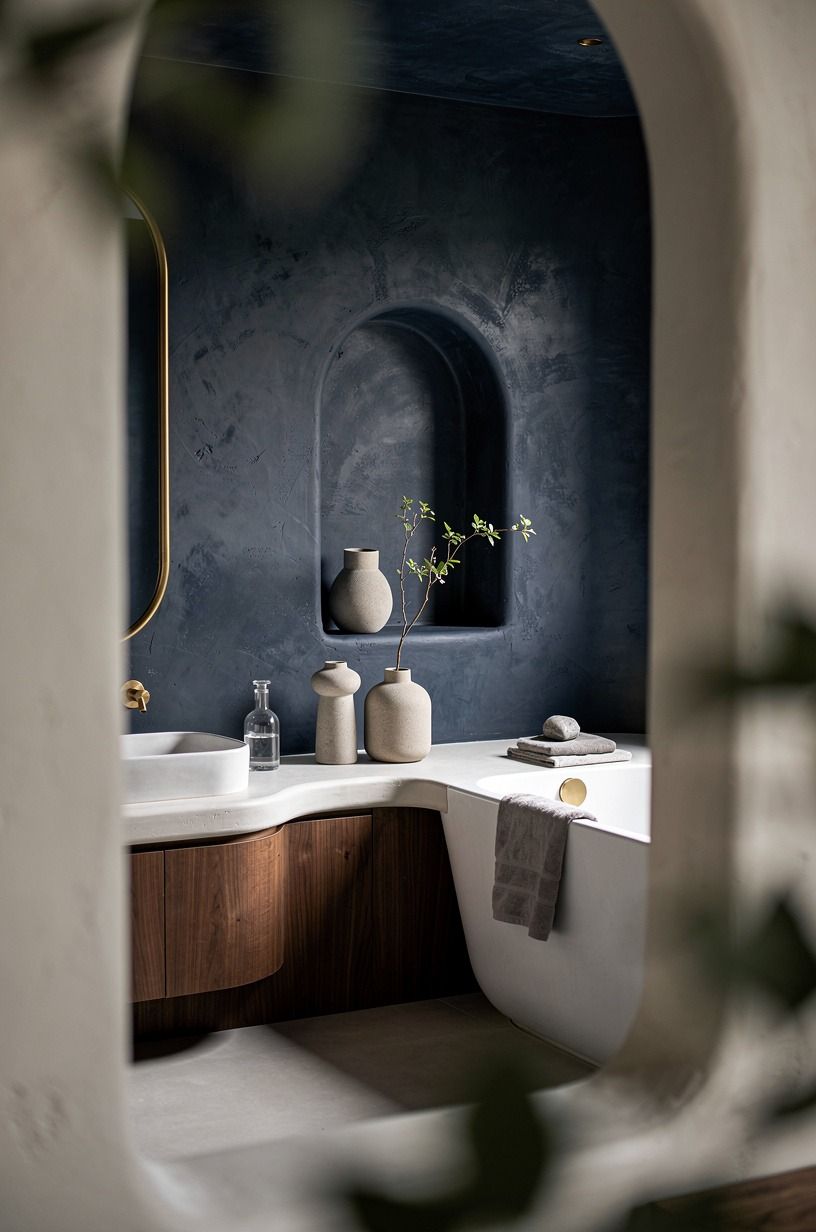
A navy, white, and walnut bathroom benefits from a warm counterpoint, especially when hand-applied Venetian plaster gives the walls their soft movement.
5Build a Low-Contrast Shower Envelope
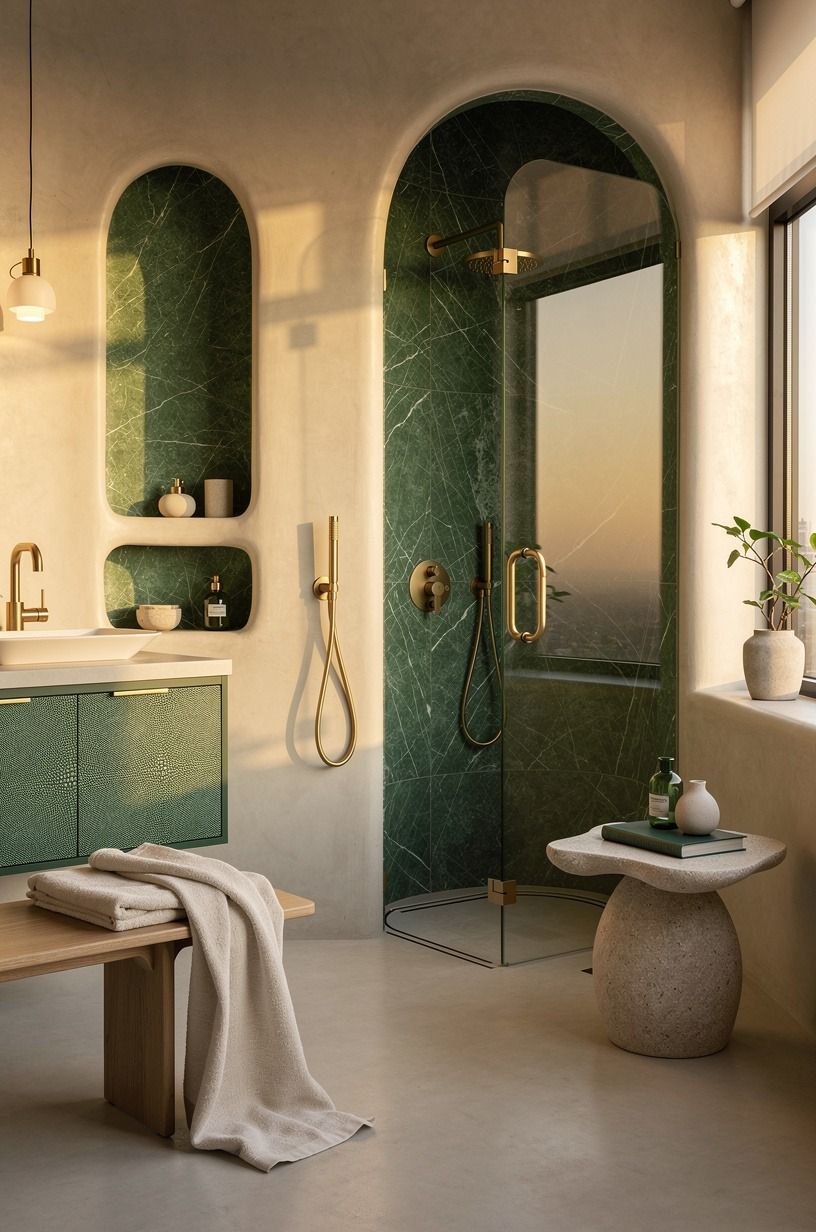
Carry the emerald, gold, and cream tones through the shower, then use a nearby tone for the floor rather than a stark white tile break. Your shower can feel more expansive when the walls don’t stop abruptly at the curb. A comfortable shower needs at least 36x36 in, and this continuous finish makes those dimensions feel less boxed in.
Choose shagreen only for a small accent or inset, not every surface. Its texture gives you a lovely bit of variation beside smoother finishes. For more glossy coastal depth, see these blue zellige bathroom ideas.
6Hang a Linen Curtain That Breaks the Blue
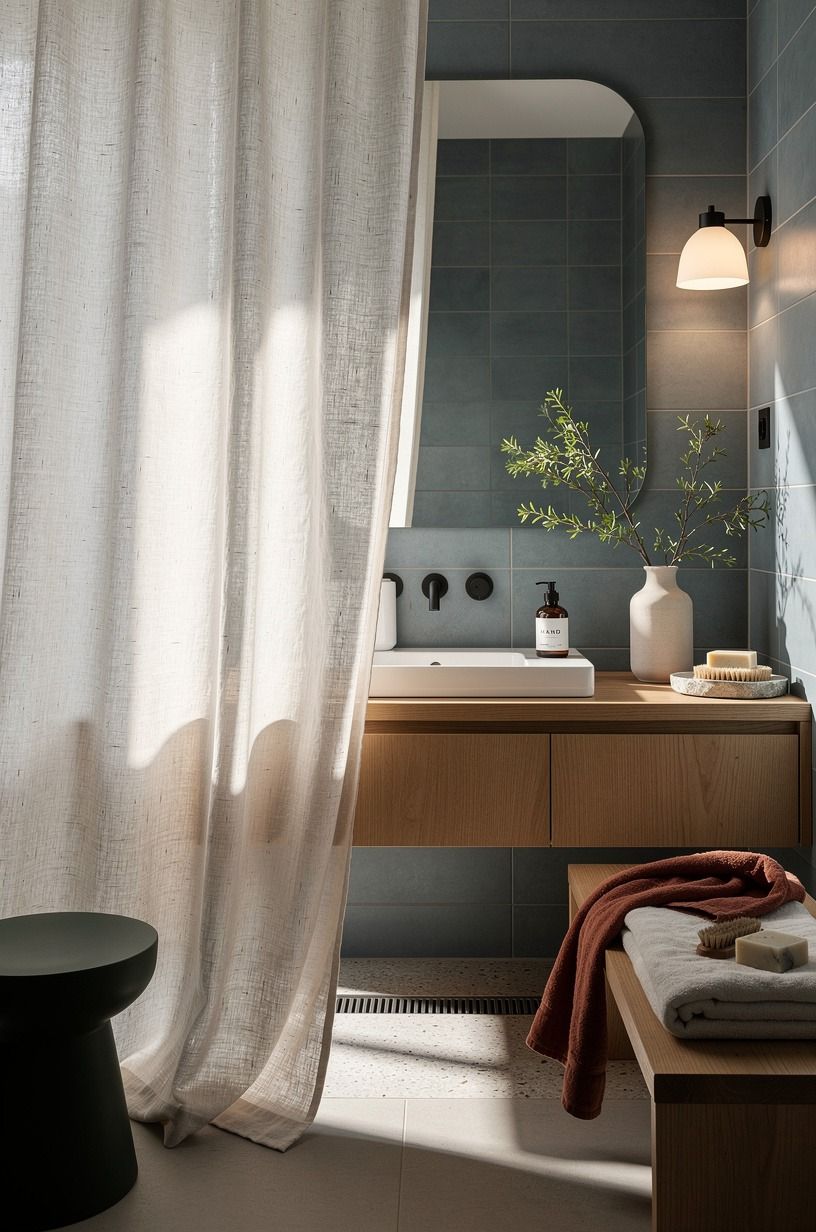
A washed Belgian linen shower curtain in forest green or rust is your easiest chance to interrupt all that mineral color.
7Let Hague Blue Hold the Dark Corner
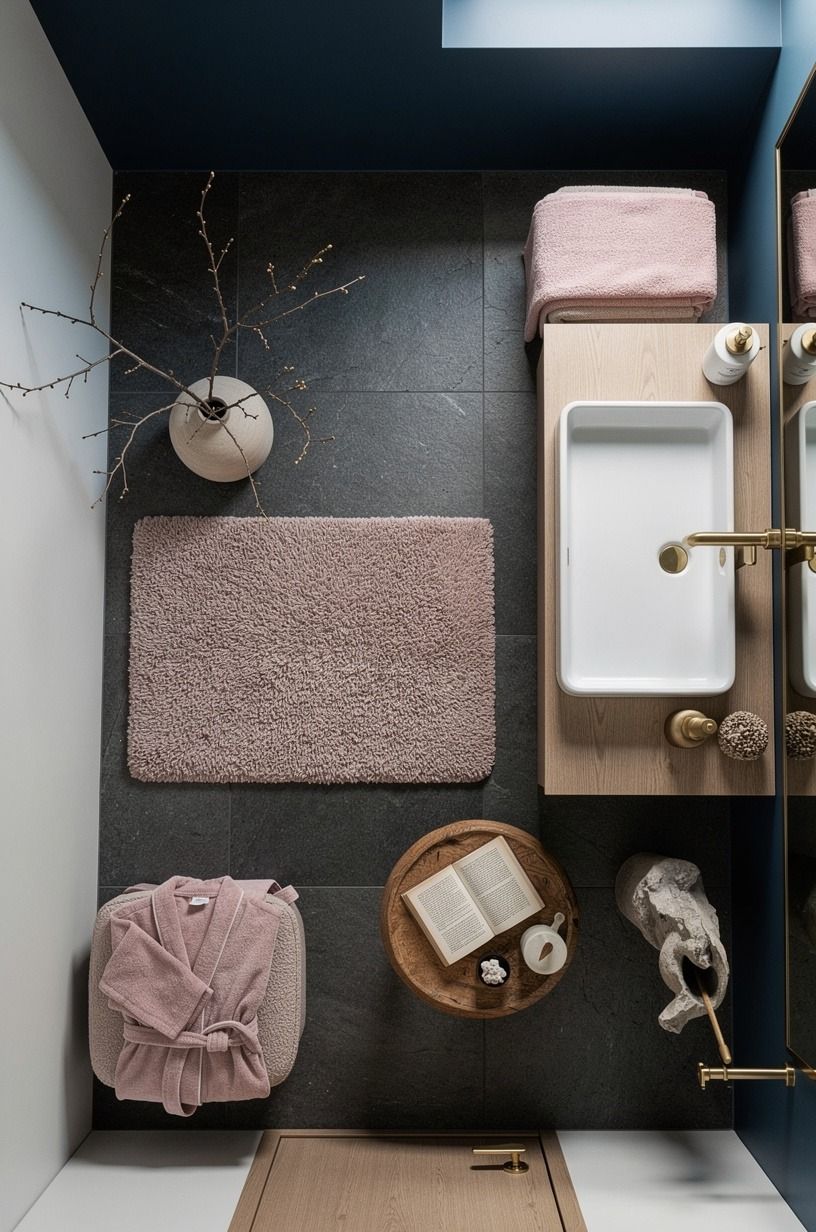
If your bathroom has a windowless alcove or a deep vanity wall, use a dusty rose or charcoal note with brass instead of trying to brighten every inch. You’ll create depth, and the softer surrounding colors will look more intentional beside it. Dark color works when you give it a job.
But keep the ceiling pale. Your walls can go moody while your ceiling stays gentle and airy, which is the balance people often miss.
I went back and forth on this in my own bath, then painted the ceiling too dark. Bad call.
It felt low by dinner.
8Frame the Vanity With an Oval, Not a Rectangle
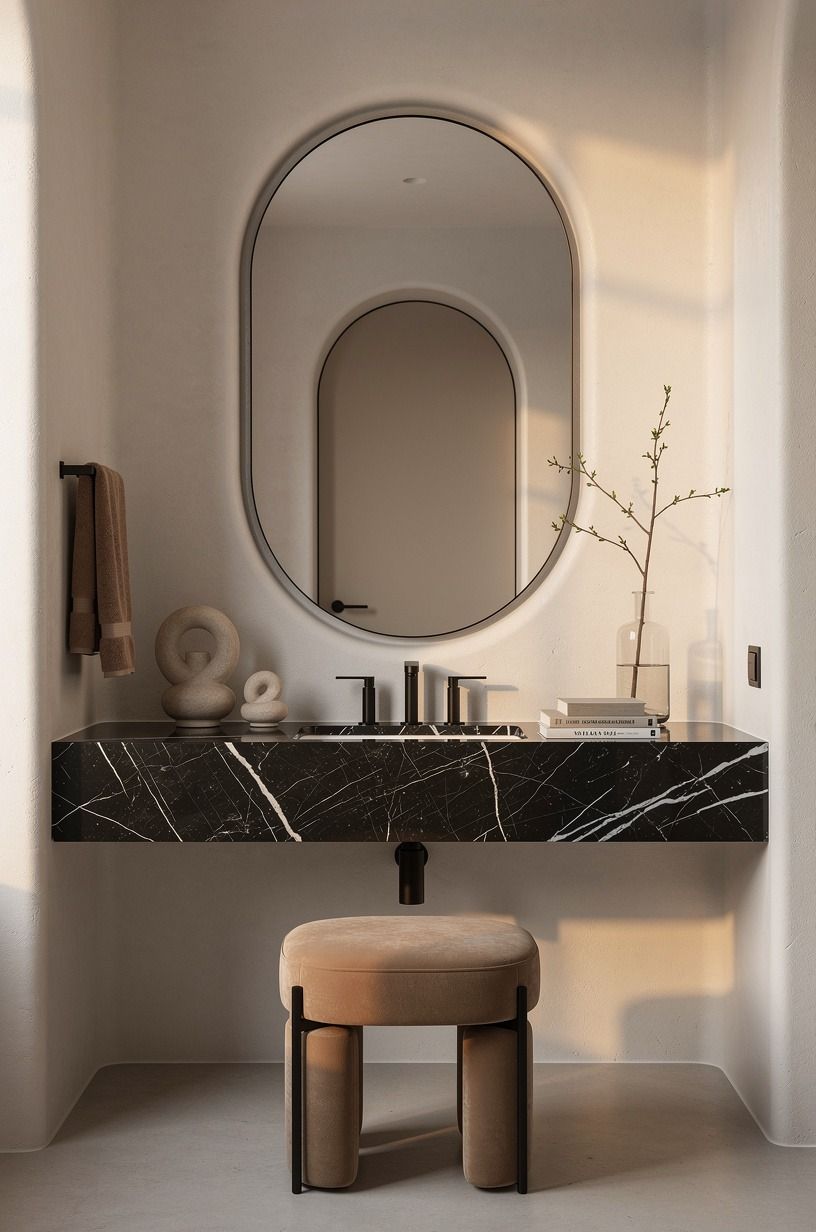
Choose an oval mirror over a sharp-edged rectangle when your bathroom includes Nero Marquina black marble with white veining. The curve breaks up the broad planes and softens the contrast between warm white, camel, and black. You’ll notice that the room feels less severe before you even change anything else.
Aim for a vanity height between 32-36 in, then hang the mirror so you aren’t craning upward every morning. Your reflection should feel easy, not like a hotel lobby check-in. For another soft material direction, browse beige microcement bathroom ideas.
9Try the Three-Height Light Stack
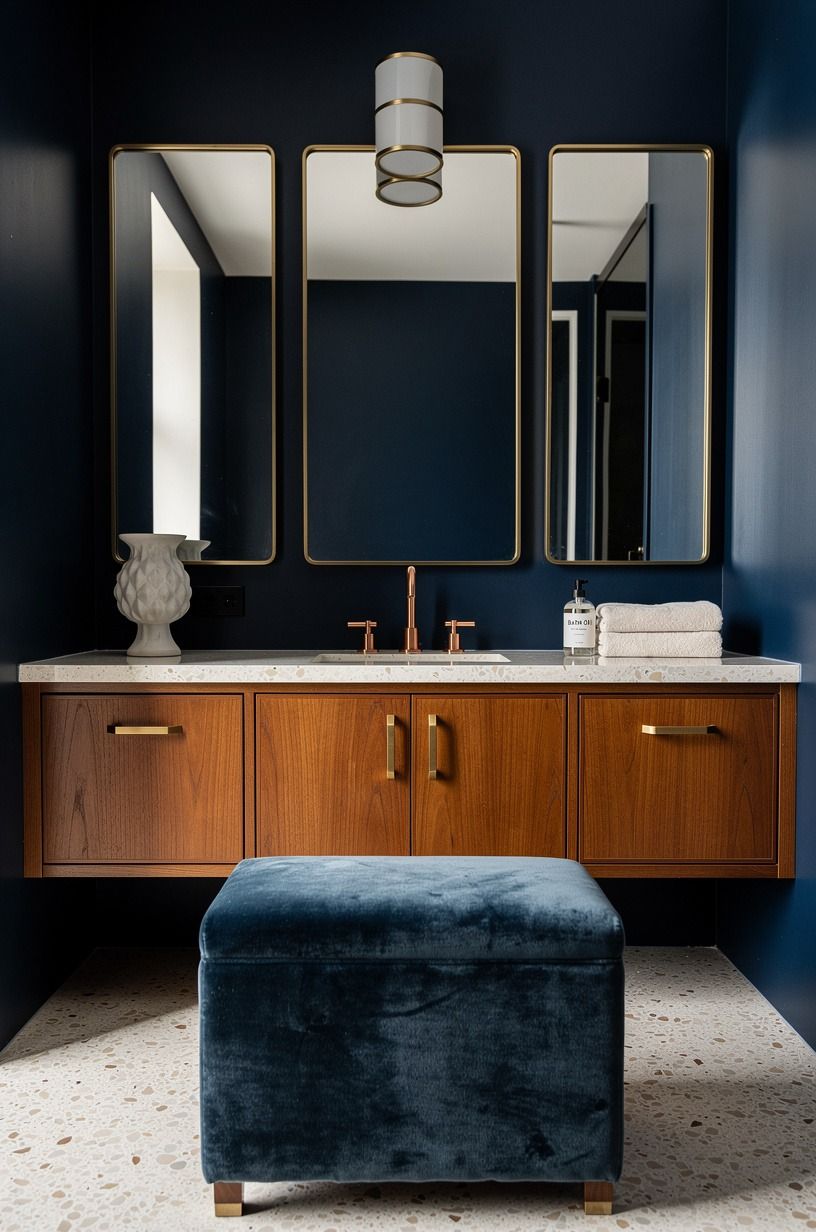
The Three-Height Light Stack means you light your bathroom at three levels: overhead, face level, and low glow.
10Choose a Floating Vanity With Real Grain
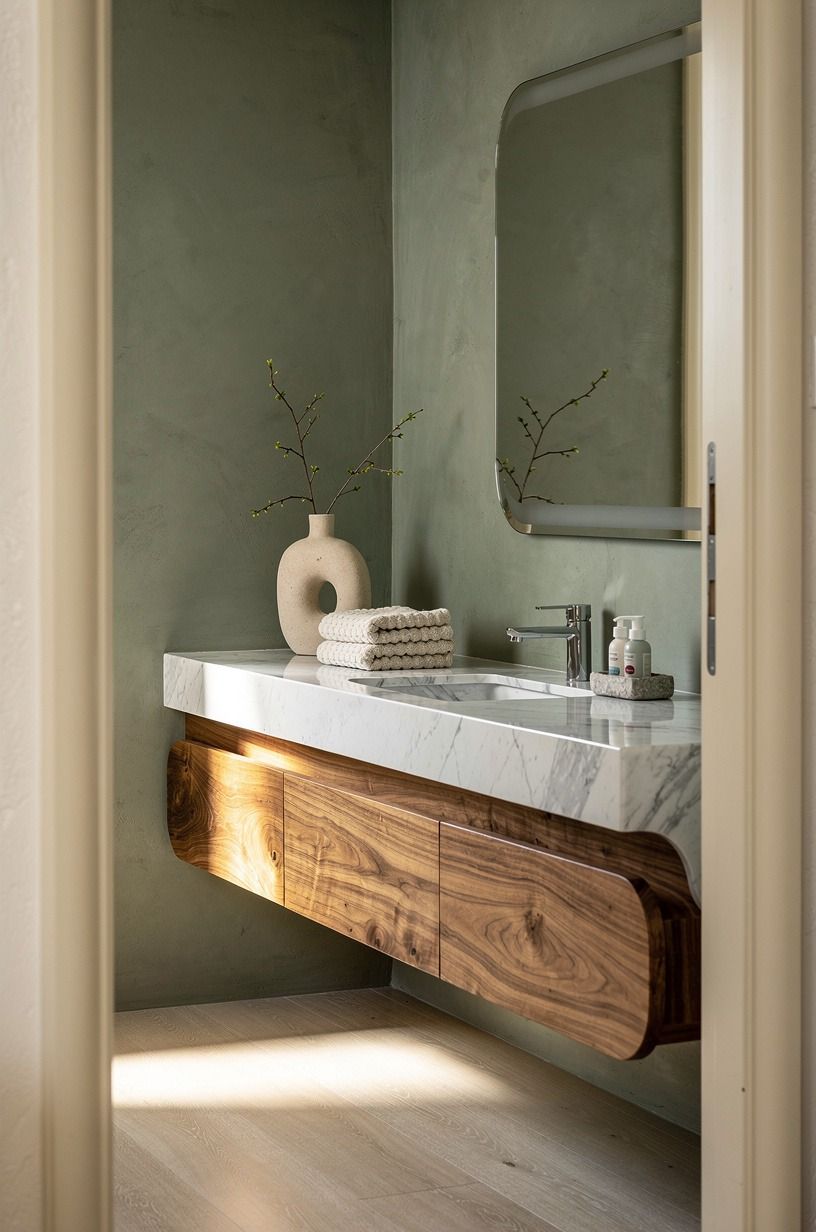
A floating vanity gives a sage-green, warm-cream bathroom more breathing room, especially in a narrow space. Choose natural wood alongside Carrara marble with subtle gray veining if you want a finish that feels calm but not blank. You’ll see more floor, so your room reads wider.
Keep the underside open and clean. A crowded basket pile below the vanity ruins the effect fast. And if you need storage, use one lidded cane webbing basket rather than five little bins.
Your eye can rest.
11Put Chestertown Buff Where the Sun Hits
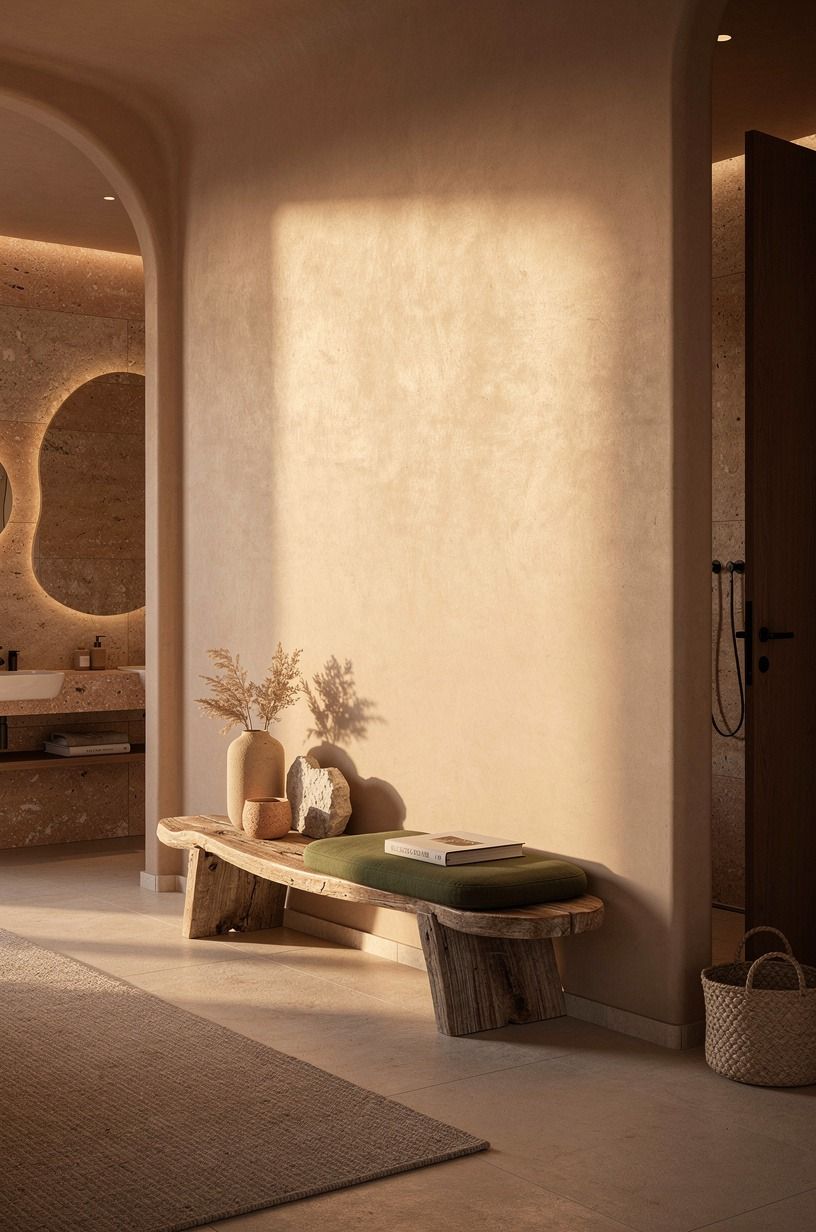
Try reclaimed, weathered teak on the exterior side of a bathroom door if you’re nervous.
12Can a Blue Bathroom Still Feel Warm?
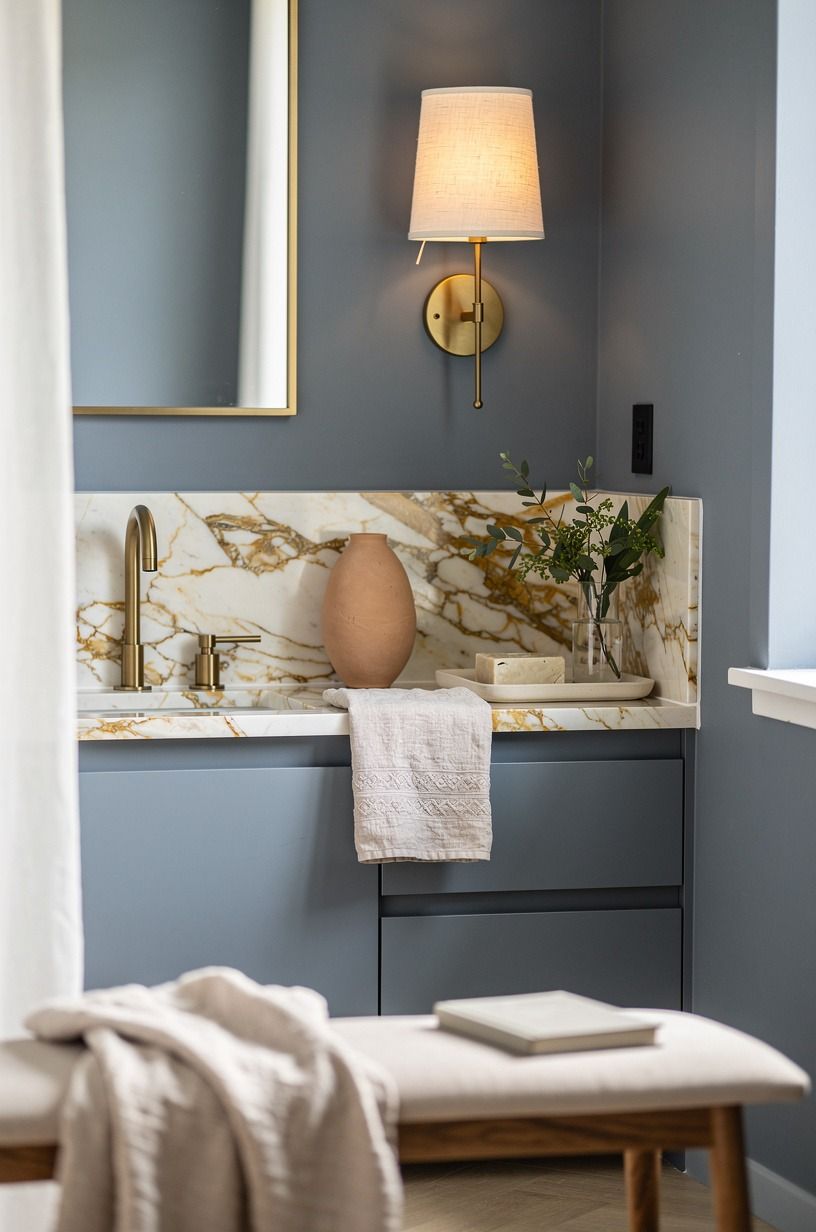
Yes, if you make blue the cool note rather than the entire temperature of the room. Your bathroom needs warm materials in at least three places: wood, metal, and textiles. Calacatta marble with gold veining can bring in warmth in a larger bath, but a linen hand towel can do the same visual work in a smaller one.
Think about what your bare feet touch. A smooth mineral finish is serene, yet it needs a forgiving landing spot.
A Turkish cotton mat, a timber stool, and an aged brass hook. Small things, but they’re doing real work.
13Keep the Toilet Wall Quiet With a Tonal Ledge
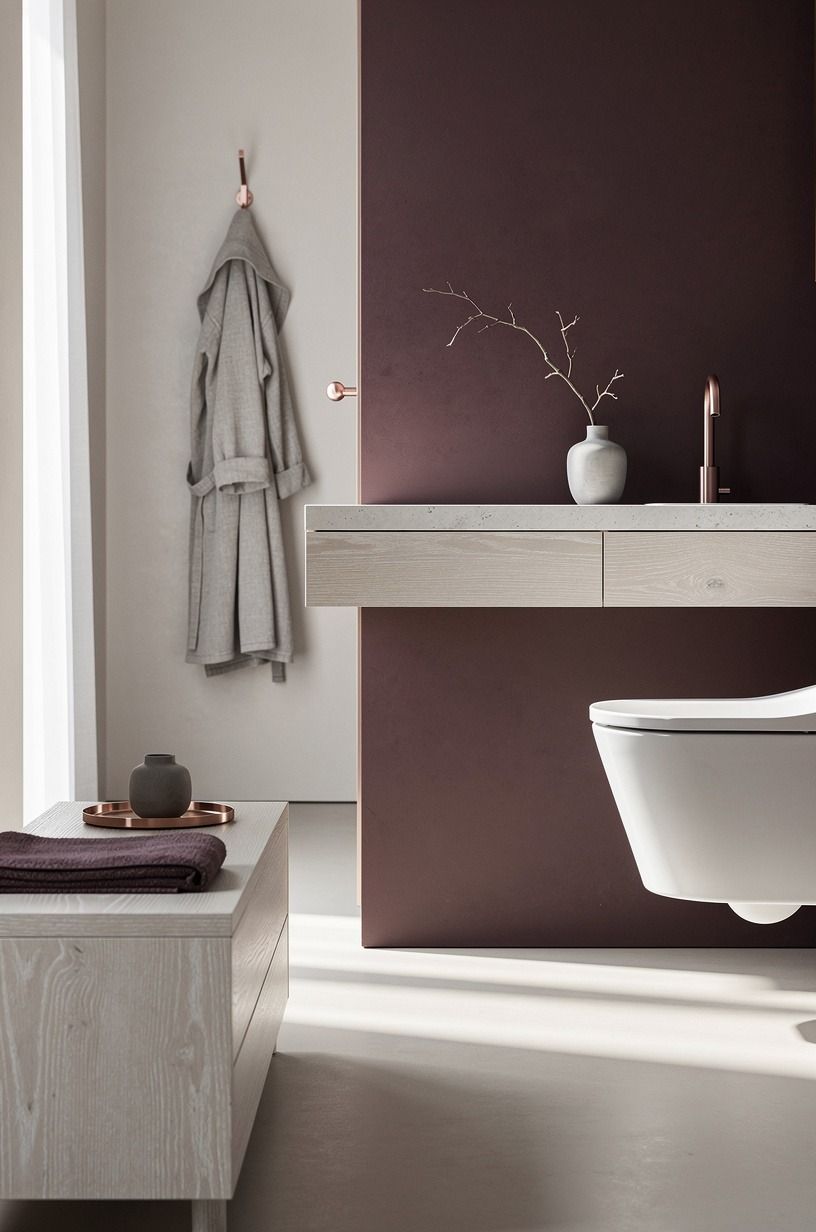
Build a shallow ledge behind the toilet in a plum or gray tone, then style it sparingly with cerused white oak nearby.
14Mix Matte Microcement With One Glossy Moment
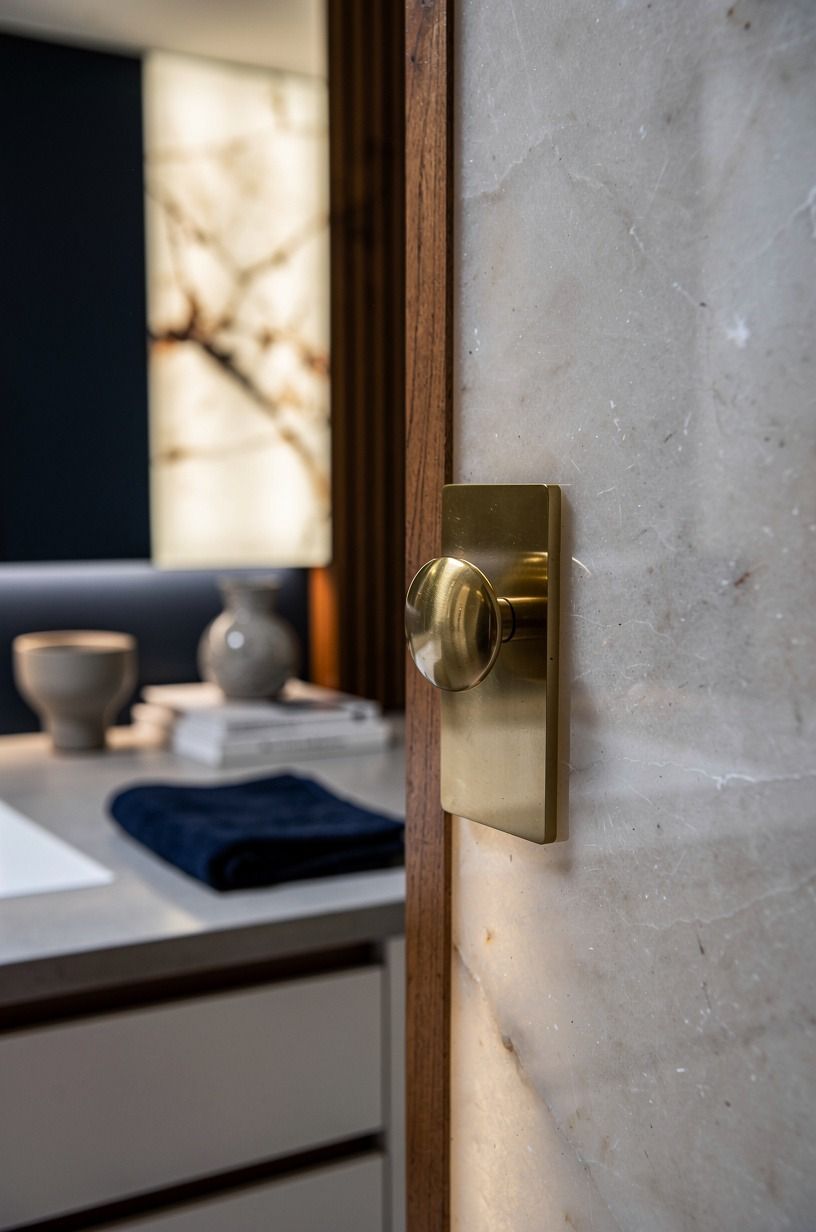
Microcement is at its best when it isn’t asked to do every visual job. Give it one luminous partner, such as backlit translucent onyx, a glazed lamp base, or a mirror with old glass. You’ll get light movement without turning the room into a tile sample board.
The contrast is captivating because the matte surface absorbs light while the luminous piece sends it back. But use only one glossy event in each sightline. Too many reflective finishes make your soft coastal feeling look busy, not peaceful.
15Hide Storage in a Slim Oak Tower
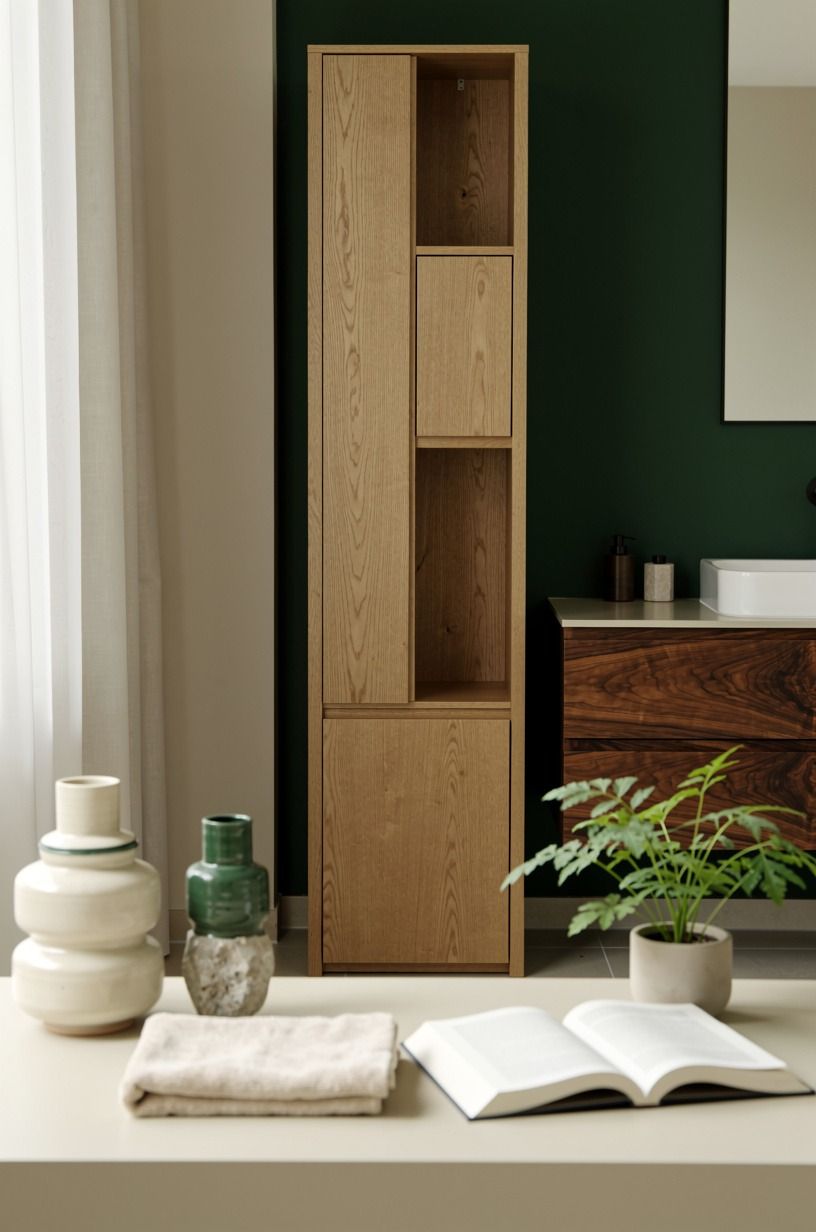
A slim storage tower can save a small emerald, gold, and cream bathroom, provided it looks like furniture instead of utility shelving. Choose a cabinet with book-matched walnut if you can; it brings enough richness without making the room feel overdone. You’ll keep towels close without stacking them on every surface.
Tuck the tower beside the vanity, not opposite the door, so your entry view stays open. For more ways to make material choices feel deliberate, read why microcement works in an organic modern bathroom.
16Spend Your Budget Where Water Meets the Wall
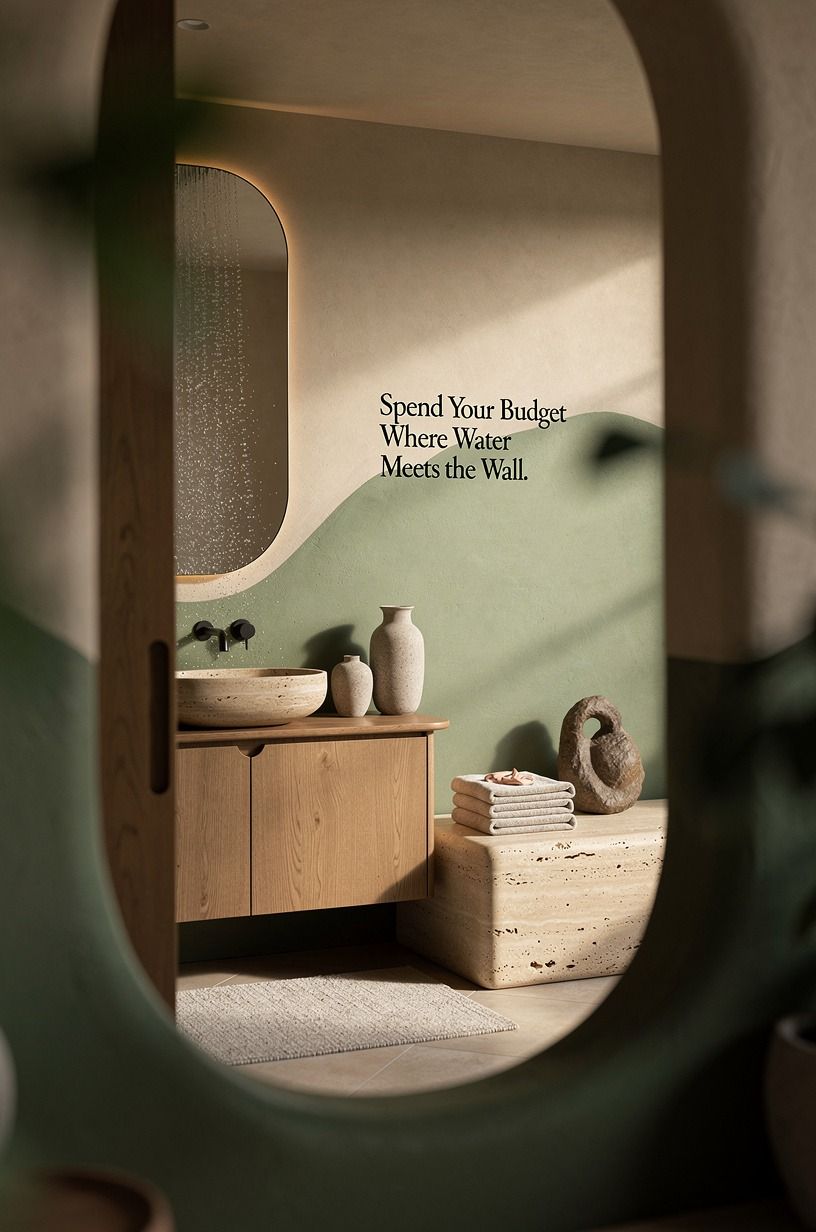
If you’re renovating, spend on the wet areas first. A warm travertine finish can cover a lot of visual ground, but waterproofing, proper installation, and plumbing aren’t places where you should chase the lowest quote. Your pretty finish won’t matter if the shower wall fails behind it.
The budget tier is where you can make a surprisingly warm change with textiles and lighting. But I’d skip a cheap faucet that feels loose after a season. You touch it every day, and your hand notices quality before your eyes do.
17Use a 60x30 in Tub as Your Pale Counterweight
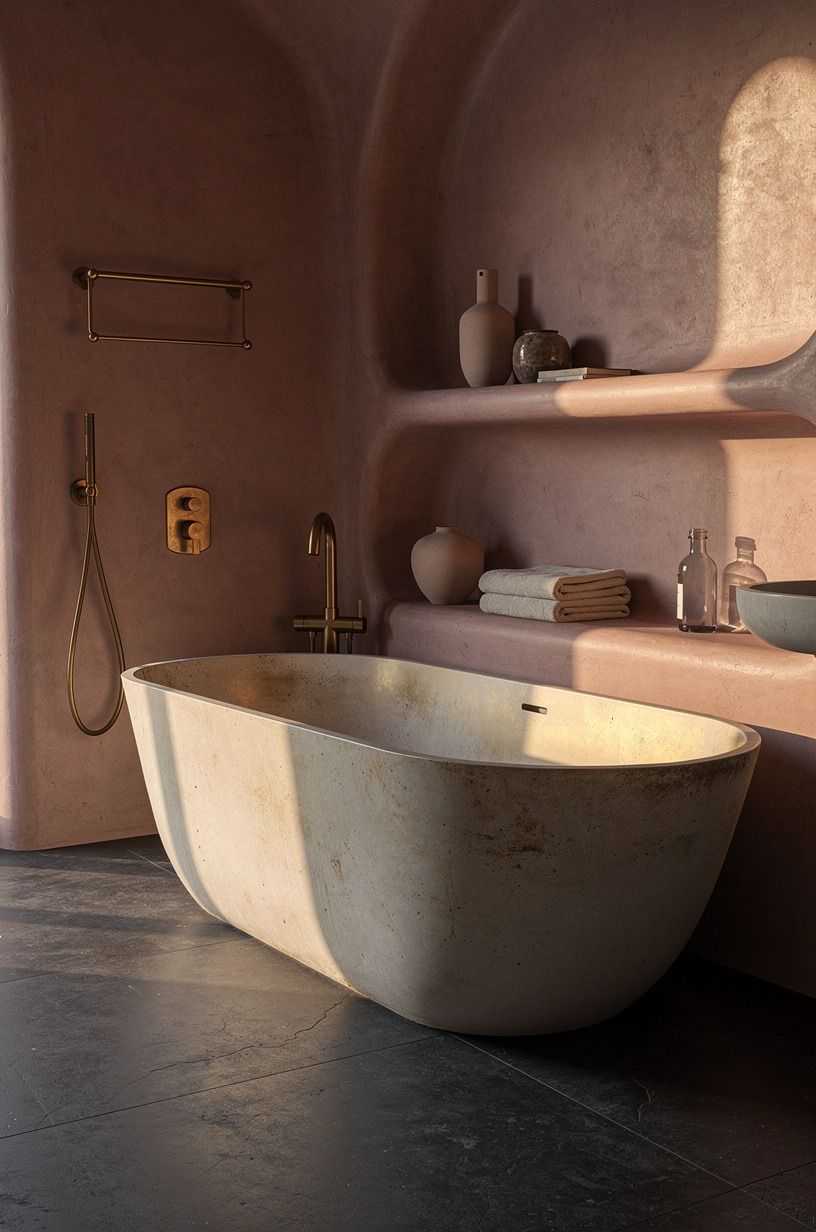
A standard 60x30 in tub can look gentle against dusty rose and charcoal if you surround it with pale, warm surfaces and let unlacquered brass develop its natural patina.
18Make the Coastal Note About Texture, Not Shells
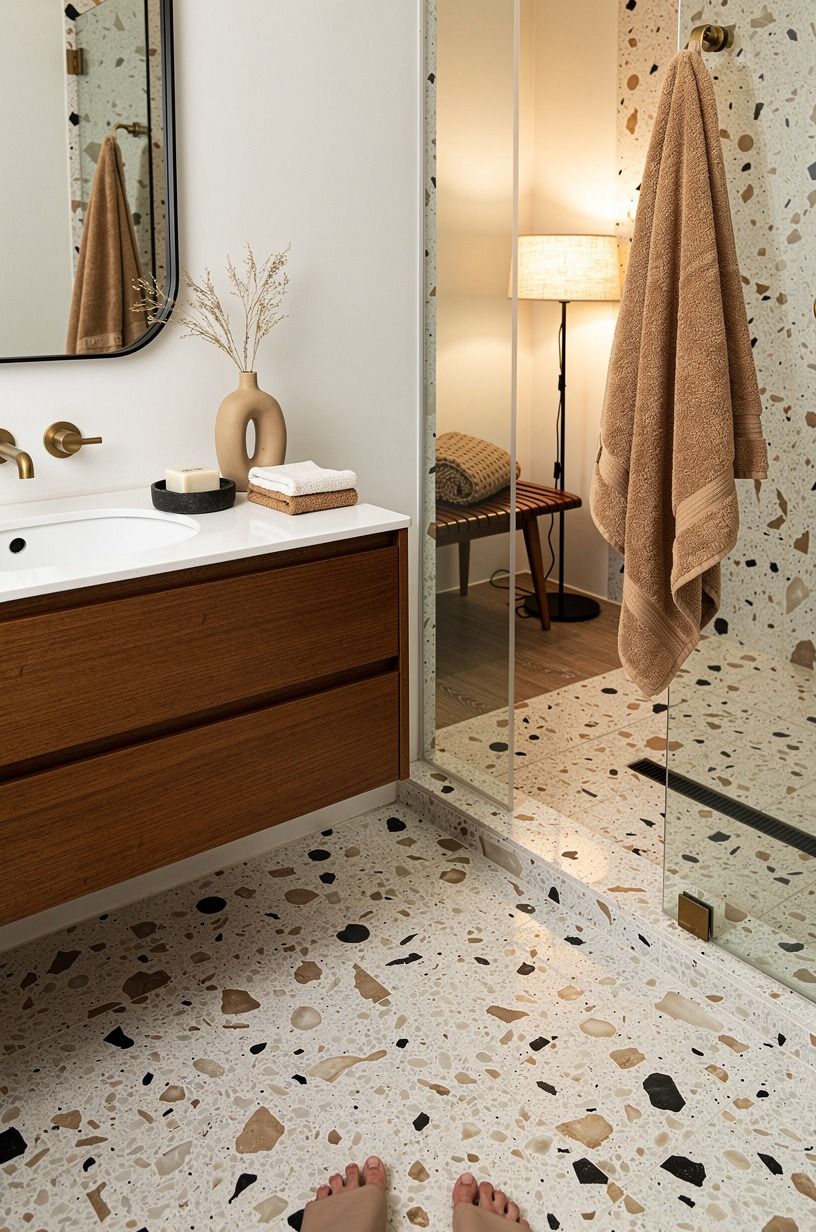
Coastal doesn’t mean driftwood signs, rope mirrors, or a bowl of shells on the toilet tank. Your bathroom will feel more timeless if the coastal reference comes from texture: warm white, camel, black marble, and thick towels. That’s more subtle, and it won’t embarrass you in two years.
Try Article Sven tan leather only as a reference for the brown tone you want in a nearby stool or basket, not as literal bathroom furniture. A compact teak shower stool is the practical version. It brings the same earthy note, and it earns its spot.
19Finish With a Soft Coastal Countertop Ritual
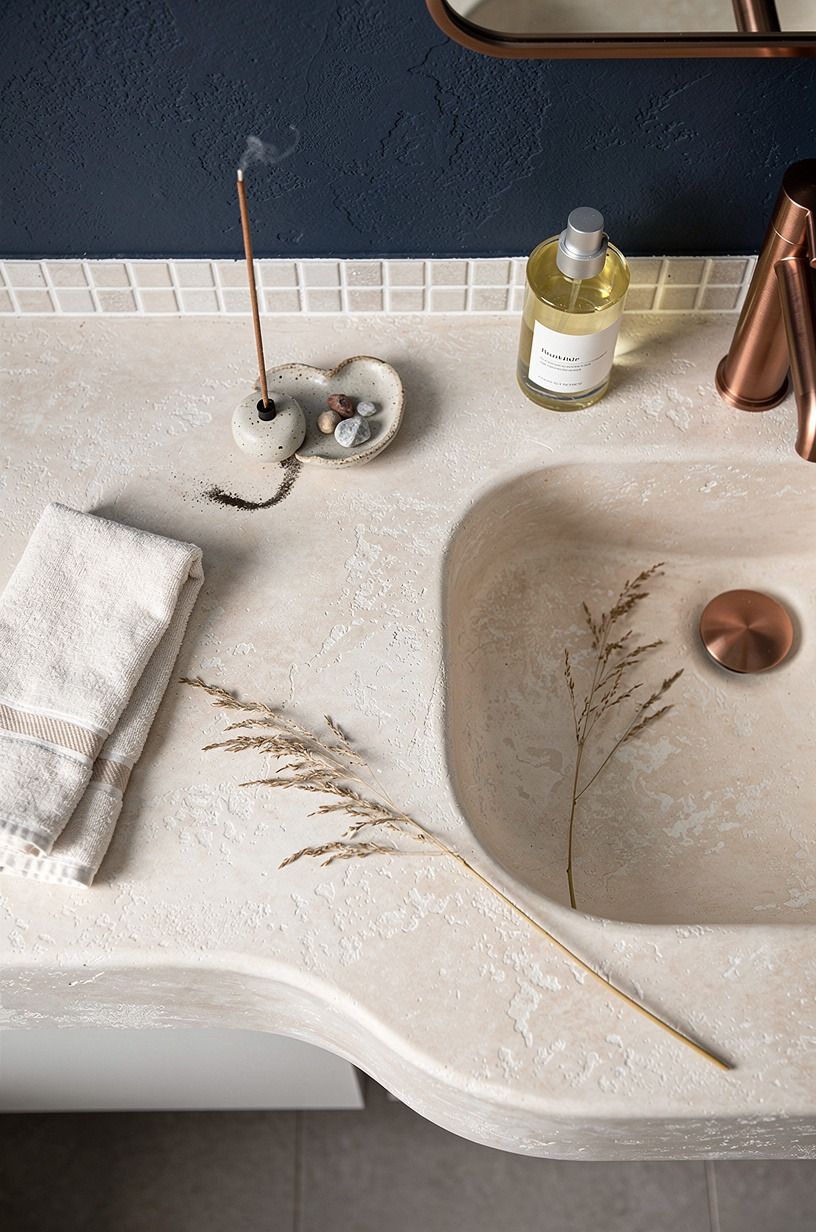
Give your counter one useful, intentional arrangement so the bathroom doesn’t become a blank backdrop. A Venetian plaster surface, amber glass bottle, folded linen cloth, and small ceramic cup for toothbrushes will keep your daily items from spreading out. You’ll make the room look gathered without hiding how you live.
I learned this after the third knocked-over toothpaste tube. One tray solved it.
And you don’t need matching dispensers, either. A slightly mismatched amber bottle and stone dish feel more honest than a coordinated plastic set.
Why I Think Blue Microcement Is Having a Moment
Blue microcement is back because people are tired of bathrooms that look as though they were assembled from one giant white catalog page. We spent years seeing hard white tile, black hardware, and very little softness.
That look photographs cleanly, but it can feel thin in real life, especially at 6 a.m. when you’re half awake and the overhead light is too sharp. Blue brings atmosphere without asking you to commit to a wallpaper print or a painted mural that might tire you out.
I’ve also noticed that the good versions of this look aren’t trying to recreate a beach house. They’re borrowing the useful parts of coastal spaces: faded color, mineral texture, washed woods, the sense that the room has met humidity and sun before. That’s why I prefer microcement over blue subway tile for a whole wall.
Tile has joints, repetition, and a very clear visual beat. Microcement is quieter.
Your eye can move across it without getting snagged every few inches.
There’s an economic reason, too. A complete high-end bathroom redo can run $12,000-$30,000+, while a budget refresh lands around $200-$1,200.
You may not be ready for a new shower, and you don’t need to pretend you are. Paint, a faucet, warm lighting, and textiles can change the temperature of your bathroom before you touch the major work. I’d rather see you make four deliberate updates than buy fifteen tiny accessories that don’t belong.
The key is restraint. Blue microcement is already the mood. Let your wood, brass, and linen support it instead of shouting over it.
That’s how the room stays inviting rather than themed. And yes, it’s a little harder to edit than all-white. Worth it!
The Questions I Get Asked Most
What is the best blue microcement bathroom idea for a small bathroom?
A floating oak vanity with soft blue walls is the best small-bath combination because you’ll see more floor and fewer visual breaks. IKEA TONSTAD oak veneer is a useful starting point. Keep your mirror oval and your textiles pale for a more open, calming view.
Where can I buy blue microcement bathroom pieces on a budget?
Start with IKEA, Target Threshold, Wayfair, and Facebook Marketplace for mirrors, stools, storage, and towels. You’ll save most by buying secondhand wood pieces, then adding new textiles. For more material pairing ideas, see these luxury microcement bathroom ideas.
How much does a blue microcement bathroom makeover cost?
A cosmetic update typically costs about $200-$1,200, while a mid-range renovation often runs $3,000-$9,000. Brushed brass hardware can be one focused upgrade. You can repaint, edit clutter, and rearrange towels for free before spending on bigger work.
Can I create a blue microcement bathroom on a budget?
Yes, and you should start with what your room already has. Turkish cotton towels, a warm-toned runner, and an edited countertop cost far less than a renovation. Your free moves: remove extra containers, switch bulb warmth, and group daily products on one tray.
Is a blue microcement bathroom worth it in a small space?
Yes, it’s worth it because a continuous blue finish can make your walls feel less chopped up. Cerused white oak keeps the effect warm. Use a floating vanity and leave the floor as visible as possible, so your small bathroom doesn’t get visually crowded.
Is a blue microcement bathroom a good idea for a rental?
Yes, if you keep the permanent work limited and use removable layers around it. Peel-and-stick wall panels, a tension-rod curtain, and removable lighting can bring in the look. You can also borrow color ideas from these coastal blue bedroom ideas without altering your lease.
Where I’d Start First
If I had to pick one, I’d start with brushed brass hardware. Blue microcement needs that warm metal interruption, or every towel and mirror will fight the walls. Pin brushed brass hardware for later and save these zellige bathroom ideas for your next layer.