
 by
by Shop Saatva Mattresses — Built for Deeper Sleep →
Body scan meditation is one of the most studied non-pharmacological sleep interventions. Unlike counting sheep or willing yourself to sleep, a body scan gives your mind a specific, gentle task — moving attention systematically through the body — that crowds out the rumination driving sleep-onset anxiety.
Research from the Journal of Psychosomatic Research (2011) found MBSR-trained participants reduced sleep onset latency by an average of 28 minutes after 8 weeks of regular practice.
The Neuroscience Behind the Body Scan
Body scan meditation works through two primary mechanisms. First, it redirects prefrontal cortex activity from worry-mode to sensory processing, which reduces default mode network (DMN) activity associated with rumination. Second, the relaxed attention on each body region triggers the stretch reflex relaxation response in muscles.
Brain imaging studies show that regular body scan practice thickens the insula — the brain region responsible for interoception (internal body awareness) — which improves your ability to detect and release tension before it escalates.
Complete Body Scan Script for Sleep (20 Minutes)
Read this script slowly, or record yourself reading it. Pause 15-20 seconds between body regions. The pacing is critical — rushing defeats the purpose.
Preparation (2 minutes)
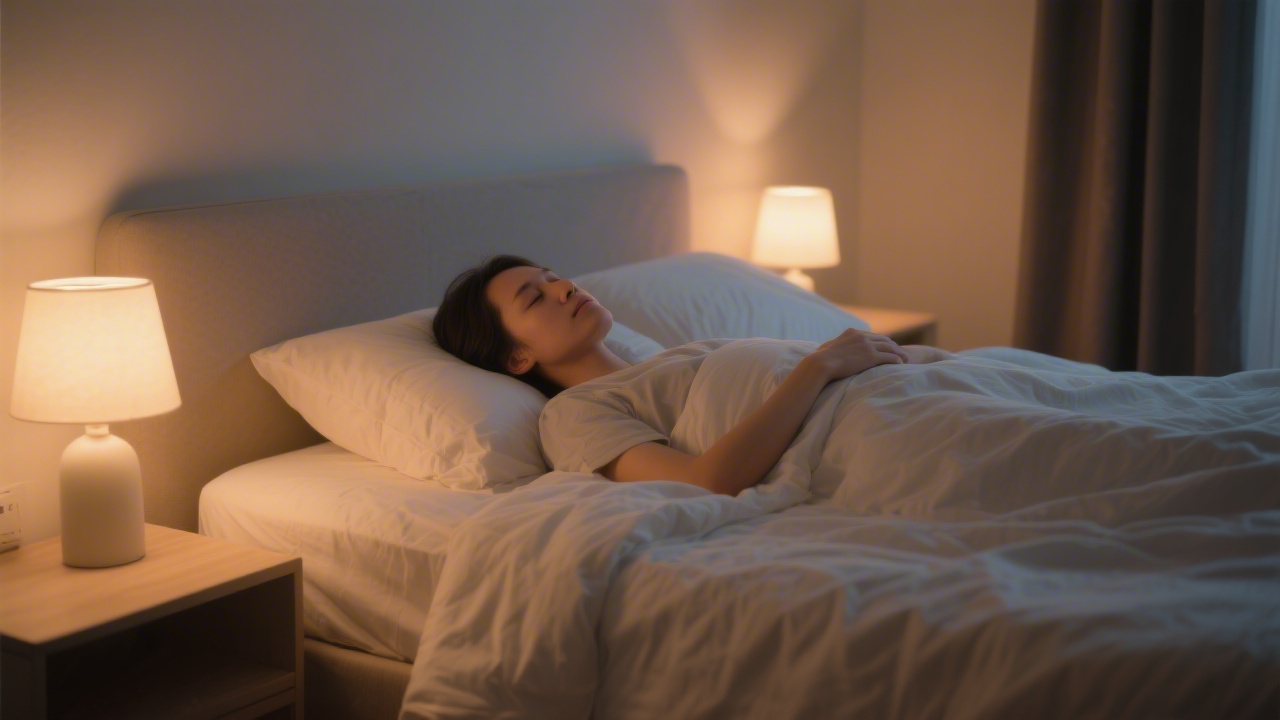
Lie flat on your back. Allow your feet to fall naturally outward. Rest your arms slightly away from your body, palms up. Close your eyes. Take three slow breaths — each exhale slightly longer than the inhale. Let your body settle into the mattress.
Feet and Ankles (2 minutes)
Bring your awareness to your left foot. Notice the sole, the heel, the toes. Do not try to relax — just observe. Notice any sensations: warmth, tingling, pressure, or nothing at all. Whatever is there is fine. Slowly move attention to your left ankle, then shift to your right foot and ankle. Take your time.
Lower Legs and Knees (2 minutes)
Move attention up to your left calf. Notice the weight of your leg on the mattress. Observe your left knee. Move to your right calf and knee. If you notice tightness, simply breathe into that area on the inhale and imagine it softening on the exhale.
Thighs and Hips (2 minutes)
Bring awareness to both thighs simultaneously. Notice where they contact the mattress. Move to your hips and pelvis. Many people hold stress here without realizing it. Simply observe. With each exhale, allow the hip area to become heavier against the bed.
Abdomen and Lower Back (2 minutes)
Notice the gentle rise and fall of your abdomen with each breath. Observe your lower back — the curve above the mattress, the contact points. Release any held tension with the next exhale. Let the belly be soft.
Chest and Upper Back (2 minutes)
Move awareness to your chest. Notice your heartbeat if you can detect it. Move to your upper back and shoulder blades. This is a common tension reservoir — especially if you spend time at a desk. Simply notice. Breathe.
Hands, Arms, and Shoulders (2 minutes)
Bring attention to both hands — fingers, palms, the backs of your hands. Move up both forearms to the elbows, then the upper arms. Arrive at your shoulders. Allow them to drop further into the mattress on your next exhale.
Neck, Jaw, and Face (2 minutes)
Notice your neck — the back, the sides, the throat. Move to your jaw. Are your teeth touching? Let the jaw drop slightly. Observe your cheeks, the area around your eyes, your forehead. Allow the muscles around your eyes to soften completely.
Whole Body Awareness (2 minutes)
Expand your awareness to take in the whole body at once — from the top of your head to the tips of your toes. Notice the weight of your entire body on the mattress. Notice the gentle rhythm of your breath. There is nothing to do. Nowhere to be. Simply rest.
Common Mistakes That Reduce Effectiveness
Moving too fast: Spending less than 60 seconds per region prevents the sensory processing shift from occurring. Trying to relax: Paradoxically, the goal is awareness, not relaxation. Relaxation follows automatically. Judging sensations: Pain, discomfort, or numbness are all valid observations. Do not evaluate — just notice.
Frequently Asked Questions
- How is body scan meditation different from progressive muscle relaxation?
- PMR involves actively tensing then releasing muscle groups. Body scan is purely observational - you move attention through the body without creating deliberate tension. Both are effective for sleep; PMR is faster-acting, body scan is more sustainable long-term.
- What if I fall asleep before finishing the body scan?
- Falling asleep mid-scan is the goal. Don't try to stay awake to complete it. If you consistently fall asleep around the same region, that is fine.
- How long before I see results from body scan practice?
- Some people fall asleep faster the first night. Consistent benefits typically emerge after 2-3 weeks of nightly practice.
- Can I use a guided audio instead of the script?
- Yes. Guided body scan recordings are equally effective. The critical factor is pace - choose a guide who moves slowly through each region.
- Does body scan help with waking up in the middle of the night?
- Yes. A brief 5-minute body scan can help quiet the arousal response and return you to sleep faster than lying awake with your thoughts.