
 by
by Body weight is the most reliably predictive single variable in mattress firmness selection — more reliable than sleep position, more reliable than stated preference for soft or firm, and far more reliable than the vague "comfort feel" assessments used in showroom trials. This is because mattress performance is governed by physics: the same mattress surface responds fundamentally differently to 130 lbs versus 230 lbs versus 330 lbs, and what feels "medium firm" to one body weight registers as soft to another and firm to a third.
The Physics of Body Weight and Mattress Firmness
Mattress firmness is measured in ILD (Indentation Load Deflection) — the pounds of force required to compress a standard foam sample by 25%. A comfort layer with an ILD of 14 (very soft) compresses significantly under 200 lbs of body weight distributed across a sleep surface; the same foam layer barely deforms under 120 lbs. This means that the "feel" of a mattress is a function of both the mattress's ILD and the sleeper's body weight.
The practical implication: when a mattress is rated "medium firm" by a manufacturer, that rating reflects the experience of an average-weight (150–175 lb) back sleeper. Heavier sleepers experience the same mattress as softer; lighter sleepers experience it as firmer. The manufacturer's firmness rating is not wrong — it is simply calibrated to a weight range that may not match you.
Body Weight to Firmness Chart
Under 130 lbs
Light-weight sleepers need softer mattresses to achieve adequate contouring. At 120 lbs, the pressure generated at pressure points is insufficient to compress a medium or medium-firm comfort layer to the degree needed for shoulder and hip accommodation. Light sleepers on medium-firm mattresses often sleep "on top" of the comfort layer rather than "into" it, experiencing pressure points despite a theoretically appropriate firmness.
Back sleepers under 130 lbs: Medium-soft (4–5) — enough firmness to maintain lumbar support without preventing pelvic contact with the surface.
Side sleepers under 130 lbs: Soft to medium-soft (3–4.5) — the reduced body weight requires a softer surface to achieve shoulder and hip sinkage.
Stomach sleepers under 130 lbs: Medium (5) — firmer than other positions to prevent hip sinkage and reduce lumbar extension.
130–175 lbs
This is the range around which most manufacturer firmness ratings are calibrated. Standard firmness recommendations apply with the fewest adjustments.
Back sleepers 130–175 lbs: Medium to medium-firm (5–6.5).
Side sleepers 130–175 lbs: Medium-soft to medium (4–5.5).
Stomach sleepers 130–175 lbs: Medium-firm (6–6.5).
175–230 lbs
Above 175 lbs, the additional force begins to compress comfort layers beyond the design point for standard firmness ratings. A mattress that a 150-lb person experiences as medium will feel noticeably softer to a 200-lb person. Moving up one firmness category is typically appropriate.
Back sleepers 175–230 lbs: Medium-firm to firm (6–7).
Side sleepers 175–230 lbs: Medium to medium-firm (5–6.5).
Stomach sleepers 175–230 lbs: Firm (7–7.5).
230–300 lbs
Heavier sleepers require higher-density foam and higher-gauge coils throughout the mattress — not just in the support core. A standard comfort layer with a low-density foam (1.5 pcf or below) will compress permanently within 2–3 years under 250 lbs of repeated loading, creating body impressions that negate the initial firmness. Density matters as much as ILD in this weight range.
Back sleepers 230–300 lbs: Firm (7–8).
Side sleepers 230–300 lbs: Medium-firm (6–7) — a firm surface without adequate contouring will create severe pressure point problems at the hip and shoulder.
Stomach sleepers 230–300 lbs: Extra-firm (8+).
Over 300 lbs
Above 300 lbs, standard mattress constructions with 6-inch support cores and 2-inch comfort layers are typically inadequate for both support and durability. Look for mattresses with a minimum 8-inch coil system (or 6+ inch high-density foam base), high-density comfort foam (2.0 pcf or above), and reinforced edge support. The mattress industry has historically underserved this weight range — most "firmness" options are simply variations on the same insufficient support core with different comfort layers.
Back sleepers over 300 lbs: Firm (8+) with high-density construction.
Side sleepers over 300 lbs: Firm (7–8) with thick comfort layer (3+ inches) to address pressure points.
Stomach sleepers over 300 lbs: Not recommended without physical therapy guidance due to the severity of lumbar hyperextension at this weight.
Why Comfort Layer Density Matters at Higher Weights
Foam density (measured in pounds per cubic foot, pcf) determines longevity, not initial feel. Two mattresses can have identical ILD (identical initial firmness feel) but vastly different densities. The higher-density foam will maintain its ILD under repeated heavy loading; the lower-density foam will compress permanently, creating body impressions and effectively becoming softer over time. For sleepers over 200 lbs, look for comfort layer foam at 2.0 pcf minimum; for sleepers over 250 lbs, 2.5 pcf or above is recommended.
The Saatva Classic Across Weight Ranges
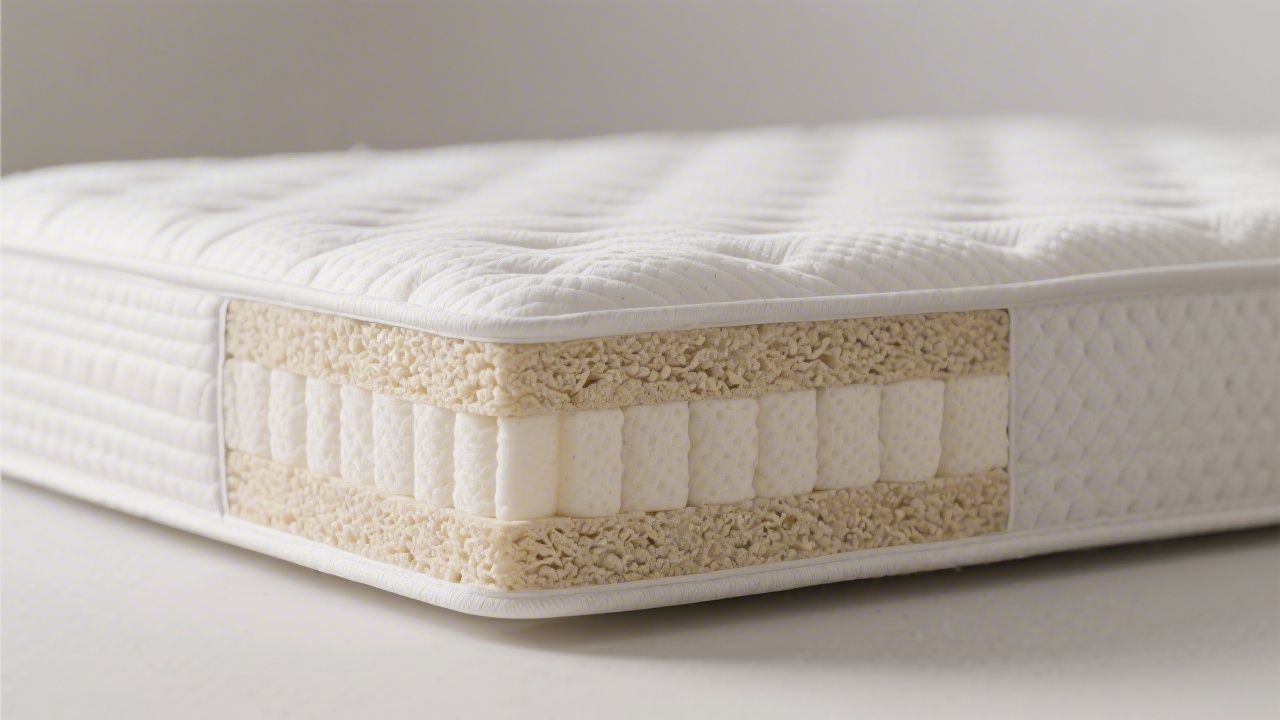
The Saatva Classic uses a dual-coil system (884 individually wrapped micro-coils over 416 tempered steel coils in queen) with tempered steel construction designed for durability under extended loading. Its three firmness options — Plush Soft (3), Luxury Firm (5–6), and Firm (8) — map reasonably well to the weight ranges described above: Plush Soft for lighter side sleepers, Luxury Firm for the 150–230 lb range across back and side positions, and Firm for heavier back sleepers and those with lumbar support requirements that exceed what medium-firm provides.
Internal Resources
- Pressure Points During Sleep: What They Are and How to Relieve Them
- Hip Alignment During Sleep: Why It Matters and How to Fix It
- Spinal Alignment During Sleep: What It Means and Why It Matters
Frequently Asked Questions
Key Takeaways
- The Physics of Body Weight and Mattress Firmness: a key factor in making the right sleeping decision.
- Body Weight to Firmness Chart: a key factor in making the right sleeping decision.
- This means that the "feel" of a mattress is a function of both the mattress's ILD and the sleeper's body weight.
- Heavier sleepers experience the same mattress as softer; lighter sleepers experience it as firmer.
- The manufacturer's firmness rating is not wrong — it is simply calibrated to a weight range that may not match you.
Our Top Pick: Saatva Classic
Voted best luxury innerspring mattress with exceptional lumbar support and white-glove delivery.
Check Price & AvailabilityIf I lose or gain significant weight, do I need a new mattress?
A weight change of 20–30 lbs or more within a single weight category (e.g., 150 to 175 lbs) will typically not require a mattress change. A weight change that crosses a category threshold (e.g., 170 lbs to 210 lbs, moving from the 130–175 range to the 175–230 range) will meaningfully change the mattress's effective firmness and may require either a firmness change or a new mattress. A topper is a cost-effective interim solution — a 2-inch firm topper on a medium mattress can compensate for weight gain; removing a topper effectively increases felt firmness after weight loss.
Should couples with different weights get a split firmness mattress?
If the weight difference exceeds 50–60 lbs and both partners have spinal comfort issues, split firmness is worth considering. A 130-lb side sleeper and a 230-lb back sleeper have different firmness requirements that cannot be optimally met by a single uniform surface. Split king configurations (two twin XL mattresses on a shared base) are the most flexible solution. For couples within the same weight category, a standard mattress with a comfort layer appropriate to the heavier partner, with a topper for the lighter partner, is a more economical approach.
Why do I feel like I'm "sinking" on a new mattress that's rated medium-firm?
Most commonly because the mattress's firmness rating was calibrated for a lighter weight range than yours. At your body weight, the comfort layer compresses further than the manufacturer's test parameters, producing the sensation of sinking. The underlying support core may still be providing adequate support, but the comfort layer is behaving softer than expected. A firm mattress in the same line, or a mattress with a higher-density comfort layer, would resolve this.
Does BMI or weight distribution matter as much as total weight?
Total weight is the primary variable, but weight distribution modifies the recommendations within a weight category. A person carrying weight primarily in the abdomen and hips (apple distribution) will generate more hip pressure in side sleeping than a person of the same weight with more uniform distribution. Apple-distribution sleepers in the 175–230 lb range often need to select toward the firmer end of the recommended range for their weight category to prevent excessive hip sinkage.
Is there a maximum weight limit for most mattresses?
Most standard mattresses are warranted for sleepers up to 250–300 lbs per side. The mechanical limit is not a sudden failure point but a progressive durability issue: above the rated weight, comfort layer compression accelerates, body impressions form more quickly, and edge support degrades faster. Mattresses specifically engineered for heavier sleepers use higher-gauge (thicker) coils, higher-density foams, and reinforced perimeter systems to extend durable performance above the standard weight range.