
 by
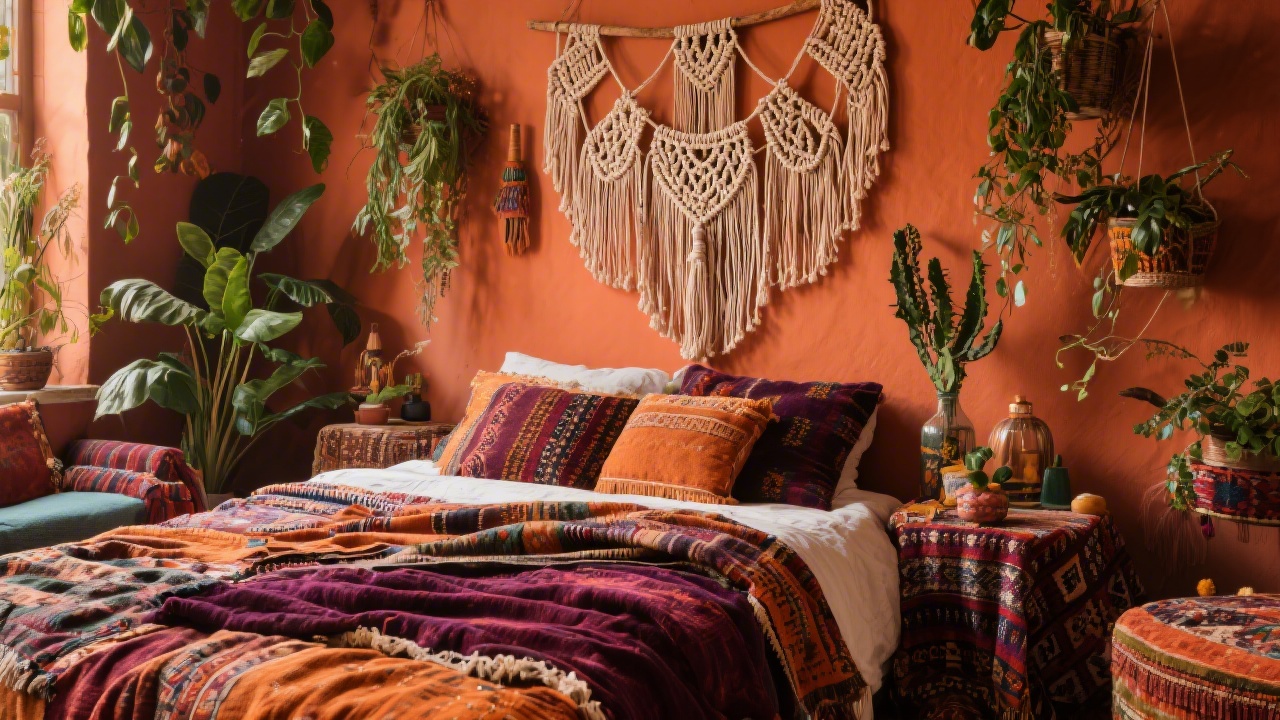
by The bohemian bedroom — layered textiles, eclectic objects, plants everywhere, rich jewel tones — is visually and emotionally appealing in a way that minimal design is not. It creates a sense of warmth, personality, and accumulated story. But it also creates visual complexity that the brain does not switch off easily at bedtime. The question is not whether boho looks good — it is whether specific elements of the aesthetic work against sleep, and which ones you can keep.
Affiliate link — we earn a commission at no cost to you.
What the Research Says About Visual Complexity and Sleep
Visual environments with high spatial complexity — many objects, patterns with high contrast, multiple competing visual focal points — increase cortical arousal. When you are lying in bed with your eyes open (or even with your eyes closed in a space you can visualize), a complex environment keeps the default mode network active, which competes with the mental quieting that precedes sleep.
This does not mean boho bedrooms cannot support good sleep. It means the specific variables that create the arousal effect — contrast, visual competition, and stimulating colors — need to be managed.
Boho Elements That Are Sleep-Friendly
Warm, muted color palette: Terracotta, dusty rose, warm burgundy, deep ochre, forest green, burnt sienna. These are psychologically warm and tend to lower arousal rather than increase it. The research on color and arousal shows that warm, desaturated colors (not bright, not neon) support calm.
Natural textures: Macrame, woven rattan, linen, cotton, wool — these are visually interesting without being high-contrast. They add complexity of a kind that does not increase arousal (natural pattern complexity is processed differently by the brain than geometric or high-contrast man-made patterns).
Plants: Green plants in a boho bedroom contribute to the biophilic calming effect. This is one of the few elements of boho that sleep research explicitly endorses. Avoid large spiky plants at pillow level — the sense of proximity to sharp objects may activate a mild threat response.
Warm lighting: String lights, candles, warm-toned lamps (2700K or lower). Boho lighting is inherently sleep-compatible because it tends toward warm, low, ambient sources rather than overhead fluorescent.
Boho Elements That Hurt Sleep
High-contrast geometric patterns: Bold black-and-white patterns, optical patterns, high-contrast tribal prints directly in the sightline from bed. These are the specific pattern types that most reliably increase cortical arousal. If you use patterned bedding or rugs, opt for low-contrast patterns (similar values, not black-and-white).
Ceiling mobiles and hanging objects directly above the bed: Objects hanging above the sleep zone activate a low-level safety-monitoring response in some people. Keep ceiling objects to the periphery of the room, not directly overhead.
Bright colors at pillow level: The pillow level is what you see in the minutes before sleep. A bright, saturated orange pillow or deeply patterned throw directly at face level is more disruptive than the same element on the far wall.
Cluttered surfaces at bed height: Nightstands piled with objects, books stacked in your immediate sightline — this creates a visual reminder of tasks and things to process. Keep surfaces at bed height minimal even if the rest of the room is maximalist.
The Boho Sleep Compromise: Zone Management
The practical approach for maximalist aesthetics is zone management. The area within arm's reach of the bed (roughly a 3-foot radius from the pillow) should be the most minimal zone in the room. The more complex boho elements — the gallery wall, the plant collection, the hanging textiles — should be on walls or in parts of the room that are not in direct sightline from the sleeping position.
This lets you have a fully boho room without creating a visually stimulating environment at the specific location where sleep onset happens.
For comparison aesthetics and how they affect sleep, see our guides on Japandi bedroom design and Scandinavian bedding style. For color theory applied to bedding, see our bedding color matching guide.
Sleep Quality Starts Under the Surface
Regardless of bedroom aesthetic, mattress quality is the primary determinant of sleep quality. Saatva Classic's lumbar zone and pressure relief work in any room design.
Frequently Asked Questions
Does a cluttered bedroom actually hurt sleep?
Research indicates that visual clutter increases cortical arousal and correlates with higher stress levels and reported sleep difficulty. The mechanism is that a visually complex environment keeps the brain's environmental monitoring systems active, competing with the mental quieting needed for sleep onset. This does not mean a boho bedroom cannot support sleep — but managing clutter in the immediate sleep zone (around the bed) is more important than the room overall.
What boho colors are best for a sleep-friendly bedroom?
Warm, desaturated colors are most sleep-compatible in the boho palette: terracotta, dusty rose, warm burgundy, deep ochre, muted forest green, and burnt sienna. Avoid bright saturated versions of these colors, fluorescent tones, and high-contrast combinations. The warmth and muted quality of the color matters as much as the hue itself.
Are plants in the bedroom good or bad for sleep?
Generally good. Plants provide mild biophilic calming (natural environment association), some improve air quality marginally, and in a boho bedroom they add organic visual complexity rather than the high-contrast artificial complexity that increases arousal. Avoid large spiky plants at pillow level — the proximity to sharp forms may activate a subtle threat response in some people.
Can you have string lights in a bedroom for sleep?
Yes — string lights in warm white (2700K or lower) are a sleep-compatible lighting choice. They provide ambient, diffuse, low-intensity light at the warm end of the spectrum, which does not suppress melatonin significantly. The boho tendency toward warm, layered ambient lighting is one of its most sleep-friendly aesthetic elements. Avoid cool-white or blue-tinted LED string lights.
What is the difference between boho and maximalist bedroom design?
Boho (bohemian) is a specific maximalist aesthetic rooted in global textile traditions, natural materials, plants, eclectic objects, and warm earthy color. Maximalism more broadly includes any high-density, multiple-pattern, bold-color approach. All boho bedrooms are maximalist; not all maximalist bedrooms are boho. Boho has specific material values (natural, handmade, globally influenced) that distinguish it from other forms of maximalism.
Key Takeaways
Boho Bedroom for Sleep is a topic that depends heavily on individual needs and preferences. The most important thing is to consider your specific situation — your body type, sleep position, and personal comfort preferences — before making any decisions. When in doubt, take advantage of trial periods to test before committing.