
 by
Boho plant and rope room dividers for renters can create a warm boundary without construction, and most versions cost far less than built-ins. I learned that after one heavy planter nearly tipped into my reading chair. You don't need a green thumb or a large floor plan. You need height, airflow, and a base that won't wander.
Editor's note: Start with the layout, then add plants. A beautiful divider still fails if it blocks a door, steals every bit of daylight, or makes your daily route awkward.
- Layer the Three-Height Green Screen
- Hang a Rope Ladder Screen
- Float the Two-Wood Rule
- Can a Plant Divider Stay Airy?
- Build the Floating Pot Grid
- Swap Heavy Rattan for Rope
- Frame a Reading Corner With Plant Stands
- Use a Renter’s Cost Compass
- Anchor a Rope Room Divider With Storage
- Hang a No-Drill Canopy Line
- Mix Rope Over Rattan for a Softer Boundary
- Create the Small-Space Breathing Zone
- Paint the Frame, Keep the Plants Green
- Arrange the Rope Over Plant Shelves
- Choose Rope Over a Solid Screen
1Layer the Three-Height Green Screen
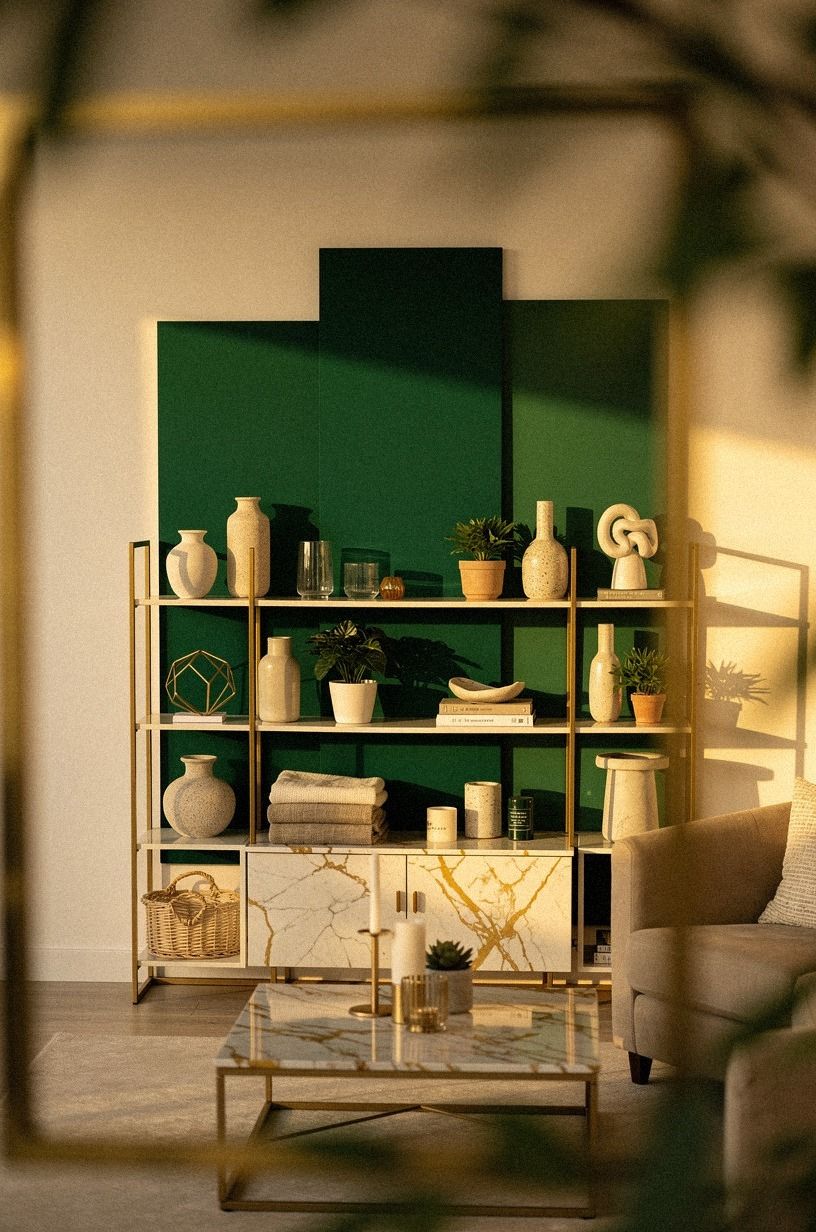
The easiest boho room divider uses three plant heights instead of one crowded row. Keep a trailing plant near the floor, a medium pot on a stand, and one taller plant near the visual center.
Your eye reads that staggered line as a room boundary, while light can still pass through the gaps. Pothos works well for the low layer because the vines soften the rope without demanding daily care.
I like this arrangement beside a sofa or at the end of a bed. Choose a side table with Calacatta marble and gold veining for the middle height, then place a lightweight nursery pot on top.
You won't need to fill every inch. Leave about one-third of the divider open, or your small room will feel boxed in. For more renter-friendly plant placement, browse these window plant shelf ideas for renters with no garden.
The tallest plant should create a gentle pause, not a wall. A snake plant or slender bird of paradise gives you a strong vertical shape, while a small string of hearts can soften the lower edge. Keep heavier pots on the floor and place a washable tray underneath.
That simple precaution is boring, practical, and wonderfully protective.
Try standing at the room entrance before you commit. If the plant grouping immediately hides the reading chair, desk, or bed, move the tallest piece sideways. Your divider should guide the eye toward the destination, not create a dramatic obstacle.
2Hang a Rope Ladder Screen
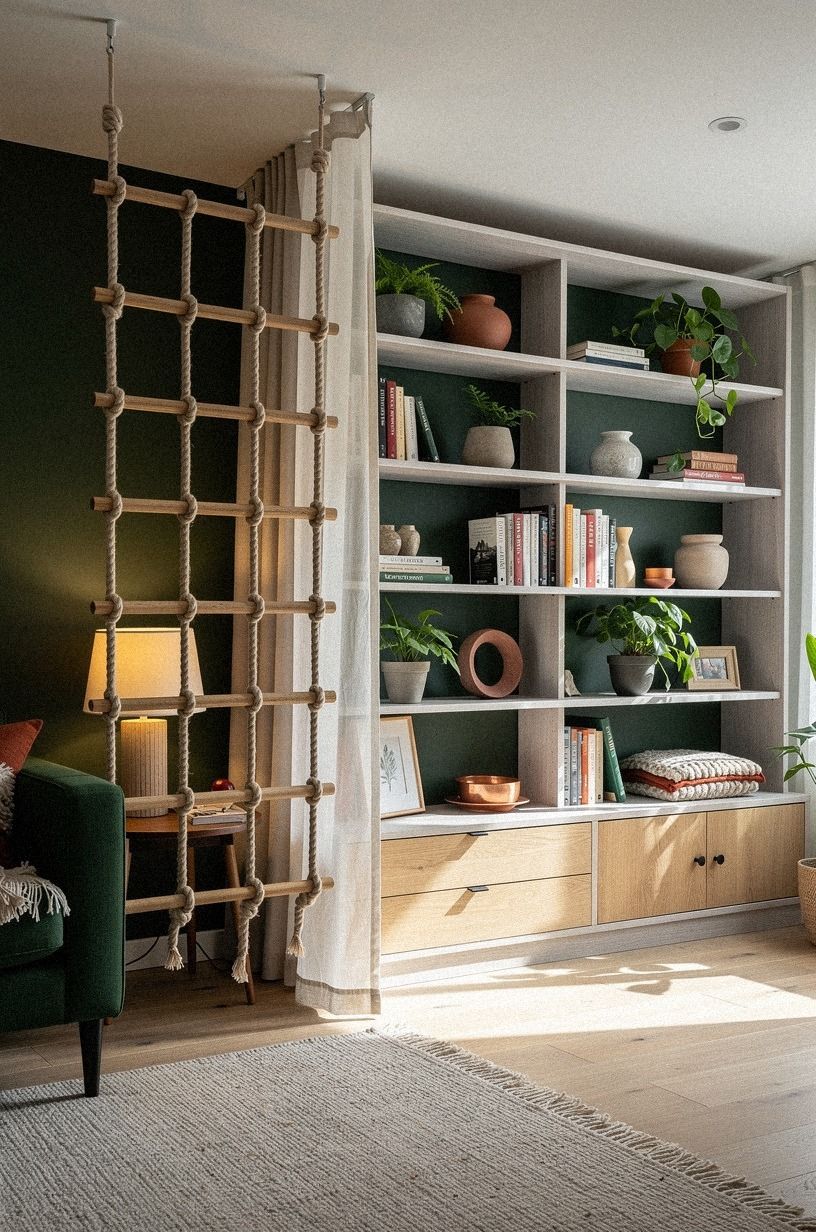
A vertical rope ladder gives you separation without making a solid wall.
3Float the Two-Wood Rule
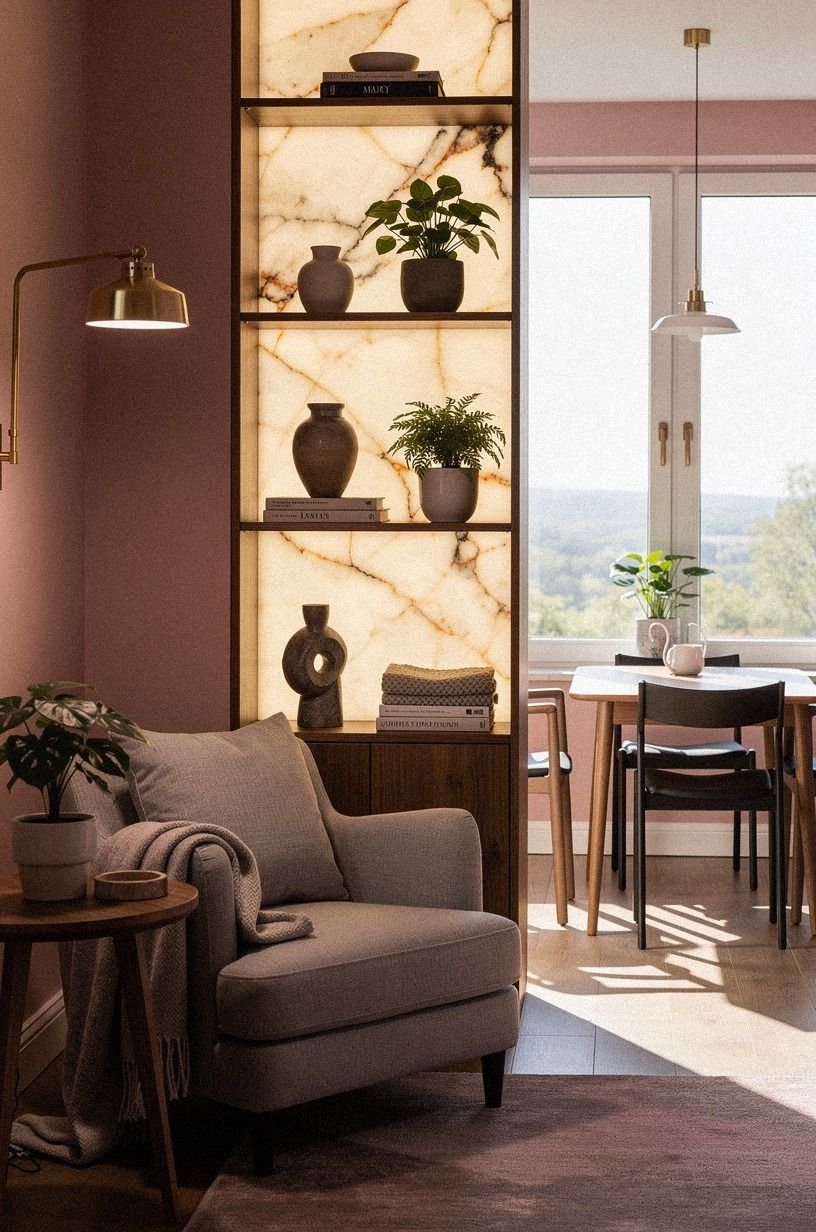
The Two-Wood Rule keeps your divider from looking like a craft project. Pair one charcoal-toned wood with one warmer natural wood, then let brass and plants connect them.
I’d use a charcoal rail with brass details and a ledge of backlit translucent onyx. Your eye gets contrast, but the room still feels calm and earthy.
This approach works especially well in rentals with plain white walls. Paint is optional, but if you’re allowed to refresh one surface, dusty rose gives the wood and leaves a warm backdrop.
Keep the plant pots in one family, such as matte cream or charcoal. You don't need a matching set.
A little variation keeps your divider lived-in rather than showroom-stiff.
Let the materials do the decorating
Rope already brings texture, so the wood doesn't need carved details or elaborate brackets. A simple square edge looks more elegant than a fussy profile. Choose one memorable material, then let the others support it.
Pale wood brightens a dim rental, while dark wood adds a rich, grounded note beside green leaves. If your floor is already dark, use lighter rails to keep the arrangement from becoming visually dense. If the walls and floor are pale, a walnut shelf can provide the useful contrast your room needs.
Don't introduce a third wood just because a small accessory happens to match it. That extra tone can make a compact divider feel scattered. Repeat your chosen woods at least twice, perhaps in the frame and a small tray, so the palette feels intentional.
4Can a Plant Divider Stay Airy?
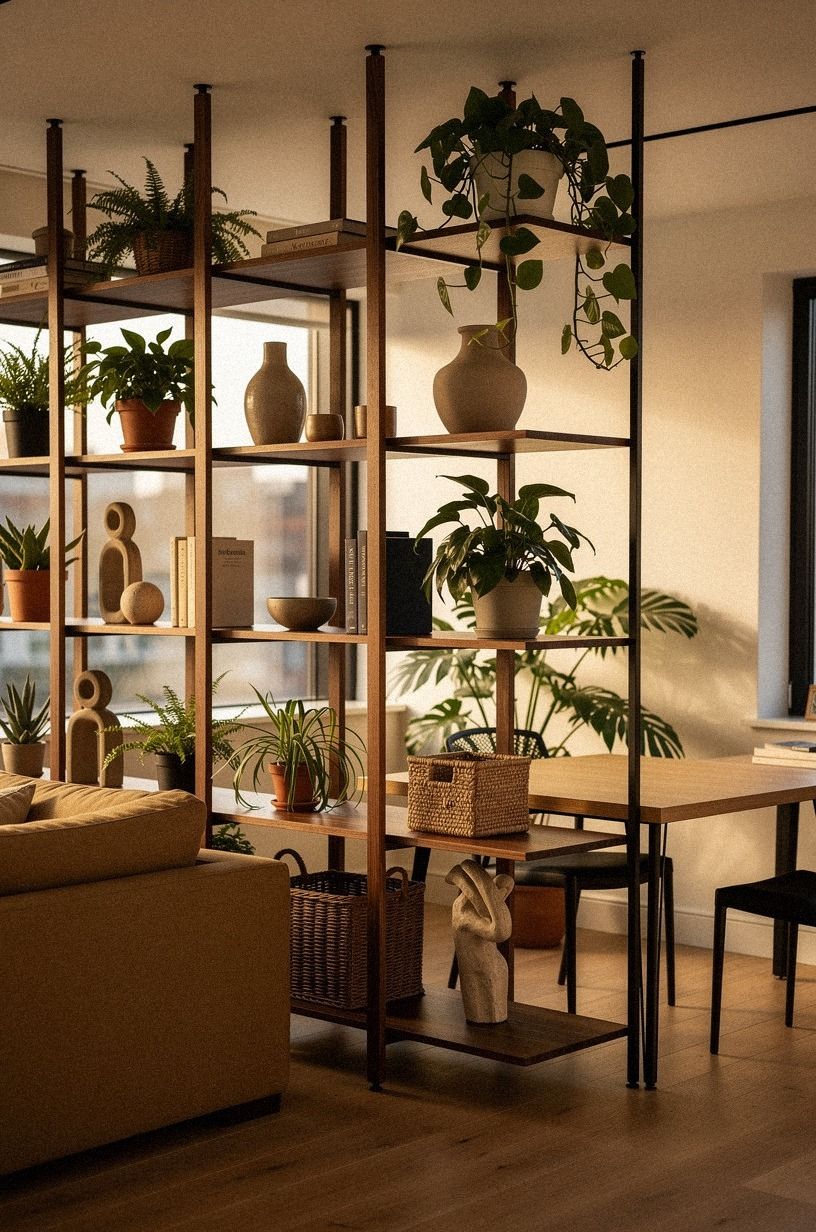
Yes, but your plant divider needs gaps that are wide enough for daylight and movement.
5Build the Floating Pot Grid
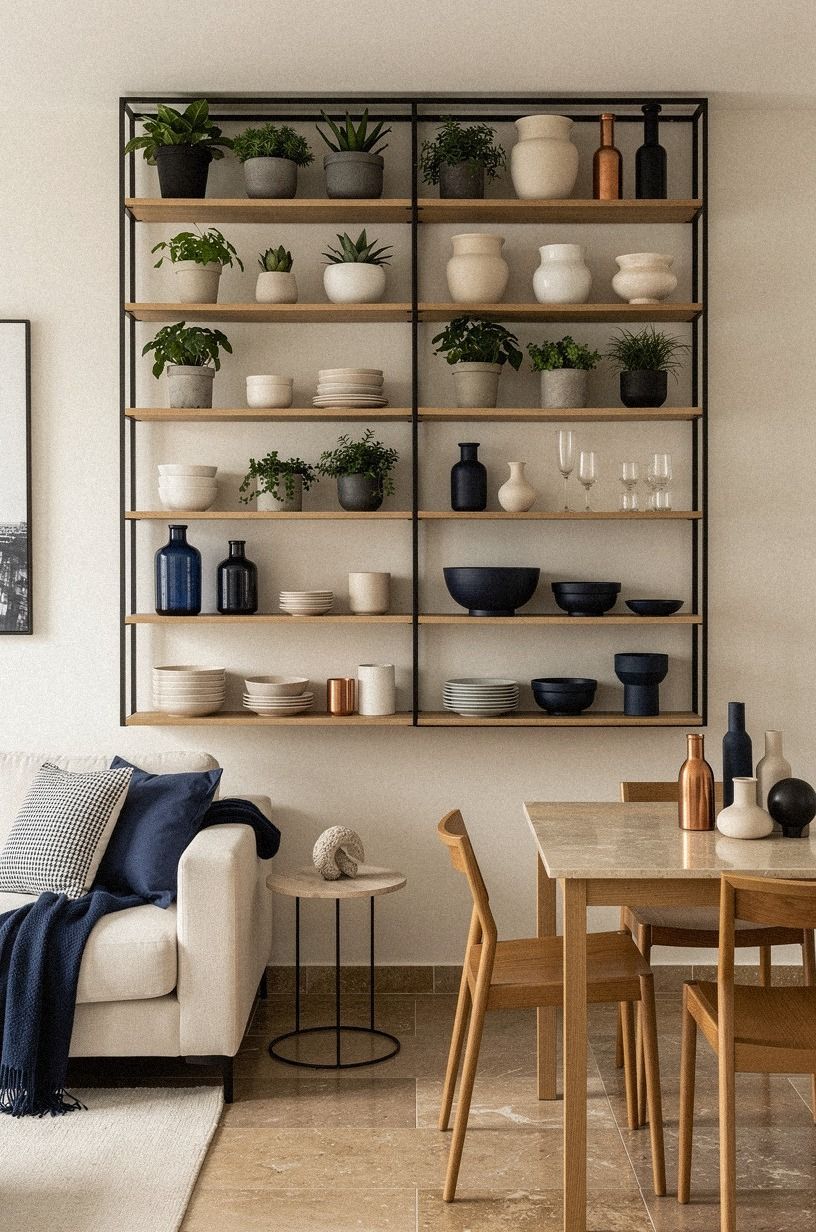
A floating pot grid creates a boho curtain room divider without fabric. Use a slim warm travertine frame with evenly spaced cord, then attach lightweight planters at different heights.
Your plants become the pattern, and the rope becomes the structure. Ivory curtains and small copper details can soften the grid without making it feel busy.
Keep the pots small enough that your frame doesn't bow. IKEA KALLAX shelving can sit behind the grid if you need storage, but don't pack every cube with greenery.
Your divider should separate activities while still letting you see where your keys and books are. For a stronger storage boundary, compare these IKEA room divider ideas using KALLAX and IVAR shelves.
Make the grid feel collected
Use two or three pot shapes instead of six. An ivory pot, a narrow copper-toned pot, and one small woven basket can create enough variation without visual noise. Let the rope stay visible.
If every strand disappears behind foliage, you've built a plant display rather than a rope divider.
A grid also benefits from one intentional empty area. Leave a square or two unoccupied near eye level so the pattern can breathe. That blank space makes the filled sections feel more lively and curated.
If you’re hanging real plants, check the total weight before installing anything. Wet soil is much heavier than dry soil. Lightweight nursery pots inside decorative sleeves are safer than large ceramic containers, especially above a walkway.
6Swap Heavy Rattan for Rope
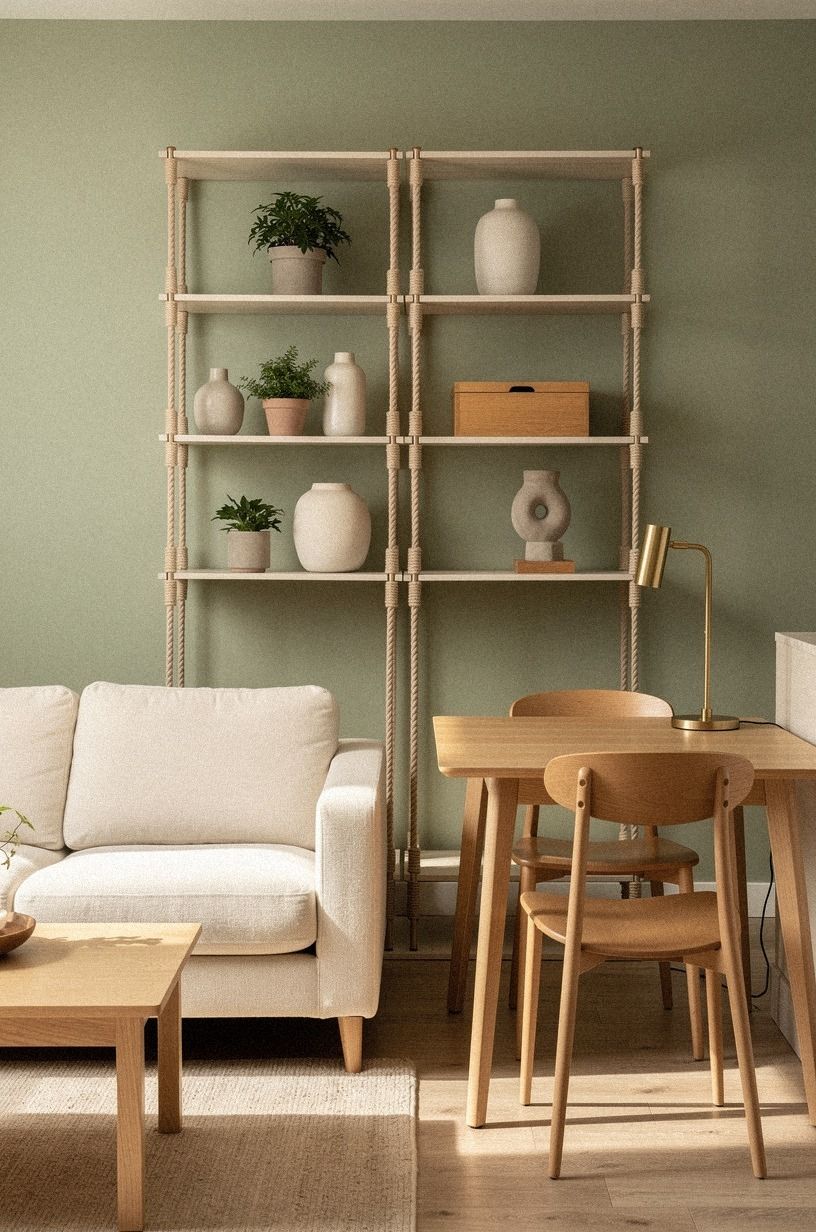
Rattan can look lovely, but a full rattan screen may feel visually heavy in a studio. Try a rope room divider with a simple natural wood top rail instead. Natural cotton rope hangs in soft vertical lines, and it moves slightly when air crosses the room.
That small movement keeps your boundary from feeling permanent.
You’ll want the rope to stop several inches above the floor so it doesn't collect dust or catch your feet. Pair it with sage green on a nearby removable panel or accent wall if your lease permits painting.
I’d choose this muted green over a bright white because it gives the rope a grounded, peaceful setting. Add a small piece of unlacquered brass and let it develop patina over time.
But don't paint just to match the divider. Your existing wall may already be the right background.
Try different rope thicknesses before buying a full spool. Thin cord feels delicate and filters the view gently.
Thick rope creates stronger shadows and a more dramatic boundary. For most small rentals, medium cotton cord gives the best balance between presence and openness.
Avoid glossy synthetic rope if you want a relaxed, tactile finish. It can look slippery under strong light. Natural cotton, jute, or a muted hemp blend has more visual warmth, although jute can shed fibers.
Place a rug beneath the screen if the texture feels rough against the floor.
7Frame a Reading Corner With Plant Stands
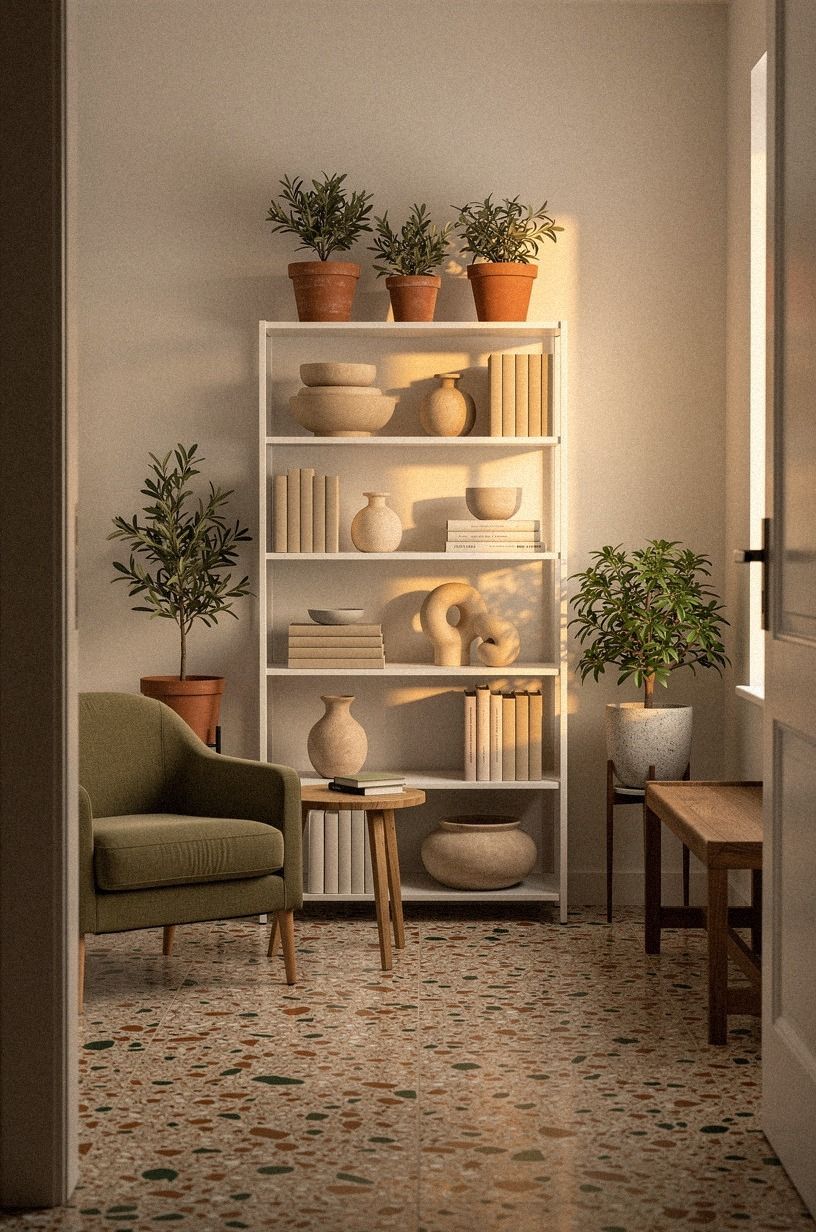
A pair of plant stands can divide a room more gently than a screen.
8Use a Renter’s Cost Compass
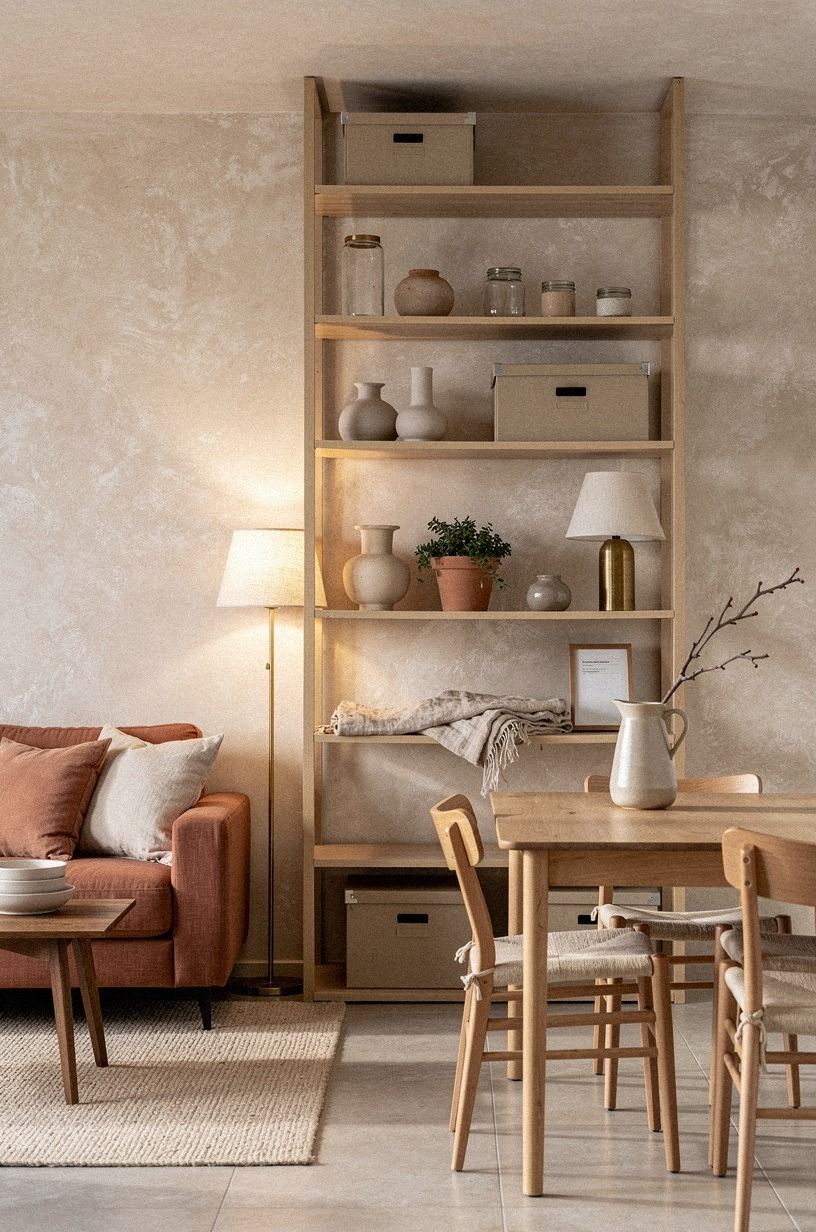
Your divider doesn't need to become a full-room renovation. The table below gives broader US decorating ranges, so you can see where a plant-and-rope project fits within a typical room refresh. A low-cost divider can borrow what you already own, while a more finished setup may include furniture, lighting, and a rug.
For this idea, your best value usually comes from the frame and the plant containers, not decorative extras. If you're allowed to change the finish, clay-toned hand-applied Venetian plaster can support a soft neutral scheme, but you don't need a new surface to make the divider work.
And if your budget is tight, spend your effort on stable placement first. A beautiful screen that wobbles will annoy you every morning.
A small plant-and-rope setup can often stay below the budget tier when you reuse a side table, ladder, or pot. Buy the structural pieces first. You can add a more luxurious lamp, rug, or art piece later if the layout proves useful.
Watch the hidden costs. Pot trays, wall-safe hardware, replacement soil, and a quality grow light can add up.
A cheap frame that needs constant repair isn't actually economical. Spend more on the part carrying weight and less on decorative accessories.
If you’re comparing storage-heavy options, these bookshelf room divider ideas that double as storage can help you decide whether the divider should also hold books, baskets, or linens.
9Anchor a Rope Room Divider With Storage
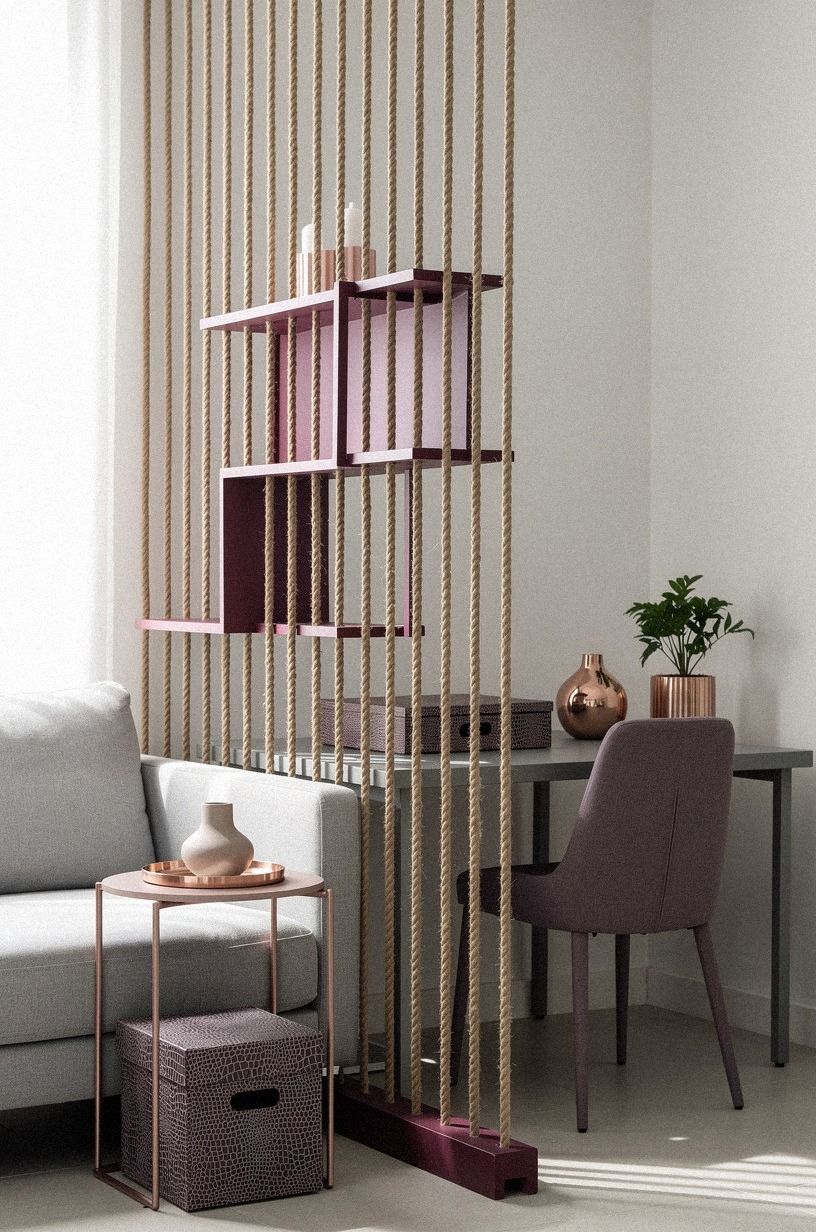
Use a low storage piece as the base for a rope room divider, and your boundary will serve two jobs. A nine-cube shelf or narrow console can hold books, baskets, and plant tools while the rope rises above it. A plum-grey console with shagreen accents and rose-gold hardware nearby adds a warm material contrast, especially if your sofa is pale fabric.
Your storage should stay below sightline height whenever possible. A tall shelf can make a small room feel chopped into lanes, while a lower base keeps the divider open.
I’d choose baskets with subtle shagreen accents for the bottom section and leave a few compartments empty. Empty space gives your eye somewhere to rest, and you’ll find the things you use more quickly.
Protect the base from everyday life
Put the heaviest plant on the lowest level, close to the center of the storage unit. Don't place a large pot at the far end, where its weight can make the piece feel unstable. A narrow anti-slip mat beneath the shelf can also reduce small movements on smooth flooring.
Use storage to hide the unglamorous parts of plant care. A lidded basket can hold pruners, soil, gloves, and spare saucers. The arrangement stays polished while still supporting real maintenance.
Leave one compartment open for everyday access. If every basket is sealed away, you'll be less likely to reach for the watering can or dust cloth. Good design should make care easier, not turn it into a special weekend project.
10Hang a No-Drill Canopy Line
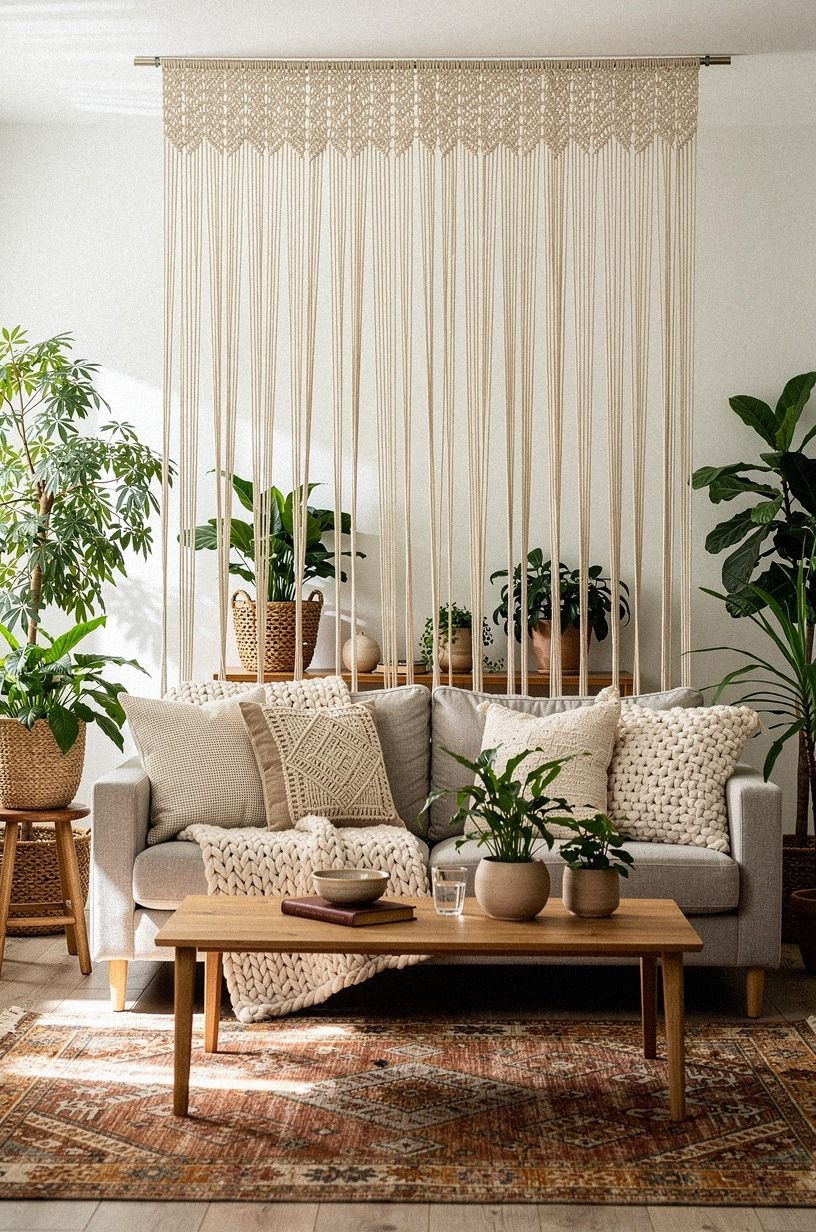
A tension rod can create a renter-safe canopy line between two walls.
11Mix Rope Over Rattan for a Softer Boundary
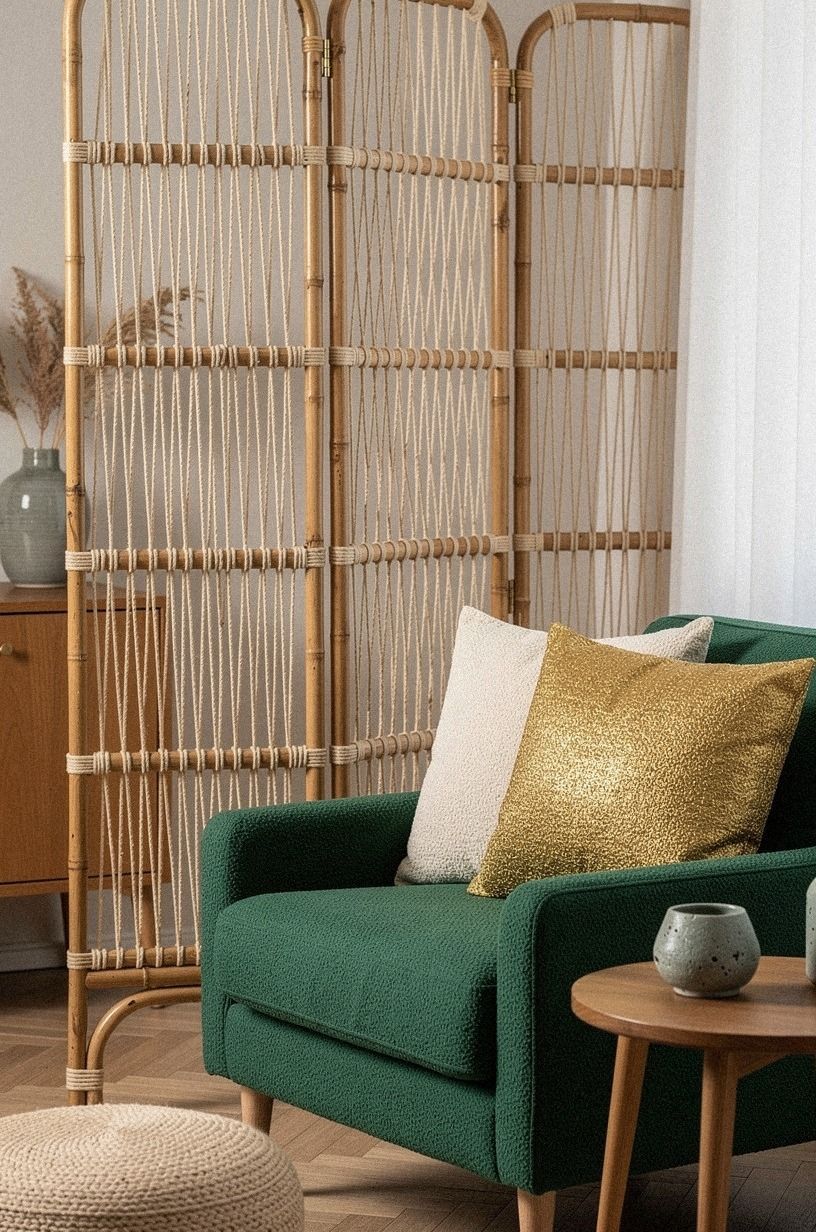
Rope over rattan is the better choice when you want texture without a rigid screen. Drape cord loosely across a rattan frame, then weave a few artificial stems through the openings.
Your divider gains depth, but the structure stays recognizable. Organic bouclé works well as a soft accent when its color stays close to warm cream, since perfect uniformity can make a rental feel overly staged.
I’d use real plants only where you have enough light and a watering routine. A low-maintenance ZZ plant can handle a dimmer corner, while preserved palm leaves add height without soil or drainage.
You don't need every strand to carry greenery. Let some rope remain bare so the pattern doesn't disappear.
The contrast between rough fiber and smooth leaves is what makes this version feel tactile.
Keep the rope composition loose near the top and slightly denser near the middle. That creates a soft, layered silhouette while leaving the lower walking route clear. If the rattan already has an ornate pattern, use fewer strands so the materials don't compete.
Artificial greenery can work here, but select stems with believable color variation. Avoid shiny plastic leaves and identical repeats. A few convincing stems are more sophisticated than a thick collection that looks artificial from across the room.
If the frame needs storage behind it, revisit these IKEA room divider ideas using KALLAX and IVAR shelves. Open cubes can support the boundary while keeping the rattan from becoming the only visual feature.
12Create the Small-Space Breathing Zone
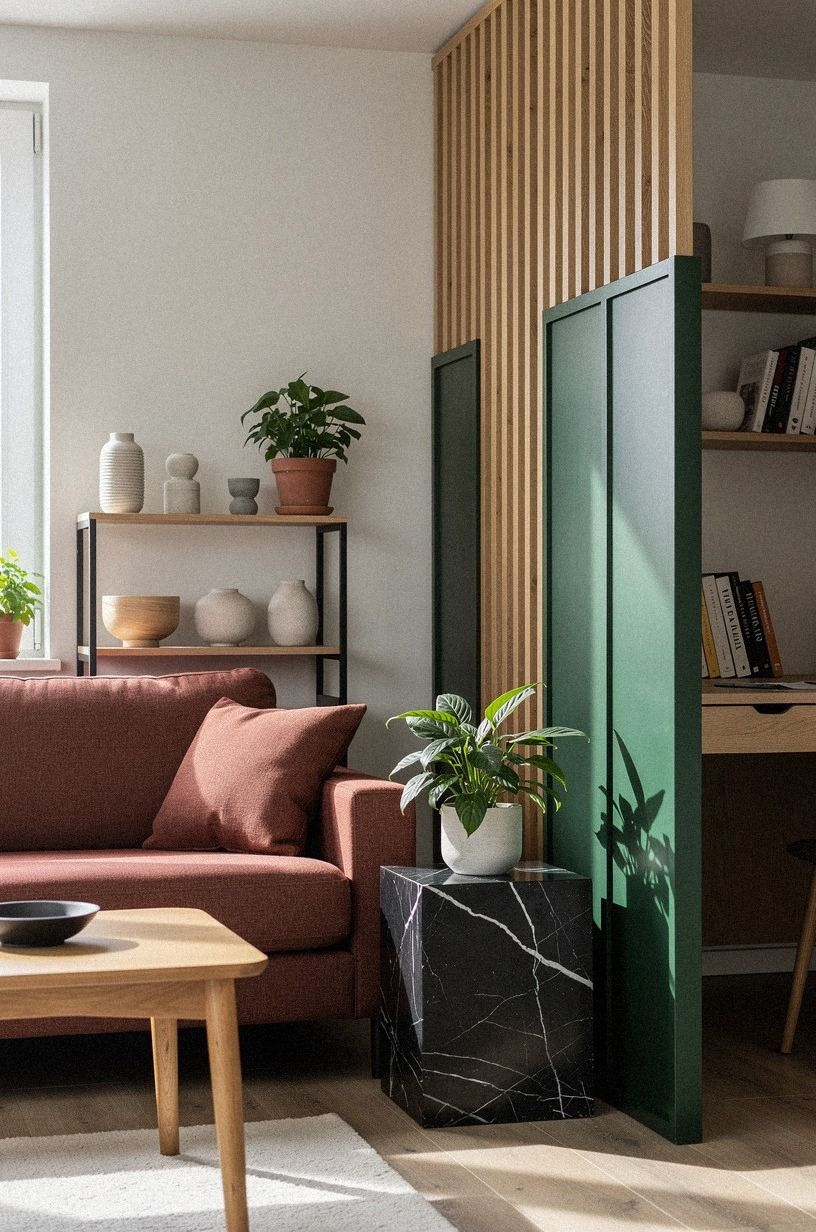
A divider succeeds when it creates a destination, not just a barrier. Give your plant-and-rope screen one clear purpose: a desk, a sleeping corner, or a place to change clothes. Your furniture should face into that zone, so the divider feels like an edge rather than an obstacle.
A small cushion in rust beside a table of Nero Marquina black marble can add softness without turning the entire room into a textile pile.
Use three light sources in the zone: overhead, task, and ambient. A small lamp behind the screen can make leaves cast gentle shadows at night.
You’ll notice the difference immediately because the corner won't disappear after sunset. What’s the point of a beautiful boundary if you can’t use the space after dinner?
I’d skip a bright ceiling fixture and choose a warm floor or table lamp instead.
Give the zone a breathing margin
Leave at least a few feet between the divider and the primary walking path whenever possible. You don't need a large clearance, but you do need a route that feels natural.
Mark the proposed footprint with painter's tape for one evening. If you keep stepping over the same corner, the layout needs work.
A narrow rug can make the destination feel cozy, welcoming, and complete. Keep the rug partially under the chair or bed so the furniture appears anchored. Avoid placing a tiny rug directly in front of the divider, where it can look like an unrelated mat.
For a plant corner, choose one memorable silhouette rather than a dozen small pots. A large leaf, a trailing vine, or a sculptural cactus can provide the focal point. The rest of the arrangement should support it quietly.
13Paint the Frame, Keep the Plants Green
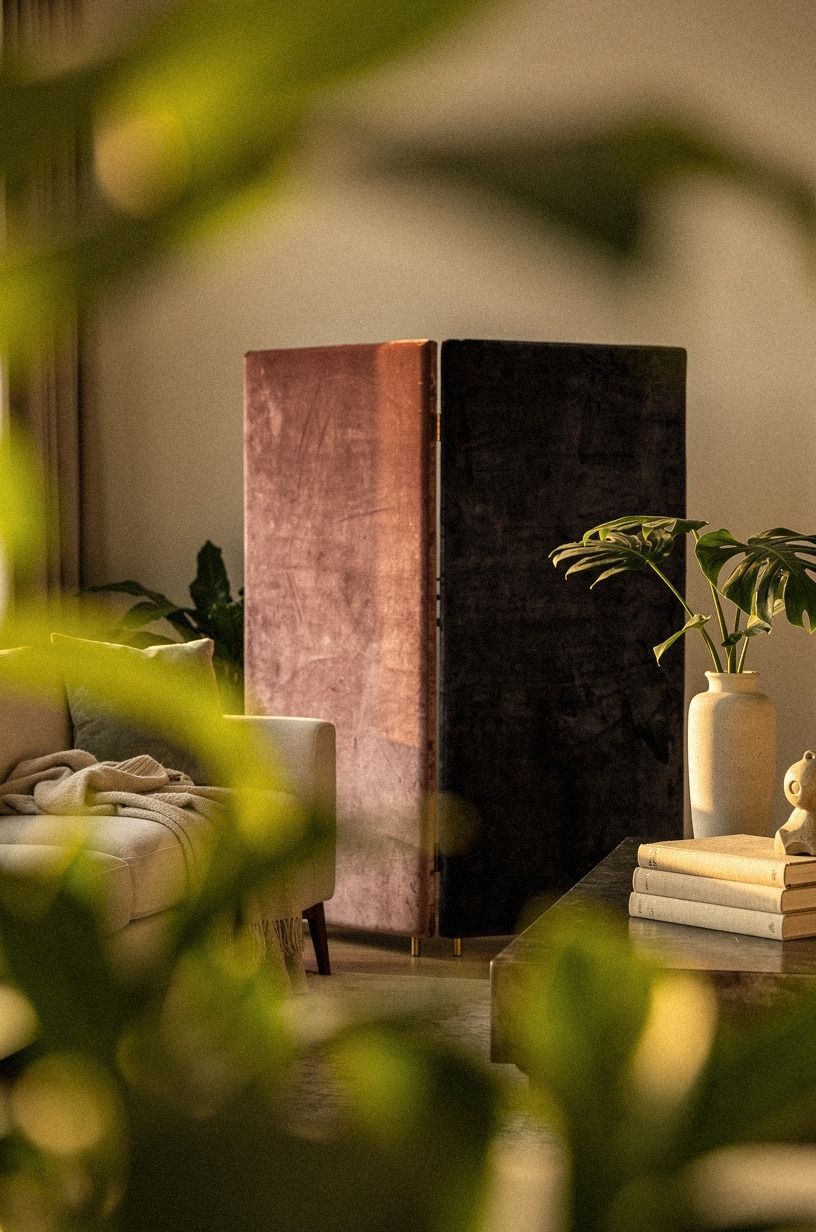
Painting the frame can make a simple divider look architectural, but your color needs to support the plants.
14Arrange the Rope Over Plant Shelves
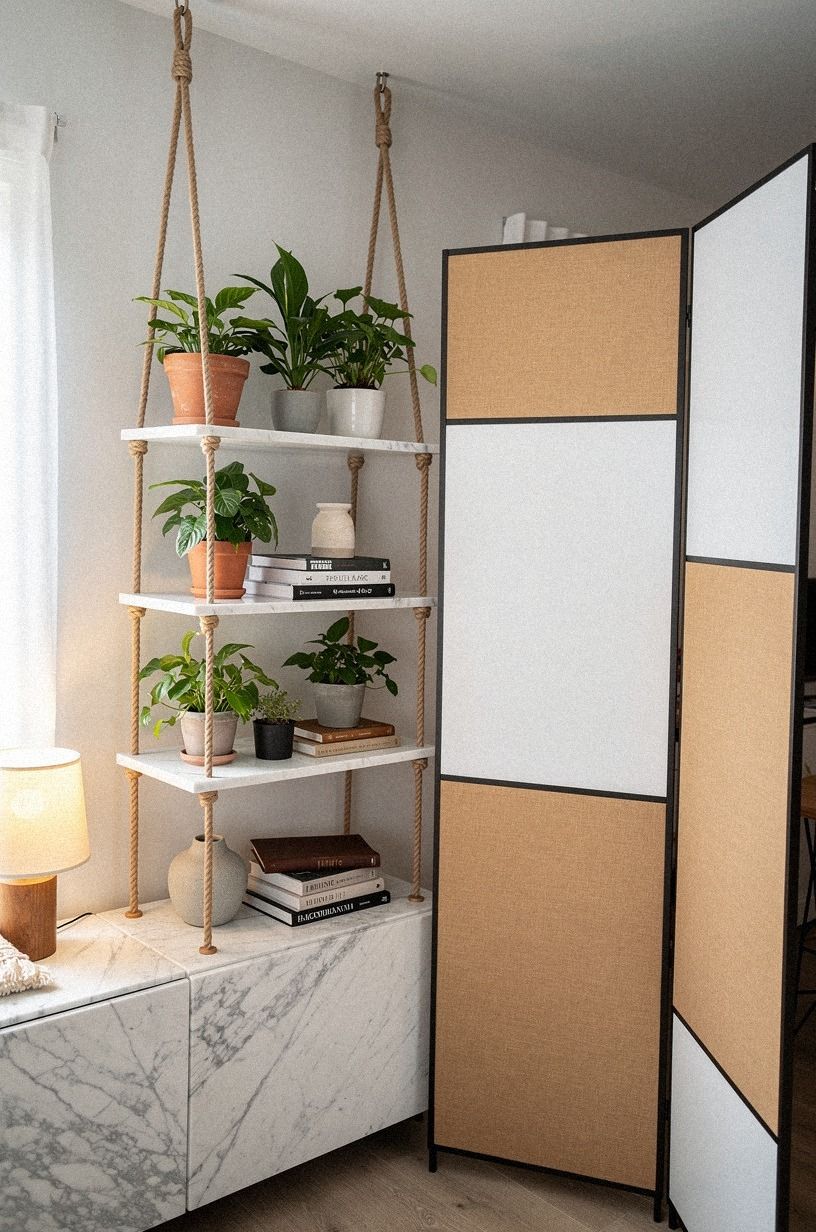
Plant shelves make a reliable base for a layered divider, especially when your floor is already crowded. Set a narrow shelf at the edge of your sleeping or work zone, then hang rope vertically from a top rail above it. Carrara marble with subtle grey veining on a nearby table or tray can echo the pale palette without forcing every item to be botanical.
Keep the shelf deep enough for stable pots, but not so deep that it steals your walking path. Your furniture should overlap a rug when possible, which visually connects the separate zones.
I’d put the heaviest container on the lowest shelf and use camel linen towels or folded textiles in the open cubbies. That combination gives you storage, softness, and a clear visual boundary.
Build from heavy to light
Place dense materials low and delicate materials high. A stoneware planter belongs near the base, while a small trailing plant can occupy an upper ledge. This arrangement feels stable even before you add the rope.
Measure the shelf depth against your pots. A container that barely fits may look fine at first but become risky when the leaves grow outward.
Leave space for watering and pruning. You’ll appreciate that clearance every week.
If your shelf is modular, resist filling every tier. One open shelf between two planted levels gives the arrangement a clean, restful rhythm. Store less attractive supplies in a basket so the whole divider remains visually calm.
A nearby mirror can make the room feel larger, but keep it perpendicular to the divider rather than directly behind the plants. That way it reflects light without multiplying every pot and rope line.
15Choose Rope Over a Solid Screen
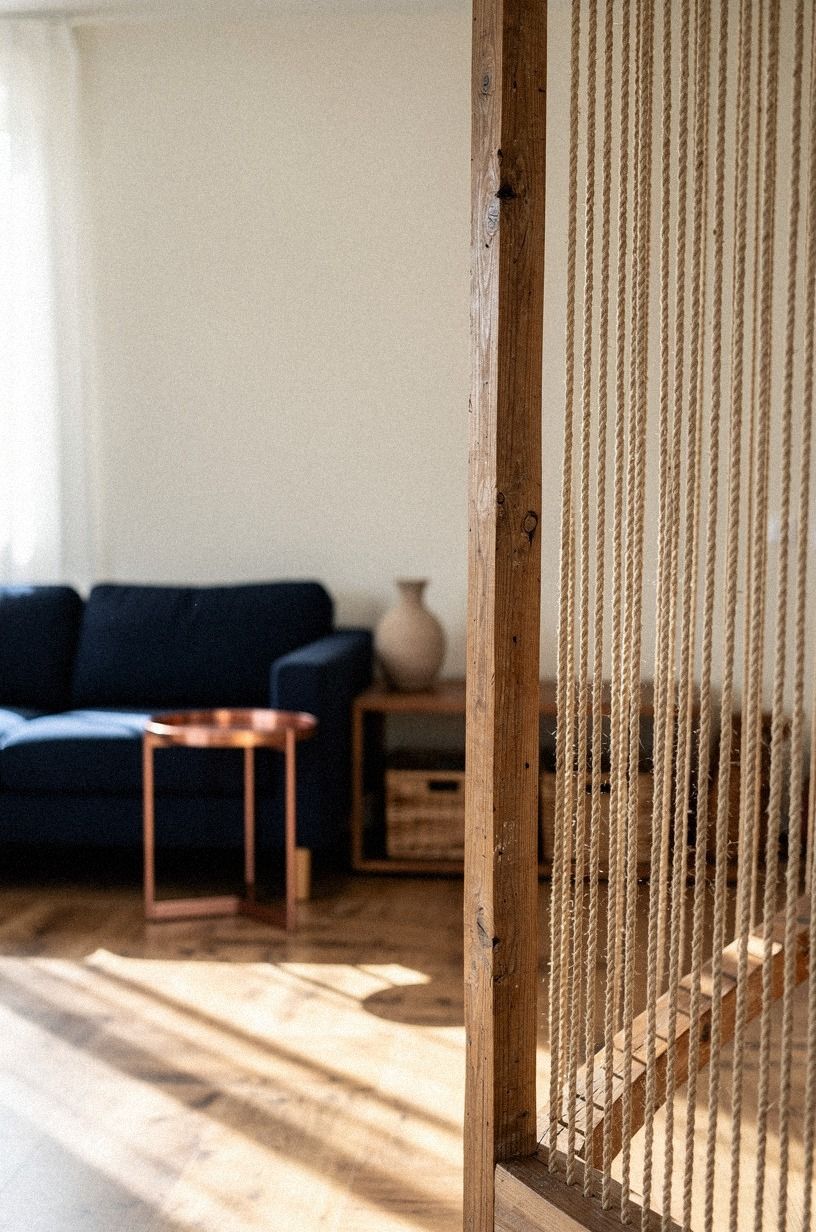
Rope over a solid screen wins when your room needs privacy but still depends on daylight. The strands blur the view without blocking it, and your plants can fill only the places that need softness. Reclaimed weathered teak is a good companion material for a small cabinet or console because its weathered grain repeats the rope’s organic texture.
You’ll want to measure your walking route before placing anything. Keep the divider out of the main door swing and make sure your pots won't brush your shoulders.
I’d choose a removable screen over a heavy bookcase if you move often. Your rental should feel flexible, not permanently rearranged.
For more storage-focused inspiration, look through these bookshelf room divider ideas that double as storage.
Privacy doesn't have to mean darkness. Use closer rope spacing at pillow height and wider spacing near the ceiling. That simple change creates a more comfortable, balanced boundary while preserving daylight above it.
Check the screen from each important side. A divider that looks beautiful from the sofa may appear awkward from the kitchen or entry.
Walk through the room with a laundry basket, a bag, or a cup of coffee. Real movement reveals problems quickly.
You can also soften the edge with one plant rather than a full collection. A tall rubber plant beside the screen can blur the most exposed section, while the rope handles the rest. The result feels serene and useful without becoming an indoor jungle.
What I’ve Learned About Plant and Rope Dividers
I used to think a room divider had to look substantial to feel useful. That belief led me toward heavy shelving, dark baskets, and one very unhappy corner where the afternoon light disappeared. The better answer is lighter.
A rope line, a low shelf, and two healthy plants can establish a boundary while leaving your room visually connected.
The most important decision is where you want your eye to stop. If you’re dividing a bed from a living area, give the screen enough height to create privacy at pillow level. If you’re separating a desk, keep the upper section open so you don't feel closed in while working.
Your divider should support the way you move through the room, not make you take a longer route.
I’ve also learned that low-maintenance does not mean no maintenance. Dust still settles on leaves, pots still need drainage, and rope can collect lint.
Choose plants you’ll remember to care for, such as a ZZ plant, pothos, or snake plant. Unglazed terracotta helps soil breathe, but it can leave marks on a floor, so your tray matters.
I once skipped that tray and spent an evening scrubbing a pale wood surface. Not my finest design decision.
Your materials should have some tension between them. Smooth ceramic beside rough rope.
Pale wood beside dark foliage. Woven baskets beside a clean metal lamp.
That contrast is what makes a small rental feel collected rather than crowded. I’d avoid buying every piece from one collection because the result can feel too rehearsed.
Choose one anchor, then let the rest develop around it.
Boho style also works best when it reflects your real habits. If you don't read on the floor, don't build a floor-level lounge just because it looks inviting.
If you travel often, artificial stems or preserved leaves may serve you better than thirsty tropicals. And if your room is dark, use fewer plants with stronger silhouettes instead of forcing a dense green wall.
The goal is a calm boundary you can live with every day.
The most successful version usually begins with something you already own. Move a shelf, test a chair, or group your existing plants before ordering supplies. Start small!
You may discover that the room needs only one clear edge and a better lamp.
The Questions Worth Answering First
What is the best plant and rope room divider idea for a small space?
A narrow rope screen with one low plant stand is the best starting point for most small rooms. IKEA KALLAX can work when you need storage, but an open rope frame keeps more light moving through the space. Your best choice depends on whether privacy or organization matters more.
Where can I buy plant and rope divider pieces on a budget?
Look at IKEA, Wayfair, and Target for shelves, stands, baskets, and simple screens. You can also find solid wood ladders and planters through Facebook Marketplace or a thrift store. Secondhand rattan often has more character than new pieces, and you won't need a matching set.
How much does a plant and rope room divider makeover cost?
A small makeover can cost about $100 to $300 when you reuse furniture and choose one or two plants. Free rearranging is your first option: move a shelf, group what you own, and test the sightline before buying anything. Larger room updates fall into the broader US ranges shown in the table.
Can I create a plant and rope divider on a budget?
Yes, and you can start with three cheap changes. Use a tension rod, repurpose a ladder, and move existing plants into one visual line.
Removable hooks can hold lightweight rope or fabric, while a thrifted basket hides supplies. Your room doesn't need a new color or expensive furniture to feel more intentional.
Is a plant and rope divider worth it in a small space?
Yes, if you need separate zones without losing daylight. A small room can make the divider feel more useful because each boundary has a clear job. Open spacing is the key.
Keep your largest furniture pieces overlapping the rug and leave a walking lane around the screen.
Is a plant and rope divider a good idea for a rental?
Yes, provided you use freestanding frames, tension rods, removable hooks, and lightweight containers. No-drill hardware lets you adjust the layout when your lease or furniture changes. Your landlord won't appreciate water damage, so use trays under every pot and keep heavier plants on the floor.
Where I’d Start First
If I had to pick one, I’d start with the three-height green screen. It gives you privacy, texture, and a clear room boundary without stealing the daylight your small space needs. Pin it for later, then test your furniture layout before buying a single new pot or strand of rope.
If the first arrangement feels flat, change the heights before changing the entire idea. If it feels crowded, remove one plant. If it feels unstable, fix the base.
The right divider should make the room feel easier to use, not merely more decorated. That small distinction makes all the difference!