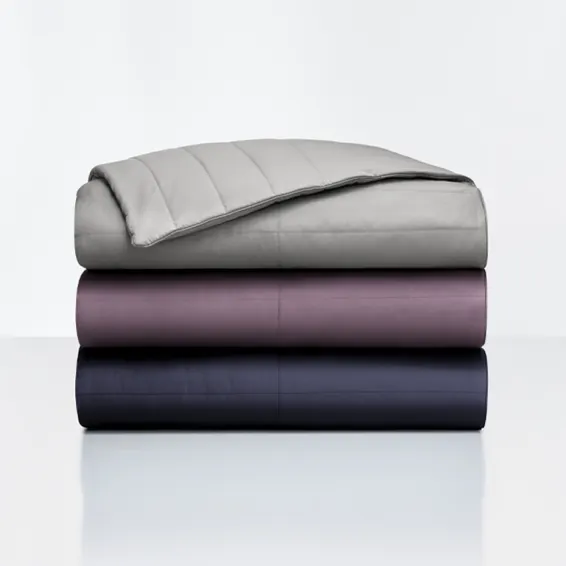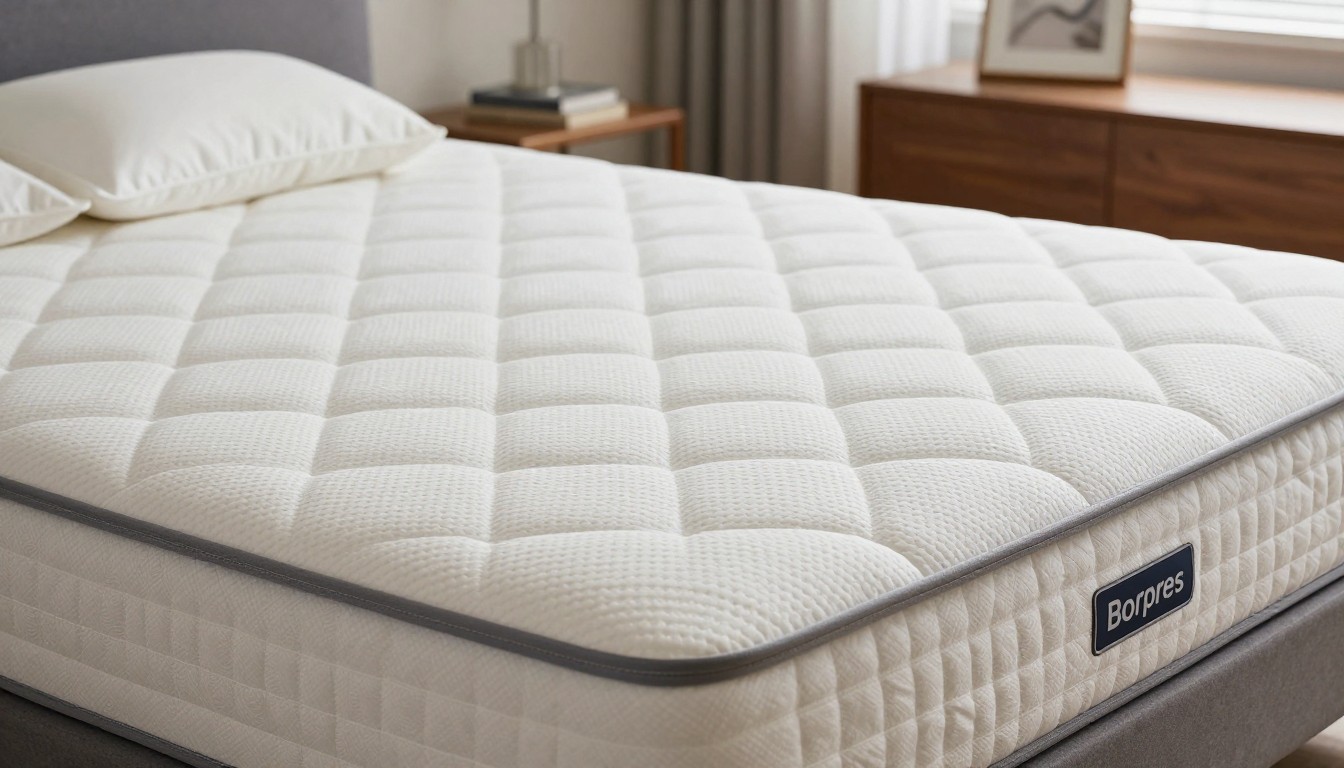
 by
by Quick answer: Borpres cooling blankets are hard to verify through published specs, so buy only after checking fabric, cooling rating, and return terms. Want a sure thing? The True Temp™ Weighted blanket from Sleep Number is the safer pick.
- Cooling blankets work in two ways: passive cool-to-the-touch fabrics or powered systems, and the difference matters more than branding.
- The number worth asking about is a Q-Max or equivalent fabric-cooling rating, plus whether any independent lab data backs it up.
- Machine washability and a clear return policy are your real protection when a brand's published specs are thin.
Updated July 2026 · Reviewed for accuracy
You searched for the Borpres cooling blanket, and I'll give you the straight answer up front: there isn't much independently verifiable information about this brand. No detailed spec sheets circulating in the sleep press, no deep bench of long-term owner feedback that I've found, no published lab cooling data I can point you to. That doesn't mean the blanket is bad. It means you're shopping blind, and this article is about fixing that.
Here's my approach: I'll walk you through exactly what to check on any Borpres listing before you hand over money, how cooling blankets actually deliver (or fail to deliver) on their promise, and when it makes more sense to buy from an established sleep brand instead. If you're new to the category, my explainer on how cooling blankets work covers the science in more depth.
What We Could (and Couldn't) Verify About Borpres
Start with the honest part. When I went looking for hard data on Borpres cooling blankets, the trail ran cold fast. There's no widely circulated technical documentation spelling out fabric composition in detail, no published Q-Max rating I could locate, and no substantial body of verified long-term owner reviews on the major sleep review sites. Bedding roundups from established outlets don't tend to feature the brand alongside the category leaders.
That pattern usually means one of two things. Either the brand is very new and hasn't built a track record yet, or it's a marketplace-native label that changes listings faster than reviewers can keep up. Neither is automatically disqualifying. Plenty of decent bedding comes from small brands. But the burden of proof shifts to you, the buyer, because there's no third-party safety net.
The Nut's rule for thin-spec brands: if a seller can't tell you the exact fabric blend, the cooling mechanism, and the return window in plain language on the product page, close the tab. A blanket that cools well has nothing to hide.
So instead of reviewing specs I can't verify, I'm going to arm you with the checklist I'd use myself. Every item below is something you can confirm directly from the listing, the seller, or the packaging before you commit.
How Cooling Blankets Actually Work
Every cooling blanket on the market does one of two things, and knowing which one Borpres is selling you is the single most important question to answer.
Passive cooling fabrics feel cool when you first touch them. These are typically synthetic knits, often nylon-based, sometimes infused with mineral particles like mica, engineered with high thermal conductivity. They pull heat away from your skin on contact. The catch: the effect fades as the fabric warms to your body temperature. These blankets shine for hot flashes and falling asleep, less so for all-night temperature regulation unless the fabric also breathes well.
Phase-change and powered systems go further. Phase-change materials absorb heat as they shift state, extending the cooling window. Powered systems use active air or water circulation and need an outlet. Both cost more. Both tend to come from established brands with published specs, precisely because the technology is expensive to engineer.
| Cooling type | How it feels | Best for | Watch out for |
|---|---|---|---|
| Cool-touch knit (nylon, mica-infused) | Instantly cold on contact | Falling asleep, hot flashes | Effect fades as fabric warms |
| Phase-change material | Steady, extended coolness | All-night hot sleepers | Higher price, heavier fabric |
| Powered air/water systems | Actively chilled all night | Severe night sweats | Needs power, more maintenance |
Most budget-priced cooling blankets sold online, and I'd wager most Borpres listings fall here, use the first approach. That's fine if you know what you're buying. It's a problem if the listing implies all-night active cooling at a passive-fabric price.
Comparing options? The True Temp™ Weighted blanket is the pick we keep coming back to — see the final verdict ↓
What to Check Before Buying a Borpres Cooling Blanket
Here's the checklist. Run every Borpres listing through it, and don't skip items because the photos look nice.
The six-point verification list:
- Fabric composition, spelled out. Look for an exact blend, like a nylon-spandex knit or a specific cooling fiber. "Cooling fabric" with no composition listed is a red flag.
- The cooling mechanism. Passive cool-touch or something more? The listing should say which, clearly.
- A Q-Max rating or lab reference. Q-Max measures how fast a fabric pulls heat from skin. Legitimate cooling brands publish it or cite testing.
- Care instructions. Machine washable, tumble-dryable, and at what settings. Cooling knits can lose their feel after rough washing.
- Sizing in actual dimensions. Throw, twin, queen, king. Confirm the blanket covers who it's meant to cover.
- Return policy and any warranty. With a thin-spec brand, the return window is your warranty. Know it before checkout.
Two of these deserve extra attention. First, the Q-Max question. If the seller can't produce a cooling rating or any test reference, assume the blanket is an ordinary lightweight knit with good marketing. It might still be pleasant, but price it accordingly. Second, care. In my experience with cooling synthetics across the category, the cooling feel is a surface property, and harsh washing degrades it. A brand that doesn't specify gentle care either hasn't thought about durability or doesn't expect the blanket to last long enough for it to matter.
Hypoallergenic claims deserve a similar sniff test. Synthetics like nylon are naturally resistant to dust mites and common allergens, so the claim is plausible for most cooling knits. But "hypoallergenic" without any certification or detail is just a word on a listing.
Borpres vs. an Established Alternative
Let me be fair here. If a Borpres listing checks every box above, the fabric blend is disclosed, the cooling mechanism is clear, care instructions are specific, and the return policy is solid, it may be a perfectly reasonable buy at a budget-friendly price. Thin spec sheets are a knowledge problem, not proof of a bad product.
But compare that uncertainty to what an established sleep brand puts on the table. Take the True Temp™ Weighted blanket from Sleep Number as the benchmark: a nationally known brand with published product details, a physical retail footprint where you can feel the product before buying, customer service infrastructure, and return policies with a long public track record. It's priced in the premium tier, so check the current offer on the official site, but you're paying for accountability as much as materials.
The value equation: a cheap cooling blanket that loses its feel after a season of washes costs more per comfortable night than a pricier one that holds up. Durability is where unknown brands most often fall short, and where warranty and return terms do the talking.
If you want to survey the full field before deciding, my roundup of the best cooling blankets compares the established options, and the cooling weighted blanket picks for summer cover the crossover category. For a deeper look at how a big-name cooling weighted blanket performs in practice, my Gravity cooling weighted blanket review shows what documented specs and real owner feedback look like when a brand has a track record.
Who Should Buy Borpres, and Who Should Skip It
Buy a Borpres cooling blanket if all of these are true: the specific listing discloses its fabric blend and cooling mechanism, the price sits clearly in the budget tier and you're comfortable with budget-tier durability, the return window gives you enough time to actually test it at home, and you mainly want that cool-on-contact feel for falling asleep rather than all-night temperature control.
Skip it if any of these apply: the listing is vague about materials, the seller can't answer basic questions about care or cooling ratings, you're a severe hot sleeper who needs sustained cooling through the night, or you're buying for someone who can't easily handle a return, like a gift shipped cross-country. In those cases, the premium for an established brand isn't a luxury. It's insurance.
One more scenario worth naming: if you're curious about the category and just want to try a cooling blanket without spending much, a budget buy with a solid return policy is a low-risk experiment. Go in with clear expectations, test it hard during the return window, and wash it a few times early to see if the cooling feel survives.
Caring for Any Cooling Blanket So It Lasts
Whatever you end up buying, these habits protect the cooling performance, and they're based on how cooling knits behave across the category, not any single brand.
Wash cold and gentle. Heat and agitation are the enemies of the smooth, conductive surface that makes cooling fabric feel cold. Skip fabric softener entirely, because softeners coat fibers and kill thermal conductivity. Line dry when you can, or tumble on the lowest heat setting the care label allows. Store it clean and dry in the off-season, folded rather than compressed, since prolonged compression can distort lightweight knits.
Do all that, and a decent cooling knit should keep its feel for years. Skip it, and even an expensive blanket turns into an ordinary throw within a season.
FAQ
Is the Borpres cooling blanket legit?
There's not enough independent review coverage or published spec data for me to vouch for it either way. That makes it a "verify before you buy" product: check the fabric disclosure, cooling mechanism, and return policy on the exact listing, and walk away if any of the three is vague.
Does the Borpres cooling blanket actually keep you cool?
That depends on which cooling technology the blanket uses, and current listings need to answer that question for you. Most budget cooling blankets use passive cool-touch knits that feel cold on contact but warm up as the night goes on. If you need sustained all-night cooling, look for phase-change materials or a powered system from a brand that publishes its testing.
What size Borpres cooling blanket should I get?
Match the blanket to how you'll use it. A throw works for the couch or one-sided coverage, while shared bed use needs a full/queen or king with enough overhang for two people. Confirm the actual dimensions on the listing rather than trusting the size label alone, since budget brands sometimes run small.
How do you wash a cooling blanket without ruining it?
Cold water, gentle cycle, no fabric softener, and low heat or line drying. The cooling feel lives in the fabric's surface properties, and heat plus softener residue are what degrade it fastest. Always default to the care label on the specific product.
What's a good alternative if I'm not sure about Borpres?
Go with an established sleep brand that publishes full product details and backs them with a clear return policy. A cooling option from a national brand costs more up front, but you get documented specs, reachable customer service, and a track record of owner feedback to check before buying.
FINAL VERDICT
Bottom line for a Borpres cooling blanket shopper: if you want a blanket from a brand that will still exist next year, the True Temp™ Weighted blanket is the safer buy — you get real temperature control from a brand you can still find next year, not a marketplace listing that vanishes.
OUR CATEGORY-MATCHED PICK
True Temp™ Weighted blanket
- See the product page for full specs and current pricing