
 by
by The box spring vs platform bed debate used to have a clear answer. It no longer does. The right choice depends on your mattress type — and the wrong choice can void your warranty and shorten your mattress's lifespan by years.
The Short Answer
If you have a foam, latex, or hybrid mattress (the types most people buy today): use a platform frame. Box springs add unnecessary height and flex that these mattresses aren't designed for.
If you have a traditional innerspring mattress with a coil system that benefits from shock absorption: a box spring may be the appropriate support.
When in doubt: check your mattress warranty documentation. Most manufacturers specify which foundation types are required.
Pros and Cons
What We Like
- Luxury innerspring with excellent lumbar support
- Multiple firmness options available
- Free white-glove delivery and mattress removal
- 365-night trial and lifetime warranty
What Could Be Better
- Higher price than many online brands
- Heavier than foam mattresses
- Not compressed in a box
- Some off-gassing possible initially
What Is a Box Spring?
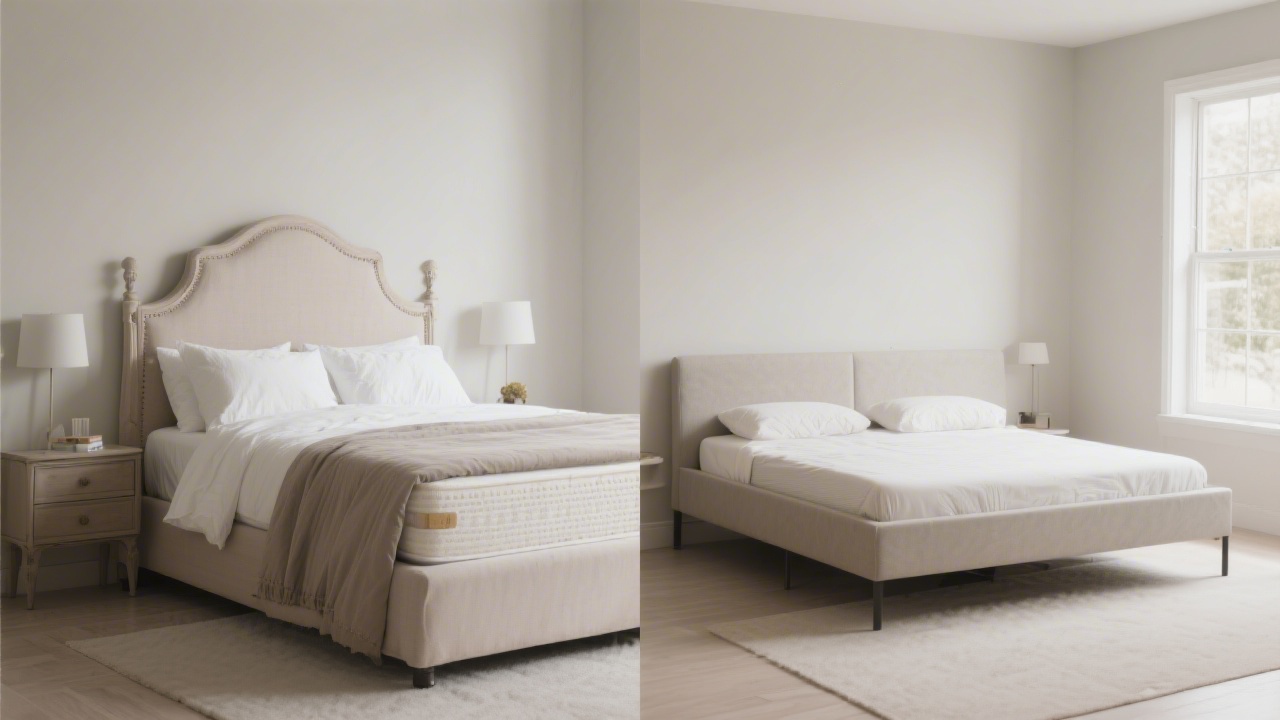
A box spring is a foundation layer that sits between the mattress and the bed frame. Traditional box springs contain actual coil springs inside a wood frame. Modern "box springs" (sometimes called foundations) often use a rigid wood slat system without springs.
Original purpose: innerspring mattresses benefited from a shock-absorbing layer beneath them. The box spring distributed impact across the mattress's coil system rather than concentrating it at contact points. This extended the life of older coil mattress types.
Box springs add 9–12 inches of height to your bed setup, raising total bed height to 24–30 inches with the mattress — which is why many older homes have standard-height beds and some people require a step to get in.
What Is a Platform Bed?
A platform bed provides mattress support through a solid surface or closely spaced slats (typically 2–3 inches apart), eliminating the need for a box spring. Platform frames sit lower — typically 8–14 inches from floor to slat surface — resulting in a total bed height of 18–24 inches with the mattress.
Comparison: Box Spring vs Platform Bed
| Factor | Box Spring | Platform Bed |
|---|---|---|
| Bed height | 24–30" total | 18–24" total |
| Cost | $100–$400 additional | Included in frame |
| Best for foam mattresses | No — creates improper flex | Yes — firm, even support |
| Best for innerspring | Yes (traditional coil types) | Yes (for modern hybrids) |
| Warranty compliance | Check specific brand | Check specific brand |
| Under-bed clearance | None (box spring fills space) | 6–14 inches |
| Weight on frame | Higher (adds 50–80 lbs) | Lower |
How Each Affects Mattress Lifespan
Foam Mattresses on Box Springs
Foam mattresses are designed to sit on a firm, flat surface. Box spring flex — even minor flex — causes foam layers to compress unevenly across the mattress. Over 12–18 months, this creates visible body impressions and sag in the areas of most use. Most foam mattress warranties explicitly require a solid or slatted platform and void coverage if a box spring is used.
Innerspring Mattresses on Platform Beds
Modern innerspring and hybrid mattresses (which combine coils with foam layers) are engineered to work on firm platform surfaces. Many manufacturers — including Saatva — specifically design their innerspring mattresses for platform support and don't recommend traditional box springs. Older, all-coil innerspring mattresses may benefit from box spring shock absorption, but these are increasingly uncommon.
The Warranty Question
This is the most practical deciding factor. Pull out your mattress warranty documentation or check the manufacturer's website. Look for:
- Required foundation type (platform, box spring, adjustable base)
- Slat spacing requirements (usually 3" max for foam)
- Center support requirements for queen/king
- Whether foundations must be "appropriate" (vague) or specify type
Violating foundation requirements is the most common reason mattress warranty claims are denied. It's worth 10 minutes to verify before purchasing a frame.
Modern Alternatives: The Foundation
A third option: the foundation or low-profile box spring. This is a rigid wood frame (no springs) covered in fabric, adding height without flex. It functions like a platform base but integrates with traditional bed frames designed for box springs. The Saatva Foundation is this type — solid hardwood construction, 11 reinforced slats, designed to pair with any Saatva mattress type.
See our best platform bed frame guide for our full recommendations, and our best bed frame guide for the broader frame category including storage options.
→ See the Saatva Foundation — solid hardwood, no-flex support
Frequently Asked Questions
Can I use a box spring with a memory foam mattress?
No — and it will likely void your warranty. Memory foam requires a firm, flat surface. Box spring flex creates uneven compression in foam layers, leading to premature sagging. Use a platform frame or solid foundation instead.
Is a box spring necessary for a hybrid mattress?
No. Modern hybrid mattresses are engineered for platform support. The coil layer in a hybrid provides its own shock absorption — a box spring adds unnecessary additional flex that most hybrid manufacturers advise against.
What is the difference between a box spring and a foundation?
A traditional box spring contains actual coil springs inside a wood frame. A foundation (also called a low-profile box spring or platform foundation) is a rigid wood frame with slats — no springs. Foundations provide firm support without flex, making them compatible with foam and hybrid mattresses.
Will a platform bed make my bed lower?
Yes, by 9–12 inches compared to a frame-plus-box-spring setup. Total bed height with a platform frame and standard mattress is typically 18–24 inches, compared to 24–30 inches with a box spring. This is considered an advantage by most people under 70 — easier to make, cleaner look, better proportions in standard-ceiling rooms.
How long do box springs last?
Traditional box springs last 8–10 years before the internal coils or wood frame weaken. When the box spring fails (you'll hear creaking and feel uneven support), it compromises your mattress support even if the mattress itself is in good condition. Replacing both at the same time is recommended.
The Verdict
Choose Box Spring if: You value what Box Spring offers in construction, materials, and sleep technology.
Choose Platform Bed if: You prefer Platform Bed's design philosophy and material choices. Compare pricing and trial periods.
Both serve different sleep needs. Choose based on your body type, sleep position, and comfort preferences.