
 by
by Editor's Pick — Best Sleep Investment
Saatva Classic Mattress — Engineered for Deeper Sleep
Individually wrapped coils + dual-tempered steel support system = the spinal alignment your brain needs to complete all 4 sleep cycles.
The Brainstem: Evolution's Sleep Architecture
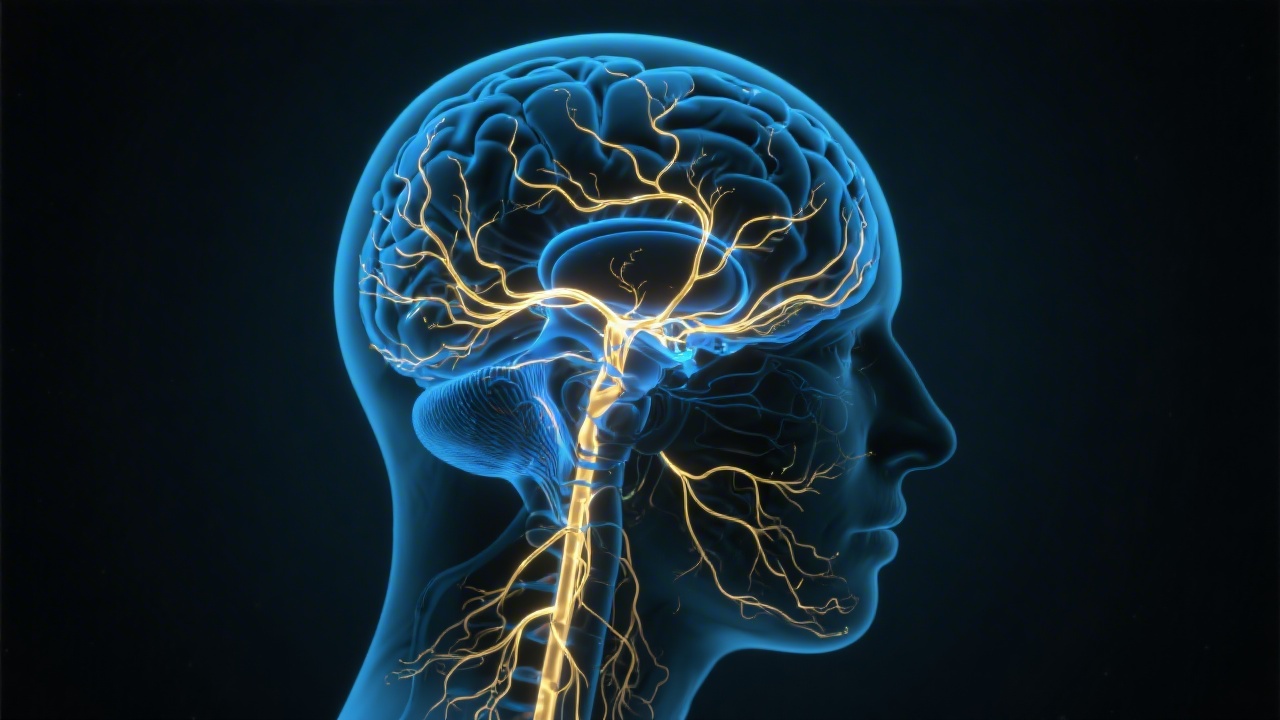
The brainstem — comprising the midbrain, pons, and medulla oblongata — is the most evolutionarily ancient part of the mammalian brain. Long before the elaborated cortex of primates or even the limbic system of early mammals, the brainstem circuits that generate and regulate sleep were in place. Nearly all vertebrates with a brainstem sleep, suggesting that the brainstem sleep-wake machinery is fundamental to animal biology.
The brainstem contains not one but several interrelated systems that collectively manage the transition between wakefulness and sleep, generate REM sleep, coordinate breathing and autonomic function during sleep, and protect the sleeping brain from motor activity.
The Ascending Arousal System: Wake-Promoting Circuits
Wakefulness is maintained by a distributed network of brainstem nuclei that project activating signals (via multiple neurotransmitters) to the thalamus and cortex. Key components include:
- Locus coeruleus (LC): Small noradrenergic nucleus in the pons; fires rapidly during waking and stress, silences during sleep (lowest activity during REM). Projects broadly throughout the brain.
- Dorsal raphe nucleus: Serotonergic; active during waking, reduced during NREM, near-silent during REM. Important for mood regulation and circadian modulation of sleep.
- Pedunculopontine and laterodorsal tegmental nuclei (PPT/LDT): Cholinergic REM-on neurons. Silent during waking, discharge maximally during REM. Drive the cortical activation and muscle atonia of REM sleep.
- Periaqueductal gray (PAG): Dopaminergic wake-promoting neurons; damage leads to hypersomnia.
The Flip-Flop Switch Model
The most influential model of sleep-wake control is the "flip-flop switch" proposed by Saper, Scammell, and Lu (2001). The model identifies two populations of mutually inhibitory neurons:
- Wake-promoting (monoaminergic arousal system): Locus coeruleus, raphe nuclei, tuberomammillary nucleus. These neurons fire during waking and send inhibitory projections to sleep-promoting neurons.
- Sleep-promoting (VLPO): Ventrolateral preoptic area neurons that fire during sleep and send inhibitory GABAergic projections to the wake-promoting system.
The mutual inhibition creates a bistable switch — like a light switch, it strongly favors either the fully awake or fully asleep state. When one side gains sufficient activity to suppress the other, the switch "flips" and the brain rapidly transitions between states.
This explains why sleep transitions are typically rapid and complete: you do not slowly fade from 70% awake to 60% awake — you flip. And once flipped to sleep, you do not easily fluctuate back (healthy sleep is remarkably stable during the first NREM period).
Orexin/hypocretin — a neuropeptide produced by hypothalamic neurons that project to both sides of the switch — stabilizes the switch by providing additional excitation to the wake-promoting side. Loss of orexin neurons causes narcolepsy, characterized by sudden transitions into sleep (cataplexy, sleep attacks) — a destabilized flip-flop switch that flips spontaneously and rapidly.
REM Sleep Generation in the Brainstem
REM sleep is generated by a circuit in the pontine brainstem. The classic model (the "REM-on/REM-off" or "reciprocal interaction" model) proposes competition between:
- REM-on neurons: Cholinergic neurons in PPT/LDT that activate during REM and drive cortical desynchronization, PGO waves, and REM muscle atonia
- REM-off neurons: Noradrenergic (LC) and serotonergic (raphe) neurons that are active during waking and NREM but nearly silent during REM
As NREM sleep deepens, monoaminergic activity progressively decreases, allowing cholinergic REM-on neurons to eventually become dominant and trigger the REM state. The cycling between NREM and REM throughout the night reflects the ongoing competition and cycling between these populations.
The Brainstem and REM Atonia: Preventing Dream Enactment
One of the brainstem's most critical sleep functions is generating REM atonia — the profound muscle paralysis of REM sleep that prevents you from physically acting out dreams. This is achieved through a pathway from the sublaterodorsal nucleus (SLD) in the pons to glycinergic and GABAergic interneurons in the ventral horn of the spinal cord, which hyperpolarize spinal motor neurons and prevent voluntary muscle activation.
When this circuit fails (due to neurodegeneration, medication, or other causes), REM Sleep Behavior Disorder results. When it functions too persistently (sleep paralysis), individuals wake momentarily paralyzed — a common benign phenomenon that can be frightening but is neurologically normal.
Frequently Asked Questions
What is the flip-flop switch in sleep neuroscience?
The flip-flop switch is a model of sleep-wake control proposed by Saper and colleagues. It describes two populations of mutually inhibitory neurons — wake-promoting monoaminergic neurons and sleep-promoting VLPO neurons — whose mutual inhibition creates a bistable switch that favors strongly either wakefulness or sleep, producing the rapid, complete transitions between states we experience.
Why does narcolepsy cause sudden sleep attacks?
Narcolepsy is caused by loss of orexin/hypocretin-producing neurons in the hypothalamus. Orexin normally stabilizes the flip-flop switch by providing extra excitation to the wake-promoting side. Without orexin, the switch becomes unstable and flips suddenly and spontaneously into REM sleep (causing cataplexy and sleep attacks), explaining narcolepsy's characteristic sudden transitions.
What causes muscle paralysis during REM sleep?
REM atonia is generated by the sublaterodorsal nucleus (SLD) in the pons, which activates glycinergic and GABAergic inhibitory interneurons in the spinal cord's ventral horn. These interneurons hyperpolarize motor neurons, preventing voluntary muscle activation. This circuit evolved to prevent acting out dream content — the biological wisdom of disconnecting movement generation from the sleeping brain.
What is the locus coeruleus and how does it affect sleep?
The locus coeruleus (LC) is a small noradrenergic nucleus in the pons that is one of the primary wake-promoting brainstem structures. LC neurons fire rapidly during stress and waking, broadly activating the cortex and limbic system. They are progressively inhibited during NREM sleep and reach their lowest activity — near silence — during REM sleep, which is thought to contribute to REM's emotional processing properties.
How does the brainstem generate REM sleep?
REM sleep is generated by cholinergic neurons in the pedunculopontine and laterodorsal tegmental nuclei (PPT/LDT) — the "REM-on" cells. As NREM sleep deepens and monoaminergic (noradrenergic, serotonergic) activity decreases, these cholinergic cells become progressively less inhibited until they flip the system into REM, driving cortical activation, PGO waves, and spinal atonia.
Related reading: Thalamus and sleep spindle generation | Neurotransmitters controlling sleep | Basal ganglia and sleep disorders
Upgrade Your Sleep Environment
The neuroscience is clear: mattress quality directly affects brain function. The Saatva Classic delivers the support your brain needs to consolidate memories, regulate emotions, and restore prefrontal function.