
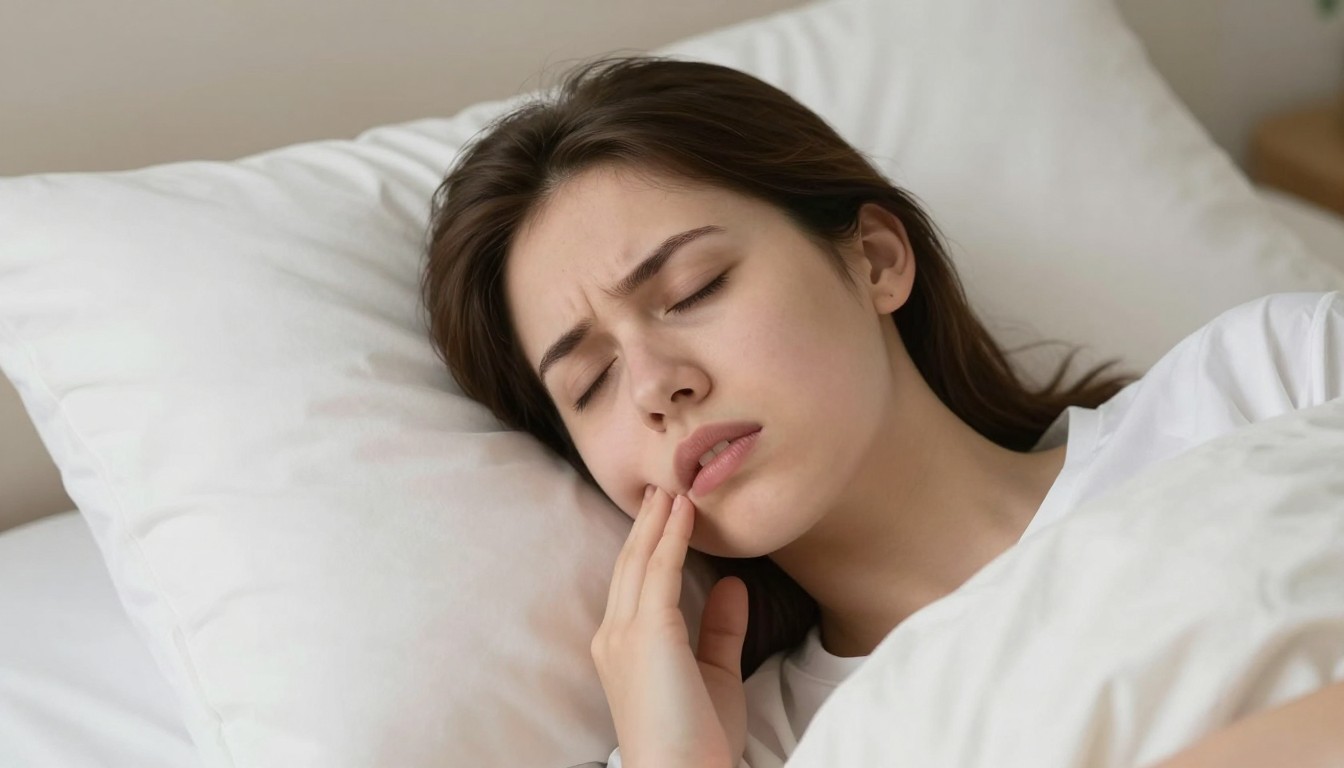
 by
by Quick answer: If a toothache is keeping you awake, don’t buy a sleep product. Follow current NHS toothache guidance for temporary relief and contact a dentist. Seek urgent help if its criteria say not to wait.
- The NHS toothache page covers causes, relief, prevention, and when to see a dentist.
- Dentists Close By specifically addresses why tooth pain may intensify at night.
- That same Dentists Close By guide separates temporary relief from situations requiring emergency dental care.
Updated July 2026 · Reviewed for accuracy
A sleepless night can turn an already painful problem into a frantic search for anything that might work. My view is simple: use trusted dental guidance for the immediate step, then get the tooth assessed instead of treating this as a bedding problem. This guide keeps that line clear without guessing at the cause.
A sleepless toothache is a dental problem first
Pain strong enough to block sleep is the useful fact you have right now. It tells you that comfort advice alone isn’t answering the problem. It does not, by itself, tell you what is causing the toothache.
The NHS presents toothache as a symptom with different possible causes and provides separate guidance on relief, prevention, and when to see a dentist. That separation matters. Nighttime intensity isn’t a reliable way for a reader to identify the cause at home.
Dentists Close By discusses why tooth pain may intensify at night, while Aspen Dental specifically addresses tooth discomfort severe enough to prevent sleep. Both sources frame immediate relief as temporary and keep dental assessment central. That is the sensible way to read the situation.
The Nut’s take: Don’t spend the night trying to name the dental condition from a search phrase. Focus on what you can establish: the pain is disrupting sleep, temporary relief may be appropriate, and you need a clear plan for dental care.
The timing can still be useful information for a dentist. Say plainly that the pain becomes harder to tolerate while you are trying to sleep. Describe what you notice without turning those observations into a diagnosis.
I also wouldn’t assume that being able to doze off later means the issue has resolved. Sleep only tells you that you managed to rest. It does not identify the cause or replace the timing guidance on the NHS toothache page.
Use a short, source-led plan tonight
The NHS toothache page is the practical starting point because it addresses both temporary relief and the point at which dental care is needed. Follow its current wording and any instructions printed on a product you use. Don’t improvise combinations or rely on an unlabeled home remedy.
If you have already taken something for the pain, write down what it was and when you used it. That prevents a tired, painful night from becoming a memory exercise when you speak with a dentist. Keep the packaging nearby so you can report the exact product rather than guessing.
Comfort changes are reasonable if you treat them as comfort changes. Try the sleeping position that feels least aggravating. Adjust your pillow if that removes pressure or makes resting easier, but don’t treat the result as evidence about the tooth itself.
A simple plan for the night:
- Use the current NHS toothache guidance as the boundary for temporary relief.
- Follow product directions exactly rather than creating your own combination.
- Record what you feel and what you have already used.
- Decide how you will contact a dentist or urgent service if the pain remains too severe for rest.
Keep the rest of the sleep setup uncomplicated. Use whichever familiar position, lighting, and room conditions feel easiest to tolerate. These choices may remove extra annoyances, but they are not dental treatment and should not delay the next step.
Avoid chasing one tip after another through the night. That makes it harder to know what you used and whether you followed its directions. A narrow plan based on recognized guidance is easier to communicate to a dental professional.
If you are uncertain whether a relief option is appropriate for you, don’t fill that gap with an assumption. Use professional guidance that can account for your circumstances. This article cannot safely turn a general toothache query into individual medication instructions.
Know where temporary relief ends
Temporary relief and the need for dental care are separate questions on the NHS toothache page. Feeling more comfortable for a while does not establish why the tooth hurt. It also does not cancel any NHS instruction that says you should see a dentist.
Dentists Close By distinguishes ordinary nighttime relief from situations that require emergency dental attention. Use the guide’s current urgency criteria rather than an improvised checklist. Aspen Dental likewise treats severe pain that prevents sleep as a reason to consider how urgently care is needed.
I would not use pain intensity to diagnose yourself, but I would use it to decide how passive you can afford to be. If the discomfort remains severe enough that rest is not realistic, seek professional guidance instead of spending the night shopping for pillows, toppers, or other sleep products.
Check the decision, not the diagnosis:
- Does the current NHS guidance say to arrange dental care?
- Do its urgent-care criteria match what is happening?
- Can you follow the temporary-relief directions safely and exactly?
- Do you know which local dental or health service to contact if you cannot wait?
If the NHS emergency wording fits your situation, follow that route. If you cannot tell whether it fits, get professional guidance rather than using the fact that it is nighttime as a reason to postpone the decision. Uncertainty is not evidence that waiting is safe.
The reverse is also true. A frightening night does not let an article determine the cause or promise a particular outcome. The honest answer is to use official thresholds, communicate the severity clearly, and let a dental professional assess the tooth.
Make the bed support comfort, not diagnosis
A pillow or mattress may change how comfortable a position feels, but I wouldn’t buy bedding in response to a toothache. The relevant guidance from the NHS, Dentists Close By, and Aspen Dental centers on temporary relief and dental care. A sleep product cannot answer either question.
If one position feels worse, move. If pressure against one side of your face is uncomfortable, arrange the pillow around that observation. You are looking for a tolerable way to rest, not testing a theory about what caused the pain.
Keep any adjustment easy to reverse. A familiar pillow moved into a more comfortable position is enough for that purpose. There is no reason to make a costly purchase before the dental problem has even been assessed.
| Action | What it can do | What it cannot do |
|---|---|---|
| Change position | Show which posture feels more tolerable | Identify the cause of the toothache |
| Adjust the pillow | Reduce an uncomfortable point of contact | Replace dental assessment |
| Simplify the room | Remove avoidable distractions while you rest | Treat the source of the pain |
| Follow NHS guidance | Provide a recognized framework for relief and care | Give an individual diagnosis through a webpage |
There is a useful mental boundary here. Comfort is personal and immediate. Diagnosis and treatment belong with dental care. Keeping those jobs separate prevents a desperate sleep purchase from masquerading as a solution.
If you do manage to sleep after changing position, keep the dental plan. If you do not manage to sleep, that is important information to report. Neither outcome proves what is happening inside the tooth.
Prepare a clear account for the dentist
A brief timeline is more useful than a long theory. Record what you actually noticed: where the pain seems to be, when you first became aware of it, whether it stays steady or changes, and how it affected your ability to sleep.
Include any temporary-relief product you used and the time you used it. Take the packaging or keep its exact name available. Avoid saying that a remedy “worked” in a diagnostic sense; say how your comfort changed and whether the pain returned.
Be honest about uncertainty. Tooth pain may feel as though it comes from a precise spot, but you do not need to prove the location before asking for care. A clean description gives the dentist observations without burying them beneath an online diagnosis.
Useful notes to prepare:
- Where the discomfort seems to be.
- When you first noticed it and how it has changed.
- Whether it is continuous or comes and goes.
- What seems to make it feel different.
- What relief measures you used and what happened afterward.
- Whether the pain prevented you from falling asleep or woke you after sleeping.
Ask direct questions during the dental conversation. What does the dentist think is causing the pain? What should you do next? Which temporary-relief guidance applies to you, and what change would make the situation more urgent?
Those questions keep the discussion practical. They also prevent a temporary improvement from becoming the only reason to postpone care. According to the NHS toothache overview, relief and knowing when to see a dentist are both parts of managing the problem.
My bottom line is firm: stop treating the toothache as a sleep-shopping problem. Use current NHS guidance, arrange dental care, and follow the appropriate urgent route if its criteria apply. Make the bed as comfortable as you can, but keep the tooth at the center of the decision.
FAQ
The NHS divides toothache guidance into causes, relief, prevention, and the point at which dental care is needed. These answers follow that same boundary and do not attempt to diagnose an individual tooth.
Why does my toothache feel worse at night?
Dentists Close By specifically recognizes that tooth pain may intensify at night, but the nighttime pattern alone cannot identify the cause of your pain. Report the pattern to a dentist and use current NHS guidance to decide what care is appropriate.
What should I do if the toothache keeps me awake?
Follow the current NHS instructions for temporary relief, record anything you use, and make a plan to contact a dentist. If the NHS or Dentists Close By urgency criteria fit what you are experiencing, use the appropriate urgent-care route rather than waiting for sleep to solve it.
What can I take for a toothache at night?
The NHS toothache page provides current pain-relief guidance, so use its exact wording together with the directions on the product concerned. Don’t invent combinations or assume that general online advice overrides instructions specific to you.
Does falling asleep mean the toothache is getting better?
No diagnosis can be made from the fact that you managed to sleep. Rest and temporary comfort are welcome, but the NHS still treats relief and the need to see a dentist as separate issues.
Will a better pillow or mattress stop tooth pain?
I wouldn’t expect a bedding purchase to answer a dental problem. A position or pillow adjustment may feel more comfortable while you arrange care, but the source-led next steps remain temporary relief guidance and dental assessment.