
 by
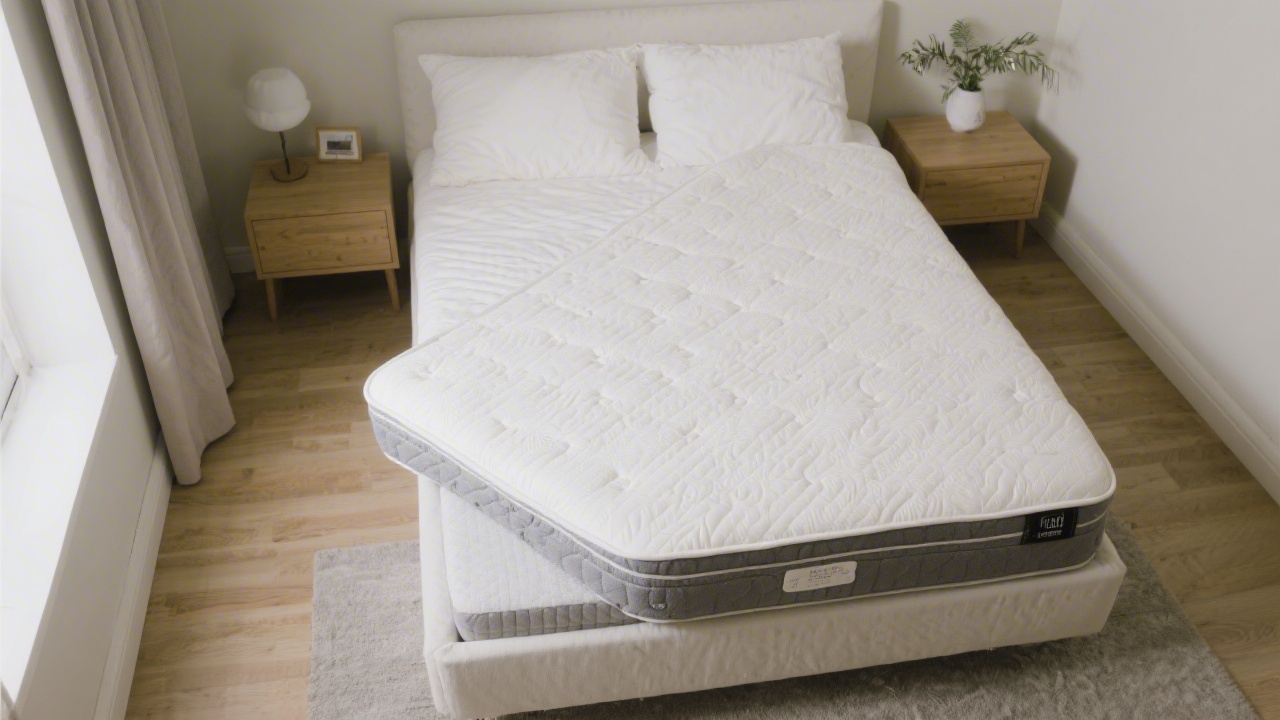
by Saatva Classic is designed to be rotated — not flipped — with a structured rotation schedule to maintain even support.
The question comes up often, and the short answer is: probably not. The longer answer is that it depends entirely on when the mattress was manufactured and how it was built. For the past two decades, the overwhelming majority of mattresses sold in the United States have been one-sided — designed to sleep on from one direction only. Flipping them is not just unhelpful; it is counterproductive.
Why Most Modern Mattresses Are One-Sided
Mattress construction changed significantly in the 1990s and 2000s. Older two-sided innerspring models were built symmetrically — comfort materials on both faces, with a shared coil core in the middle. Manufacturing that design cost more, weighed more, and required that consumers flip the mattress every few months to maintain even wear.
Modern mattresses are built in layers: a support core at the bottom (high-density foam, pocketed coils, or hybrid combinations), then progressive comfort layers moving upward, with the sleep surface on top. This construction optimizes each layer for a specific function. It cannot be reversed without eliminating the structural logic of the design.
Which Mattresses Can Be Flipped
Traditional Two-Sided Innerspring (Pre-2000)
If you own a innerspring mattress manufactured before approximately 2000, it may be two-sided. Look for comfort material on both faces — if the underside has padding rather than a flat fabric base cover, it is likely flippable. Check the law tag or manufacturer label for specific instructions.
Modern Specialty Two-Sided Models
A handful of manufacturers today produce intentionally two-sided mattresses, often as a premium or long-durability product. These are explicitly marketed as flippable and include flipping instructions. If you purchased a mattress specifically described as two-sided or flippable, follow the manufacturer's schedule — typically every 3 to 6 months.
Latex Mattresses with Swappable Layers
Some latex mattresses allow you to unzip the cover and rearrange internal layers for different firmness profiles. This is a form of customization, not flipping in the traditional sense. Follow the manufacturer's layering guide — reversing layers without guidance can alter support in unintended ways.
The Correct Practice for Modern Mattresses: Rotation
For any one-sided mattress — which includes virtually all memory foam, hybrid, and contemporary innerspring models — the correct maintenance practice is rotation, not flipping.
What Rotation Does
Every sleeper creates body impressions in specific zones, particularly under the hips and shoulders, which carry the most weight. Over time, these zones compress more than the foot area. Rotating the mattress 180 degrees head-to-foot moves the heavier-used zone toward the lighter-used end, distributing cumulative compression more evenly across the full sleep surface.
Rotation Schedule by Mattress Type
- Memory foam: Every 3 months for the first two years; twice yearly after that. Foam compresses more permanently than coil systems, making frequent rotation more valuable.
- Hybrid: Every 3 to 6 months in year one; twice yearly after. The coil system provides some natural resilience, but the foam comfort layers still benefit from rotational maintenance.
- Innerspring: Every 6 months. The coil system is more resilient and recovers better between rotations.
- Latex: Every 6 months. Latex is the most resilient surface material and develops impressions more slowly than foam.
What Happens If You Flip the Wrong Mattress
Flipping a one-sided mattress puts the base foam or coil base cover in direct contact with your body. Base layers use a different foam density optimized for structural support, not pressure distribution. Sleeping on them produces discomfort quickly. More consequentially, some manufacturers will void the warranty if evidence shows the mattress was used in the wrong orientation. If you have inadvertently flipped a one-sided mattress, turn it back to its correct position. A single night in the wrong orientation will not permanently damage the mattress.
How to Tell If Your Mattress Is One-Sided or Two-Sided
Check the following in order: manufacturer documentation or the product listing; the underside of the mattress itself — a flat fabric base cover with no padding indicates one-sided; the law tag, which sometimes specifies orientation. When in doubt, do not flip. Rotation is safe for all mattress types.
Related Reading
When to replace your mattress | How to clean mattress stains | Do you need a mattress protector?
Frequently Asked Questions
Can you flip a modern mattress?
Most modern mattresses should not be flipped. Contemporary mattresses are built with a specific sleep surface on top and a firmer support base underneath. Flipping them puts the support layer on top and the sleep surface face-down against the box spring or foundation — the opposite of their intended orientation. Only double-sided or two-sided mattresses are designed to be flipped.
Which mattresses can be flipped?
Two-sided mattresses — also called flippable mattresses — are specifically designed with comfort layers on both faces. Some innerspring models from the 1970s through early 2000s were double-sided. Today, a small number of specialty brands intentionally produce two-sided models. Always check manufacturer documentation before flipping; there should be explicit instructions if flipping is intended.
What is the difference between flipping and rotating a mattress?
Flipping turns the mattress 180 degrees so the top becomes the bottom. Rotating spins the mattress 180 degrees head-to-foot while keeping the same surface facing up. For most modern one-sided mattresses, rotation is the correct maintenance practice. Rotation redistributes wear from the heaviest sleeping zone — typically the hip and shoulder area — toward the less-compressed end.
How often should you rotate a mattress?
The standard recommendation is every 3 to 6 months during the first two years of use, then twice yearly after that. Memory foam mattresses benefit from more frequent rotation — every 3 months — because foam compresses more permanently than coil systems. Innerspring and hybrid mattresses can be rotated every 6 months after the first year.
What happens if you accidentally flip a one-sided mattress?
Sleeping on the underside of a one-sided mattress typically results in immediate discomfort — the base foam or coil cover is not designed for direct sleep contact. You may also void the warranty, as manufacturers specify proper use orientation. Flip it back to its correct position as soon as you realize the error; sleeping on it briefly will not cause permanent damage.
Saatva Classic: rotate head-to-foot every 3 months in year one, twice yearly after. White-glove delivery included.
Affiliate disclosure: This site earns a commission from qualifying purchases at no additional cost to you.