
 by
by Cashmere is the most expensive natural fiber commonly used in bedding — a full cashmere blanket or throw can run $500–1,500+, and cashmere mattress toppers from luxury brands can exceed $3,000. The question isn't whether cashmere is luxurious — it's whether that luxury translates to meaningfully better sleep, or whether you're primarily paying for a status signal.
We'll give you an honest assessment of cashmere bedding performance, where it's genuinely worth it, and where premium alternatives deliver comparable results at lower cost.
Our Top Pick for Premium Bedding
We've tested dozens of sheet sets. Saatva's percale is the best value in long-staple cotton — strong construction, breathable weave, and a 45-night trial period.
What Makes Cashmere Different from Other Wool
Cashmere comes from the undercoat of cashmere goats (primarily from Mongolia, China, and Afghanistan). The fibers are exceptionally fine — typically 14–19 microns, compared to merino wool at 17–24 microns and standard sheep wool at 26–35 microns. This fineness is what creates cashmere's characteristic softness — the fibers are too fine to cause the prickling sensation associated with coarser wools.
The scarcity adds to the cost: a single cashmere goat produces approximately 150 grams of usable cashmere fiber per year, compared to 3–5 kg from a standard sheep. A queen-size cashmere blanket requires fiber from dozens of goats.
Grade Classifications
- Grade A cashmere: 14–15.5 microns fiber diameter, longest available fiber length. The highest quality designation.
- Grade B: 16–19 microns. Still excellent, slightly less fine.
- Grade C: 19+ microns. May begin to show some coarseness over time as fibers degrade.
Many brands don't disclose grade or fiber diameter. "100% cashmere" at $150 is almost certainly Grade C or blended with other fiber. Genuine Grade A cashmere bedding starts around $300+ for blankets and climbs sharply from there.
Types of Cashmere Bedding
Cashmere Blankets and Throws
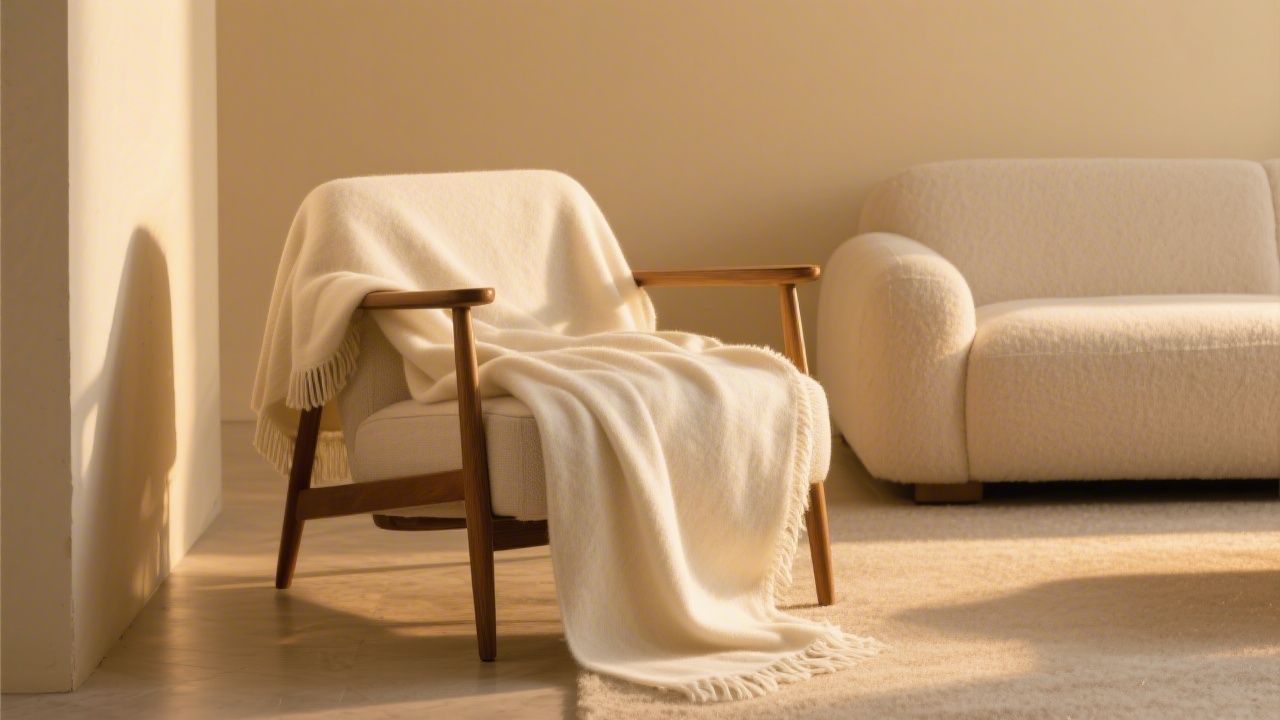
The most common cashmere bedding product. A cashmere throw ($300–800) adds luxurious softness as a top layer — particularly useful as a secondary blanket for cold sleepers or for on-sofa use. A cashmere blanket intended as primary bedding runs $600–1,500+.
Performance: Exceptional softness. Lightweight warmth comparable to down (loft weight much less than equivalent wool). Breathes reasonably well. The warmth-to-weight ratio is among the best of any natural fiber.
Cashmere Mattress Toppers and Covers
Luxury mattress brands (Savoir, Vispring, Hästens) use cashmere ticking or cashmere toppers as part of their ultra-premium mattress systems. Standalone cashmere mattress toppers from specialty bedding brands run $800–3,000+.
Performance: The cashmere-against-skin surface feel is genuinely different — softer and warmer than cotton immediately. Temperature regulation is good but not as active as a full wool topper due to lower fill weight.
Cashmere Pillow Covers
The most accessible entry point ($150–400 per pair). A cashmere pillowcase delivers the softness experience against your face without the full cost commitment of a blanket or topper. Performance-wise, it's the most cost-effective way to experience cashmere in bedding.
The Honest Performance Assessment
Where cashmere genuinely outperforms alternatives:
- Surface softness: Grade A cashmere is distinctly softer than any sheep wool, long-staple cotton, or most semi-synthetic fabrics
- Warmth-to-weight: You get significant warmth from a lightweight product — important for people who want warmth without weight on the body
- Longevity of softness: High-quality cashmere stays soft over years; cheaper alternatives pill and feel rougher over time
Where cashmere doesn't justify the premium:
- Temperature regulation: Not as active as merino wool for moisture wicking; cashmere's advantage is warmth and softness, not cooling
- Durability: Cashmere pills and degrades more quickly than cotton or merino under equivalent use. Requires careful hand washing or dry cleaning.
- Value proposition: For sleep quality improvement, quality merino wool or TENCEL lyocell delivers 80% of the benefit at 20–30% of the cost
When the Premium Makes Sense
Cashmere bedding is worth the investment if:
- You're buying a long-term quality item where initial cost is less important than experience
- You run cold and want maximum warmth at minimum weight
- The tactile luxury is a meaningful part of how you experience your sleep environment
- You're outfitting a space where quality signals matter (primary master suite, high-end guest room)
It's harder to justify if:
- You're primarily looking for performance (cooling, moisture management, longevity)
- You have pets or young children who will accelerate wear
- You want simple care without dry cleaning or hand washing
For alternatives at lower price points, see our wool bedding guide (merino wool is 40–60% of cashmere cost with excellent performance) and our down vs synthetic fill comparison for warmth-focused bedding choices.
Ready to Upgrade?
If you're looking for premium bedding with verified materials and a real trial period, Saatva is a consistent top performer in our testing.
Frequently Asked Questions
Why is cashmere bedding so expensive?
Cashmere goats produce approximately 150 grams of usable fiber per year — far less than sheep wool. A queen cashmere blanket requires fiber from many animals. Combined with the labor-intensive fiber processing and small-scale production, cashmere has a structurally high cost that doesn't compress easily even at volume.
How do you wash cashmere bedding?
Hand wash in cold water with cashmere-specific detergent, or dry clean. Never machine wash (even on gentle cycle), never wring, never tumble dry. Lay flat to dry. The delicate fiber structure is permanently damaged by heat and mechanical stress. This care requirement is one of the primary reasons to carefully consider whether cashmere bedding fits your lifestyle.
Does cashmere bedding pill?
All cashmere pills to some degree — even high-grade cashmere develops surface pills with friction over time. Quality Grade A cashmere pills less and can often be depilled with a cashmere comb. Budget "cashmere" pills quickly and extensively. This is often the clearest way to identify low-quality cashmere after purchase.
Is cashmere warmer than merino wool?
Yes, cashmere is warmer than merino per unit of weight — it has more insulating air pockets relative to its weight. For maximum warmth at minimum weight, cashmere outperforms merino. For overall performance including moisture management and durability, merino wool is often the better all-around choice.
What is the best grade of cashmere to look for in bedding?
Grade A (14–15.5 microns) for anything that contacts skin directly — pillowcases, blankets used without covers. Grade B cashmere is fine for mattress covers or toppers used under sheets. Avoid products that don't disclose grade or fiber diameter — at cashmere price points, transparency should be expected.
Voted best luxury innerspring mattress with exceptional lumbar support and white-glove delivery.
Check Price & Availability FAQPage", "mainEntity": [ { "@type": "Question", "name": "Why is cashmere bedding so expensive?", "acceptedAnswer": { "@type": "Answer", "text": "Cashmere goats produce approximately 150 grams of usable fiber per year. A queen cashmere blanket requires fiber from many animals. Combined with labor-intensive processing and small-scale production, cashmere has a structurally high cost." } }, { "@type": "Question", "name": "How do you wash cashmere bedding?", "acceptedAnswer": { "@type": "Answer", "text": "Hand wash in cold water with cashmere-specific detergent, or dry clean. Never machine wash, wring, or tumble dry. Lay flat to dry. Heat and mechanical stress permanently damage the fiber." } }, { "@type": "Question", "name": "Does cashmere bedding pill?", "acceptedAnswer": { "@type": "Answer", "text": "All cashmere pills to some degree. Quality Grade A cashmere pills less and can be depilled with a cashmere comb. Budget cashmere pills quickly — this is often the clearest way to identify low-quality cashmere." } }, { "@type": "Question", "name": "Is cashmere warmer than merino wool?", "acceptedAnswer": { "@type": "Answer", "text": "Yes, cashmere is warmer than merino per unit of weight. For maximum warmth at minimum weight, cashmere outperforms merino. For overall performance including moisture management and durability, merino is often the better all-around choice." } }, { "@type": "Question", "name": "What is the best grade of cashmere to look for in bedding?", "acceptedAnswer": { "@type": "Answer", "text": "Grade A (14–15.5 microns) for anything that contacts skin directly. Grade B is fine for mattress covers used under sheets. Avoid products that don't disclose grade or fiber diameter." } } ] }