 by
by Quick answer: Pick Casper if you want a simpler foam-led feel and an online-first purchase. Pick Sealy if you want more coil and hybrid options, more firmness variety, and the chance to try beds in stores.
- Casper listings compared by SleepRanked show prices from $799 to $1,199, depending on the model and offer.
- SleepRanked lists Casper trial terms of either 90 or 100 nights, so the exact model and seller matter.
- Sealy’s range spans foam, hybrid, and innerspring designs, according to Sealy’s product-line descriptions.
Updated July 2026 · Reviewed for accuracy
Casper and Sealy are not really chasing the same buyer. Casper makes the cleaner choice for someone who wants foam comfort, a consistent feel, and a straightforward web purchase. Sealy makes more sense for shoppers who want to compare several construction types, especially beds with coils.
My verdict is simple: don’t compare the logos first. Compare the model’s build. Foam versus coils changes how a mattress responds under your body, how much bounce it has, how it handles edges, and what it feels like to move around on at night.
Casper vs Sealy at a glance
The biggest dividing line is construction. Casper is generally foam-forward, with open-cell foam and, on some models, zoned support. Sealy’s catalog is broader: foam beds sit alongside hybrids and innerspring models, including Posturepedic and Hybrid lines, per Sealy’s own product descriptions.
| What to compare | Casper | Sealy |
|---|---|---|
| Typical construction direction | Foam-led, with a more uniform surface response, according to Casper model descriptions. | Foam, hybrid, and innerspring options, according to Sealy’s product-line descriptions. |
| Feel direction | Usually plush-to-medium and pressure-relieving, based on Casper’s foam-focused positioning. | Can range more widely, with coils adding lift and bounce on many models, per Sealy’s hybrid and innerspring descriptions. |
| Shopping experience | Strong direct-to-consumer focus and online ordering, according to Casper’s retail approach. | Widely sold through retailers and specialty stores, making in-person comparison easier. |
| Trial terms | SleepRanked lists 90-night and 100-night Casper trials across compared listings. Confirm the exact purchase terms. | Retailer-dependent. Read the policy for the exact store and model before ordering. |
| Best starting point | Shoppers who already know they like foam. | Shoppers who want to try coil, hybrid, and foam feels side by side. |
The Nut’s take: “Casper versus Sealy” is really a construction decision. Start with whether you want the slower contour of foam or the springier response of coils. That answer narrows the field faster than any brand comparison.
Casper is the simpler foam-first choice
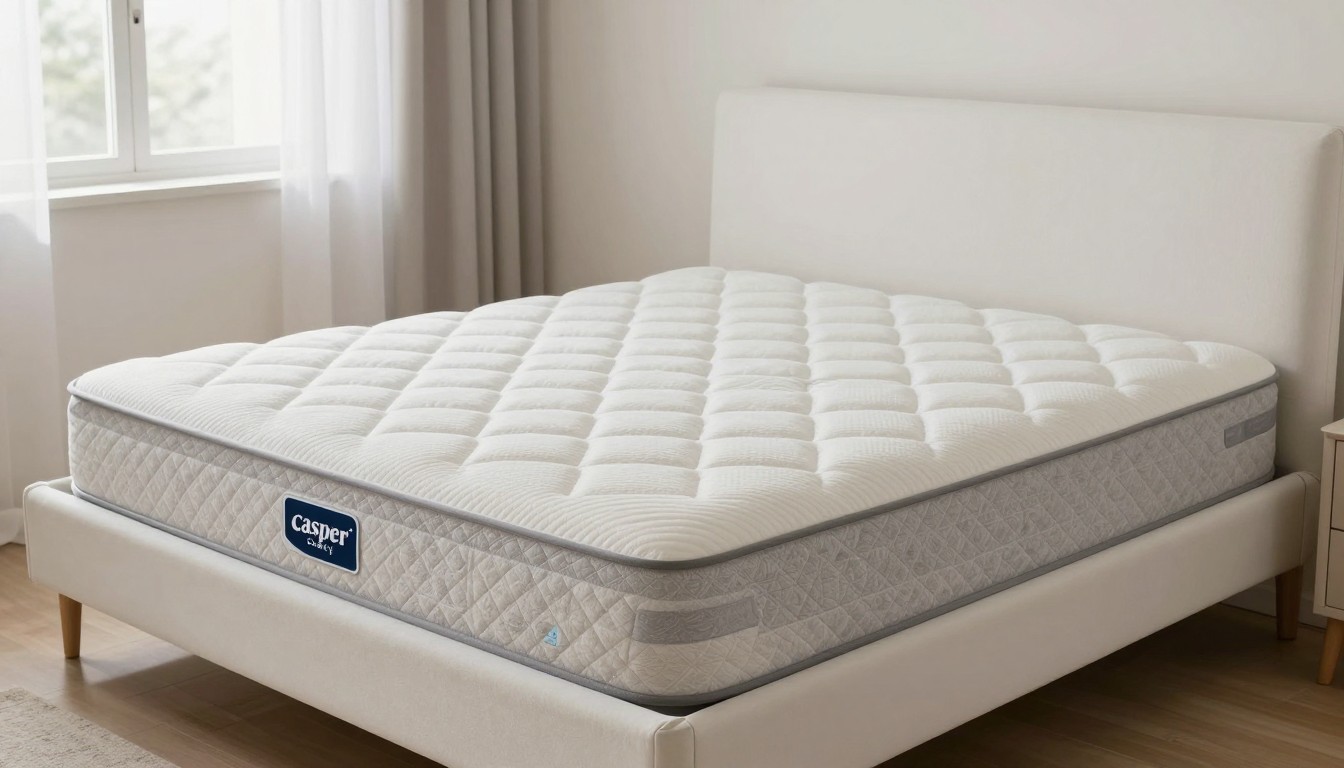
Casper’s appeal is clarity. Its foam-centered approach is built around a more even, close-to-the-body response than a traditional coil bed. Open-cell foam is intended to avoid the sealed, dense character people often associate with older memory foam, while zoned support on certain models is designed to make different areas of the mattress respond differently under the body.
That construction can suit sleepers who dislike a lot of bounce. Foam tends to absorb movement instead of sending it across the surface. For couples, that can be a practical advantage if one person changes position frequently. The tradeoff is equally practical: foam generally won’t give you the same buoyant pushback or quick rebound that a coil system can provide.
Casper also fits the online shopper who doesn’t want to sort through a sprawling showroom. The brand’s direct-to-consumer approach makes the purchase path more standardized than a retailer-heavy brand. Still, “standardized” does not mean every Casper model feels identical. Check the materials and firmness description for the exact mattress, not just the name on the cover.
SleepRanked’s Casper comparison listing shows prices of $799, $999, and $1,199 for different listed configurations and offers. It also shows both 90-night and 100-night trial terms. I wouldn’t treat either detail as universal. Use them as proof that the exact product page and seller can change the deal substantially.
- Choose Casper first if you prefer a foam-dominant feel.
- Choose Casper first if online convenience matters more than comparing many builds in person.
- Pause before choosing Casper if you know you need pronounced bounce, a distinctly traditional coil feel, or a broad in-store firmness selection.
If manufacturing location affects your decision, read our guide to where Casper mattresses are made. Country or facility details can vary by model and sales region, so it is still worth checking the current listing for the particular bed you’re considering.
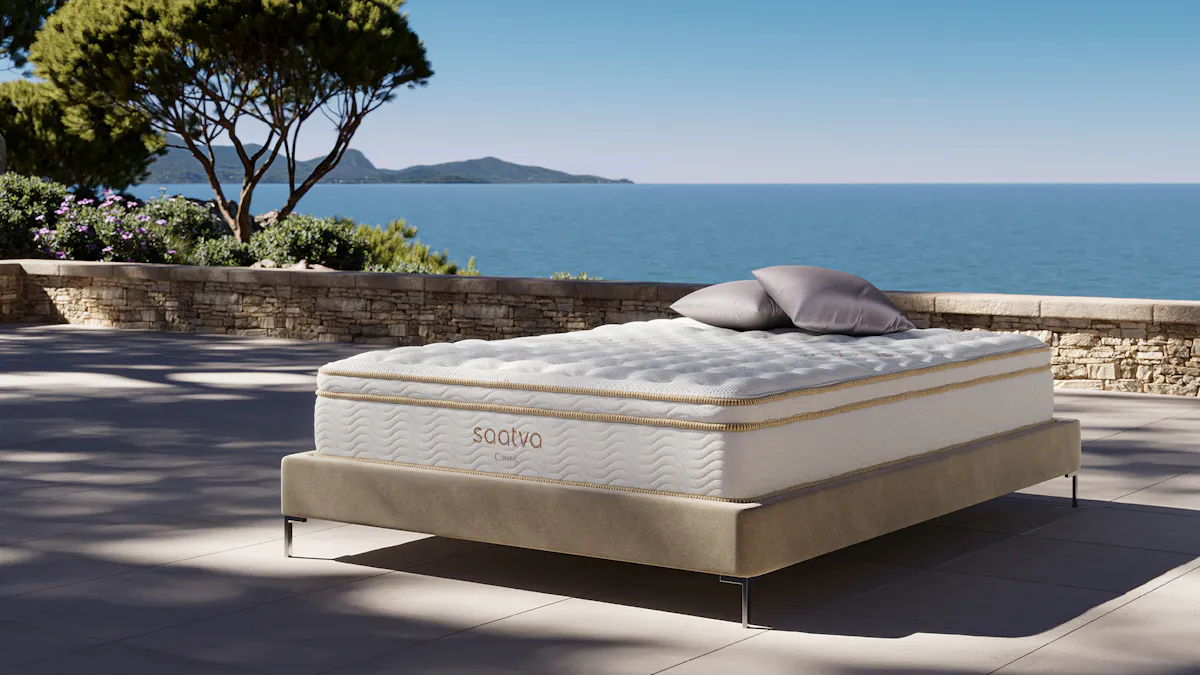
Comparing options? The Saatva Classic is the pick we keep coming back to — see the final verdict ↓
Sealy gives you more ways to buy a mattress
Sealy’s strength is range. Its lineup includes foam, hybrid, and innerspring options, according to the brand’s product descriptions. That means the Sealy name alone tells you less about feel than the Casper name does. You need to identify the line and construction before drawing any conclusion.
A Sealy hybrid generally puts foam layers over a coil unit. That design can create a surface with some pressure relief while retaining the more responsive support of springs underneath. An innerspring design leans harder into the coil character: easier movement, more bounce, and a less enveloping feel than many all-foam beds. A Sealy foam model belongs in a more direct comparison with Casper, though even then layer design and firmness can differ.
For me, the in-store advantage is Sealy’s most useful edge. A broad retail network gives shoppers more opportunities to lie on different firmnesses and constructions before committing. That does not automatically make the retailer experience simpler. It makes it more variable. Prices, available models, return rules, delivery terms, and mattress names can differ by store and region.
That variability is why I would never buy a Sealy solely because a store tag says “Posturepedic” or “Hybrid.” Ask what is inside it. Is it foam, coils, or both? Is the support unit the feature you actually want? Is the comfort layer trying to create a plush surface, a firmer surface, or something between those ends?
Before you sign anything: Check the retailer’s return policy, who handles return shipping, whether a restocking fee applies, and whether the trial applies to the exact mattress you selected. Sealy purchase terms can vary by retailer and region.
Want more background on brand sourcing? Our explanation of where Sealy mattresses are made is a useful companion read. As with any widely distributed line, the model-level listing is the final word for the mattress in front of you.
Feel: contouring foam versus coil-supported lift
Foam and coils don’t just use different ingredients. They create different movement patterns. Casper’s foam-forward construction is aimed at a more uniform, pressure-relieving surface. The bed typically follows the body more closely than a spring-led build, which can feel calming to a sleeper who wants less surface motion and less pushback.
Sealy’s coil and hybrid options take the other route. Coils compress individually or as a connected system, then rebound. That rebound is what many shoppers mean when they say a mattress feels more responsive. It can make changing position easier, and it gives the surface a lifted feel rather than the deeper cradle associated with foam.
Neither approach wins by default. A sleeper who likes to settle in may prefer foam. A sleeper who dislikes feeling surrounded by the mattress may prefer coils. Body size, sleep position, and personal firmness preference all matter, but a label such as “medium” cannot settle the question by itself. One company’s medium can be very different from another company’s medium because the layer stack beneath the cover is different.
For side sleepers, the practical question is whether the shoulder can settle without the hips dropping too far. For back sleepers, it is whether the midsection gets enough support without creating an uncomfortable gap. For stomach sleepers, the question becomes whether the top layers allow too much sink. Those are comfort judgments, not promises a brand name can make for every body.
Support and durability come back to the build
A mattress’s support is not the same thing as firmness. A very firm surface can still be poorly designed, and a softer surface can still have a supportive core. With Casper, look closely at whether the model uses zoning and how the foam layers are described. Zoned support is intended to alter support across different areas of the sleep surface rather than make every area behave exactly alike.
With Sealy, identify whether you are looking at foam, a hybrid, or an innerspring model before comparing durability expectations. A coil-based bed has a different support structure from an all-foam bed. Edge-support features can also matter if you sit on the side of the bed often or sleep near the perimeter, but you should confirm that feature on the exact Sealy listing rather than assume every model includes it.
I’m cautious about broad durability promises. Layer thickness, foam type, coil design, body weight, foundation, and use all influence how a mattress ages. The smarter move is to read the warranty and care requirements for the exact model. A long warranty may tell you about coverage terms, but it is not a shortcut to knowing how the mattress will feel years from now.
Material check: Don’t let marketing names do the engineering for you. Find out whether the mattress is all foam, foam over coils, or primarily coil-led. Then compare the support system, comfort layers, firmness designation, and return policy in that order.
Cooling, motion, and edges
Cooling claims need a little discipline. Casper uses open-cell foam in its foam-led approach, and open-cell foam is positioned as more breathable than denser, closed-feeling foam. But sleeping temperature also depends on the room, bedding, sleeper, and exact mattress construction. I would treat cooling language as a feature to inspect, not a guarantee.
Sealy hybrids and innerspring models can have more open space around the coil unit than an all-foam mattress. That construction difference is one reason shoppers often seek out coils when they want a less insulated feel. Still, a thick comfort system on top can change the experience. Check the specific model rather than assuming “hybrid” means cool.
On motion, foam is usually the more obvious fit for someone who wants a quieter, more damped surface. Coils can add more movement and bounce, which some couples dislike and others actively prefer. On edges, Sealy’s range includes models marketed with edge-support technology, according to Sealy’s product descriptions, but this is another model-by-model issue. Confirm it on the page for the exact bed.
The point is not to chase a perfect scorecard. It is to decide which compromise bothers you least. A responsive mattress can be easier to move on but less isolated. A more absorbing foam surface can reduce movement but feel less lively. That is the real Casper versus Sealy decision.
Price, trials, and the retailer trap
Price comparisons get messy fast because both brands sell multiple models and promotions change. SleepRanked’s comparison page lists Casper prices from $799 through $1,199, plus a $200 listed figure in a specific comparison context. Those figures should not be treated as a current universal price chart. They show why you should compare the exact model, size, and seller on the day you buy.
Casper is generally positioned as a direct-to-consumer, mid-range-to-premium foam option. Sealy spans a broader set of price levels because its catalog spans more constructions and retail channels. A lower-priced Sealy and a premium Sealy may share a brand badge while offering a very different build and purchase policy.
Trial terms deserve the same care. SleepRanked lists Casper trial terms of 90 nights and 100 nights across its compared listings. For Sealy, the return and trial terms can depend on the retailer. Read the policy before payment, especially the portion explaining pickup, return transport, condition requirements, and any fees.
I would also compare the full purchase package, not just the mattress price. Check the current sale price, delivery arrangement, included items if any, return rules, and the foundation requirements. A cheap-looking mattress can be less attractive once the return process and setup needs are clear.
Who should pick Casper, and who should pick Sealy?
Pick Casper if you want the shortest route to a foam-centered mattress. Its construction direction is easier to understand, its online-first setup suits people who prefer a direct purchase, and its pressure-relief focus can appeal to sleepers who dislike a springy surface.
Pick Sealy if you want to shop by construction and firmness in person. Its foam, hybrid, and innerspring range gives you more possible feels. It is the better starting point for a shopper who knows they like coils, wants more bounce, or wants to compare several showroom options before buying.
Skip either brand model if its construction does not match your preference. Don’t choose Casper merely because its online process is simple if you know you want a coil-driven surface. Don’t choose Sealy merely because it is easy to find in stores if the particular model’s materials are unclear or its retailer policy is weak.
If neither a foam-led online buy nor a retailer-dependent lineup feels right, the Saatva Classic is a reasonable third comparison point for shoppers seeking a traditional luxury-mattress direction with coil support. Per Saatva, it includes a 365-night trial and lifetime warranty, along with flexible financing and handcrafted-in-the-USA positioning. Compare its current terms directly before deciding.
My buying order: choose your preferred construction first, narrow to the exact model second, then read the return policy and current price from the seller you will actually use. That sequence keeps brand marketing from making the decision for you.
What I’d verify before placing the order
Start with the exact model name. Casper’s foam-oriented models should be compared against Sealy foam models if you want the cleanest apples-to-apples matchup. If you are weighing a Sealy Hybrid or innerspring bed, acknowledge that you are also choosing a different support system.
Then verify the firmness description and all listed materials. This is where the marketing gets translated into something useful. A comfort layer affects initial pressure relief. A support core affects how the mattress carries weight and responds to movement. The combination matters more than a broad label such as “premium” or “cooling.”
Next, read the seller’s trial and return language from start to finish. SleepRanked’s differing Casper trial listings are a reminder that purchase terms can change by offer or channel. For Sealy, retailer variation makes that step even more important.
Finally, if you can try a Sealy in store, use that opportunity well. Lie in your normal sleep position long enough to notice whether your shoulder, hips, and lower back feel supported. Then compare that sensation with the construction you are considering from Casper. A few minutes will not predict every night, but it can tell you whether you are naturally drawn to foam contouring or coil response.
FAQ
Is Casper or Sealy better?
Neither is automatically better. Casper is the cleaner choice for a foam-led, online-first purchase, while Sealy is the stronger choice for shoppers who want access to foam, hybrid, and innerspring options. The right answer depends on the exact model and the feel you prefer.
Does Casper feel softer than Sealy?
Casper is generally associated with a plush-to-medium, foam-forward feel, according to its positioning. Sealy varies more because the brand sells foam, hybrid, and innerspring mattresses. A coil-based Sealy can feel more responsive even at a similar firmness label.
Which brand is better for couples?
Casper’s foam-led design may suit couples who want a more motion-absorbing surface. A Sealy hybrid or innerspring can suit couples who prefer easier movement and more bounce. Check the exact model because construction varies within both brands’ ranges.
Can I try Sealy before buying?
Sealy is widely distributed through retailers and specialty stores, so in-person comparison is often possible. Availability, model selection, pricing, and return terms differ by location and seller. Confirm that the showroom mattress matches the model you plan to buy.
How long is Casper’s sleep trial?
SleepRanked lists Casper trial terms of 90 nights and 100 nights across its compared listings. Verify the trial period, return procedure, and seller conditions on the exact current offer before ordering.
My final take on Casper vs Sealy
Casper wins the simplicity argument. Sealy wins the variety argument. If you want foam contouring and a direct online path, begin with Casper. If you want coils, a hybrid build, or a real showroom comparison, begin with Sealy.
Either way, buy the construction, not the badge. The model’s layers, support system, feel, price, and return policy are what you will actually sleep on.
FINAL VERDICT
Before you settle: if casper vs sealy is what brought you here, the Saatva Classic is the value pick on this page — more home-trial and warranty coverage than the alternatives covered here. Confirm current price, dimensions and terms on the official product page before ordering.
OUR CATEGORY-MATCHED PICK · UP TO $625 OFF
Saatva Classic
- 365-night home trial and lifetime warranty, per saatva.com
- Handcrafted in the USA, free white-glove delivery
- Flexible financing available