
 by
by Our Top Mattress Pick
Whatever sleep technology you use, it only works as well as the mattress underneath you. Saatva's handcrafted innerspring hybrid tops our testing for support, temperature regulation, and durability.
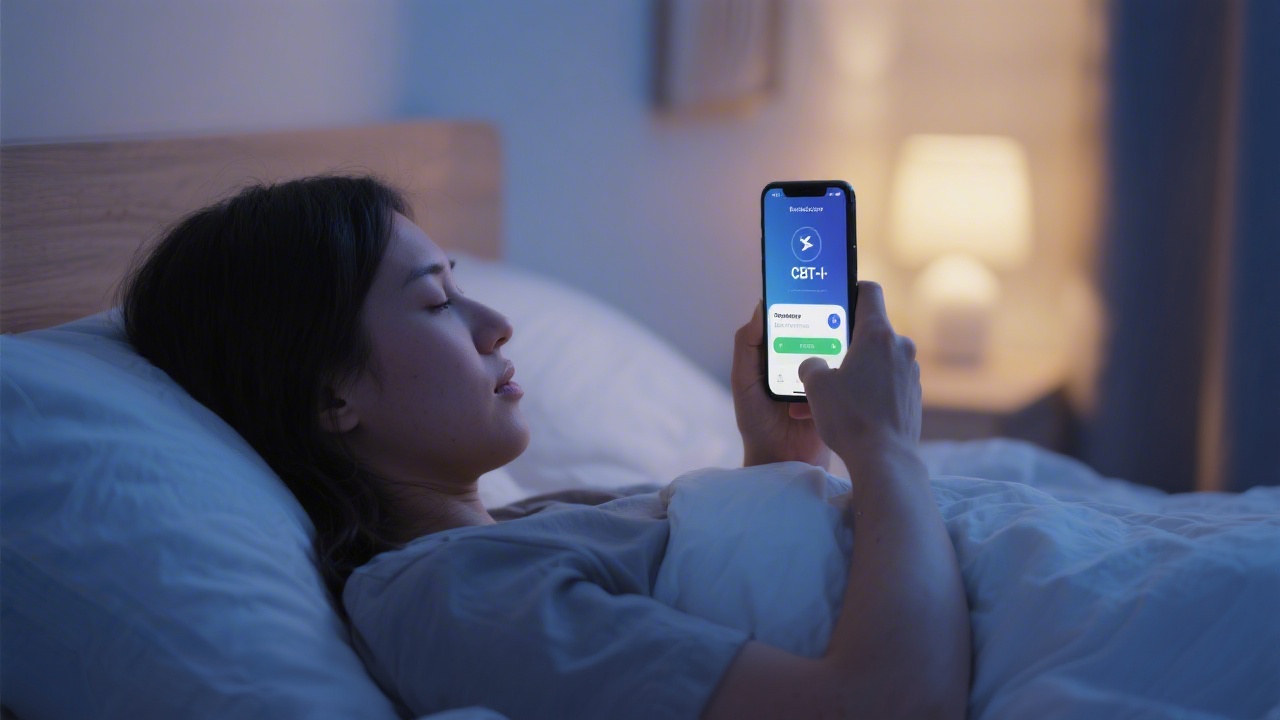
What Is CBT-I and Why It Matters
Cognitive Behavioral Therapy for Insomnia (CBT-I) is the first-line treatment recommended by the American Academy of Sleep Medicine, the American College of Physicians, and the British Association for Psychopharmacology for chronic insomnia — above sleep medications. Multiple randomized controlled trials show CBT-I is more effective than medication for long-term insomnia management, with lower relapse rates and no dependency risk.
The problem: in-person CBT-I requires a trained therapist, costs $150–$300 per session over 6–8 sessions, and access is limited — there are far fewer qualified sleep therapists than there are insomnia sufferers. Digital CBT-I programs were developed specifically to address this access gap, and the evidence base supporting them is now substantial.
Pros and Cons
What We Like
- Luxury innerspring with excellent lumbar support
- Multiple firmness options available
- Free white-glove delivery and mattress removal
- 365-night trial and lifetime warranty
What Could Be Better
- Higher price than many online brands
- Heavier than foam mattresses
- Not compressed in a box
- Some off-gassing possible initially
The Core Components of CBT-I
Any legitimate CBT-I program — digital or in-person — addresses six core components. Sleep restriction therapy (temporarily reducing time in bed to match actual sleep time, building sleep pressure). Stimulus control (retraining the brain to associate the bed only with sleep, not wakefulness). Sleep hygiene education (the behavioral basics). Cognitive restructuring (addressing unhelpful thoughts about sleep). Relaxation techniques (progressive muscle relaxation, breathing exercises). Relapse prevention.
The apps differ in how thoroughly they implement each component, how they adapt to individual sleep diary data, and whether they include human support. FDA clearance (Prescription Digital Therapeutics classification) is a meaningful differentiator for clinical evidence quality.
Somryst (Pear Therapeutics): The FDA-Cleared Option
Somryst holds FDA clearance as a Prescription Digital Therapeutic (PDT) for chronic insomnia disorder in adults 22+. This is the highest regulatory bar in the category — it required randomized controlled trial evidence demonstrating safety and efficacy as a medical device. The underlying program is based on SHUTi (Sleep Healthy Using the Internet), a CBT-I program with over a decade of clinical research.
The program runs 9 weeks, requires a daily sleep diary, and adapts the sleep restriction component based on your actual diary data — a key advantage over generic programs. It's prescribed through healthcare providers and often covered by insurance.
Cost: Requires prescription; typically $900 list price, insurance coverage variable. Check with your insurer; coverage has been expanding since FDA clearance.
Who it's for: People with diagnosed chronic insomnia who want the highest-evidence digital treatment, especially if they have access to insurance coverage or want something they can discuss with their doctor.
Sleepio (Big Health): The Clinical Research Workhorse
Sleepio is the digital CBT-I program with the largest published evidence base — over 30 randomized controlled trials and peer-reviewed studies. It's been used by the UK's NHS, US military, and major health insurers. The program runs 6 weeks with a virtual therapist (a cartoon character called "The Prof"), daily sleep diary, and weekly sessions that adapt based on your data.
Sleepio has received breakthrough device designation from the FDA and is increasingly available through employer health benefits and insurance networks. It does not hold the same PDT clearance as Somryst for chronic insomnia disorder specifically, but has arguably more clinical research behind it in general populations.
Cost: $400 direct purchase; free through many employer health plans, some insurers, and NHS (UK). Check Big Health's website for free access options — availability through employers has expanded significantly.
Who it's for: People who want a program with deep clinical evidence and the ability to access it through employer benefits or NHS. Best for mild-to-moderate chronic insomnia.
Sleep Reset: Human Coaching Hybrid
Sleep Reset differentiates by pairing its app-based CBT-I program with real human sleep coaches (not therapists, but trained coaches). The program runs 8 weeks with nightly check-ins via the app and coach messaging. This hybrid approach produces better adherence than fully automated programs — CBT-I's biggest challenge is completion rate.
Cost: $150 for the 8-week program (as of 2026). No insurance coverage.
Who it's for: People who struggle with self-directed programs and benefit from accountability and human support at a reasonable price point.
Dozy, Insomnia Coach, and Free Options
Insomnia Coach (from the VA — US Department of Veterans Affairs) is a free, evidence-based app that delivers core CBT-I components with a sleep diary and personalized guidance. It was developed with clinical rigor and validated in VA populations. It lacks the adaptiveness and polish of Sleepio or Somryst but is free and functionally effective for motivated users.
Dozy is an emerging UK-based app with a strong CBT-I implementation and lower cost than the major programs. The research base is thinner than Sleepio or Somryst, but clinical advisory is solid.
CBT-I Apps Comparison
| App | FDA Status | Duration | Cost | Human Support | Best For |
|---|---|---|---|---|---|
| Somryst | FDA Cleared (PDT) | 9 weeks | ~$900/Rx | No | Clinical/diagnosed insomnia |
| Sleepio | Breakthrough Device | 6 weeks | $400 / free via benefits | No (virtual) | Evidence-based, employer benefits |
| Sleep Reset | None | 8 weeks | $150 | Yes (coaches) | Accountability-driven users |
| Insomnia Coach | None (VA-developed) | Self-paced | Free | No | Budget, motivated self-starters |
Does FDA Clearance Actually Matter?
For PDT clearance specifically, yes — it requires submission of randomized controlled trial data to FDA demonstrating safety and efficacy. This is a higher bar than most health apps clear. However, Sleepio's published research base (30+ RCTs) is arguably stronger than the evidence behind Somryst's clearance, even though Somryst has the regulatory designation.
For practical purposes: if your insurer covers Somryst, use it. If you have access to Sleepio through employer benefits, use that. If cost is the primary constraint, Insomnia Coach is free and clinically grounded. The worst choice is not treating chronic insomnia — its long-term health costs exceed any of these programs' costs many times over.
For the sleep environment side of insomnia management, a mattress with minimal motion transfer and appropriate temperature regulation reduces the micro-arousals that reinforce insomnia patterns — see our guide to mattresses for insomniacs and our best cooling mattress picks. Also see our sleep setup optimization guide for integrating CBT-I with environmental improvements.
Our Top Mattress Pick
Whatever sleep technology you use, it only works as well as the mattress underneath you. Saatva's handcrafted innerspring hybrid tops our testing for support, temperature regulation, and durability.
Frequently Asked Questions
What is CBT-I and does it work?
CBT-I (Cognitive Behavioral Therapy for Insomnia) is a structured program that addresses the behaviors and thoughts that perpetuate insomnia. It is the first-line treatment recommended by major sleep medicine and physician organizations above sleep medications. Multiple randomized controlled trials show long-term remission rates of 70–80% for chronic insomnia.
Is Sleepio or Somryst better for insomnia?
Both have strong evidence. Somryst holds FDA clearance as a Prescription Digital Therapeutic, which requires clinical trial evidence for regulatory approval. Sleepio has the larger published research base (30+ RCTs) and is available free through many employer health plans and the UK's NHS. If insurer coverage is available for Somryst, that's the stronger clinical choice; if employer benefits cover Sleepio, that's the most accessible option.
Does FDA clearance matter for sleep apps?
For Prescription Digital Therapeutic (PDT) clearance specifically, yes — it requires randomized controlled trial evidence submitted to FDA. This is a meaningful differentiator from the thousands of apps claiming to improve sleep without any clinical evidence. Somryst is the only sleep app with full PDT clearance for chronic insomnia disorder.
How long does CBT-I take to work?
Most structured CBT-I programs run 6–9 weeks. Improvements in sleep efficiency often appear within 2–3 weeks of starting sleep restriction therapy. Some people experience sleep getting temporarily worse in the first week of sleep restriction before it improves — this is expected and is part of the mechanism. Full treatment response typically takes the complete program length.
Can CBT-I apps replace medication for insomnia?
For chronic insomnia, CBT-I is more effective than medication for long-term outcomes, with lower relapse rates and no dependency or withdrawal effects. It cannot replace medication for acute sleep disruption (surgery, bereavement, jet lag) where short-term pharmacological treatment is appropriate. Consult your doctor before discontinuing any prescribed sleep medication.